
Groundwork Daily
Systems
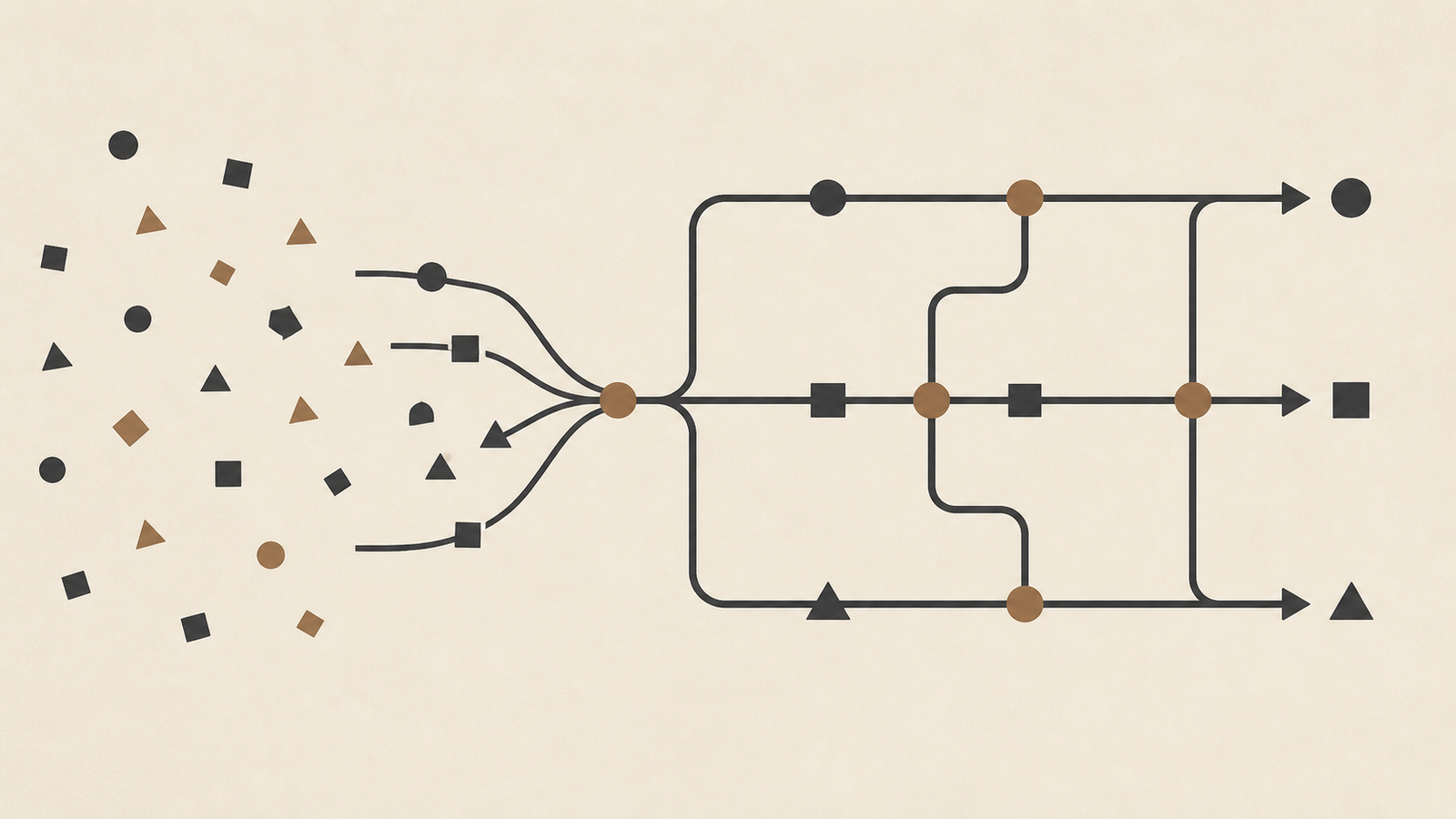
Systems explain how behavior, attention, and decisions operate in repeatable patterns. This is where Groundwork Daily moves from principle to mechanism.
Systems shape outcomes before effort ever enters the room. Most people do not fail because they lack information. They fail because the structure beneath their behavior is weak, invisible, or misaligned with what they say they want.
A person can want change and still repeat the same pattern. A team can want progress and still create the same friction. A community can want stability and still reproduce disorder. The issue is rarely desire alone. The issue is the machinery underneath the behavior.
What This Section Is For
This section helps readers understand the machinery beneath repeated outcomes. It looks at what influences behavior, what directs attention, what turns decisions into patterns, and what makes progress either repeatable or fragile.
Motivation can start motion, but structure determines whether that motion becomes progress. Without a clear operating pattern, people rely on mood, urgency, pressure, or crisis. That may create short bursts of action, but it rarely creates durable change.
Principles explain what must be true.
Mechanisms explain how those truths operate.
Frameworks organize those mechanisms into something usable.
Start With the Core Operating Models
Behavior
The Discipline System
How consistent behavior is built through structure, repetition, and reduced decision friction.
Attention
The Attention Economy System
How platforms, incentives, and emotional triggers shape what people notice, repeat, and believe.
Money
The Economic Behavior System
How habits, incentives, pressure, and repeated decisions shape financial outcomes beyond income alone.
Why Operating Patterns Matter
Repeated outcomes are not random. They usually come from repeated conditions. If the same environment keeps producing the same decision, the problem is not only the decision. The problem is the structure surrounding it.
This is why effort alone is not enough. Effort can be honest and still be poorly directed. It can be intense and still leak through weak routines, unclear priorities, bad incentives, or attention pulled in too many directions.
Clear structure makes outcomes easier to read. It shows where friction is coming from, what keeps repeating, and where a change would actually matter.
Where Things Break
Breakdowns usually appear as frustration before they are recognized as design problems. People feel stuck, scattered, reactive, or inconsistent. Then they blame themselves without studying the structure they are operating inside.
- Inconsistent structure creates unpredictable results.
- Invisible structure creates repeated mistakes because nobody can see the pattern clearly.
- Misaligned structure creates friction between intention and action.
- Overloaded structure creates burnout because too much depends on willpower.
Once the pattern is visible, the work changes. The goal is no longer to push harder inside a broken arrangement. The goal is to redesign the arrangement so better behavior becomes easier to repeat.
How the Core Models Interact
No operating model works alone. Attention determines what enters the mind. Discipline determines what repeats. Economic behavior determines what accumulates. When one area weakens, the others feel it.
If attention is constantly captured by distraction, discipline becomes harder. If discipline weakens, financial decisions become more reactive. If money pressure rises, attention narrows and stress increases. The loop feeds itself unless structure interrupts it.
Attention determines what gets access.
Discipline determines what repeats.
Economic behavior determines what grows or disappears over time.
This is the practical value of understanding how the machinery works. You stop treating every problem as isolated. You start seeing the connections.
How to Read This Section
Start with The Discipline System if you want to understand how behavior becomes consistent. Move to The Attention Economy System if your focus feels scattered or externally controlled. Read The Economic Behavior System if money patterns keep repeating despite better intentions.
If you are new to Groundwork Daily, read The Foundation first. That page explains the core principles beneath this section: structure, discipline, accountability, stability, and freedom.
What Comes Next
Once the machinery is visible, the next step is application. Frameworks organize these ideas into layered models that can be used under pressure.
The Stability Framework
A layered model for holding steady across personal, emotional, financial, civic, and community life.
Stability Under Pressure
A focused look at how structure holds when stress, emotion, and decision pressure increase.
→ Donella Meadows Project — Systems Thinking Resources
→ Harvard Business Review — How to Build a Culture of Originality
A system is already shaping the outcome. The question is whether it is working by design or operating by default.
Once the structure is visible, better decisions become possible. Once better decisions repeat, change stops depending on mood and starts becoming something that can hold.