Culture, Media & Leadership
CULTURE, MEDIA & LEADERSHIP
Culture, Media & Leadership examines how influence moves through people, platforms, institutions, identity, and everyday behavior.
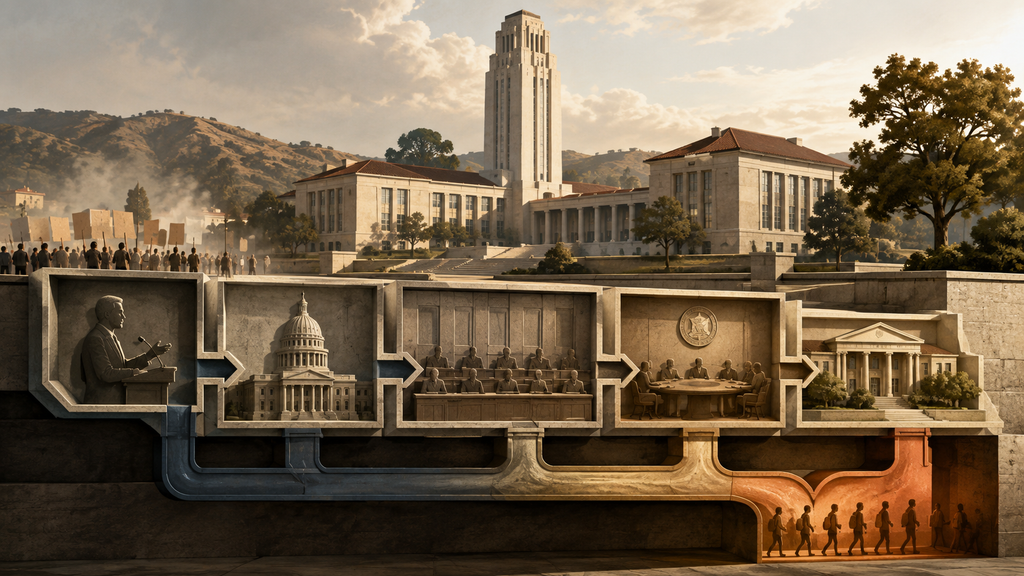
Culture is not simply what becomes popular. It is what gets repeated, rewarded, tolerated, imitated, defended, monetized, and eventually treated as normal. Media accelerates that process by deciding what receives attention. Leadership becomes visible in what people do once attention, pressure, responsibility, or power arrives.
This territory studies the systems underneath all three. The work follows cultural incentives, digital behavior, media narratives, leadership standards, public performance, identity, humor, generational change, diaspora, audience psychology, and the gap between what people say they value and what their behavior actually rewards.
The Culture, Media & Leadership Principle
What a culture rewards, it eventually produces.
Attention creates incentives. Incentives shape behavior. Repeated behavior creates norms. Norms become culture. Leadership either reinforces that system, challenges it, or reveals that it never understood the system at all.
Start Here
Culture becomes easier to read once you stop treating every trend as an isolated event. Start with behavior, incentives, or standards, then follow the pattern underneath.
Behavior
Real Talk Blueprint
Examine the behavior people explain away before they examine it, with cultural observation, humor, accountability, and plain language.
Incentives
Culture Ledger
Trace how media systems, markets, audiences, institutions, platforms, and public incentives shape cultural behavior.
Standards
The Front Porch Audit
Use ordinary behavior, humor, work ethic, responsibility, and common sense to reveal what character looks like in practice.
Real Talk Blueprint: When Behavior Tells the Story First
Rochelle “Ro” Hayes builds Real Talk Blueprint around a simple premise: people often reveal the truth through behavior long before they are ready to explain it.
The series examines accountability, public performance, social expectations, humiliation, communication, attention, gender discourse, cultural contradictions, transactional behavior, and the everyday stories people tell themselves to avoid uncomfortable conclusions.
Humor matters here because some truths become easier to recognize once the performance surrounding them is made visible. However, the joke is never the destination. The work still has to expose the pattern.
Real Talk Blueprint asks the question people often skip: what does the behavior say when the explanation and the evidence do not match?
Explore Real Talk Blueprint
Culture Ledger: Follow the Incentive Beneath the Trend
Cultural behavior becomes easier to understand once the incentives become visible.
André Toussaint builds Culture Ledger around the systems that turn attention into behavior. The series follows media logic, consumer influence, cultural economics, leadership incentives, public signaling, institutional behavior, platform dynamics, and the structures that determine which ideas receive amplification.
The ledger metaphor matters. Culture produces debits and credits. Some behaviors create trust while others spend it. Some institutions borrow credibility from audiences without rebuilding it. Some trends look spontaneous until the reward system underneath them is examined.
The useful question is rarely just what became popular. It is what made this behavior worth repeating?
Explore Culture Ledger
Media Literacy: Read the Incentive Before Sharing the Story
Modern media does more than distribute information. It competes for attention.
That distinction changes everything. Headlines must travel. Clips must hold attention. Creators need reaction. Platforms need engagement. Audiences reward material that confirms identity, produces emotion, or creates an immediate reason to respond.
As a result, context can lose to packaging and certainty can outperform accuracy. A partial story may travel farther than a complete one simply because the partial version creates a cleaner emotional response.
Media literacy therefore requires more than deciding whether an outlet is trustworthy. It requires understanding how the information environment rewards the story you are seeing.
The Front Porch Audit: Character Shows Up in the Small Things
Culture is not only built by institutions, celebrities, platforms, and major public events. It is also built in ordinary behavior.
Darius “Dee” Colson builds The Front Porch Audit around work ethic, humility, consistency, humor, responsibility, maintenance, judgment, character, and the small habits people repeat when nobody expects those habits to become evidence.
The porch is the observation point. The standard is practical. Does the person show up? Do they take care of what belongs to them? Can they laugh without humiliating someone? Do they work or only talk about work? Can their word carry weight?
Big claims become easier to evaluate once ordinary conduct enters the record.
Explore The Front Porch Audit
Kitchen Table Politics: Bring the Public Debate Back Home
Political arguments change when they reach the kitchen table.
Kitchen Table Politics, also built by Darius “Dee” Colson, examines public issues through household consequence. The series asks what politics means once the campaign language is stripped away and the effects reach groceries, bills, schools, work, neighborhoods, taxes, safety, opportunity, and family decisions.
This is not politics as team loyalty. It is politics measured against ordinary life.
The kitchen table has a way of correcting rhetoric because somebody eventually has to pay the bill.
Explore Kitchen Table Politics
This Is Us (But Funnier): Laugh at the Pattern Long Enough to See It
Some human behavior is difficult to explain seriously because the contradiction is already doing half the comedy.
Micah Green builds This Is Us (But Funnier) around the excuses, contradictions, avoidance patterns, social scripts, habits, and everyday absurdities people recognize immediately because most of us have participated in them.
The humor creates recognition without removing accountability. A person can laugh at the pattern and still notice that the pattern is costing time, trust, money, energy, or opportunity.
Sometimes the shortest path to clarity is realizing how ridiculous the excuse sounds once somebody says it out loud.
Borderlines: How Culture Travels
Culture does not stop at a border.
Isabella Jean Ramírez builds Borderlines around diaspora, migration, memory, language, identity, belonging, family, cultural inheritance, and the invisible lines people carry even after geographic boundaries have been crossed.
The series looks at how culture travels across generations and places. Language changes. Traditions adapt. Families reinterpret home. Children inherit identities they did not personally migrate with. Over time, belonging becomes something constructed through memory, relationship, ritual, and negotiation.
Borderlines makes those cultural transitions visible without flattening them into a simple story about assimilation or nostalgia.
Explore Borderlines
Young, Black & Not Buying It: Read the Generational Shift
Younger generations inherit cultural scripts. They are not required to keep all of them.
Nia Brooks builds Young, Black & Not Buying It around the choices younger Black adults make when they begin questioning inherited expectations about identity, work, style, success, respectability, consumer behavior, masculinity, femininity, social performance, and what adulthood is supposed to look like.
The work is not built around rejecting everything older generations valued. It examines where the inheritance still works, where conditions changed, and where younger people are quietly rewriting the code.
The important question is not whether the new behavior looks different. It is whether the new pattern creates more capability, stability, dignity, and room to build.
Explore Young, Black & Not Buying It
How Culture Becomes Normal
Cultural change often looks sudden only because most people notice it late.
A behavior appears. Someone receives attention for it. Other people copy the behavior. Platforms distribute the imitation. Brands or institutions notice the audience. Language develops around the pattern. Repetition removes some of the original friction.
Eventually, what once looked unusual begins to look ordinary.
The same process can strengthen good behavior or normalize destructive behavior. The mechanism does not care. It responds to reward.
Culture, Media & Leadership follows that movement:
signal → attention → incentive → imitation → repetition → norm → culture.
Leadership Becomes Visible Under Pressure
Leadership is easy to perform when the incentives are aligned and the consequences are distant.
Pressure changes the test. A leader has to choose between standards and applause, correction and avoidance, truth and convenience, responsibility and reputation.
Culture tells people what behavior is likely to be rewarded. Leadership determines whether the reward system should remain intact.
That is why leadership belongs beside culture and media. Leaders do not operate outside the cultural system. They either become governed by its incentives or develop enough clarity to govern their response to them.
The Culture, Media & Leadership Map
Use this map to identify the lens that best fits the cultural pattern you are trying to understand.
|
Question |
Series |
What It Helps You See |
|---|
|
What does the behavior actually reveal? |
Real Talk Blueprint
|
Accountability, performance, contradictions, social behavior |
|
What incentive is producing the cultural pattern? |
Culture Ledger
|
Media, markets, platforms, attention, institutional incentives |
|
What does ordinary behavior reveal about character? |
The Front Porch Audit
|
Standards, work ethic, responsibility, judgment, consistency |
|
What happens when politics reaches ordinary households? |
Kitchen Table Politics
|
Household consequences, public policy, everyday political reality |
|
Why do we keep doing this? |
This Is Us (But Funnier)
|
Avoidance, excuses, contradictions, everyday absurdity |
|
How does identity travel across generations and borders? |
Borderlines
|
Diaspora, belonging, language, migration, memory, identity |
|
Which inherited cultural scripts are younger generations rewriting? |
Young, Black & Not Buying It
|
Generational change, identity, style, expectations, cultural adaptation |
Questions We Build Around
Culture, Media & Leadership is built around durable questions about influence, media literacy, cultural behavior, leadership, identity, attention, and social change.
How does social media shape behavior?
Why does outrage spread so quickly online?
How do algorithms influence culture?
Why is trust in media changing?
What makes online accountability become humiliation?
How do cultural norms become normal?
What does good leadership look like under pressure?
Why does public performance change private behavior?
How does identity change across generations?
How does migration shape cultural identity?
Why do people confuse attention with influence?
How can humor reveal cultural contradictions?
Builders Inside Culture, Media & Leadership
Culture is too broad for one voice. Each builder works a different part of the territory while contributing to the same larger system of cultural literacy.
Rochelle “Ro” Hayes
Real Talk Blueprint
Cultural behavior, accountability, public performance, communication, social expectations, humor, and everyday contradictions.
André Toussaint
Culture Ledger
Cultural systems, media logic, leadership, institutions, attention, consumer behavior, public influence, and incentive structures.
Darius “Dee” Colson
The Front Porch Audit · Kitchen Table Politics
Character, standards, work ethic, responsibility, humor, public issues, household consequences, and plain-spoken accountability.
Micah Green
This Is Us (But Funnier)
Everyday contradictions, avoidance, social scripts, excuses, behavioral patterns, and humor as a vehicle for recognition.
Nia Brooks
Young, Black & Not Buying It
Generational culture, Black identity, changing expectations, consumer behavior, style, adulthood, and cultural adaptation.
Isabella Jean Ramírez
Borderlines
Diaspora, migration, language, memory, belonging, cultural inheritance, identity, and the ways culture moves between places and generations.
Culture Is a System, Not Background Noise
Culture can feel invisible precisely because people live inside it.
It influences what looks respectable, embarrassing, desirable, normal, masculine, feminine, successful, offensive, funny, fashionable, trustworthy, ambitious, or worth paying attention to.
Media distributes those signals. Audiences reinforce them. Institutions respond to them. Markets monetize them. Leaders either challenge the incentive structure or learn to perform inside it.
The purpose of this category is not to tell readers which culture to like. It is to make the machinery visible enough that people can recognize what is shaping them before imitation becomes automatic.
Read the pattern before becoming part of it.
Groundwork Daily examines culture, media, leadership, identity, influence, digital behavior, generational change, public performance, and the incentives shaping what society repeats.
Join the Groundwork List