
Behavior Systems · Groundwork Daily
Behavior Systems
Behavior systems show how structure, discipline, attention, and accountability appear in real life through repeated patterns, decisions, and outcomes.
Behavior systems explain why people keep repeating patterns even when they want different results. Most people experience behavior as isolated moments: one decision, one mistake, one reset, or one strong start that fades. However, that framing hides what is actually happening.
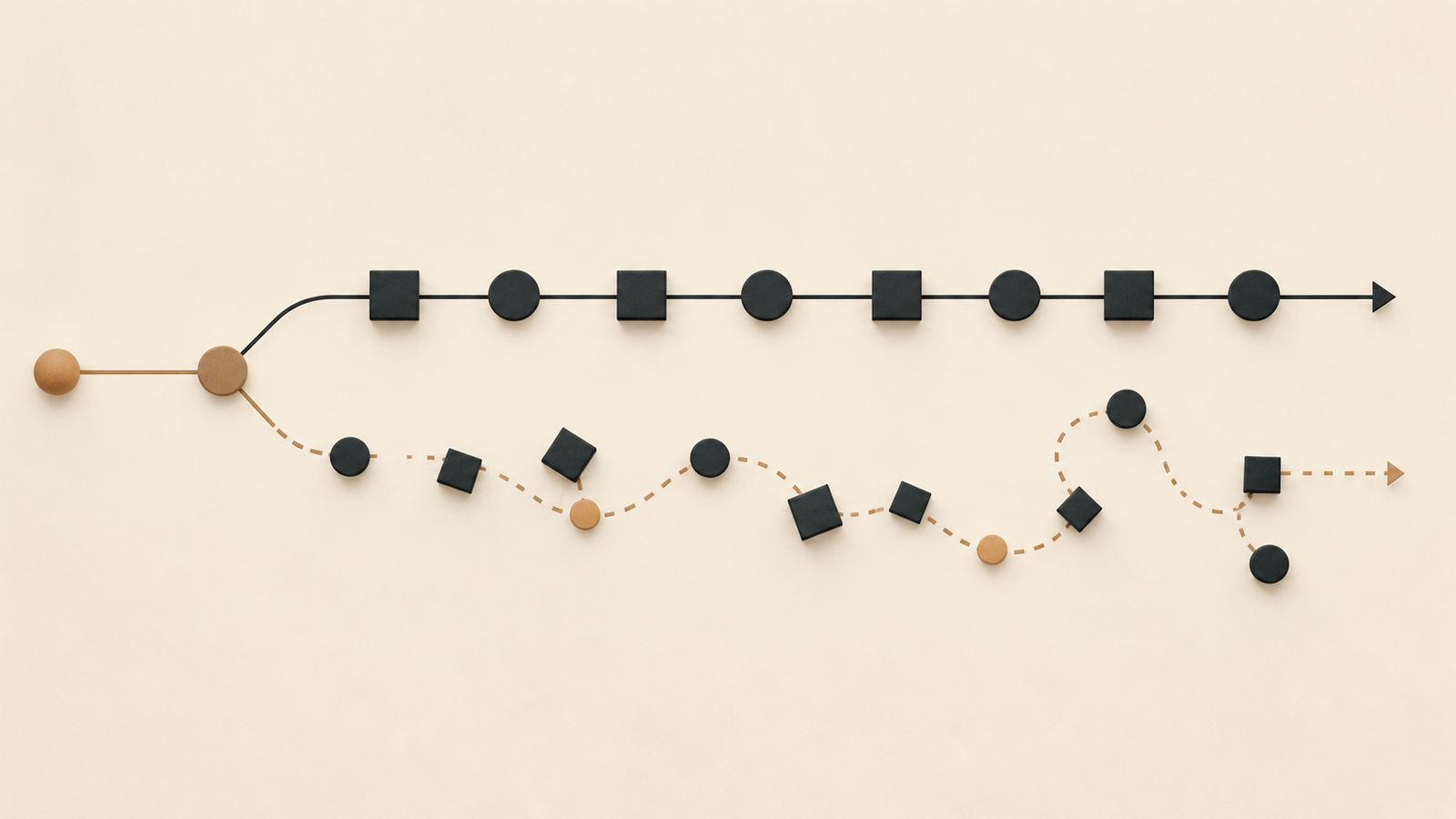
In reality, behavior is rarely random. Instead, it follows conditions. It responds to pressure, incentives, attention, emotion, and structure. As a result, when those conditions stay the same, the outcome usually repeats.
For that reason, this section is built for pattern recognition. It helps readers see what keeps happening, why it keeps happening, and what structure is quietly producing the result.
What Behavior Systems Reveal
Behavior systems do not judge outcomes. Instead, they explain them. More specifically, they show why similar conditions often produce similar decisions, even when intentions change.
When patterns are invisible, people rely on effort. They promise to do better, push harder, restart the plan, or blame themselves for lacking discipline. However, effort alone rarely changes the structure producing the behavior.
Once a pattern becomes visible, the problem changes. At that point, the question is no longer, “Why did this happen again?” Instead, the better question becomes, “What structure keeps making this outcome likely?”
Patterns reveal behavior.
Behavior reveals structure.
Structure determines outcomes.
Where Behavior Systems Show Up
Behavior systems are visible wherever repeated outcomes appear. While the surface details change, the underlying pattern often stays familiar.
Work
At work, deadlines become urgent. Tasks stack. Priorities shift. Although workload is often blamed, the real issue is usually unclear structure around decisions, timing, ownership, and execution.
Money
With money, income increases, then disappears. Saving starts, then stops. Consequently, the pattern repeats because financial behavior reacts to pressure instead of following structure. This connects directly to The Economic Behavior System.
Relationships
In relationships, consistency breaks. Communication becomes reactive. Trust weakens over time. These are not isolated issues; instead, they reflect patterns of accountability breaking under pressure.
Personal Behavior
On a personal level, progress often depends on energy. When motivation rises, behavior improves and momentum builds. However, when energy drops, structure fails and the reset begins. This is not just a motivation issue; it is structural.
Why Behavior Patterns Repeat
Patterns repeat because the conditions that create them remain unchanged. Too often, people try to fix outcomes without changing the structure producing those outcomes.
This creates a familiar loop:
- Effort increases.
- Temporary progress appears.
- Pressure rises.
- The old structure takes over.
- Progress resets.
Importantly, that loop is not a character flaw. It is a design problem. A person can be sincere, capable, and motivated while still operating inside a structure that makes consistency difficult.
Because of this, behavior must be studied as a system. The pattern becomes the evidence, and the repeated outcome becomes the signal.
How Behavior Systems Connect to Structure
Behavior systems sit between principle and outcome. They show what happens when structure is present, absent, weak, or misaligned.
When structure is clear, behavior has a path. When discipline is active, behavior can repeat. When accountability is present, behavior becomes reliable. Without these conditions, behavior turns reactive and unstable.
This connects directly to The Foundation, where the core principles behind structure, discipline, accountability, and stability are defined.
What Behavior Systems Are Not
This section is not about blame. It is also not about excuses. Both approaches miss the actual problem.
Instead, the stronger approach is structural. It asks what pattern is repeating, what condition is producing it, and what system must change.
As a result, that question leads to more useful work than shame ever will. It replaces vague self-criticism with structural clarity.
Connection to Core Systems
Behavior systems do not operate alone. Rather, they are the visible output of deeper systems.
- The Discipline System
- The Attention Economy System
- The Economic Behavior System
- The Stability Framework
When those systems change, behavior changes. However, when they remain the same, behavior continues to repeat.
How to Use Behavior Systems
Start with the pattern that feels most familiar. If progress keeps resetting, look for the structure that fails under pressure. If money keeps disappearing, examine financial behavior. If communication keeps breaking down, focus on accountability. If attention keeps scattering, look at focus systems.
From there, name the repeat. Then identify the condition. Finally, examine the structure that keeps allowing or reinforcing the behavior.
The goal is not perfection. Instead, the goal is clarity about what is actually repeating.
Behavior does not repeat by accident. It repeats because a structure is allowing it, rewarding it, or failing to interrupt it.
Once the design is visible, change becomes possible. Not because the work becomes easier, but because the right problem is finally being addressed.