

Clarity Comes From Removal, Not Effort
Clarity is not created by doing more. It is created by removing what no longer belongs. Progress begins when interference is reduced.
Groundwork Daily · Foundational Thinking
The Foundation is where Groundwork Daily defines the ideas that everything else stands on. This is the home of core principles and canonical frameworks for structure, discernment, capacity, margin, discipline, accountability, stability, and durability.
These ideas are not slogans. They are operating concepts. They help explain how people make decisions, how systems carry pressure, why some structures endure, and why others fail even when the intentions behind them were good.
When Groundwork uses a foundational term, this is where the language becomes precise.
01 / Start Here
Three questions sit at the center of Groundwork’s decision architecture. Each has a different job. Together, they help determine whether something deserves entry, whether it can be carried, and what carrying it will leave behind.
Judgment
Discernment determines what deserves weight before action. It separates signal from noise, pattern from incident, evidence from desire, and relevant pressure from distracting pressure.
Reliable Load
Capacity is what a person, household, team, or system can reliably carry while preserving function, judgment, recovery, and future usefulness.
Structural Reserve
Margin is the usable space between reliable capacity and current load. It gives pressure somewhere to go before one disruption spreads across the whole system.
02 / A Groundwork Decision Sequence
A commitment can be desirable and still be wrong for the system carrying it. That is why Groundwork separates judgment from capacity and capacity from reserve.
Discernment
→
Capacity
→
Margin
→
Commitment
Discernment asks whether the demand deserves entry.
Capacity asks whether it can be carried reliably. Margin asks what remains after the load is accepted.
03 / Groundwork Daily Core Principles
Frameworks describe mechanisms. Core Principles establish the standards underneath them.
Good structure reduces unnecessary negotiation and chaos. Constraint can create the conditions in which freedom becomes usable instead of theoretical.
Resources cannot create lasting stability when behavior continually consumes what those resources are supposed to build.
Standards become meaningful when behavior remains visible to them. Accountability turns correction into maintenance rather than humiliation.
A structure should be judged by more than whether it works under ideal conditions. It should carry load, receive maintenance, recover, and remain useful over time.
Well-designed systems absorb preventable disorder before people are forced to carry the full cost of weak planning, vague roles, and avoidable chaos.
Stillness protects enough space for observation, judgment, and proportion before urgency or emotion takes control of the decision.
04 / The Condition We Are Building Toward
Stability is not the absence of change. It is the ability to remain functional while conditions change.
That requires more than strength. It requires structure, enough capacity for the load, margin for disruption, recovery when resources are depleted, and standards that survive pressure.
The Groundwork Stability Architecture
Structure creates order.
Discernment protects direction.
Discipline governs repeated behavior.
Capacity defines reliable load.
Margin preserves reserve.
Accountability corrects drift.
Recovery restores function.
Durability proves what the structure can hold.
05 / One Architecture
A useful foundation should travel. These ideas should still work when the subject changes.
Money
Structure governs cash flow. Discipline protects it. Capacity determines what can be carried. Margin determines whether one expense becomes a crisis.
Relationships
Discernment reads patterns. Boundaries protect capacity. Margin leaves room for ordinary human imperfection and repair.
Work
Reliable capacity separates sustainable output from temporary heroics. Margin prevents one disruption from becoming operational collapse.
Leadership
Stillness protects decision space. Discernment assigns weight. Accountability keeps the standard visible after the decision.
Community
Durable systems distribute responsibility instead of depending permanently on the same people to absorb every shock.
Personal Life
That question often reveals weak structure, thin margin, hidden load, or a commitment that good discernment should reconsider.
06 / Use the System
More effort is not always the answer.
Sometimes the structure is weak. Sometimes the load exceeds reliable capacity. Sometimes there is no margin left. Sometimes discipline has slipped. Sometimes the problem should never have entered the system in the first place.
Is the structure clear?
Does this deserve to be carried?
Can it be carried reliably?
What margin remains afterward?
What restores the system?
What standard identifies drift?
Will what we are building still hold when conditions change?
Those are Foundation questions. They are designed to outlast the trend, crisis, or headline that may have brought you here.
07 / More From The Foundation
The canonical pages above establish the architecture. The Foundation archive below extends those ideas through essays, applications, reflections, and supporting frameworks.
The Groundwork
The strongest part of a structure is often the part nobody notices while it is working.
Good foundations are like that. They turn chaos into load, load into structure, structure into stability, and stability into enough freedom to build something larger.
Do not begin with how high you want to build.
Begin with what will have to hold it.
Build better. Every day.
Clarity is not created by doing more. It is created by removing what no longer belongs. Progress begins when interference is reduced.

Letting go is not emotional. It is structural. You are not stuck because you cannot move forward. You are stuck because you have not removed what no longer belongs.

People chase attention online because it provides visible feedback and signals importance. In the attention economy, likes, views, and shares reinforce behavior, creating a system where attention becomes a goal instead of a byproduct. Over time, this shifts how people act, create, and engage.
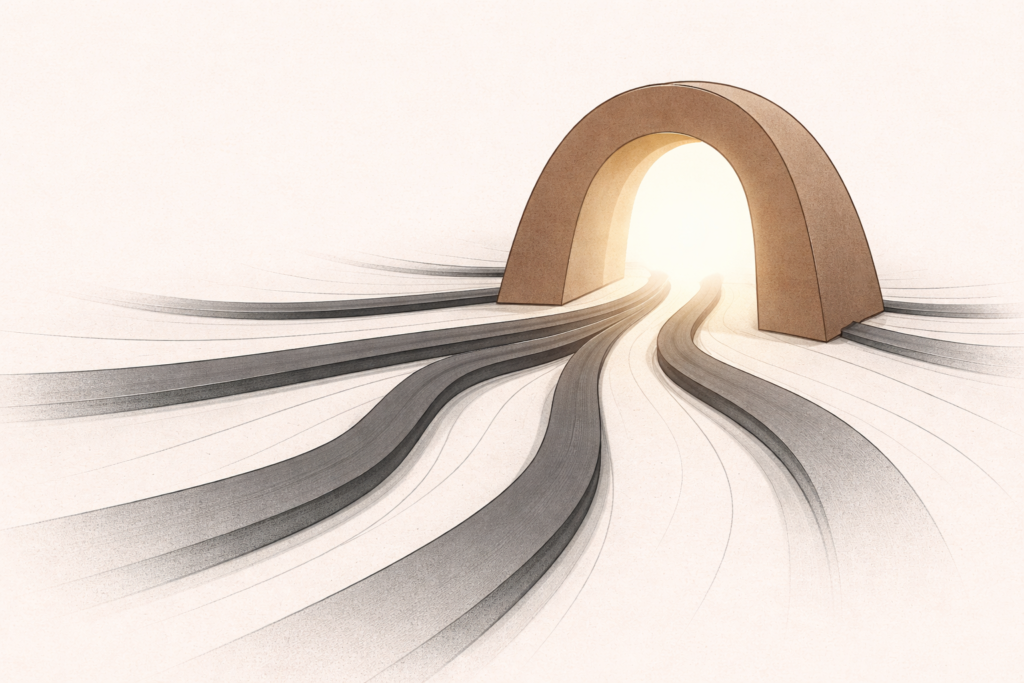
Viral content spreads quickly, but speed does not equal value. In the attention economy, visibility is easy to measure while impact is not. This creates a system where content that performs well dominates, even when it lacks substance or lasting relevance.
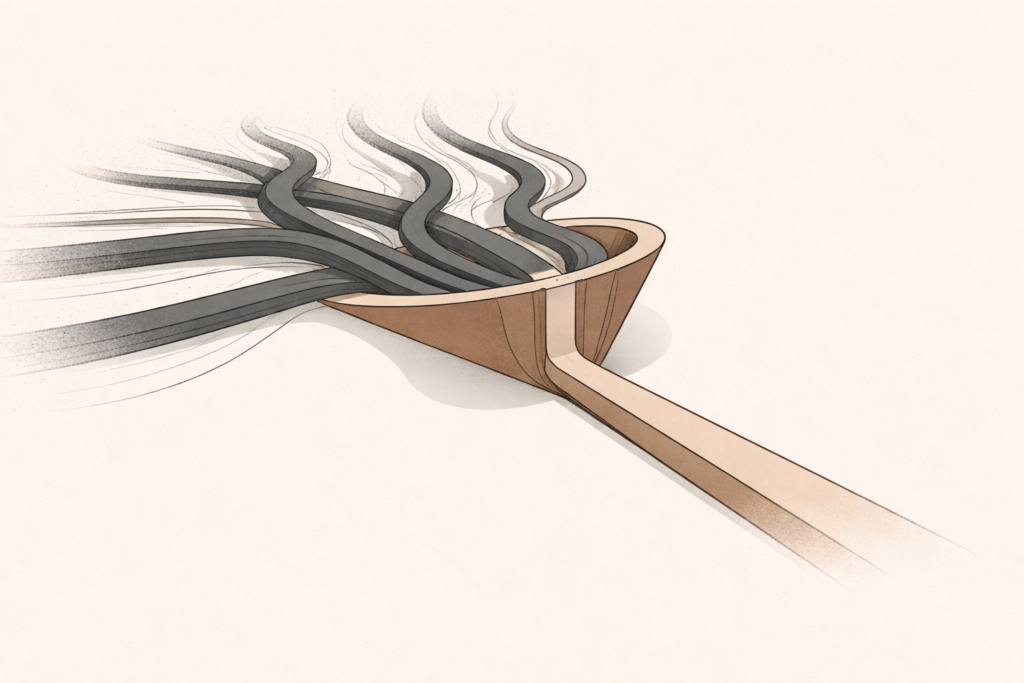
Algorithms control what you see by filtering content based on your behavior. They track engagement signals like clicks and watch time, then prioritize similar content. Over time, this creates a personalized feed that reinforces patterns, limits exposure, and shapes how information appears in the attention economy.
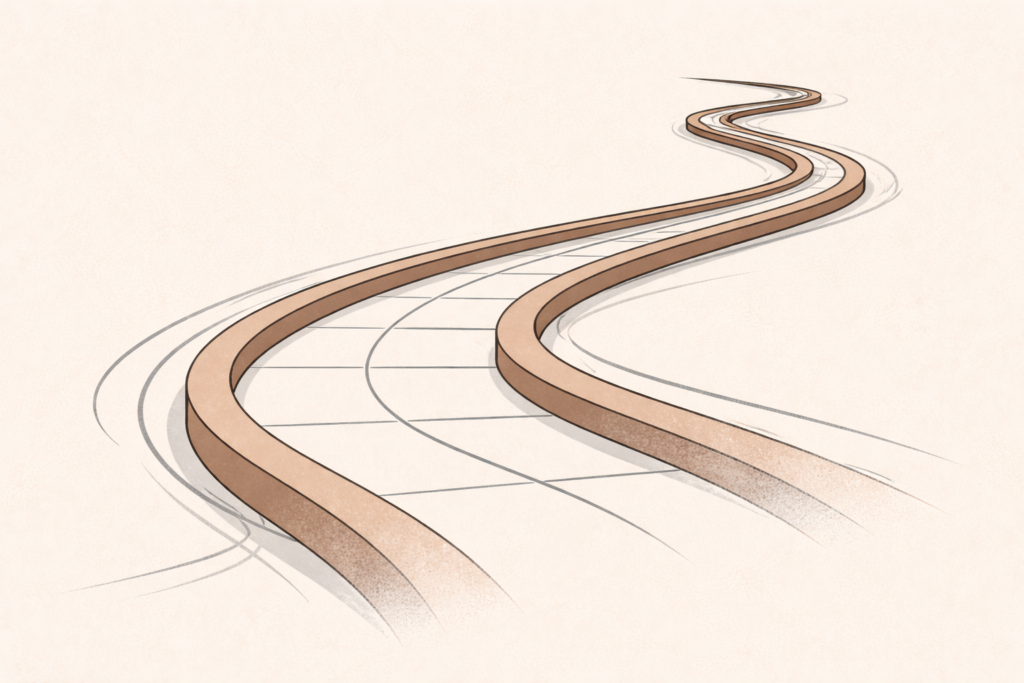
Social media is hard to quit because it removes stopping points. Endless content, personalized feeds, and continuous engagement loops keep users scrolling without interruption. In the attention economy, this design creates a system where leaving requires effort, making constant use feel easy and stopping feel difficult.
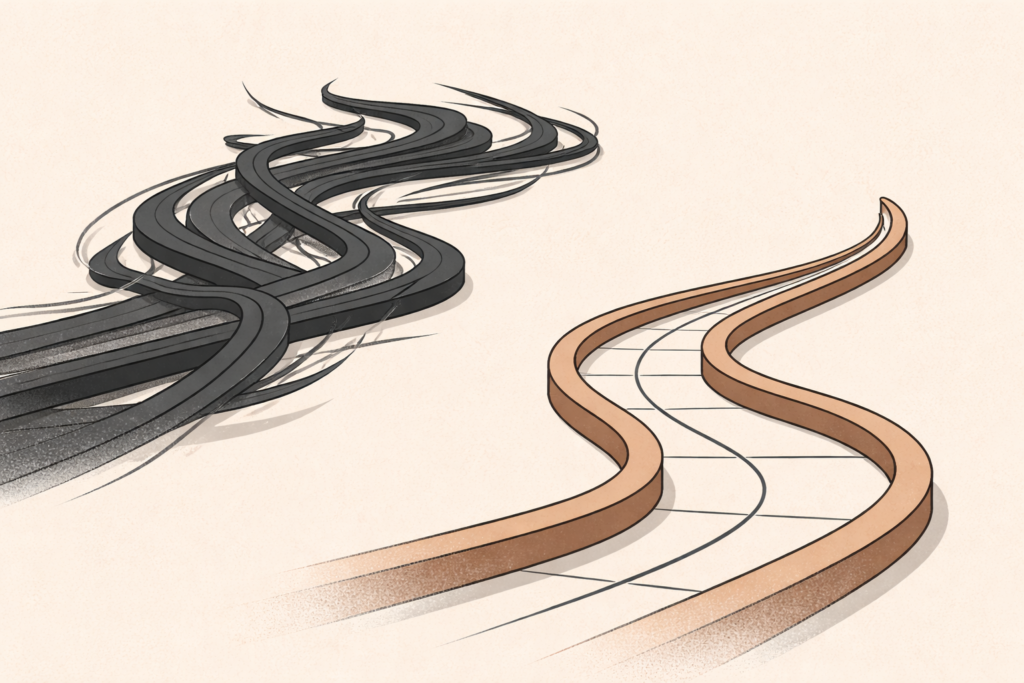
Negative content spreads faster because it triggers faster reactions. In the attention economy, emotional intensity drives engagement, and engagement drives visibility. This creates a system where speed beats accuracy and reaction outperforms reflection, allowing negative content to dominate what people see online.

Feeling stuck is not a failure of effort. It is a failure of structure. When too many things stay active, progress slows to a halt.

You are not stuck. You are overloaded.
Too many active inputs, too many unresolved decisions, too much competing for the same space.
Clarity does not return by adding more. It returns through removal.
Clear the structure.
Then move.

Stability is not a feeling you chase. It is a system your structure produces. Life, money, and institutions hold when the design can absorb pressure.

Is the attention economy addictive? Not exactly. It operates through reinforcement loops that shape behavior over time. By removing stopping points and adapting to your actions, platforms keep you engaged longer, creating patterns that feel difficult to break but are driven by design, not dependency.
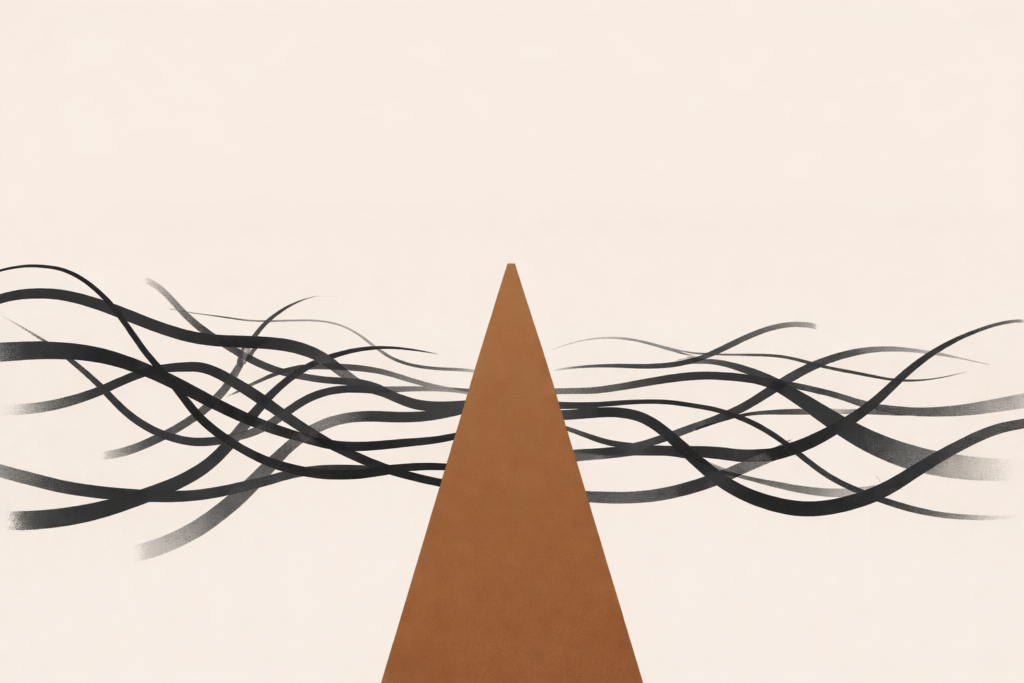
Distraction is not accidental. It is engineered. Learn how to take control of your attention with simple, structured habits that protect your focus in a system designed to capture it.