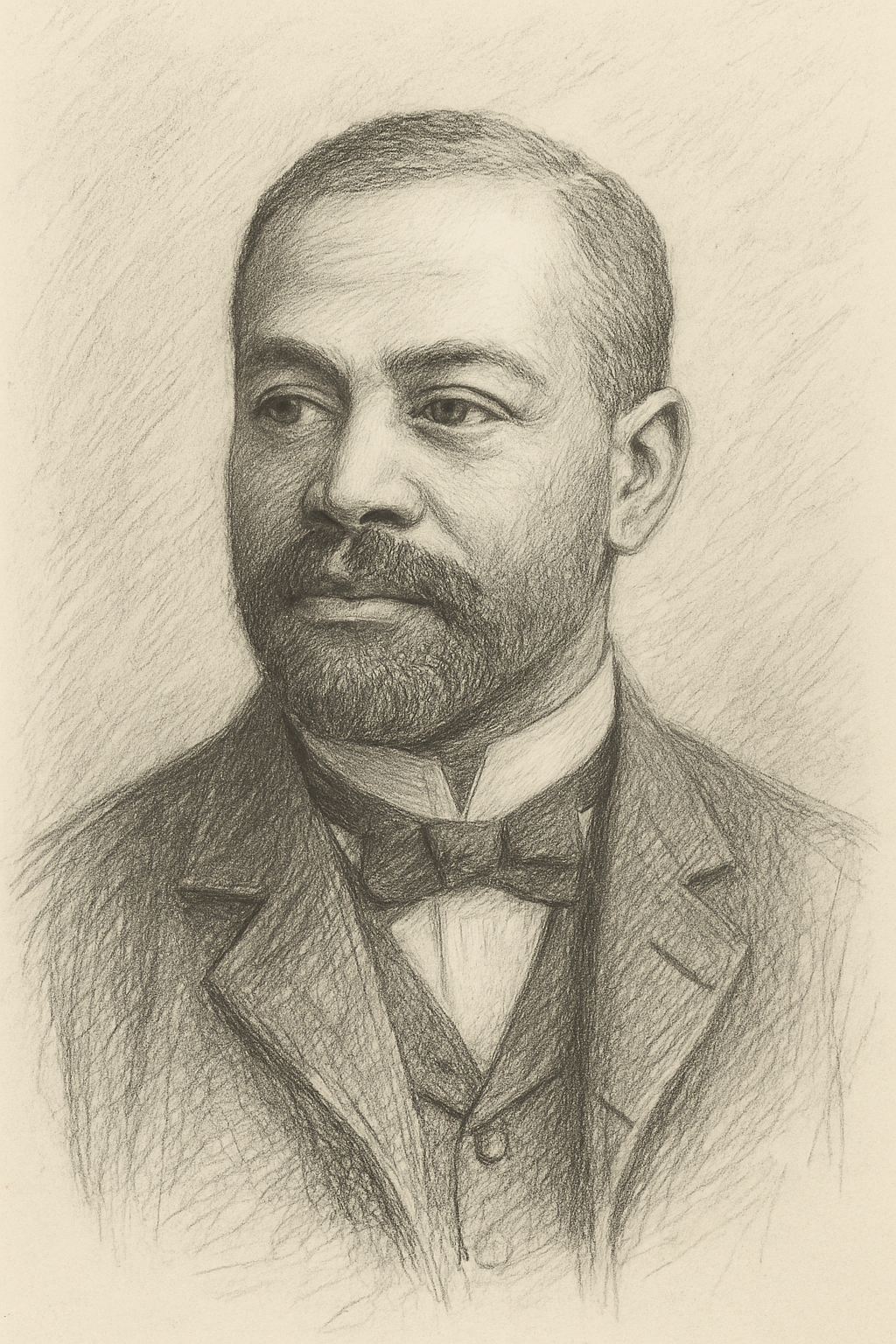
Solomon Carter Fuller is recognized as one of the earliest physicians to treat Alzheimer’s as a disease of the brain instead of a natural feature of aging. He worked in the lab with a microscope, a case file, and a stubborn belief that there was a pattern inside the brain that could be named, mapped, and shared.
In 1912, Solomon Carter Fuller published what is now recognized as the first comprehensive English-language review of Alzheimer’s disease. The paper combined translation, pathology, and original observation in a single piece of work. It was not a press release. It was infrastructure. Fuller quietly built the framework that let the rest of the field see Alzheimer’s as a specific disease of the brain instead of a vague collapse of the mind.
The early study of Alzheimer’s disease relied heavily on international research exchanges, including the foundational work of leading Alzheimer’s researchers who expanded the disease model through pathology and case studies.
Fuller’s 1912 paper, “Alzheimer’s disease: The report of a case and review of published cases,” is widely cited as the first full English review of the condition, including his own case and a translation of Alois Alzheimer’s original report on Auguste Deter.
The Case File And The Logic Behind It
Solomon Carter Fuller trained as both a pathologist and a psychiatrist before arriving in Germany to work with Alois Alzheimer and Emil Kraepelin. While others focused on outward symptoms, he followed the discipline of the autopsy table. Slice by slice, stain by stain, he mapped the internal structure of the disease.
His 1912 report did three crucial things at once. First, he translated Alzheimer’s original German description of Auguste Deter into English, allowing a wider community of physicians to understand the emerging condition. Second, he mapped the characteristic pathology inside the brain: the plaques and tangles that still define Alzheimer’s today. Third, he contributed his own case, one of the earliest documented instances recognized as Alzheimer’s disease.
Instead of treating each patient as an isolated tragedy, Solomon Carter Fuller organized them as data. He compared brain tissue, cross-referenced clinical notes, and searched for patterns that held across countries and languages. What emerged was not another case report but an early operating manual for identifying the disease within the brain.
This was the level of precision Fuller brought to every case he studied, refusing to separate outward symptoms from their biological roots.
Fuller’s descriptions of plaques and tangles helped move Alzheimer’s from a vague notion of senility toward a structured disease model rooted in observable biology.
Born in Monrovia, Liberia, in 1872 to parents connected to the legacy of formerly enslaved Black communities, Solomon Carter Fuller grew up within a lineage shaped by resilience, discipline, and determination. He arrived in the United States as a teenager to study medicine and walked into institutions that did not expect a Black physician to lead, much less redefine a new field of brain science.
By the time he began his research on dementia, Solomon Carter Fuller had assembled a toolkit grounded in clinical practice, pathology, language translation, and cross-cultural study. He was not simply treating patients; he was mapping the systems that labeled them, identifying their failures, and building a clearer structure for how the brain and its disorders were understood.
A Life Built In Fragments
Fuller’s path was shaped by discipline and adversity. Born in Liberia, he came to the United States as a teenager to study medicine. He trained at Boston University School of Medicine, completed an internship at Westborough State Hospital, and built a career in environments where Black physicians had to outwork, outthink, and outlast the barriers placed around them.
He studied in Munich with Alzheimer as part of a small cohort of international assistants. When Solomon Carter Fuller returned to Massachusetts, he brought sharpened laboratory skills and a refined interest in neuropathology. At home, despite his expertise, he faced lower pay, limited advancement, and racial hostility from neighbors intent on pushing his family out.
Still, he kept building. Fuller spent decades teaching and practicing at Boston University and later at Tuskegee Veterans Hospital, where he trained Black psychiatrists who served Black war veterans. His work was scientific, but its impact was human: ensuring accurate diagnosis, fair treatment, and professional pathways for those the system overlooked.
Across each stage of his career, Solomon Carter Fuller treated careful observation as a form of respect. He paired scientific discipline with a clear understanding of who his work was meant to serve.
The Modern Echo Of Solomon Carter Fuller’s Alzheimer Framework
Today’s clinical language for Alzheimer’s disease sits on Fuller’s early framework. The distinctions between dementias, the reliance on pathology and imaging, and the expectation that disease is defined by structure rather than story all trace back to his precision.
Modern diagnostic pipelines use brain imaging, spinal fluid markers, and genetics. Yet the underlying logic remains the same: structural change inside the brain produces a predictable form of cognitive decline. Solomon Carter Fuller helped move Alzheimer’s from anecdote to architecture, enabling clinical trials, prevention strategies, and global conversation around aging.
His story also challenges how we understand visibility in scientific history. Alzheimer’s disproportionately affects Black communities, yet Black patients remain underrepresented in research. The fact that one of the field’s earliest architects was a Black physician who trained others to serve marginalized patients should reshape how we talk about equity in neuroscience today.

Solomon Carter Fuller And The Architecture Of Understanding
What Fuller built was a framework, not a spectacle. He created an architecture of understanding grounded in translation, comparison, and the belief that dementia was a physical condition requiring precision—not a moral failing requiring judgment.
Architecture like this does not announce itself. It hides inside decisions that seem obvious only later: shared criteria, comparable cases across borders, and research published in languages the field could use. Solomon Carter Fuller chose structure over noise.
Just as engineers design bridges that hold more weight than anyone notices, Fuller designed conceptual scaffolding that underlies decades of Alzheimer’s research and policy. His name is not on every study, but the logic inside them carries his imprint.
For anyone building better systems, Solomon Carter Fuller is a blueprint for disciplined, infrastructure-first thinking that privileges clarity over spotlight.
The Groundwork For Us
Groundwork culture teaches that progress begins with definition, accuracy, and patience. Fuller lived these values long before they had a name. He focused on what he could control: the work, the method, the standard. He trained people who carried that standard into communities that needed it most.
In a world that often chooses narrative over structure, Solomon Carter Fuller reminds us to build the spine first. Translate knowledge so it becomes usable. Document patterns so they outlive you. Train others so the work becomes communal, not individual.
Innovation is not only about being first. It is about being foundational. Fuller did not only discover something—he built the architecture of understanding that everyone else now stands on.
- The Original Architects: Elijah McCoy, Reliability, the Standard, and the Architecture of Motion
- Garrett Morgan and the Third Signal: Building Time into Safety
- The Original Architects: Alice H. Parker, the Furnace, the Blueprint, and the Architecture of Warmth
- Explore the full Foundation Innovators collection