
Author name: Langston Reed

Langston Reed is a civic strategist and former city planner who examines how policy and infrastructure shape daily life. At Groundwork Daily, he focuses on the mechanics of power—budgets, data, and design—and what they reveal about public priorities. His work breaks complex systems into plain language, showing how accountability begins with understanding how things work.

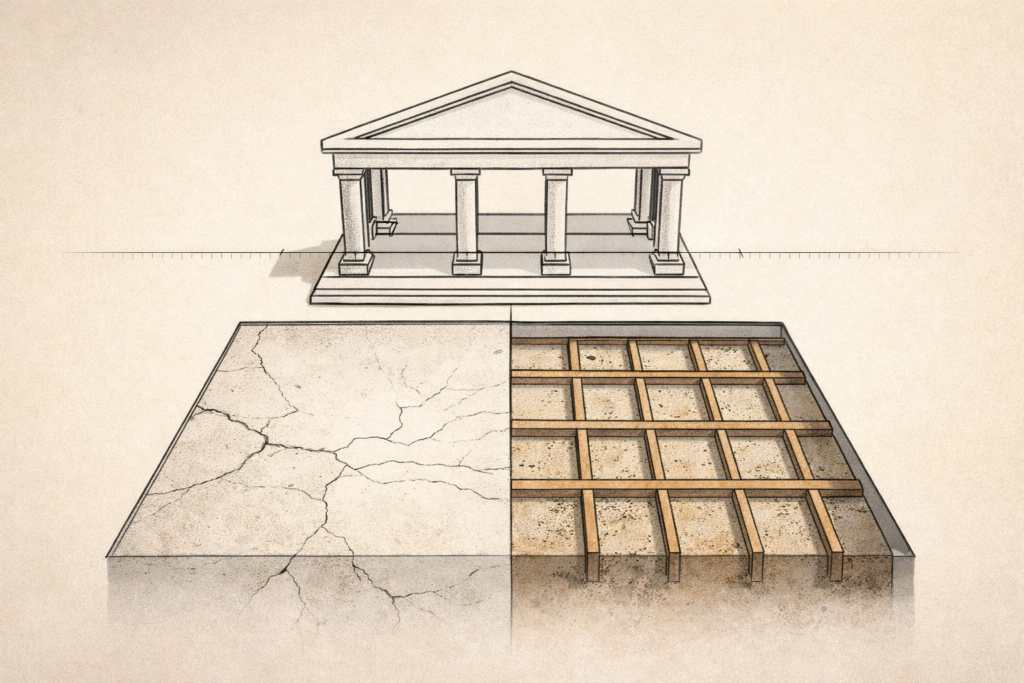
Minimalist civic structure illustration showing two structural pillars representing the historical recognition of Juneteenth within American civic memory.
Civic Power & Policy

Juneteenth: From Community Memory to National Recognition

Juneteenth is more than a federal holiday. It represents a long civic journey from community remembrance to national recognition. For generations Black communities preserved the memory of emancipation through gatherings, readings, and celebration before the country formally acknowledged it. Understanding that history reveals how cultural memory often becomes the foundation of national recognition.

Minimalist architectural illustration showing four structural frameworks progressing left to right, representing shifts in Black identity labels from Reconstruction through modern ethnic framing, with reinforced beams and evolving institutional structure.
Civic Power & Policy

From Freedmen to African American: How Labels Shifted Power

From “Freedmen” to “African American,” the evolution of Black self-identification reflects more than language change. It reveals how naming conventions shaped political power, cultural maturity, and institutional recognition. This analysis traces how labels shifted across eras, how the 1988 Chicago consensus influenced national adoption, and why identity terms remain strategic tools in the negotiation of citizenship and lineage.

Scroll to Top