
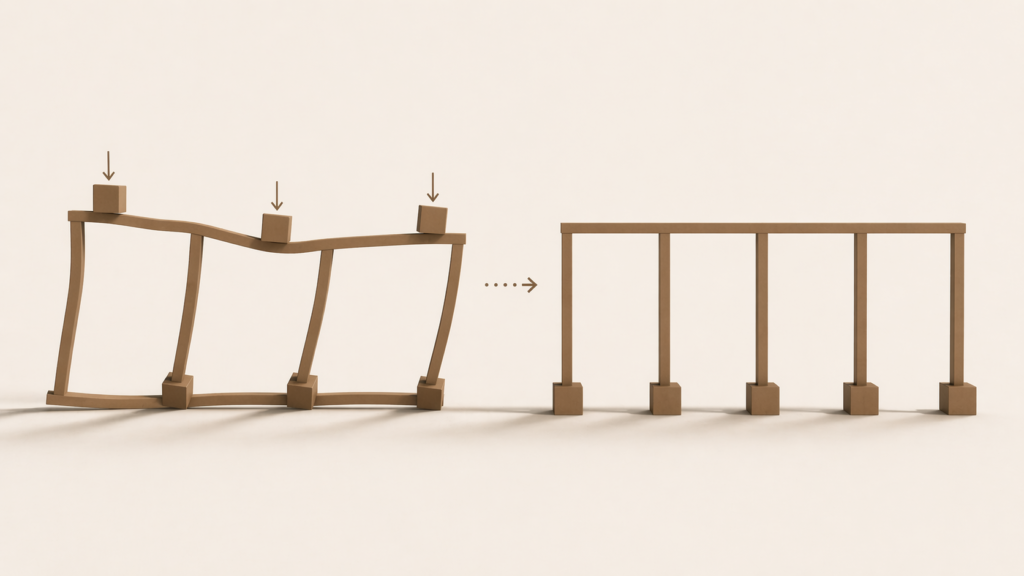
When Accountability Feels Like Control
Accountability often feels like control when past experience distorts perception. This post explains the difference between structure and dominance, and how to recognize healthy accountability.

Accountability often feels like control when past experience distorts perception. This post explains the difference between structure and dominance, and how to recognize healthy accountability.

Your system is not failing all at once. It is failing in signals. Learn the 5 early signs before breakdown becomes collapse.

April 2026 pushed Groundwork Daily beyond maintenance and into reinforcement. Capacity, contribution, attention, and control became the month’s defining systems.

A system can appear stable while relying on hidden labor beneath it. The care economy is not supplemental. It is infrastructure. Until it is recognized, every visible outcome will be misread and mismanaged.

There is a ministry in presence. The quiet act of being with someone when words have nothing to offer. A moment can hold more truth than a speech. Connection does not require noise. It requires willingness.

Accountability does not fail all at once. It breaks down in stages, from drift to collapse, creating friction, confusion, and loss of trust.

Consistency is not built through intensity. It is built through alignment over time. When actions stabilize into repeatable patterns, trust begins to form. What looks like discipline is often just structure held long enough to become predictable.

Black prom culture is often judged at the level of spectacle. This piece argues that the real story is structural: visibility, status, family labor, and the misalignment between celebration and long-term reward.

Clarity is not created by doing more. It is created by removing what no longer belongs. Progress begins when interference is reduced.

Letting go is not emotional. It is structural. You are not stuck because you cannot move forward. You are stuck because you have not removed what no longer belongs.

People chase attention online because it provides visible feedback and signals importance. In the attention economy, likes, views, and shares reinforce behavior, creating a system where attention becomes a goal instead of a byproduct. Over time, this shifts how people act, create, and engage.

Viral content spreads quickly, but speed does not equal value. In the attention economy, visibility is easy to measure while impact is not. This creates a system where content that performs well dominates, even when it lacks substance or lasting relevance.