

Work Hands: What the Job Teaches Back
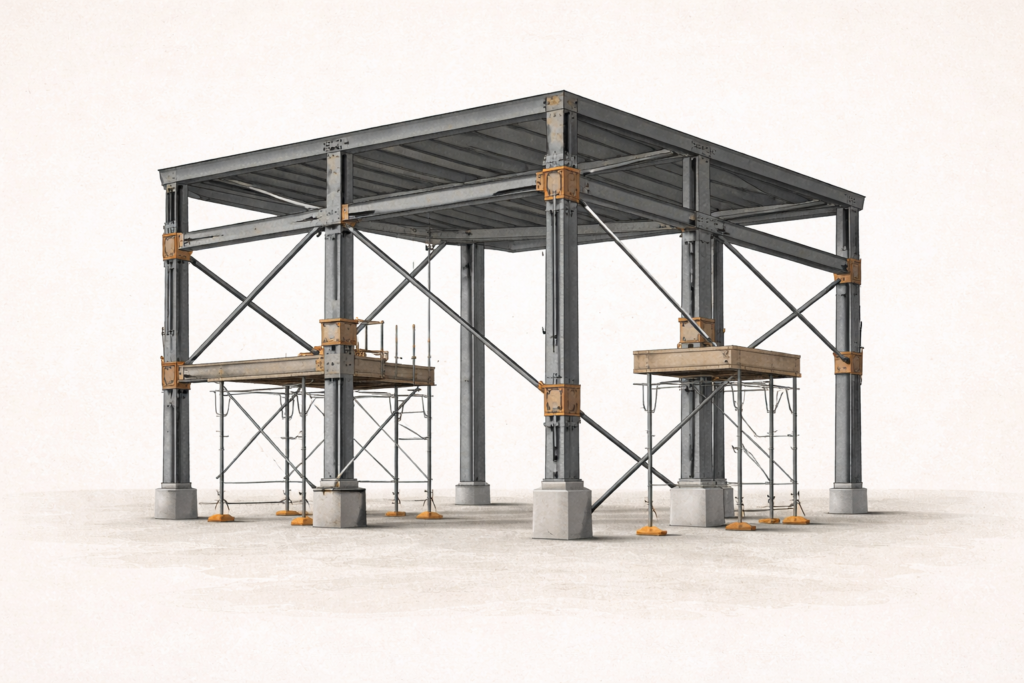
The job always responds. Work Hands captures what skilled labor teaches back when discipline meets real conditions.
The world is moving faster than institutions, and capability has become the new credential.
Education & Skills is where tools, frameworks, and systems thinking come together to build
clarity, structure, and real-world adaptability. This is not about degrees. It is about the
skills that make you steady under pressure, able to interpret change early, and capable of
making disciplined moves in shifting conditions.
This category includes the full Future Literacy series, clarity models, bandwidth audits,
structural thinking, capability tiers, and practical systems that help you operate with
intelligence and calm even when the environment accelerates. These are the mental structures
that support stability and upward capability at scale.
Future Literacy is a ten-part series on capability in a fast world. It focuses on the skills
that help you think clearly under pressure, protect your bandwidth, read patterns early, and
design a daily structure that holds up when conditions keep shifting.
Inside the series you will find work on clarity, decision hygiene, systems thinking,
pattern recognition, and a daily frame that makes all of it usable in real life.
Explore the full Future Literacy series
Pattern Recognition · Note
Pattern recognition is the skill of noticing what repeats, what changes, and how those
shifts tend to play out over time.
Paired with systems thinking, it turns random events into readable signals. That is how
Future Literacy moves from theory into daily decisions.
Receipts
Pew Research Center
Household, work, and capability trends.
Harvard Business Review
Clarity, cognitive load, and decision frameworks.
OECD Skills Outlook
Global skill requirements and shifting capability landscapes.
The job always responds. Work Hands captures what skilled labor teaches back when discipline meets real conditions.

The modern world overwhelms by design. The real skill is filtering the noise and protecting your clarity. Discernment is the new competitive advantage.

Most decisions are made without full clarity. This post explains how disciplined judgment operates when information is incomplete.

Stay steady when motivation fades. Habits and systems carry progress when the spark disappears and the mood stops cooperating.
Discipline only lasts when it becomes process. Work Hands shows how skilled labor turns standards into repeatable systems.

Accountability keeps the weight off by turning discipline into a shared practice instead of a solo struggle.

Behavior follows incentives more reliably than morals. This Rational Field entry examines how structure shapes outcomes long before intention enters the equation.
Skilled labor discipline is built through preparation, repetition, and respect for materials that do not negotiate. The Work Hands series opens with work that holds under pressure.

Skills do not disappear suddenly. They fade through neglect. This post explains why capability decays and how maintenance preserves relevance.

Correlation shows patterns, not causes. This Rational Field entry explains why confusing the two undermines disciplined reasoning.

Learning rarely happens in ideal conditions. This post explores how to build capability and adapt effectively under real-world constraints.
Recovery is not quitting. It is the biological system that makes discipline sustainable instead of destructive.