

Digital Sovereignty and the Future of Cross-Border Regulation
Digital sovereignty is redefining how nations regulate platforms, data, and cross-border harm. As digital infrastructure ignores borders, regulatory power is being rebuilt in real time.
Digital sovereignty is redefining how nations regulate platforms, data, and cross-border harm. As digital infrastructure ignores borders, regulatory power is being rebuilt in real time.

The Tenderism story reveals a deeper lesson about modern economics. Viral attention creates value, but only ownership determines who keeps it. In the creator economy, intellectual property protection is the difference between temporary visibility and lasting leverage.
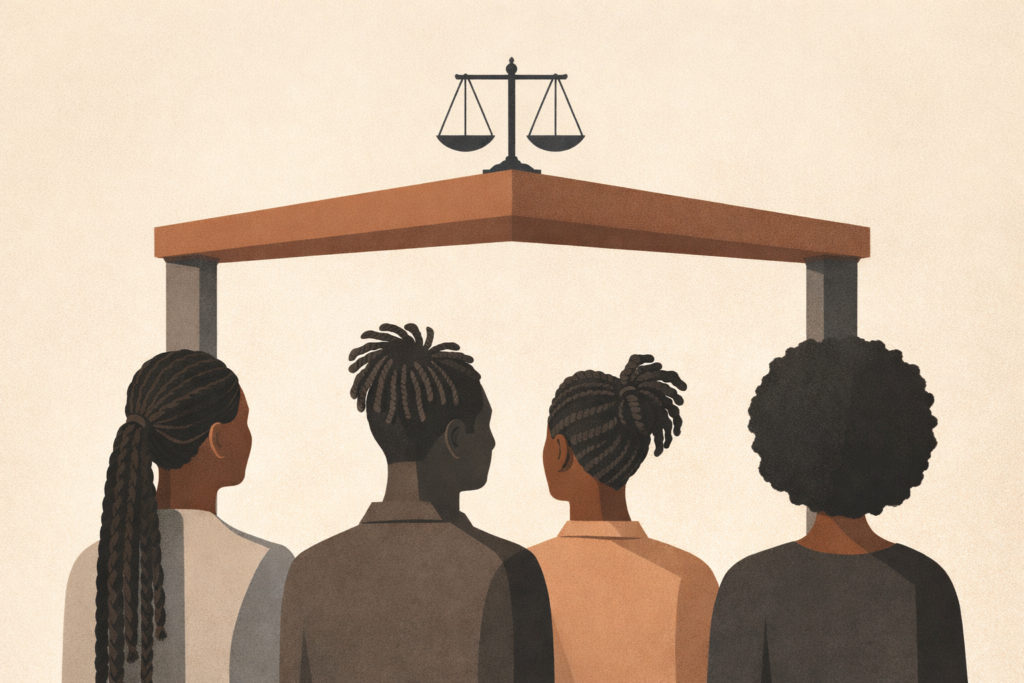
Hair discrimination has long existed inside workplace grooming policies that appeared neutral on paper. The CROWN Act was introduced to clarify that natural hair textures and protective hairstyles deserve protection under existing civil rights law.

Platforms don’t just host gender debates — they shape them. Algorithmic feedback loops amplify conflict, rewrite expectations, and turn identity into performance. Understanding the structure behind the noise is the first step toward reclaiming clarity.

Emotional boundaries protect your peace without controlling others. Understanding the difference between control and protection clarifies relationships, strengthens accountability, and prevents manipulation disguised as care.

The quiet cost of narrative shortcuts is fragmentation. When we move too fast toward conclusions, we trade clarity for comfort. Stillness restores order.

Extraterritorial enforcement in the age of viral harm forces governments to confront a new reality: content crosses borders instantly, but law does not. The question is no longer whether harm spreads globally. It is who has the authority to stop it.

Alignment restores order. Reinforcement preserves it. Strength is not installed during chaos — it is added after standards hold. Remove drift first. Then harden what remains.

The difference between race and ethnicity in Black identity politics is not semantic — it is structural. In American law and census classification, race operates as a broad social category shaped by power hierarchies. Ethnicity, by contrast, refers to shared lineage, culture, and historical continuity. As debates grow around lineage-based identity, reparations eligibility, and census data disaggregation, this distinction becomes central. Is “Black” a race, an ethnicity, or both? And how does that classification affect constitutional scrutiny, policy design, and civic cohesion? This analysis explains how race and ethnicity function differently in the United States — and why precision is necessary before political conclusions are drawn.

Reentry workforce programs succeed when incentives line up across training, supervision, and hiring. Funding helps, but structure decides whether outcomes hold when labor demand changes.

Civic education is not about opinions. It is the disciplined study of how power is structured, limited, and exercised. A democracy survives only when citizens understand the architecture that governs them.

Cross-border surveillance content exposes a structural flaw in platform governance. Incentive design rewards virality, while liability remains fragmented. Real accountability requires redesigning the economic architecture behind digital distribution.