
The Friendship Crisis Men Keep Calling Being Busy
Many men do not lose friendships all at once. They slowly replace connection with obligation until loneliness starts feeling normal.
Education & Skills is where Groundwork Daily examines how people become more capable.
Learning is larger than schooling. Capability is larger than credentials. What matters is whether knowledge can be understood, tested, practiced, transferred, and used when conditions change.
This territory brings together learning systems, rational thinking, physical and cognitive capacity, technology discipline, skilled work, daily practice, and future readiness. The common question is simple: what helps a person remain useful, clear, adaptable, and able to act?
The Education & Skills Principle
Capability is built.
Strong skills do not appear because someone wants them badly enough. They develop through structure, repetition, feedback, correction, judgment, and real use.
If you are new to Education & Skills, begin with the three capabilities that connect most of the territory: understanding change, thinking clearly, and turning knowledge into repeatable action.
Adaptability
Learn how to read change, recognize patterns, protect capacity, and remain capable when conditions shift.
Judgment
Strengthen reasoning, test assumptions, separate evidence from confidence, and become easier to correct.
Practice
Turn structure into ordinary practice through small, repeatable actions that hold even on difficult days.
Future Literacy, built by Jordan Avery, is the flagship capability framework inside Education & Skills.
It does not try to predict the future. It develops the capabilities needed when prediction fails: pattern recognition, systems thinking, cognitive bandwidth, adaptability, decision-making under uncertainty, and the ability to recognize when an old assumption no longer fits current conditions.
The objective is not to keep up with everything. It is to become better at identifying what matters and capable enough to respond.
Begin the Future Literacy pathway
The Skill Stack You Actually Need in 2026
How to Stay Capable When the Future Moves Faster Than You Do
Explore the complete Future Literacy framework
·
Browse Future Literacy articles
Capability is not purely intellectual. Clear thinking becomes harder when attention is fragmented, physical capacity is depleted, or technology begins making too many decisions by default.
Malik Rivers builds this part of Education & Skills through three connected series. Together they treat mind, body, and technology as parts of one governed human system.
Attention, mental control, cognitive margin, clarity, and the conditions that allow judgment to remain reliable under pressure.
Physical capacity, recovery, stress, sleep, movement, and health systems that support responsibility instead of collapsing beneath it.
Digital judgment, human agency, automation, AI, convenience, and the discipline required to use technology without surrendering capability to it.
Education fails when people accumulate information without improving judgment.
Dr. Kamau Ellis builds The Rational Field around disciplined reasoning. The work examines evidence, causation, incentives, assumptions, uncertainty, correction, and the difference between being able to explain a belief and being able to test it.
The goal is not intellectual performance. It is accuracy that can survive scrutiny.
Start with The Rational Field framework
Some forms of learning have nowhere to hide.
A system works or it does not. A repair holds or it fails. A standard was followed or somebody eventually discovers that it was not. Skilled work makes competence visible because the environment provides feedback that opinion cannot overrule.
Earl “Sparky” Gaines builds Work Hands around practical intelligence, field observation, verification, correction, knowledge transfer, apprenticeship, technical competence, and respect for people who know how to make things work.
Education should help people enter the future with more options, not simply teach them how to survive yesterday’s system.
Keisha Mills builds Build The Next around practical preparation, future-ready skills, entry points, capability development, and the question of what people can begin building before opportunity becomes urgent.
This lane is particularly concerned with movement. What skill is worth building? What can someone practice now? Which forms of preparation create more choices later?
Understanding something once is not the same as being able to rely on it.
Daniel Richards builds The Daily Build around small actions, routines, maintenance, consistency, awareness, correction, and the quiet repetition that turns intention into something usable.
It is the daily-practice layer of Education & Skills. The scale is intentionally small because capability usually grows through what can be repeated, not what can be performed once.
These series are different by design, but they reinforce one another. Use the map below according to the capability you are trying to strengthen.
| Need | Series | Capability |
|---|---|---|
| Navigate change | Future Literacy | Adaptability, patterns, systems, uncertainty |
| Protect attention | Mind as Discipline | Attention, clarity, cognitive margin |
| Build physical capacity | Health as Discipline | Recovery, stress, movement, durability |
| Use technology deliberately | Tech as Discipline | Agency, AI, automation, digital judgment |
| Reason more accurately | The Rational Field | Evidence, causation, assumptions, correction |
| Develop practical competence | Work Hands | Craft, standards, verification, field knowledge |
| Prepare for what comes next | Build The Next | Preparation, pathways, future-ready skills |
| Make structure repeatable | The Daily Build | Habits, repetition, maintenance, consistency |
Education & Skills is not organized around subjects for their own sake. It is organized around capability.
Future Literacy helps you see change. The Rational Field helps you judge what you are seeing. Mind as Discipline protects the attention needed to think. Health as Discipline protects the physical capacity needed to act. Tech as Discipline protects agency when tools become more powerful. Work Hands turns knowledge into competence under real conditions. Build The Next points that competence toward opportunity. The Daily Build makes the whole system repeatable.
That is the larger educational model: recognize, understand, practice, test, correct, adapt, and repeat.
The category is designed to help readers answer practical questions about learning, capability, judgment, technology, and work.
How do you build skills that remain useful when conditions change?
How do you improve decision-making when information is incomplete?
What does systems thinking look like in everyday life?
How do you protect attention in a high-information environment?
How do you use AI and automation without losing human judgment?
What makes practical knowledge different from knowing about something?
How do you distinguish correlation from causation?
How do small routines become durable capability?
Each builder works a defined part of the territory. Together, their series turn Education & Skills into a connected capability system rather than a collection of unrelated topics.
Future Literacy. Adaptability, pattern recognition, systems thinking, cognitive capacity, and readiness under changing conditions.
Mind as Discipline, Health as Discipline, and Tech as Discipline. Human capacity treated as a governed system.
Work Hands. Skilled labor, workmanship, field standards, verification, apprenticeship, and earned competence.
Dr. Kamau Ellis
The Rational Field. Evidence, logic, causation, correction, disciplined reasoning, and stronger judgment.
Keisha Mills
Build The Next. Practical preparation, entry points, skill development, future-ready learning, and expanded opportunity.
Daniel Richards
The Daily Build. Repetition, routine, consistency, maintenance, awareness, and everyday discipline.
Continue Building
Education becomes more valuable when ideas move into practice. Continue through the capability system using the pathways below.
→ Adaptability:
Future Literacy
→ Practical Competence:
Work Hands
→ Human Capacity:
Malik Rivers
Build capability before pressure demands it.
Groundwork Daily publishes frameworks on learning, disciplined thinking, technology, practical skill, physical capacity, systems, and the structures that help people remain capable.
Many men do not lose friendships all at once. They slowly replace connection with obligation until loneliness starts feeling normal.
Many men mistake depletion for ambition. Exhaustion is not proof of strength. It is a signal that capacity, recovery, and identity need repair.
More men are talking about mental health than ever before. But naming stress is not the same thing as understanding it. Mental health begins when language becomes specific enough to create change.
Behavior follows environment. If the structure stays the same, the outcome will too.
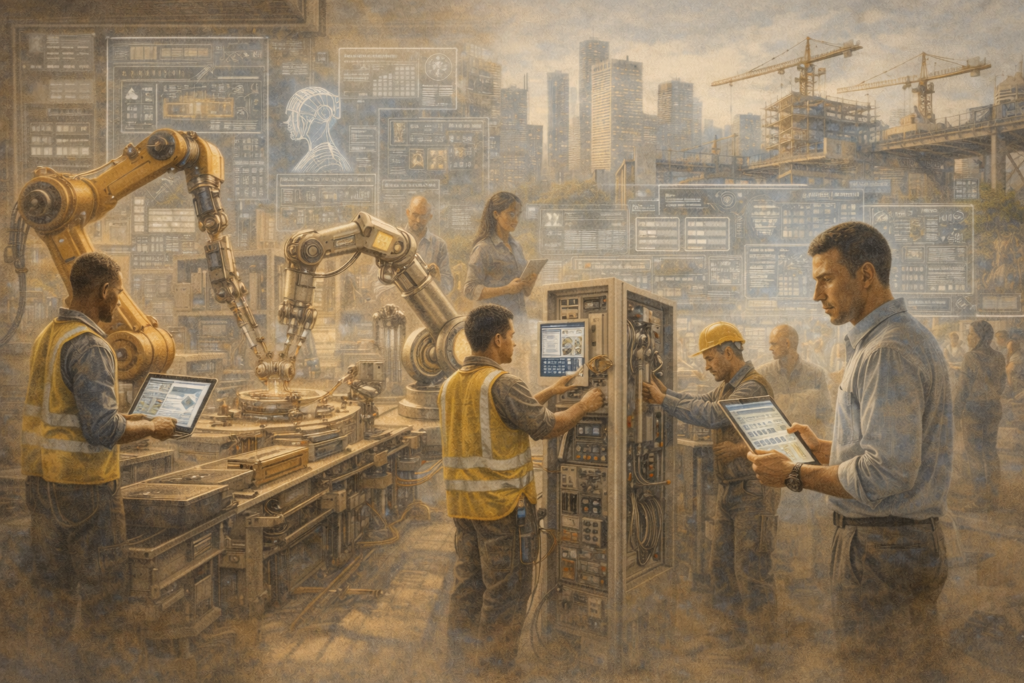
Automation is reshaping the modern workforce, but it is not eliminating work altogether. Instead, it is changing which skills matter most. As machines handle more routine tasks, human workers are increasingly valued for judgment, adaptability, and problem solving. Understanding how automation changes work is essential for navigating the future economy and building skills that remain relevant as technology evolves.
Efficiency often looks disciplined. However, systems optimized to the edge can become fragile under pressure. Without structural margin, minor disruptions cascade into instability. Real strength requires resilience, not compression.
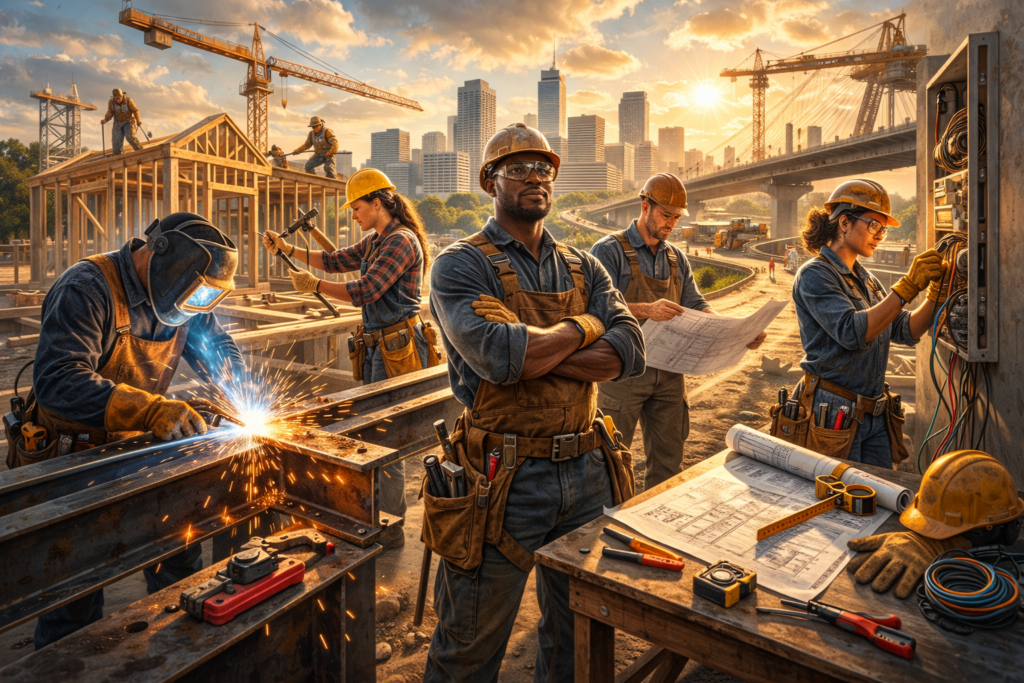
Skilled labor built the modern economy, yet cultural narratives often overlook its value. The dignity of skilled work comes from competence, responsibility, and the ability to build things that last.
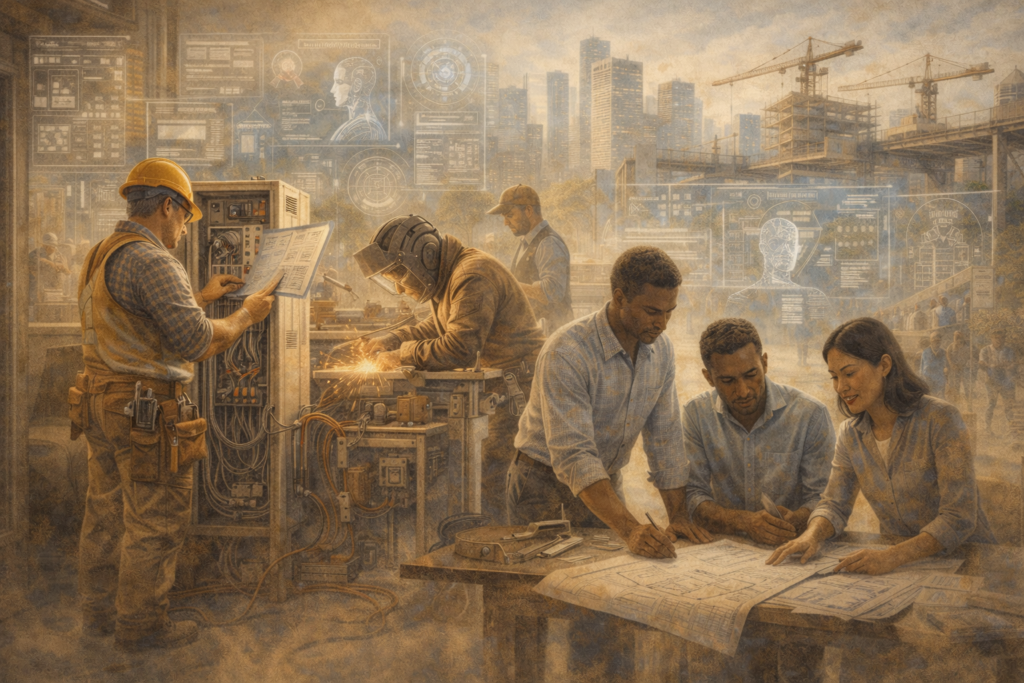
AI can automate tasks, analyze data, and accelerate workflows. But the future of work will still depend on human skills that machines struggle to replicate—judgment, adaptability, hands-on problem solving, and the ability to navigate real-world complexity. As automation expands, the workers who combine technical knowledge with practical intelligence may become even more valuable. The real question is not what machines can do, but which human skills remain indispensable.
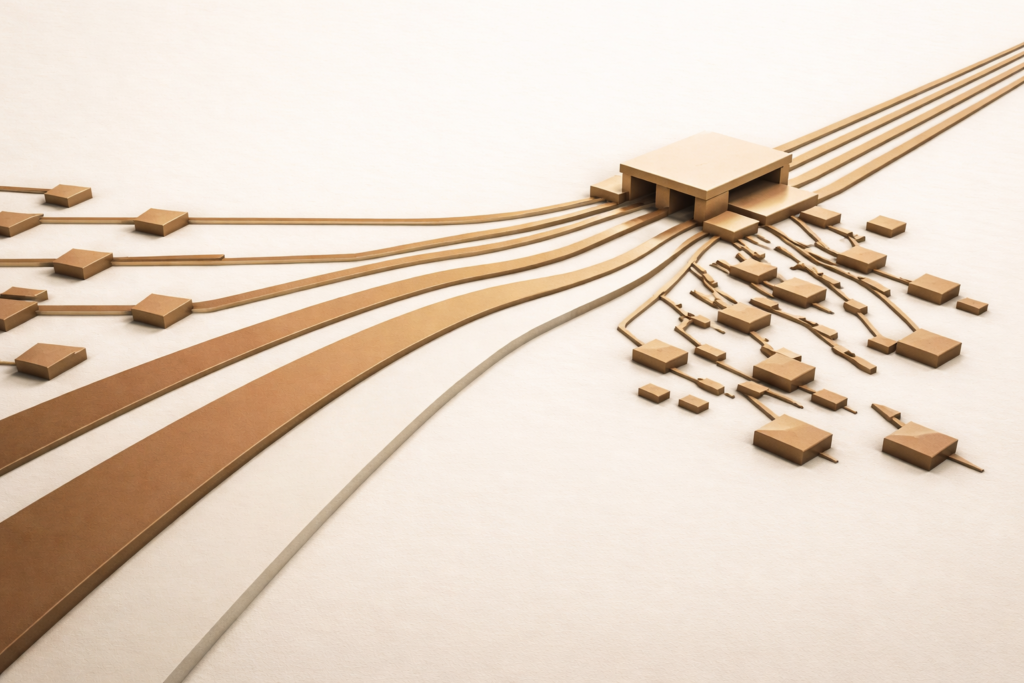
Uneven education access is not about effort. It is a system design problem where unequal entry points lead to predictable outcomes.
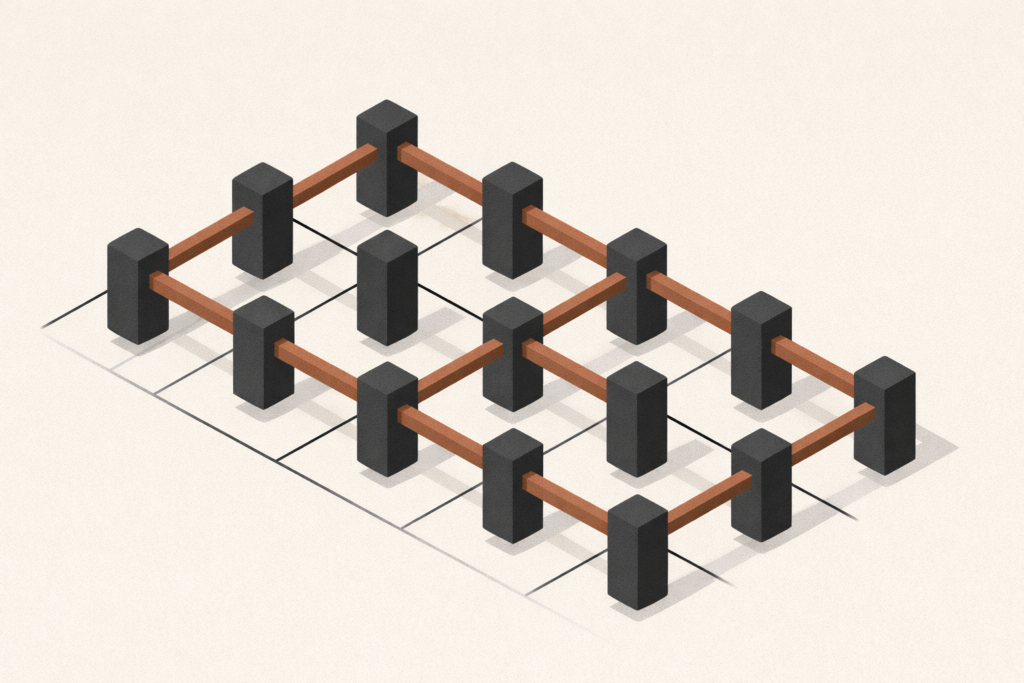
Recovery is not weakness. It is a performance skill. In this Health as Discipline entry, we explore cyclical capacity building, structured recovery, and how intelligent load management creates sustainable, high-trust performance over time.
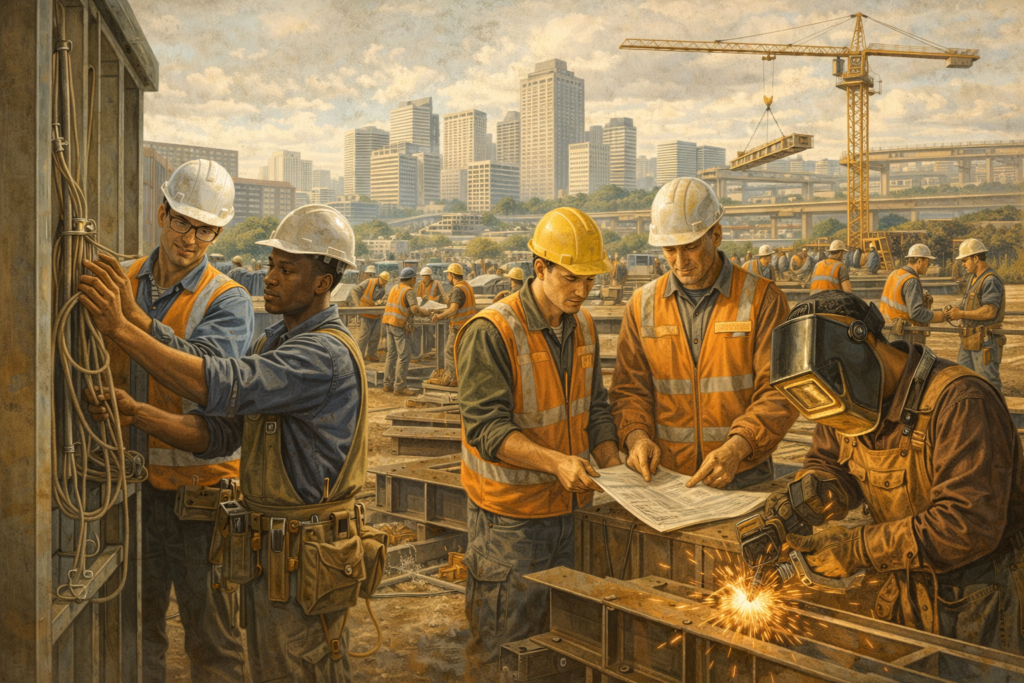
Apprenticeship training teaches skills that cannot be learned through textbooks alone. By combining mentorship, paid work, and hands-on practice, apprenticeships turn knowledge into real competence across the skilled trades.
Apprenticeship programs are expanding across the United States as industries rebuild the skilled labor pipeline. Rising infrastructure investment and labor shortages are driving renewed demand for practical, hands-on workforce training.