The world is moving faster than institutions, and capability has become the new credential.
Education & Skills is where tools, frameworks, and systems thinking come together to build
clarity, structure, and real-world adaptability. This is not about degrees. It is about the
skills that make you steady under pressure, able to interpret change early, and capable of
making disciplined moves in shifting conditions.
This category includes the full Future Literacy series, clarity models, bandwidth audits,
structural thinking, capability tiers, and practical systems that help you operate with
intelligence and calm even when the environment accelerates. These are the mental structures
that support stability and upward capability at scale.
Future Literacy Series
Future Literacy is a ten-part series on capability in a fast world. It focuses on the skills
that help you think clearly under pressure, protect your bandwidth, read patterns early, and
design a daily structure that holds up when conditions keep shifting.
Inside the series you will find work on clarity, decision hygiene, systems thinking,
pattern recognition, and a daily frame that makes all of it usable in real life.
Explore the full Future Literacy series
Clarity & Cognitive Strength
-
How to Think Clearly When Everything Pulls at You
-
A practical frame for thinking cleanly when life pulls in ten directions at once.
-
The Quiet Bandwidth Audit
-
A simple way to see where your energy and attention are leaking every day.
-
Structure Builds Freedom
-
How clear boundaries and routines create more room, not less.
Systems Thinking & Pattern Recognition
-
How to Read the Patterns That Shape Your Future
-
An introduction to seeing repetitions, trends, and early signals before they become crisis.
-
Systems Thinking for Real Life
-
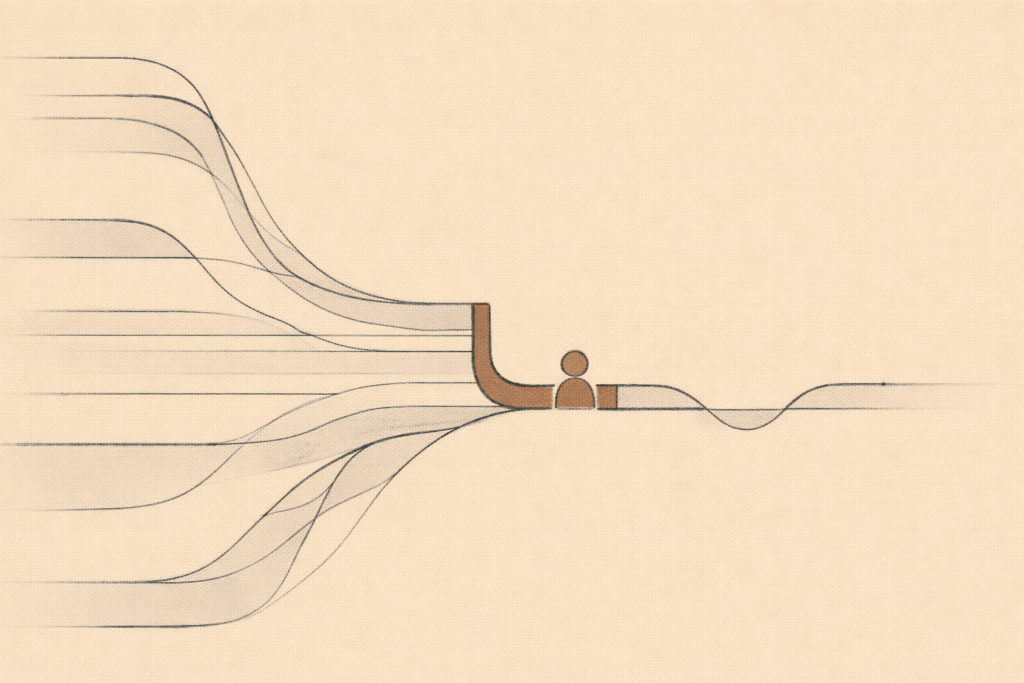
How to map inputs, bottlenecks, and leverage points inside the mess of everyday life.
Pattern Recognition · Note
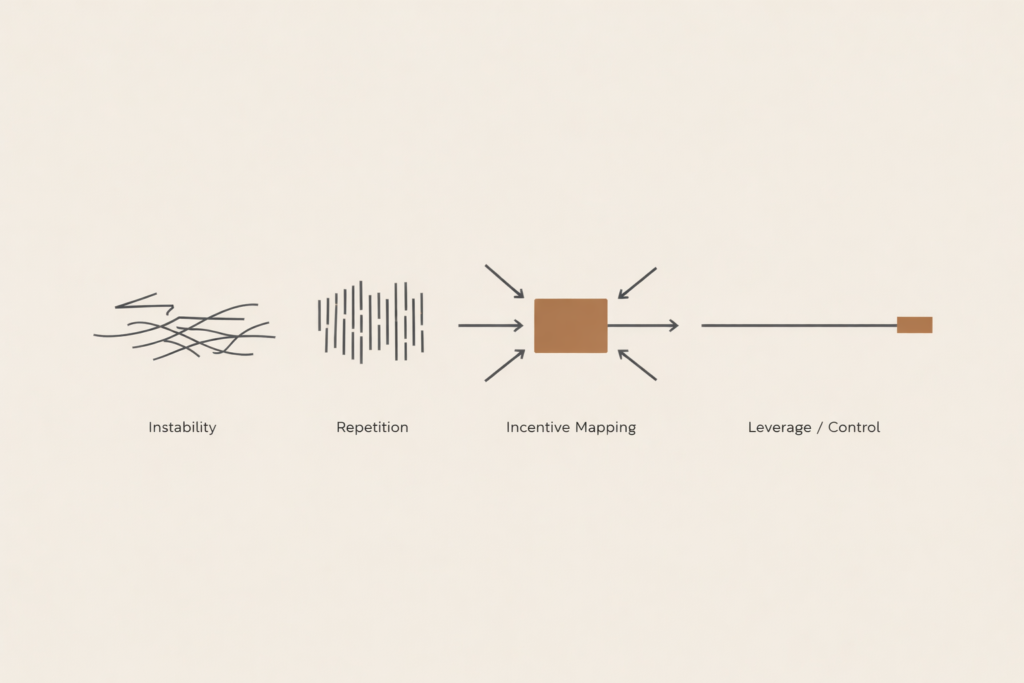
Pattern recognition is the skill of noticing what repeats, what changes, and how those
shifts tend to play out over time.
Paired with systems thinking, it turns random events into readable signals. That is how
Future Literacy moves from theory into daily decisions.