
Groundwork Daily Builder
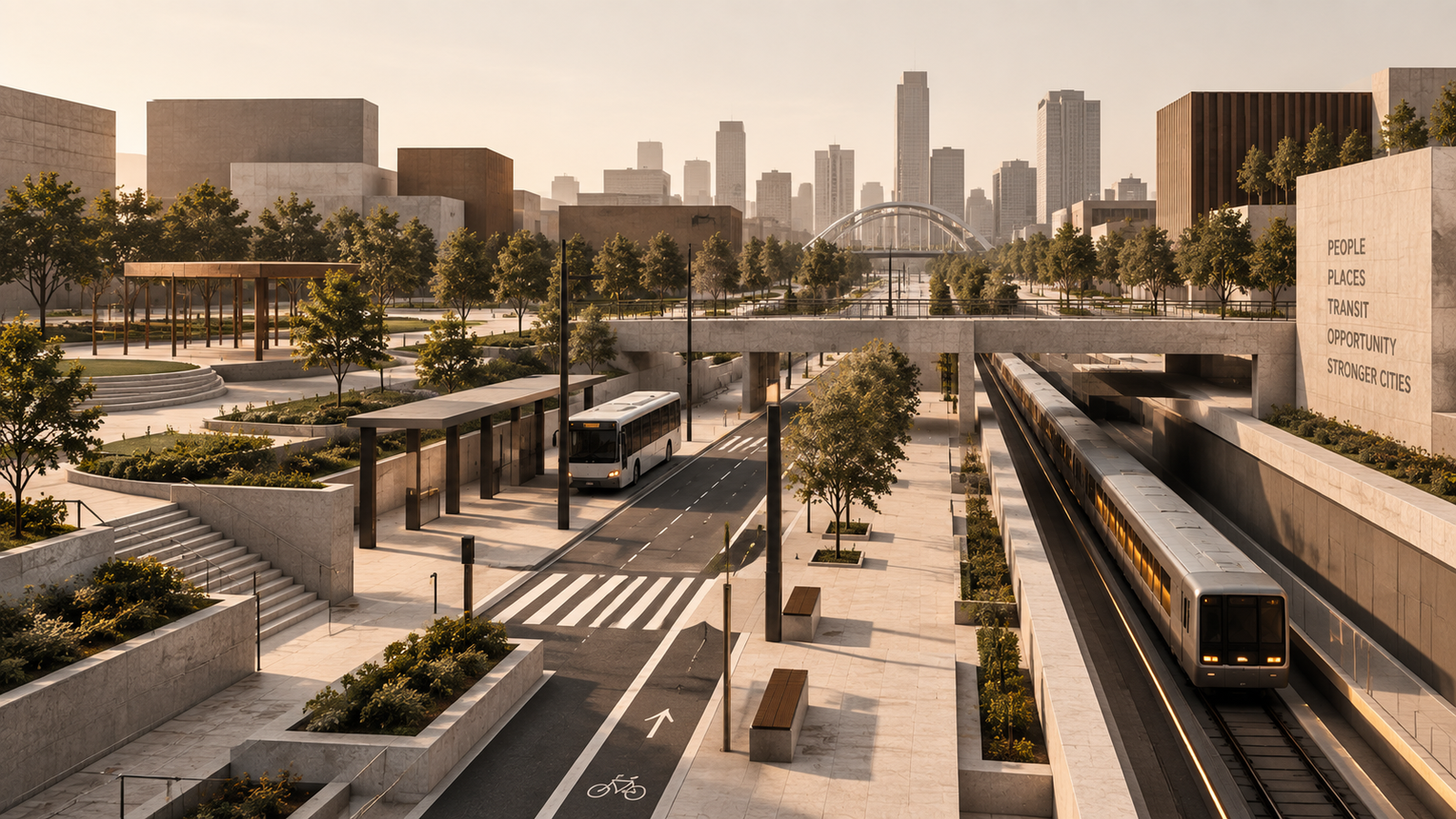
Omari Steele examines cities as operating systems. His Groundwork studies how infrastructure, transportation, public space, wayfinding, maintenance, access, and land use shape how people move, gather, work, wait, navigate, and belong.
Cities make policy physical. Therefore, Omari looks at what streets, transit systems, crossings, public spaces, signage, and maintenance reveal about civic priorities long after a planning meeting ends.
Builder Territory
Omari Steele Reads the City as a Public System
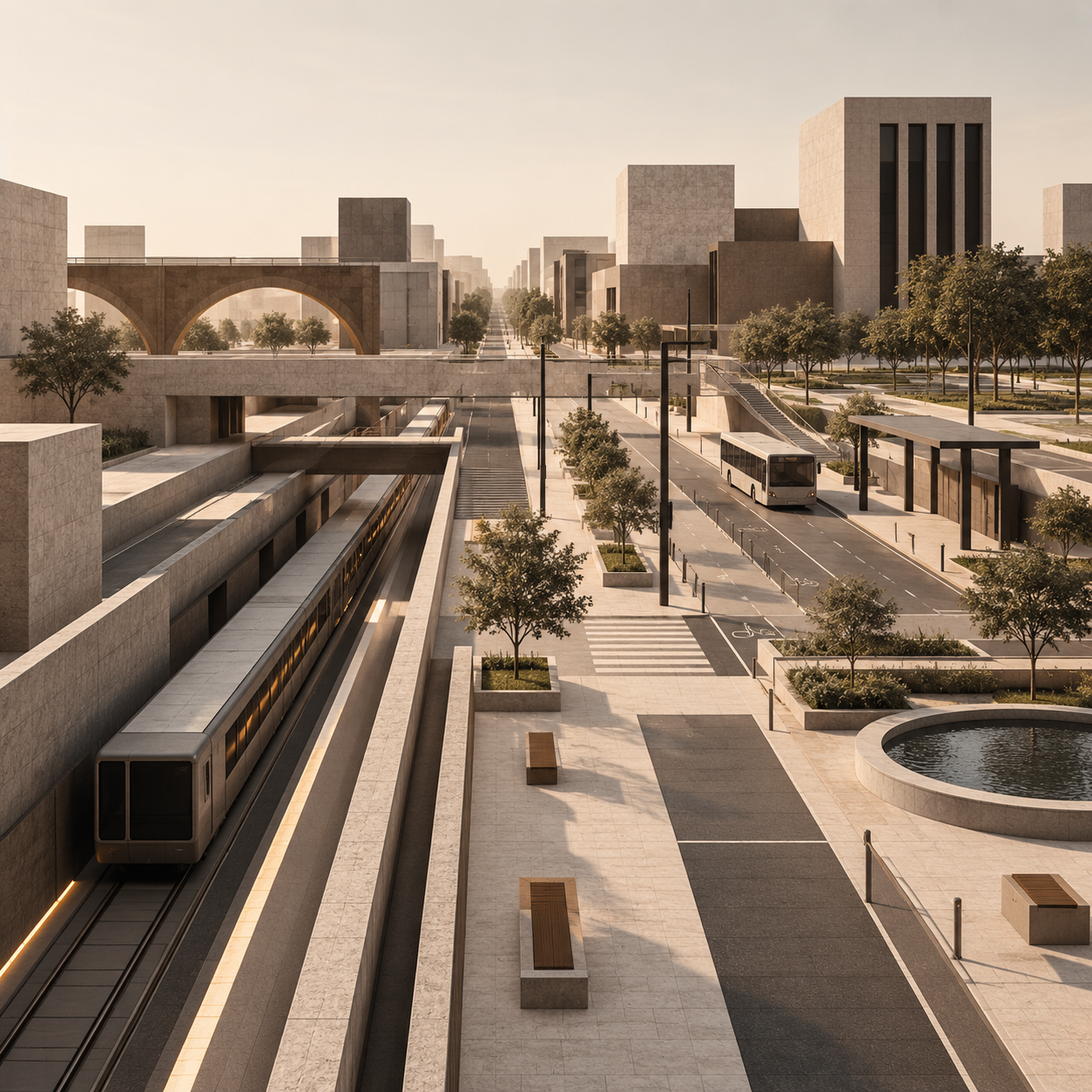
The built environment is often treated as background. Yet sidewalks, train lines, bus stops, crossings, lighting, benches, trees, ramps, signage, parks, and street grids are active parts of daily life.
Together, those systems shape who can reach opportunity, how long movement takes, where people can gather, and how much effort ordinary navigation requires.
Omari’s work brings those relationships into view. He studies the city as a structure that teaches people what has been prioritized, connected, maintained, delayed, or ignored.
Governing Proposition
A city is a public argument made physical.
Urban Systems
Six Systems Organize Omari Steele’s Work
Urban life becomes easier to understand when the city is treated as a connected system instead of a collection of separate projects. Therefore, Omari repeatedly returns to six structural areas.
Movement
How streets, transit, walking, cycling, crossings, and transfers shape access.
Wayfinding
Whether people can understand where they are, where they are going, and how to get there.
Public Space
Where people can gather, pause, wait, meet, rest, and participate in public life.
Maintenance
What condition reveals about civic attention after the ribbon cutting is over.
Access
Who can reach jobs, schools, services, parks, cultural institutions, and opportunity.
Time
How urban design redistributes waiting, commuting, delay, inconvenience, and daily effort.
Movement
Transportation Is More Than Getting From One Place to Another
A transportation system distributes time. It also distributes opportunity.
Commutes Carry Hidden Costs
A longer commute can reduce time available for family, rest, exercise, education, caregiving, and community life. Meanwhile, unreliable service adds uncertainty to the same burden.
Because of this, Omari does not treat commuting as a neutral detail. The cost of movement becomes part of the city’s economic and social structure.
Connections Matter as Much as Routes
A transit line can exist without creating useful access. The route has to connect people to where they actually need to go.
Therefore, the stronger question is not simply whether transit exists. The stronger question is whether the system works as a network.
Wayfinding
A City Should Not Require Insider Knowledge to Use It
Confusing infrastructure shifts work onto the person trying to navigate it.
Poor signage, unclear entrances, hidden transfers, inconsistent naming, weak street cues, and badly organized circulation all create cognitive cost.
Clarity Is Infrastructure
Good wayfinding reduces hesitation and unnecessary decision-making. More importantly, it makes public systems easier to use for people who do not already know how the system works.
That includes visitors, older adults, people with disabilities, commuters changing routes, and residents entering an unfamiliar part of their own city.
In that sense, clarity is not decoration. It is part of access.
Public Life
Public Space Helps Determine Whether a City Can Feel Shared
Not every useful place requires a purchase.
Third Places Create Social Infrastructure
Libraries, plazas, parks, benches, community spaces, sidewalks, and other third places allow people to encounter one another outside home and work.
When those spaces disappear, public life becomes more dependent on private consumption.
Design Can Invite or Discourage Use
Shade, seating, crossings, lighting, noise, maintenance, and visibility all shape whether people experience a public place as usable. As a result, public-space design becomes a civic question rather than simply an aesthetic one.
Maintenance
The Real Policy Often Appears After Construction Ends
Cities frequently celebrate new infrastructure. However, the deeper test begins later.
Condition Reveals Priority
A transit station can be well designed and poorly maintained. A public plaza can open beautifully and become difficult to use once lighting, seating, surfaces, or landscaping deteriorate.
Consequently, maintenance reveals whether a public investment was treated as an event or as a continuing obligation.
Neglect Is Also a System
Deferred maintenance does not merely make something look worse. Eventually, it increases costs, reduces trust, limits use, and creates additional barriers.
Omari reads those conditions as governance made visible.
Primary Series
Omari Steele Builds Urban Logic
Urban Logic examines the hidden systems shaping how cities function. It studies infrastructure, governance, planning, maintenance, transportation, public space, navigation, and the daily consequences of urban design.
The City as a Decision System
Every road, crossing, station, plaza, sidewalk, zoning decision, and maintenance schedule reflects choices about priorities and tradeoffs.
Urban Logic makes those choices easier to see.
The Series Follows Design Into Daily Life
Instead of stopping at what a city built, Omari asks what the system now requires from the people using it.
“A city is a public argument made physical. What gets connected, maintained, delayed, and neglected tells people what the system values.”
Design & Governance
Urban Design Is One of the Ways Governance Reaches Daily Life
Civic decisions often feel abstract while they are being debated. Eventually, however, those decisions become physical.
Budgets Become Conditions
Funding choices become service frequency, pavement quality, lighting, accessibility, park maintenance, station condition, and construction schedules.
In other words, budgets eventually become lived environments.
Priorities Become Geography
Where infrastructure goes matters. So does where it does not go.
Omari’s work examines that geography because access, convenience, investment, and public quality are rarely distributed evenly by accident.
Selected Groundwork
Start With Omari Steele
These pieces establish the central Urban Logic territory: navigation, third places, transportation burden, car-centered design, environmental pressure, and pedestrian infrastructure.
Wayfinding
Cities Should Not Require Insider Knowledge to Navigate
Why wayfinding is public infrastructure and confusion creates a real civic cost.
Third Places
The Places Between Home and Work Are Disappearing
How shared public places support connection, trust, and ordinary community life.
Commute Cost
The Hidden Cost of a Long Commute
Why transportation systems distribute more than distance. They distribute time and capacity.
Car Dependency
What Happens When a City Is Designed Around the Car
How street design changes access, movement, public space, and everyday urban behavior.
Urban Pressure
The Mental Health Impact of Loud Cities
How environmental conditions add cumulative pressure to ordinary city life.
Pedestrian Design
Why Pedestrian Design Beats Public Transit Slogans
Why transportation policy succeeds only when the surrounding physical environment makes movement usable.
Builder Voice
Omari Steele Looks at the City From the Ground Up
Omari’s work is analytical, but it begins with ordinary experience. A transfer takes too long. A station entrance is difficult to find. A crossing feels unsafe. A park offers nowhere comfortable to sit.
Start With the Friction
Rather than dismissing those experiences as inconvenience, Omari asks what system produced them.
Was the route poorly connected? Was maintenance deferred? Did the design prioritize vehicle throughput over pedestrian access? Did a planning decision shift time or risk onto the user?
Then Find the Structure
That move from friction to structure is the center of his voice. Everyday urban experience becomes evidence about how the city is actually operating.
Reader Promise
What Readers Can Expect From Omari Steele
Expect practical Groundwork on urban systems, infrastructure, transportation, public space, wayfinding, accessibility, maintenance, land use, commute costs, pedestrian design, and civic investment.
Better Questions About the Built Environment
Omari Steele does not ask readers to become planners or engineers. Instead, he gives them a clearer way to read the systems surrounding them.
Readers should leave asking who the space was designed for, what kind of movement it rewards, where the friction appears, who absorbs that friction, and what maintenance reveals about public priority.
Civic Literacy Made Physical
The goal is to make governance more legible by showing where it becomes concrete, pavement, transit, access, time, and public life.
The Groundwork
The City Is Already Telling You What It Values
You can read a city in what it connects.
You can also read it in what it makes difficult.
Follow the Everyday Condition
Look at the crossing. The station. The sidewalk. The bench. The transfer. The lighting. The missing tree. The broken elevator. The twenty-minute detour required to travel a few blocks.
None of those details tells the whole story by itself. Together, however, they reveal the operating logic.
Urban Logic begins where civic policy becomes an everyday physical condition.
Continue Building
Move from Omari Steele into the series and category that extend this urban systems Groundwork.
→ Series Hub: Urban Logic
→ Series Archive: Browse Urban Logic Articles
→ Category: Civic Power & Policy
Build better. Every day.
Groundwork Daily examines the structures behind cities, institutions, communities, ownership, relationships, and everyday decisions. Get new Groundwork delivered directly, with less noise and more clarity.