
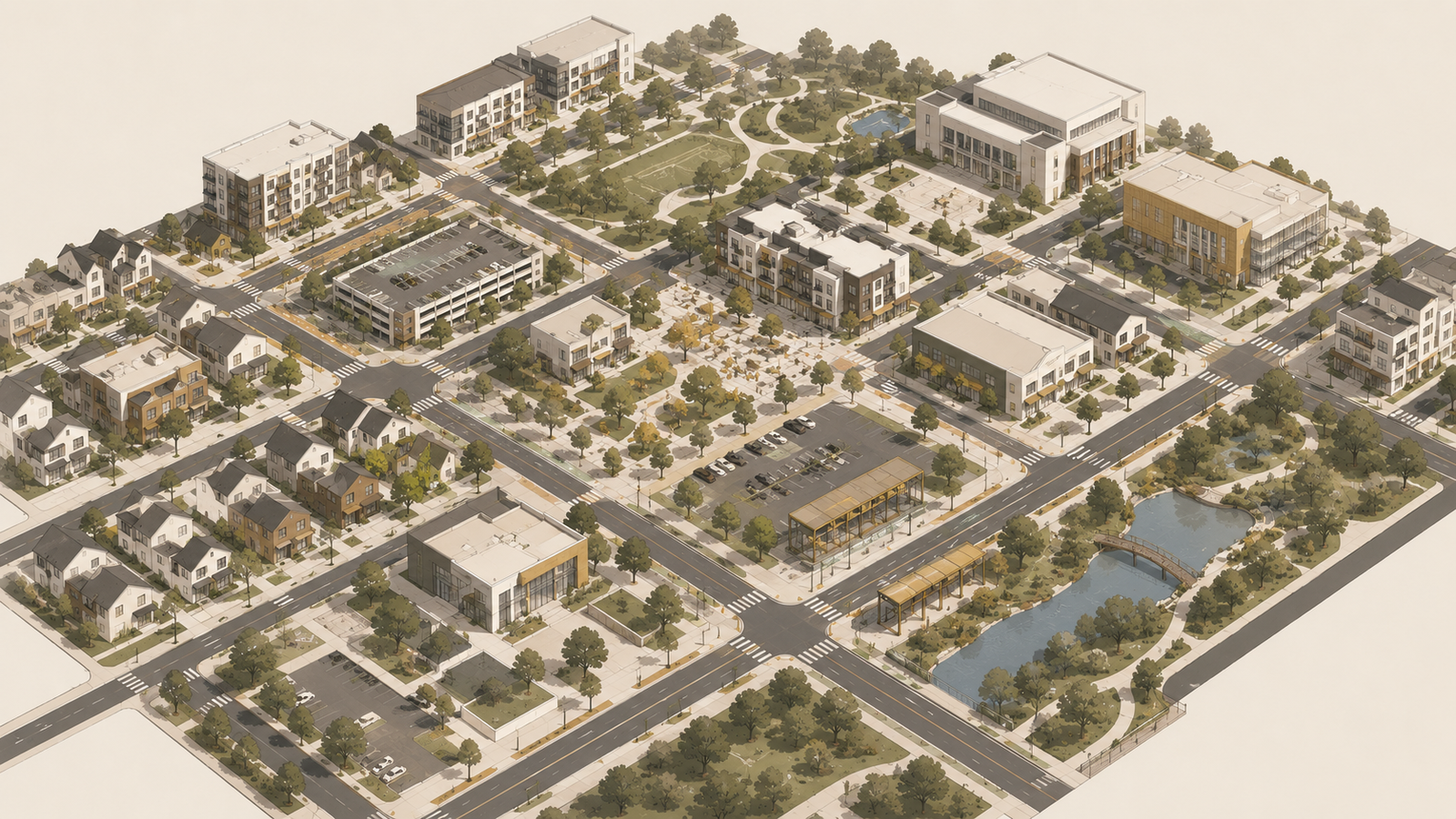
Groundwork Daily • Civic Power & Policy • Urban Logic
Urban planning is the hidden operating system beneath everyday life.
It shapes how people move, gather, wait, spend, rest, commute, build, and belong. Indeed, it influences whether a sidewalk actually connects people to daily life, whether a bus stop feels usable, whether a crosswalk organizes risk, whether public space invites people to stay, and whether a neighborhood works without demanding constant compensation from the people inside it.
Most people experience cities.
Fewer, however, are taught how to read them.
Urban Logic closes that gap. Built by Omari Steele, the series examines the systems beneath visible urban outcomes: infrastructure, land use, transportation, housing, public space, maintenance, navigation, institutions, incentives, capacity, and governance.
This is not a loose archive of city stories. Rather, it is the canonical hub for understanding how the pieces connect.
How Cities Work
Cities can feel chaotic because dozens of systems operate at the same time.
For instance, traffic appears random, and housing prices can feel mysterious. Public transportation works well in one neighborhood and badly in another. Some streets invite walking, while others make walking feel like an afterthought. Some commercial corridors remain useful deep into the evening; others empty as soon as the workday ends.
The visible outcome, though, is only the surface.
Underneath it are decisions about budgets, zoning, engineering standards, capital investment, service levels, maintenance schedules, procurement, enforcement, development, rights-of-way, political priorities, and institutional capacity. Delay matters too. In fact, neglect is a decision with physical consequences.
Eventually, those choices become streets, blocks, housing, transit routes, parking lots, sidewalks, tree canopy, lighting, signs, drains, parks, utilities, civic buildings, and public spaces.
In other words, a city is not only a place. It is a system of incentives, rules, materials, networks, maintenance obligations, habits, constraints, and public priorities.
Urban Logic studies that system.
Cities Are Systems, Not Collections of Buildings
A weak way to read a city is to study one feature at a time and stop there.
That misses the real architecture.
Small Pieces Reveal the Larger System
A sidewalk, for example, is not only concrete. It connects people to housing, commerce, schools, parks, libraries, transit, and public life.
Likewise, a bus stop is not only a sign or shelter. Its location, visibility, seating, crossing conditions, route information, and connection to the sidewalk network all affect whether transit feels like realistic access.
A parking lot, meanwhile, is not empty space. Rather, it is land committed to one use instead of another.
Even a sign is not merely a sign. It helps people understand where they are, where they can go, and how the public system expects them to move. That is why wayfinding is public infrastructure .
One Change Ripples Through the Whole System
The city works through relationships.
Widen one road, and the crossing may become harder. Add too much surface parking, and destinations can spread farther apart. Let lighting fail, and public space loses usable hours. Build housing without enough transportation capacity, and access becomes the next bottleneck; build good infrastructure without clear navigation, and people still struggle to use it.
This is why sidewalks are economic infrastructure . After all, they do more than carry foot traffic — they connect people to the systems that make neighborhood life possible.
Infrastructure Shapes Behavior
People respond to the environments around them.
Small Failures Do Not Land Evenly
People avoid a street that feels dangerous. A disconnected bus stop changes how riders travel, and when a sidewalk is broken, the burden does not fall evenly. Disabled residents, older adults, parents with strollers, workers carrying equipment, and anyone with limited mobility encounter the failure first.
Confusing signs make people hesitate. An unclear station exit costs them time. And when a public building hides its entrance, access becomes harder than it needs to be.
Every Design Choice Teaches Behavior
Design does not control every choice.
Instead, it changes the cost of each choice.
Good infrastructure reduces avoidable friction. Bad infrastructure, by contrast, moves that friction onto the public. Over time, those small costs shape whether people walk, drive, cycle, wait, gather, shop, explore, or leave.
That is why crosswalks are civic infrastructure . A crosswalk is more than paint; it is an organizing device for risk, visibility, expectation, and movement.
The same logic applies to cycling infrastructure. A protected lane creates a clearer operating structure for cyclists, drivers, and pedestrians. That is why bike lanes are transportation infrastructure , not a decorative amenity.
Wayfinding completes the system by helping people understand where the route continues, where decisions must be made, and how separate pieces of infrastructure connect.
Every design choice, in short, teaches behavior. The city is always instructing us.
Land Is Every City’s Most Limited Resource
Land is finite.
That sounds obvious. Yet urban debates routinely behave as if it is not.
Every Parcel Forces a Tradeoff
Every parcel, block, curb, right-of-way, and public site has competing possible uses. Land can hold housing, parking, shops, parks, schools, libraries, utilities, plazas, roads, civic facilities, industry, or some combination of them.
Choosing one use, therefore, narrows another.
This is where planning stops being abstract.
Land-use decisions shape how far people travel, how much housing can exist, whether destinations can support transit, how much infrastructure must be extended, and whether everyday errands can happen nearby.
Land Use Shapes Legibility Too
Parking makes the tradeoff easy to see. A surface lot may be useful, but it still occupies land that cannot simultaneously become homes, shops, trees, sidewalks, public space, or another civic use. As explored in Parking Shapes Cities More Than You Think , parking is a spatial decision with consequences beyond the parked car.
The same logic applies to zoning, density, setbacks, building heights, curb allocation, public parcels, and the placement of civic destinations.
Land use also affects legibility. A destination set behind a vast parking field operates differently from one that meets the sidewalk. Similarly, a district without coherent routes or visible public landmarks asks people to spend more attention simply figuring out how to use it.
In the end, urban planning decides what land is allowed to become.
Transportation Is Access
Transportation is not just traffic.
Rather, transportation is access.
A functioning transportation system helps people reach work, school, healthcare, groceries, parks, public services, family, social life, and opportunity without making every trip unnecessarily expensive or exhausting.
Every Mode Needs a Real Role
Roads matter, and so do cars. Many people depend on them because the surrounding system gives them no practical substitute.
But a city built almost entirely around driving creates predictable tradeoffs. Parking consumes land, destinations spread farther apart, and walking becomes harder. Transit, meanwhile, becomes more expensive to serve well, short trips require more machinery, and public life thins where every destination becomes an isolated stop.
Urban Logic treats transportation as a network of modes and interfaces: walking, transit, cycling, driving, freight, curb access, crossings, lighting, and information all matter.
Access Depends on More Than the Vehicle
The useful question is not which mode wins. Instead, the question is whether the system gives each mode a clear, realistic role, and whether those roles connect.
Bus stops are public infrastructure , because access begins before someone boards a vehicle. It depends on the sidewalk, crossing, waiting environment, visibility, shelter, information, and surrounding street.
Navigation belongs inside transportation for the same reason. Riders need to know where to board, where to transfer, where to exit, and what to do when the expected route changes.
Long commutes expose the cost of weak access most clearly. As explored in The Hidden Cost of Long Commutes , time spent reaching daily life is not free — it comes out of attention, money, recovery, health, and family capacity.
Ultimately, transportation succeeds when mobility becomes dependable access.
Public Space Is Infrastructure
Public space is not decoration. It is infrastructure for civic life.
Public Space Gives People Somewhere to Remain
Parks, plazas, libraries, sidewalks, benches, public squares, and third places give people somewhere to exist outside a private home, vehicle, workplace, or transaction.
In fact, they create room for rest, conversation, observation, informal care, chance encounters, civic expression, and neighborhood memory.
When public space works, people have somewhere to remain. When it does not, the city instead becomes a machine for passing through.
Public Space Depends on the Systems Around It
This is why public benches matter more than people think . A bench is small, but its job is not — it changes who can pause, how long people can stay, and whether public space accommodates bodies that cannot remain in constant motion.
Third places carry a related function. As discussed in Why Third Places Matter More Than Ever , communities need informal places where connection can happen without an appointment, ticket, or formal invitation.
Navigation strengthens public space too. A park path without useful markers, a library with an unclear entrance, or a plaza poorly connected to transit cannot deliver its full civic value.
Public space, ultimately, is where civic life becomes visible. Without it, a city can become efficient and lonely at the same time.
Nature Is Infrastructure
Nature in cities is often treated as beautification. That framing is too small.
Trees and Green Systems Do Real Work
Street trees, parks, rain gardens, bioswales, planted medians, waterfronts, green corridors, and urban canopy perform real system work.
Specifically, they manage water, reduce heat exposure, create shade, support walking, improve comfort, shape public space, and soften environments dominated by pavement and hard surfaces.
A tree is not only scenery. Rather, it is shade, thermal relief, stormwater interaction, pedestrian comfort, habitat, and long-term public value.
That is why street trees are public infrastructure .
Nature Helps People Orient Themselves
Tree canopy quietly supports sidewalks, bus stops, benches, commercial corridors, walking routes, and public spaces. Where shade disappears, many of those systems become harder to use during periods of extreme heat.
Natural systems can also help people orient themselves. A tree-lined corridor, waterfront edge, shaded path, or visible park entrance can become part of the city’s navigational language.
Nature, therefore, belongs inside the infrastructure conversation. A city that ignores heat, drainage, shade, and environmental capacity is not fully planned. It is only paved.
Maintenance Is Civic Leadership
Infrastructure does not remain useful because somebody built it once. Rather, it remains useful because somebody keeps carrying the obligation.
This is where cities reveal their operating priorities.
Maintenance Rarely Gets Credit
Sidewalks crack. Crosswalks fade. Drainage systems clog, streetlights fail, and bus shelters break. Signs become outdated, bike lanes collect debris, and trees require care. Parks wear down, roads deteriorate, and public buildings accumulate deferred repairs.
Maintenance is not glamorous — it rarely gets the rendering, launch event, or ribbon cutting. Yet maintenance determines whether the promise survives the announcement.
Street lighting makes the point plainly. As explored in Street Lighting Is Public Infrastructure , lighting extends the practical operating hours of sidewalks, crossings, transit stops, public spaces, and commercial corridors. A broken light does the reverse.
Every Asset Creates a Standing Obligation
Wayfinding has its own maintenance burden too. A faded sign, missing street marker, outdated map, or broken information kiosk reduces the reliability of the public system, even though the road or station may still physically exist.
Infrastructure also creates obligations that last far beyond the construction budget. Every new asset brings inspection, repair, staffing, replacement, operating, and lifecycle costs with it.
Maintenance, in other words, is governance made visible. When maintenance fails, people are forced to carry the gap.
Governance Becomes Physical
Governance sounds abstract until it becomes a street.
Policy Becomes Physical
Budgets decide which assets can be maintained. Zoning decides what can be built and where. Procurement influences how quickly public projects move, engineering standards define what gets installed, capital plans determine which projects enter the pipeline, and enforcement determines whether adopted rules mean anything in practice.
Policy becomes pavement. It becomes lighting, bus shelters, drainage, tree canopy, housing capacity, signage, and distance.
This is why Urban Logic belongs in Civic Power & Policy. The series is not simply about design taste. Rather, it is about the structures that turn authority, resources, incentives, standards, and maintenance decisions into everyday conditions.
Streets Carry Evidence of Priorities
A street carries evidence of who had authority, who had money, who had time, which standards controlled the work, what the system could maintain, and which failures were tolerated.
Bad outcomes are often described as natural. Many, however, are anything but — they are designed, inherited, funded, constrained, delayed, neglected, misdiagnosed, or allowed to persist.
Urban Logic Principles
Urban Logic returns to a set of recurring operating ideas.
- Cities are interconnected systems.
- Infrastructure shapes behavior by changing the cost of choices.
- Every design decision creates tradeoffs.
- Land is finite.
- Transportation is access.
- Navigation is infrastructure.
- Public space is civic infrastructure.
- Nature performs infrastructure work.
- Maintenance is policy made visible.
- Capacity matters as much as ambition.
- Implementation matters more than announcement.
- Strong systems reduce avoidable friction.
- What a city builds creates a maintenance obligation.
- Better urban outcomes require stronger underlying systems.
These principles help move the conversation past aesthetics and slogans.
Instead of asking only whether something looks good, Urban Logic asks what it does: what carries the load, who benefits, and who absorbs the inconvenience? What behavior does the design reward, and what does it cost to maintain? Which system must support it, what fails first when capacity runs out, and who owns the repair?
Those questions, together, make the city readable.
Explore Urban Logic
Use this section as a guided map through the Urban Logic knowledge system.
Start Here
Urban Logic: How the City Teaches Structure
The foundation essay for understanding cities as connected operating systems rather than collections of isolated projects.
Transportation and Access
- The Hidden Cost of Long Commutes
- Bus Stops Are Public Infrastructure
- Bike Lanes Are Transportation Infrastructure
- Parking Shapes Cities More Than You Think
Walking, Street Safety, and Navigation
- Sidewalks Are Economic Infrastructure
- Crosswalks Are Civic Infrastructure
- Wayfinding Is Public Infrastructure
Public Space and Civic Life
Environment, Comfort, and Operating Hours
Each article should explain one mechanism well enough to stand alone while also strengthening the larger Urban Logic map of how cities work.
What Urban Logic Is Building
Urban Logic will keep expanding into the systems that shape land, movement, housing, infrastructure capacity, resilience, and civic life.
- Zoning Shapes Cities More Than You Think
- Density Is Not the Enemy
- Public Squares Matter More Than You Think
- Libraries Are Civic Infrastructure
- Stormwater Is Public Infrastructure
- Alleys Shape Cities More Than You Think
- Mixed-Use Neighborhoods Work Differently
- Block Size Shapes Walkability
- Curb Space Is Public Space
- Parks Are Health Infrastructure
- Schools Shape Neighborhood Growth
- Why Cities Build Infrastructure They Cannot Afford to Maintain
- How Capital Plans Quietly Shape the Future City
- What Happens When Urban Capacity Runs Out
The point is not to fill a calendar with city content. Rather, the point is to build a durable body of knowledge that makes urban systems progressively easier to understand.
Search can introduce the reader. Authority, however, is what the archive should keep.
The Groundwork
Read What Is Carrying the City
Urban planning is not only about buildings, roads, maps, or renderings.
Instead, it is about the systems shaping daily life before most people notice they are being shaped.
A city teaches through distance, through shade, and through cost — through crossings, signals, benches, routes, parking, libraries, drainage, transit, signs, repair schedules, operating hours, and the things nobody budgeted enough to maintain.
Every block carries evidence of what was valued, what was funded, what was postponed, what reached capacity, and what the public was expected to work around.
Once you learn to follow those systems, the city stops looking like a collection of isolated outcomes.
Instead, you start seeing the decisions underneath them.
A city reveals what it values through what it keeps working. Read the systems, and the choices stop looking accidental.
Continue Building
Urban Logic is the systems map. Continue into the essays that show how those systems become physical, operational, and visible in everyday life.
Groundwork Architecture
The Structure Under Urban Logic
Urban Logic sits inside Groundwork Daily’s larger architecture. Its governing principle tests whether urban systems can keep carrying real life, while its primary Condition identifies the structure that organizes the relationships beneath those systems.
Build What Holds
A city should not be judged only by what it can announce or construct. Strong urban systems carry real load, survive pressure, receive maintenance, adapt to changing conditions, and remain useful over time.
Structure
Structure organizes roles, relationships, pathways, constraints, authority, interfaces, and decision architecture. Urban outcomes become easier to understand when those underlying relationships are made visible.
See the full Groundwork Daily Core Principles and Conditions architecture .
Receipts
The external sources below provide public-sector and technical context for the urban systems discussed throughout this hub.
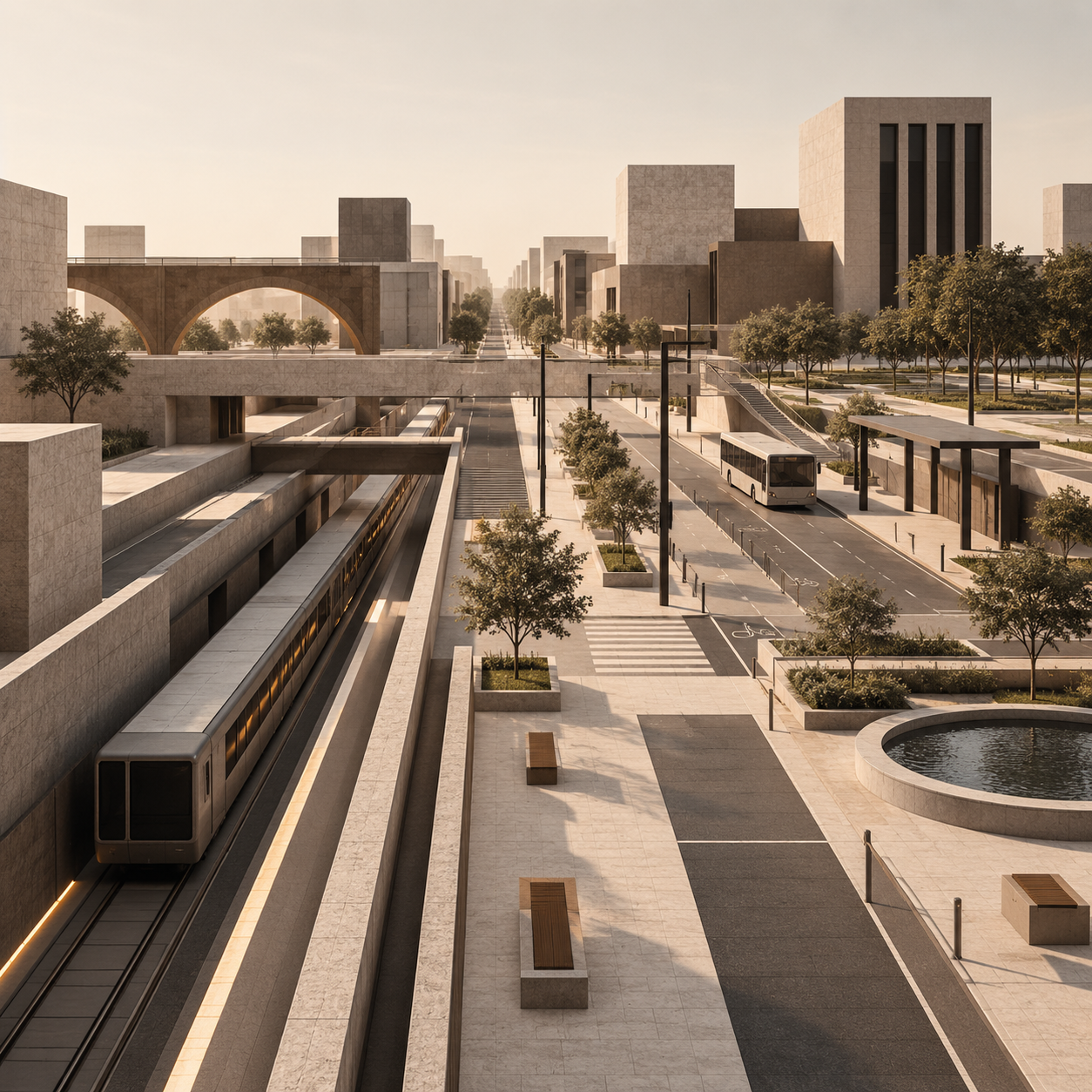
Groundwork Daily Builder
Omari Steele
Urban Systems, Infrastructure & Public Life
Omari Steele examines cities as operating systems. His Groundwork explores how infrastructure, transportation, public space, wayfinding, maintenance, access, and land use turn civic decisions into everyday conditions.