
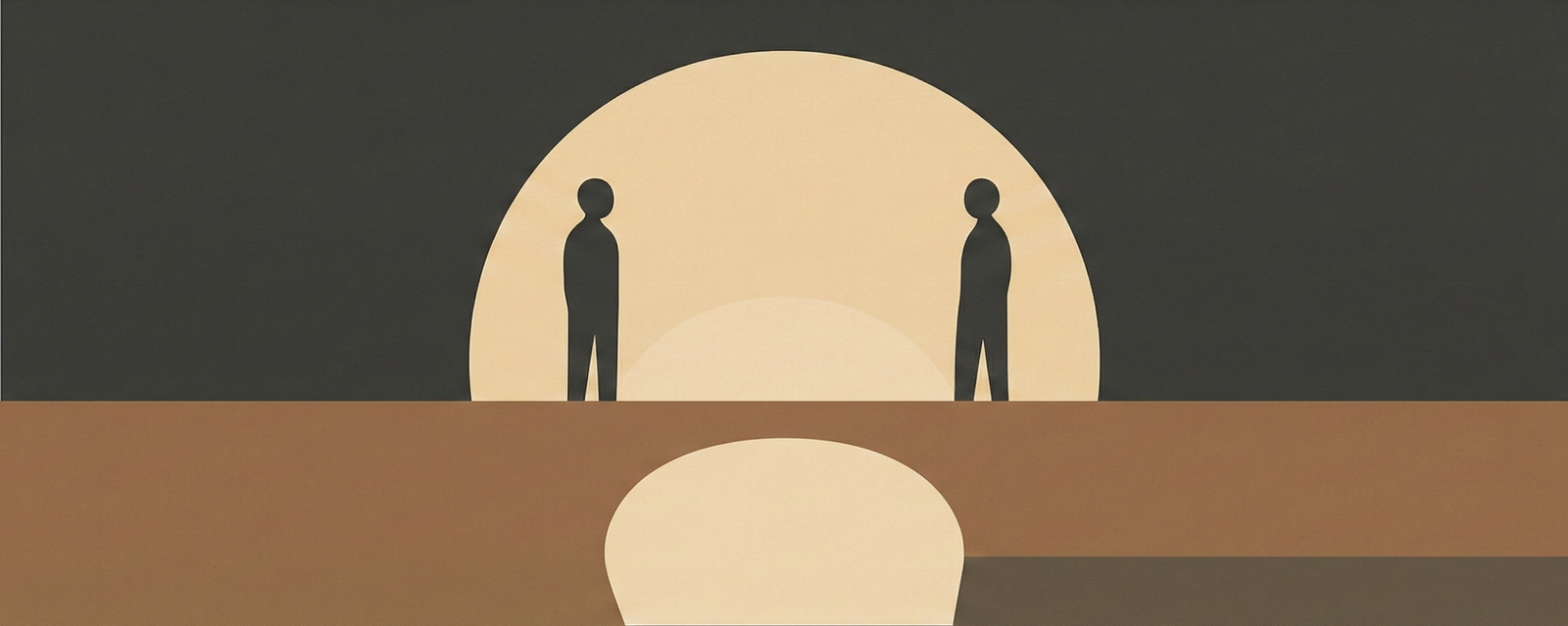
Groundwork Framework
History does not stop belonging to the people who made it simply because more people eventually benefit from what they built.
The civil rights diaspora framework helps explain what happened when Black American struggle changed the legal, political, and cultural structure of the United States. It also asks what followed when later generations entered a country that had already been altered by that work.
That starting point matters because many diaspora arguments begin with identity rather than history. The conversation quickly becomes a contest over belonging, gratitude, culture, or legitimacy. Once that happens, several different stories get flattened into one emotional debate.
A structural view gives us a better way in. Black Americans fought a long domestic struggle against slavery, segregation, disenfranchisement, discrimination, and exclusion. By the middle of the twentieth century, that struggle helped force major changes in federal law and public institutions.
During roughly the same period, U.S. immigration law also changed dramatically. In the decades that followed, migration from Africa and the Caribbean expanded. Meanwhile, Black American culture reached farther across the world, and the Black population inside the United States became more internally diverse.
These developments are connected. However, they are not interchangeable. Understanding the difference is where the framework begins.
The Framework in One Sentence
Legal struggle created protections. Institutional change widened access. Migration changed the population. Culture traveled even farther. The work now is to understand inheritance without erasing origin.
01 · Architecture
What the Civil Rights Diaspora Framework Tracks
Most diaspora debates begin too late. They start with today’s labels, today’s immigration disputes, or today’s social media arguments. As a result, the conversation often skips the structures that made the present possible.
This framework works in the opposite direction. First, it looks backward. Then it traces how struggle became law, how law changed institutions, and how later populations entered those altered systems.
1. Struggle
Organizing, litigation, protest, political pressure, resistance, and institution building changed what the country could continue to defend.
2. Law
Federal protections altered rules governing voting, employment, public access, education, and discrimination.
3. Access
As institutions changed, more people could participate in American systems under different legal conditions.
4. Inheritance
Later generations entered structures they did not originate but could still inherit, use, shape, and expand.
Inheritance Is Not the Same as Authorship
This distinction is central to the framework. Benefiting from a structure does not mean you created it. At the same time, inheriting a structure does not make your presence illegitimate.
Both realities can exist together. In fact, mature historical analysis depends on our ability to hold them at the same time.
02 · Timeline
The Structure Changed Before the Demographics Did
The modern Black population of the United States did not emerge in a vacuum. First, major legal and political structures changed. Over time, institutions adjusted, migration patterns shifted, and cultural exchange accelerated.
1954
Brown v. Board of Education
The Supreme Court rejects state-sponsored segregation in public schools as incompatible with equal protection. Consequently, the constitutional direction of the country begins to shift more clearly against legalized racial segregation.
1964
Civil Rights Act
Federal law directly confronts discrimination in major areas, including public accommodations and employment. Therefore, practices long defended as local custom become matters of federal civil rights enforcement.
1965
Voting Rights Act
Federal enforcement expands protection against racial discrimination in voting. As a result, the political landscape begins changing in places where Black citizens had long faced systematic exclusion.
1965
Immigration and Nationality Act
Separate immigration reform ends the national-origins quota system that had heavily favored immigration from parts of Europe. In the decades that follow, the new system helps reshape migration into the United States, including migration from African and Caribbean nations.
1970s–2000s
Black American Culture Expands Globally
Music, sports, language, fashion, entertainment, and political expression generated within Black American life become major forces in global culture. Meanwhile, those forms are absorbed, adapted, and remixed across borders.
Present
A More Internally Diverse Black America
Today, the U.S. Black population includes a growing number of immigrants and descendants of immigrants alongside the historic Black American population whose roots in the country reach back generations.
Connected Events Are Not Identical Events
These legal changes belong within the same broad historical era, yet they should not be reduced to one simple chain of causation. The Civil Rights Act and Voting Rights Act addressed racial exclusion inside the United States. Immigration reform, by contrast, changed the rules governing entry into the country.
Their consequences eventually interacted. Still, precision matters because a stronger argument does not need history to be more convenient than it actually was.
03 · Inheritance
Civil Rights Became an Institutional Inheritance
A right can begin as somebody else’s fight and still become part of your life. That is one of the central realities of institutional inheritance.
People born decades after a legal victory may never know the organizers who made it possible. They may not know the court cases or remember the photographs. Nevertheless, they can still attend the school, enter the workplace, vote in the district, use the public facility, challenge discrimination, or build a life inside the legal environment earlier struggle helped create.
You do not have to diminish someone else’s belonging to tell the truth about who carried the original load.
Specificity Is Not Division
Black American civil rights history deserves specificity because the people who carried that struggle were not an abstraction called “the diaspora.” They were people living within a particular American history and confronting particular American institutions.
For that reason, naming the origin of the struggle accurately should not be confused with rejecting later arrivals. Historical clarity creates better ground for cooperation because nobody has to disappear for the relationship to work.
04 · Culture
Law Was Not the Only Thing That Traveled
The legal story matters, but it is only one layer of the inheritance. Black American culture also became one of the country’s most powerful global exports.
Music traveled. So did language, fashion, athletics, entertainment, political vocabulary, faith traditions, and ideas about liberation. Through those channels, Black American life influenced people who had never lived inside the United States.
At the same time, cultural exchange did not move in only one direction. Caribbean and African communities also shaped Black American life, particularly as migration increased. Food, language, music, religious traditions, business networks, and family histories began crossing paths more often in American cities.
Shared Culture Does Not Require Shared Origin
That distinction helps us move beyond a competition over who “owns” every cultural form. Influence can travel in several directions while origin remains identifiable.
Keep the distinction clear:
Exchange becomes healthier when people can name what they received, what they contributed, and what they changed.
05 · Diaspora
Difference Does Not Cancel Connection
The word “Black” can describe a racial category, a political identity, a shared experience of anti-Blackness, a cultural identity, or some combination of those things. However, it does not automatically mean everyone inside the category shares the same lineage.
A Black American whose family has lived in the United States for centuries may carry a different historical inheritance from a Nigerian American, Haitian American, Jamaican American, Ghanaian American, or recent immigrant from another part of the African diaspora.
Those differences are real, but they do not prevent cooperation. In fact, ignoring them often makes cooperation weaker because people eventually notice when their history has been compressed into language too broad to describe them.
Connection Does Not Require Interchangeability
Better cooperation begins with enough confidence to preserve distinction. People can share institutions, neighborhoods, political interests, families, cultural spaces, and civic goals without pretending their histories are identical.
That approach makes room for connection without demanding erasure.
Cooperation
Clear History Creates Better Cooperation
The idea of a historical ledger can help, as long as the metaphor stays disciplined. The point is not to turn every relationship into a transaction. Instead, the ledger helps preserve memory.
Before asking people to unite, it helps to establish what happened, which institutions changed, who carried the risk, who inherited access, and what later communities contributed.
Before debating unity, establish the structure.
- Who carried the risk?
- Which institutions changed?
- Who inherited access?
- What did later groups contribute?
- Where are interests genuinely shared today?
These questions will not produce automatic agreement. Even so, they reduce confusion. Cooperation becomes more durable when no participant has to disappear inside the coalition.
Framework Library
Follow the Architecture
This page is the hub. From here, each piece isolates a different layer of the larger civil rights diaspora framework.
Cultural Architecture Legacy in Motion: The Architecture of Black American Culture Begin with the institutions, traditions, and creative systems built within the Black American experience. Institutional Access Civil Rights: Who Benefited? Examine how civil rights protections extended beyond the people who originally carried the struggle. Historical Accounting The Civil Rights Inheritance Ledger Separate cost, institutional change, inherited benefit, and continuing obligation without flattening history. Cooperation Diaspora Cooperation Framework Move from symbolic unity toward clearer boundaries, mutual benefit, and durable collaboration. Cultural Commentary The Diaspora Argument People Keep Getting Wrong See what happens when lineage, cultural exchange, history, and present-day disagreement get compressed into one online fight.06 · The Groundwork
Memory Without Contempt
Historical memory can fail in two directions. In one version, every inherited benefit becomes an accusation. In the other, calls for unity require everybody to forget where the underlying structure came from.
Neither approach is strong enough.
A better standard is memory without contempt, specificity without isolation, and cooperation without erasure. Black American civil rights history deserves to be understood in its own right. Likewise, African, Caribbean, and other diaspora histories deserve the same level of seriousness.
At the same time, people now share American workplaces, schools, neighborhoods, institutions, families, political coalitions, and cultural spaces. Therefore, the need for structural literacy has only increased.
Know What You Are Standing On
The purpose of this framework is not to determine who deserves the final word. Instead, it gives us a clearer account of the foundation beneath the current conversation.
Once the structure is visible, the next question becomes more useful: what can be built together without asking anyone to surrender history in the process?
The Groundwork
Remember the origin. Historical accuracy is not hostility.
Name the inheritance. Rights and institutions can outlive the movements that forced them into existence.
Build the next layer. Cooperation becomes stronger when history, boundaries, interests, and contributions remain visible.
Continue Building
This framework is the entry point. Continue from historical architecture into inheritance, then move toward cooperation.
→ Framework: The Civil Rights Inheritance Ledger
→ Mechanism: Civil Rights: Who Benefited?
→ Next: Diaspora Cooperation Framework
Receipts
→ Pew Research Center · Key facts about Black Americans
→ Pew Research Center · Race and identity among Black Americans
→ U.S. National Archives · Civil Rights Act
→ American Immigration Council · Black immigrants in the United States
Groundwork Architecture
How This Framework Fits
This framework sits inside a larger Groundwork system about how institutions carry history forward. It connects civil rights, continuity, culture, and civic structure without collapsing them into one story.
Core Principle
Build What Holds
Primary Condition
Continuity
Primary Territory
Civic Power & Policy
Connected Territory
Culture, Media & Leadership
The through-line is continuity: how struggle becomes structure, how structure survives its original generation, and how later communities encounter what earlier generations built.
Groundwork Daily
Build Better. Every Day.
Get new frameworks, essays, and structural analysis built to outlast the argument of the day.
Join the NewsletterGroundwork Daily Perspective
Built for the Longer View
Groundwork Daily Perspective develops foundational frameworks around structure, institutions, discipline, systems, and durable thinking. The purpose is not to win the argument of the moment. It is to leave behind a clearer structure for the next one.
Systems remember what arguments forget.