
The Daily Build · Season One · Week 5
The Discipline of Expansion
The Discipline of Expansion is a five-part Daily Build collection about growing without asking the existing structure to carry more than it can support.
Growth can feel exciting because the cost often arrives later. A new responsibility, project, habit, or increase in output may fit easily at first. The real test comes after novelty fades and the new load has to be carried on an ordinary Tuesday.
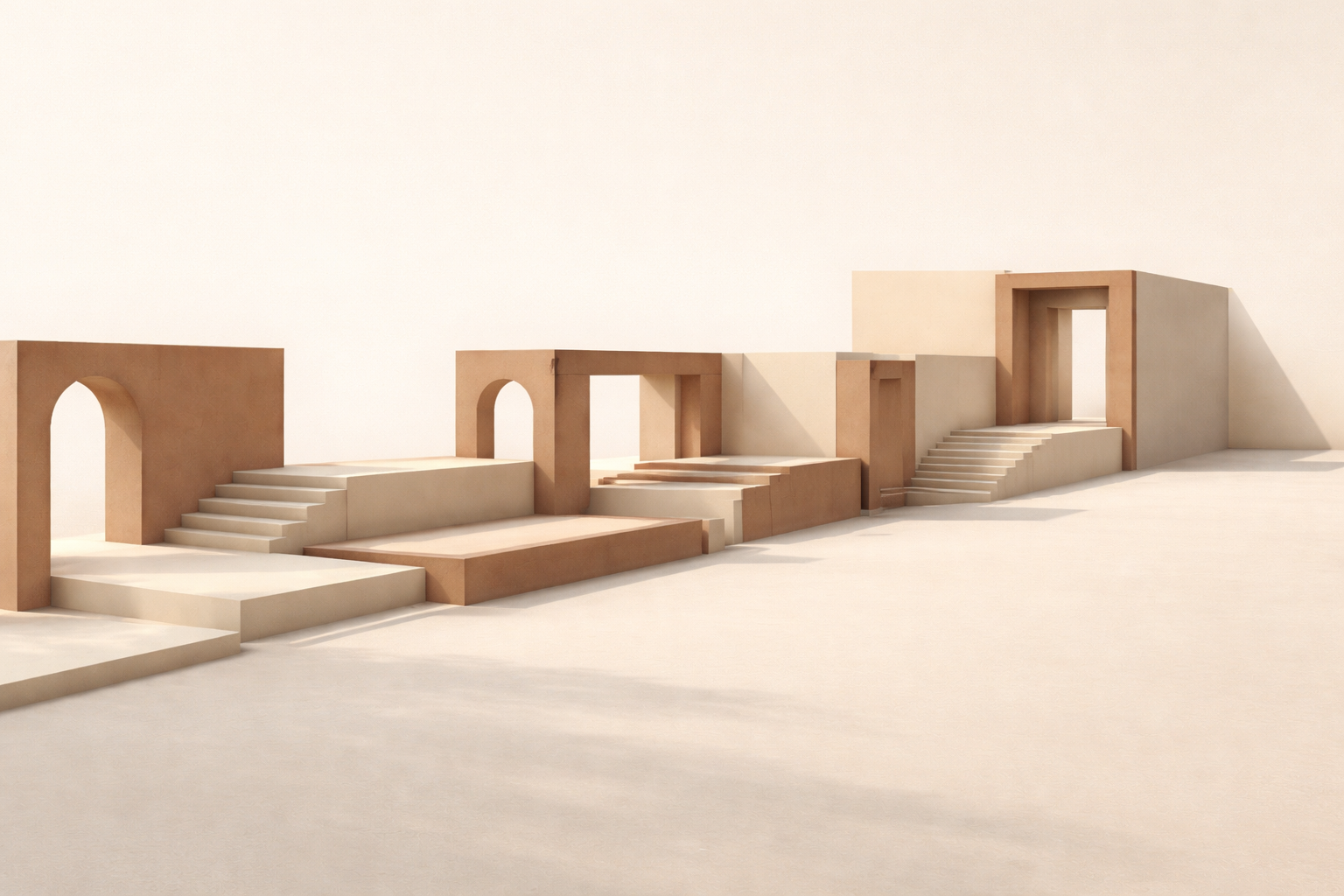
Series Collection
The Discipline of Expansion Begins With Capacity
This collection closes Season One of The Daily Build. The earlier weeks build repetition, structure, control, and stability under pressure. Only then does the series ask a harder question: what happens when you add more?
What The Discipline of Expansion Examines
Expansion creates weight. Every new commitment, responsibility, habit, tool, project, or increase in output adds something the existing structure must continue to support after the first burst of enthusiasm disappears.
At first, that added load may barely register. You are energized, attentive, and willing to improvise. Over time, however, the new responsibility joins everything else that already needs maintenance, time, sequencing, and attention.
That is where disciplined growth becomes different from simple accumulation. The question is no longer whether you can add something. The question is whether the larger life remains coherent after you do.
Every Addition Has a Carrying Cost
A new commitment does not only occupy the hour when you perform it. It may also require preparation, follow-up, communication, maintenance, recovery, storage, planning, or repeated decisions about where it belongs.
This is why some additions feel deceptively cheap at the beginning. The visible action is easy to measure. The supporting work is scattered across the rest of the week.
Once you start counting that hidden work, expansion becomes easier to judge honestly. A useful addition should create enough value to justify not only the action itself, but also the structure required to keep carrying it.
Growth Has to Fit the Person Carrying It
Capacity is not a moral issue. People have limits. Days have limits. Attention, energy, time, and recovery are finite even when ambition is not.
That matters because a system can look successful while quietly depending on a person operating too close to the edge. More work gets done, but sleep gets shorter. Output rises, but evenings become catch-up shifts. The new habit survives, but only because something else keeps getting pushed aside.
Durable expansion should not require the person to disappear inside the system. It should leave enough room for ordinary life to remain ordinary.
Evidence
Demands Work Better When They Match Available Resources
The basic logic has support beyond personal routines. The National Institute for Occupational Safety and Health notes that stress can emerge when job demands do not match the capabilities, resources, or needs of the worker. It also identifies excessive workload and poor work design as conditions that can create strain.
Read NIOSH guidance on demands, resources, and work stress →
The Expansion Test
Before You Add, Ask What Will Carry It
A good addition should not depend on permanent enthusiasm, heroic effort, or the assumption that future capacity will somehow appear. Instead, it should fit inside a structure that can absorb the new load on ordinary days.
The useful question is not simply, “Can I do more?” Ask, “What will have to change if I keep doing more?”
Five-Part Sequence
Read The Discipline of Expansion
Part 1 · Addition
Add Carefully or Pay for It Later
Every addition becomes future responsibility. What feels light at the moment of expansion can become recurring weight once novelty disappears.
Read Part 1 →Part 2 · Structure
More Output Requires Better Structure
Higher output cannot be supported by effort alone. A larger load requires stronger sequencing, clearer boundaries, and a structure designed to carry it.
Read Part 2 →Part 3 · Carrying Cost
What You Add Must Be Carried Daily
A useful addition is not judged by how exciting it feels on day one. It is judged by whether the responsibility still fits on an ordinary day.
Read Part 3 →Part 4 · Review
Expansion Without Review Creates Drift
Growth does not stay aligned by accident. Review exposes hidden cost, unnecessary complexity, and the parts of the expanded system that no longer serve the original purpose.
Read Part 4 →Part 5 · Pace
Growth That Lasts Is Built Slowly
Durable expansion is measured, reviewed, and reinforced. Slow growth gives the structure time to absorb the new load before another layer is added.
Read Part 5 →Why the Sequence Matters
The five builds are designed to be read in order because each one removes a different illusion about growth. First, addition is not free. Next, output needs structure. Then the new load has to survive daily repetition. After that, review catches the drift that expansion creates. Finally, pace determines whether the whole thing has time to stabilize.
Skip those steps and expansion can look successful while quietly weakening the base. Follow them and growth becomes less exciting in the short term, but much easier to trust over time.
The Core Principle of Disciplined Expansion
Growth that lasts is not built by adding as fast as capacity allows. It is built by leaving enough room for the structure to strengthen around what has already been added.
Therefore, expansion has to be reviewed after the new work becomes ordinary. The real carrying cost is rarely visible on day one. Sometimes the review confirms that the addition belongs. Other times, it reveals that something useful in theory became too expensive in practice.
Expansion is not successful because the system became larger. It is successful when the larger system remains coherent, useful, and human enough to keep.
Groundwork Principle
Build What Holds
Expansion should follow capacity, not ambition. Strengthen what is already carrying the load, add only what the structure can continue to support, and let durability—not speed—decide when the next layer is ready.
Explore Build What Holds →What Comes Next
Season Two Tests Whether the Structure Survives
Season One ends by asking how to expand without weakening the base. Season Two then puts that structure under harder conditions: fatigue, interruption, changing circumstances, recovery, maintenance burden, busy weeks, and ordinary human capacity.
In other words, expansion is not the end of the argument. Once the structure grows, the next question is whether it can recover, adapt, and remain livable.
Continue with Starting Again Is Part of the Build →The Daily Build
Explore the Full Series
The Discipline of Expansion is one collection inside The Daily Build. The full series moves from foundational discipline into reduction, recovery, resilience, maintenance, adaptation, rhythm, and durability.
Explore The Daily Build →Groundwork Daily
Build Better. Every Day.
Get new Daily Build entries and Groundwork thinking on capacity, structure, recovery, maintenance, and growth designed to last.
Join the Groundwork
Small structures. Useful corrections. Progress built slowly enough to hold.