
What happens after the quarter zip stops being the internet’s favorite symbol? That is where the cultural joke becomes a much more serious question about identity, discipline, stability, and what actually lasts.
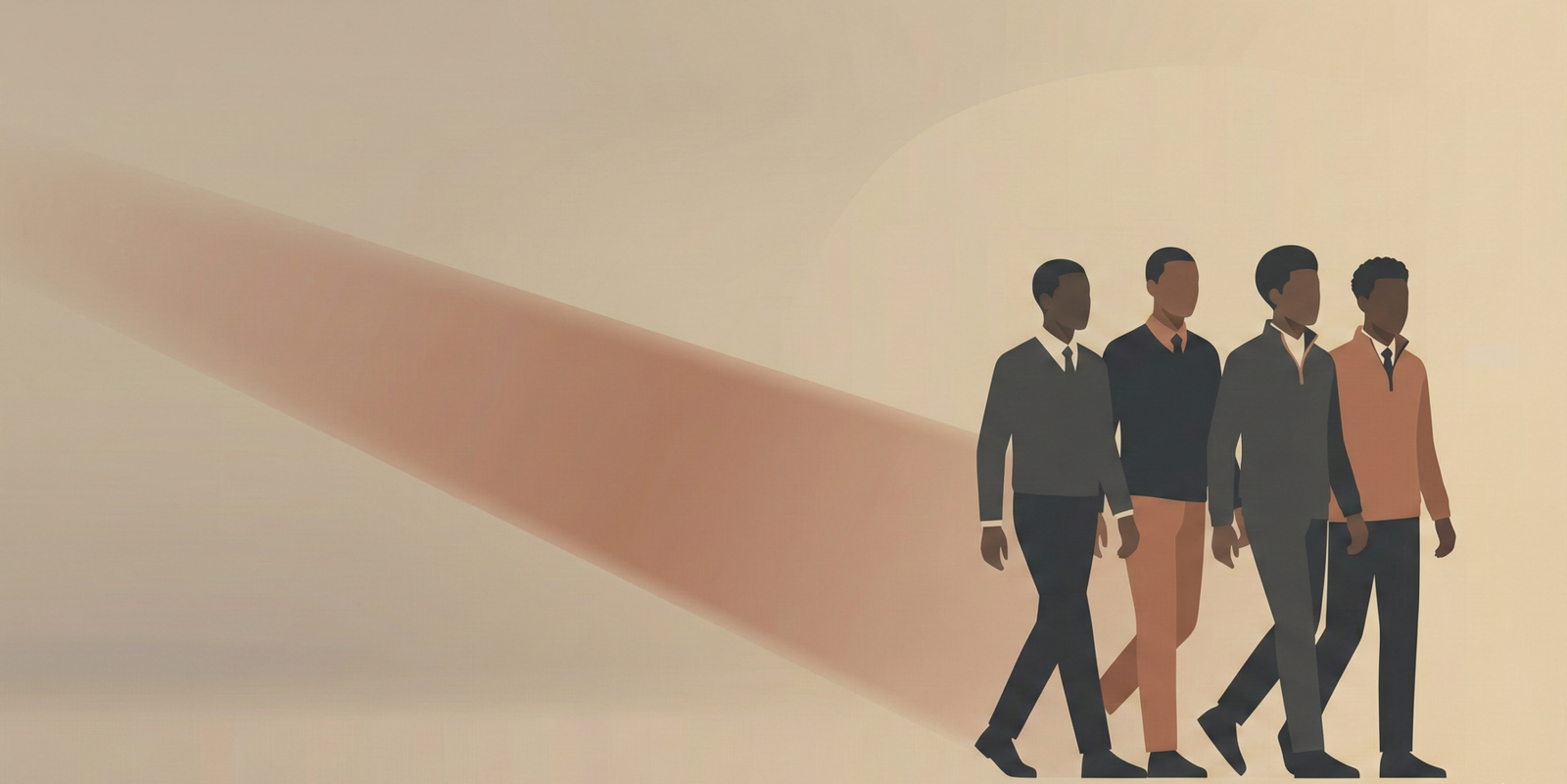
The Quarter Zip Movement made another version of young Black masculinity visible. It offered a playful contrast to harder streetwear codes and introduced a public language of calm, work, money, softness, and aspiration.
However, trends cannot maintain transformation by themselves.
Eventually, attention moves somewhere else. The algorithm finds a new joke, while the clothes settle into ordinary wardrobes.
At that point, one question matters more than whether the trend remained fashionable: Did anything underneath the look actually change?
Inside This Groundwork
The Visible Beginning
What Happens After the Quarter Zip Movement’s First Layer?
The early appeal was easy to recognize.
A clean knit over a button-down created a calmer silhouette than the style being parodied in the trend. Add matcha, glasses, work bags, cleaner fits, and exaggerated professional language, and the joke became instantly legible.
Yet the humor worked because people already understood the contrast.
Instead of public chaos, the performance suggested composure. Rather than survival posture, it leaned toward aspiration. Meanwhile, career language and financial references added another layer of cultural meaning.
Of course, the quarter zip did not create any of those qualities.
Instead, it gave them a visual form the internet could recognize quickly.
The Important Distinction
The garment made the shift visible. It did not make the shift real.
The Full Arc
How the Quarter Zip Cluster Built the Argument
Groundwork approached the trend from several different angles because no single article could explain the whole shift.
Softness as Strategy
Why Softness Became Armor examined why quieter presentation could feel strategically useful in a culture that often reads Black male presence through threat.
Behavior Beyond the Clothes
Next, The Old Code vs The New Code moved the conversation from appearance into behavior. It asked which forms of survival intelligence remain useful and which ones become expensive when they never switch off.
Calm as an Internal Practice
Meanwhile, Matcha Masculinity looked underneath the joke toward stress, recovery, routine, and emotional regulation.
The Uniform as a Public Signal
Finally, The Uniform examined clothing itself as social information.
Importantly, that essay made a key distinction: appearance may influence perception, but it does not prove character, guarantee safety, or erase bias.
This closer now asks what all four pieces were ultimately pointing toward.
A Low-Risk Experiment
Why the Quarter Zip Was an Easy First Move
Deep identity change is difficult. Buying a sweater is not.
That difference helped make the trend culturally useful.
A person did not need to announce a complete life overhaul. Instead, the experiment could start with something small and reversible.
Perhaps the clothes changed first. Then the routine changed slightly. A new environment might follow. Eventually, the joke could expose a more personal question.
Do I actually want less chaos?
Would a calmer version of my life feel better?
What would need to change for that calm to become real?
As a result, the visual experiment could create room for structural curiosity.
Sometimes transformation enters through the smallest available door.
Where the Trend Gets Serious
What Happens After the Quarter Zip Becomes Ordinary?
Aesthetic change is easy to photograph. Structural change is much harder to display.
For example, structure can look like going to bed early enough to function tomorrow. It may mean paying the bill before upgrading the wardrobe. Sometimes the improvement is learning to leave an argument before ego turns the moment into damage.
In other cases, the upgrade is a résumé, certificate, budget, workout schedule, cleaner home, stronger relationship boundary, or better circle of friends.
None of those changes will trend as easily as the quarter zip.
Nevertheless, they are much more capable of changing a life.
Routine
Does the week have enough structure to keep every obligation from becoming a crisis?
Money
Is financial aspiration becoming budgeting, saving, skill-building, and ownership?
Emotional Regulation
Can intensity be experienced without automatically becoming public escalation?
Relationships
Are the people closest to you experiencing greater reliability, accountability, clarity, and repair?
Core Principle
The promise underneath this cultural moment is not respectability. It is greater range. Structure creates more choices because fewer decisions are dictated by disorder, financial pressure, impulse, or constant reaction.
The Groundwork Progression
From YN to YG to Builder
Groundwork uses the YN → YG → Builder progression as an interpretive model for this cluster.
These labels are not diagnoses, universal definitions, or claims about every young Black man. Instead, they describe different operating scripts.
YN: The Survival Script
The YN archetype is organized around alertness, rapid reaction, status protection, and the intelligence needed to navigate unstable environments.
Some of those instincts contain useful information. However, they become expensive when survival mode never shuts down.
YG: The Experiment
YG, or Young Gentleman, changes the visible and behavioral code.
Career language, softer silhouettes, calmer presentation, and financial aspiration become part of the experiment. Even so, YG remains partly a signal.
It shows what someone may be moving toward.
Builder: The Evidence
Builder is where the signal must become evidence.
At this point, the wardrobe matters less because the life begins producing its own proof. Bills are handled, useful skills increase, and relationships become more stable.
Meanwhile, responsibility becomes less theatrical because it is being carried regularly.
This progression connects directly to Masculinity as Structure , where identity becomes credible through repeated behavior rather than aesthetics alone.
Primary Condition
Continuity allows a useful system to survive transition. In this case, the test is whether healthier habits remain after the novelty, attention, audience, and quarter zip itself stop reinforcing them.
The Real Test
What Happens After the Quarter Zip Trend Fades?
Every cultural moment eventually loses novelty.
That is normal rather than tragic. Trends are supposed to move.
Therefore, the useful question is whether anything travels forward with the people who participated.
What Would Lasting Change Look Like?
A durable shift might leave behind:
- a calmer relationship with conflict
- stronger financial habits
- greater interest in ownership and career development
- more deliberate friendships
- better emotional language
- a healthier relationship with stress and recovery
- more confidence moving across social environments
- a larger idea of what Black masculine identity can contain
If those changes remain, the movement mattered beyond fashion.
If they do not, the sweater still had a good run.
Cultural experimentation does not need to become a revolution to have value. Still, Groundwork is most interested in whatever manages to hold.
What Must Be Left Behind
The Quarter Zip Cannot Become Another Respectability Test
There is a bad ending available to this story.
In that version, the quarter zip simply becomes another rule for deciding which Black men look acceptable.
That would be regression disguised as progress.
A hoodie does not make someone irresponsible. Likewise, streetwear does not make a person dangerous, and business casual does not make someone trustworthy.
Consequently, the cultural experiment becomes more useful once it outgrows the temptation to assign moral value to clothing.
The destination is not looking respectable. It is building a life that can carry responsibility.
The broader context also matters. Readers can explore Pew Research Center’s Race and Ethnicity research alongside its more specific work on contemporary perceptions of men and masculinity.
The Next Signal
What Might Come After the Quarter Zip?
Another garment will probably capture attention eventually because fashion keeps moving.
Yet the more interesting possibility is that the next stage depends less on one uniform.
Visually, the code may broaden into soft tailoring, elevated sportswear, knit polos, workwear, classic outerwear, loafers, sneakers, or combinations that blur older boundaries between streetwear and professional dress.
The More Important Shift May Be Behavioral
Instead of “look at the uniform,” status may become quieter.
Knowing how money works carries weight. So does keeping an ordered home, developing useful skills, maintaining health, and knowing when not to react.
Likewise, a person who can move comfortably between environments without losing identity demonstrates a different kind of range.
Groundwork uses quiet competence as a forecast lens for that possibility.
It is not a formal Groundwork framework or a declared cultural trend. For now, it simply describes a useful possibility: the signal becomes quieter because the evidence becomes stronger.
The next level of signaling may be a life that needs less explanation.
The Builder Test
How to Know the Cultural Experiment Became Something More
Do not measure the movement’s legacy by how many quarter zips remain in rotation.
Instead, watch behavior.
Money
Did credit-score jokes become real financial literacy, saving, investing, and ownership?
Work
Did professional aesthetics become useful skills, credentials, competence, and mobility?
Relationships
Did calm presentation become emotional presence, accountability, boundaries, and repair?
Identity
Did the experiment expand what young men believe they are allowed to become?
Those outcomes would represent more than adoption.
More importantly, they would represent transfer.
The Groundwork
What Happens After the Quarter Zip Is the Real Story
Trends can open doors because they make experimentation socially easier.
Someone can try something new without declaring an entirely new identity. That lightness can matter because the joke sometimes arrives before the philosophy.
Likewise, clothes may arrive before habits.
Sometimes a person has to see another version of himself before imagining how to live as that person.
None of this means the quarter zip saved anybody.
Its contribution was smaller and more interesting: it created a culturally legible doorway.
The Work Still Belongs to the Person
Build the skill and learn the money. Protect health while improving the environment around you.
When conflict arrives, govern the anger instead of handing it the wheel. If a relationship breaks, repair what can be repaired.
Most importantly, keep the promises that matter.
Once those things begin to hold, the movement no longer depends on the sweater.
It has become structure.

Continue Building
Move from the cultural signal into the systems that make identity durable.
→ Core Principle: Structure Builds Freedom
→ Condition: Continuity
→ Framework: Masculinity as Structure
Receipts
→ Pew Research Center: How Americans See Men and Masculinity
→ Pew Research Center: Race and Ethnicity Research
→ American Psychological Association: Resilience and Adaptation
Keep Building
Trends Move. Groundwork Should Hold.
The Groundwork List connects cultural signals to identity, money, relationships, institutions, discipline, and the systems that remain after attention moves somewhere else.
Join the Groundwork List