Legacy in Motion is Groundwork Daily’s long-horizon series on family, responsibility, and continuity.
It examines how behavior systems extend across time and become the structures people inherit.
A life is not measured only by momentum. It is measured by what continues to stand after decisions compound.
What repeats in a household becomes normal. What becomes normal becomes expected. What is expected becomes inherited.
The mission is simple. Treat legacy as a living system. Family structure, commitment, boundaries,
and provision are not abstract values. They are operational patterns that shape children, relationships,
and futures long before new decisions are made.
Legacy in Motion operates like a long-range audit. It examines how responsibility is assumed,
deferred, or avoided—and what each pattern produces over time. No nostalgia. No moral theater.
Just a clear look at what holds and what quietly breaks across generations.
Legacy is not something built later. It is already in motion. Every repeated behavior is contributing to it,
whether intentional or not.
Every installment answers three questions.
1. What system is being built
The family structure, commitment pattern, or relational model currently repeating.
2. What it produces over time
The downstream effects on children, stability, trust, and opportunity as those patterns compound.
3. What must be corrected now
The disciplined action required to protect continuity instead of reinforcing drift.
Time is not neutral. What is not guided drifts. What is not maintained decays.
What is not protected does not last.
This is responsibility practiced with intention. This is family treated as infrastructure.
This is behavior understood across time, not just in moments.
Transactional honesty is not cynicism. It is clarity about what each person is offering, needing, and protecting in a relationship so no one ends up resenting the bill that shows up later. When people refuse that clarity, conflict fills the space honesty avoided.
What makes a man a man is not dominance or image. It is consistency under pressure, emotional control, and the discipline to carry responsibility when it counts.
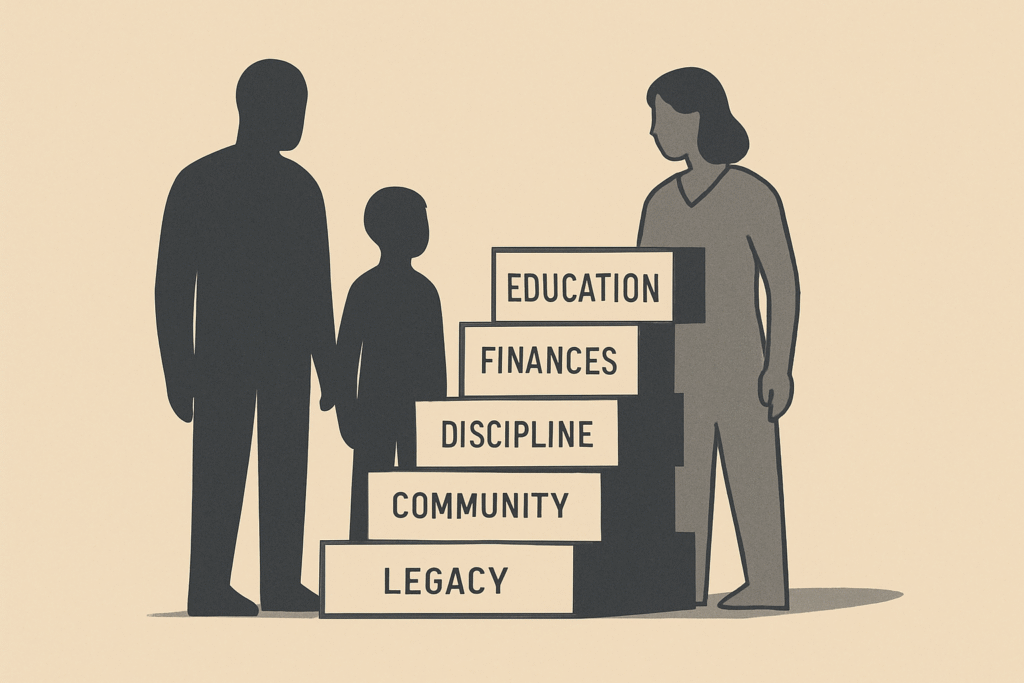
Families are strongest when structure comes first. This framework lays out how education, finances, discipline, community, and legacy form the foundation long before a child is born. Stability is built by preparation, not reaction.
Does body count matter in a relationship? Marcus Vaughn moves past sexual scorekeeping to examine what history can reveal about discipline, honesty, patterns, compatibility, and the standards two people are trying to build together.
A disciplined look at how modern dating dynamics changed approach behavior, why men now protect their peace before pursuing connection, and how clarity reshapes relationship patterns.
The language of “body count” tries to sound new, but it is ancient. It is a different name for the same old habit of measuring women’s worth against their restraint
Communication is more than speaking. It is the daily practice of listening, clarifying, repairing, and growing together. Through the perspectives of N. Grace James and Malik Rivers, this reflection explores how trust is built through grace, accountability, and intentional conversation. Lasting relationships are strengthened not by perfect words, but by the discipline of returning to one another with humility and purpose.
Modern masculinity can turn purpose, discipline, and independence into performance. This piece examines validation, authority, algorithms, and what grounded purpose should actually build.
From a woman’s perspective, love grows through presence, patience, and honest communication. Strong relationships are not built on perfection but on trust, respect, and the willingness to grow together without losing individuality.