

Patterns Repeat When They Are Not Seen
Habit pattern awareness helps you see what repeats before it becomes a problem. When patterns are visible, you can adjust them early and protect consistency.
Groundwork Daily Series Archive
The Daily Build is Groundwork Daily’s practical series about the small routines, corrections, and repeatable structures that make everyday life easier to carry. It examines what helps useful behavior begin, recover, adapt, repeat, and remain durable under real conditions.
This is not a collection of perfect routines or motivational performances. The work is more practical than that. Reduce unnecessary friction. Protect what already works. Recover after interruption. Adapt when conditions change. Build recognizable rhythm. Keep the maintenance burden low enough that the system remains worth living inside.
Each article can be used on its own. Together, the archive builds a larger argument: durable progress comes from structure that can survive contact with ordinary life.
Start Here
You do not need to begin at the oldest post simply because it came first. Choose the entry point that matches what you need now.
If you want the broader Groundwork logic behind controlled growth, structure, and expansion, begin with the foundational framework.
If a routine has fallen apart, life changed, or you simply need a practical way back into useful structure, begin with the Season Two bridge.
The series treats consistency as an operating problem rather than a character judgment. Useful behavior becomes easier to keep when the surrounding structure asks less unnecessary effort from the person using it.
Across the archive, that means reducing friction, making good actions easier to begin, recovering without ceremony, protecting useful structure, adapting without destroying what still works, giving recurring work recognizable rhythm, and designing systems that become lighter to maintain over time.
Season One
Season One establishes the first layer of The Daily Build: repeatable action, environmental structure, controlled response, stability under pressure, and disciplined expansion. The progression moves away from intensity and toward systems that can carry useful behavior consistently.
Week 1 · Starting With What Holds
Build repeatable actions, reduce unnecessary friction, and establish a foundation that does not depend on intensity.
Week 2 · Reinforcing Structure
Shift more of the burden from effort toward system design, environmental cues, and dependable structure.
Week 3 · Control Before Reaction
Develop boundaries, precision, and the ability to act deliberately before pressure makes the decision for you.
Week 4 · Stability Under Pressure
Test capacity, time control, and consistency when conditions become less convenient.
Week 5 · The Discipline of Expansion
Expand carefully, review honestly, and grow at a pace the existing structure can actually support.
The Bridge
Season Two begins by rejecting one of the most damaging assumptions in habit culture: interruption does not return you to zero. Useful structure can survive a missed day, a difficult week, or a changed season of life. The next move can begin from what remains.
Season Two
Season Two puts the system under pressure. Instead of asking whether a routine can work under ideal conditions, it asks whether useful structure can survive fatigue, interruption, busy weeks, changing circumstances, ordinary maintenance, and the imperfect capacity of a real human life.
Week 1 · Reduction
Reduction removes recurring decisions and unnecessary complexity before another layer of management gets added.
Week 2 · Recovery
Recovery works better when it happens before collapse and has a real place before every other demand fills the available space.
Week 3 · Resilience
Resilience means the system can contract when capacity falls and provide a recognizable return path after interruption.
Week 4 · Maintenance
Maintenance preserves what is already carrying useful load and corrects ordinary drift without turning every imperfect week into a full reset.
Week 5 · Adaptation
Adaptation distinguishes temporary compression from genuine environmental change and modifies only what the new conditions require.
Week 6 · Rhythm
Rhythm reduces repeated negotiation. Defaults make the next action easier to find, while cadence gives important recurring work a familiar place to return.
Week 7 · Durability
Durability asks how much work the system itself requires and whether the larger life around it can operate within ordinary human capacity.
Season Two begins with starting again and ends with a whole-life durability test. Between those points, the system learns to carry less, recover sooner, shrink under low capacity, preserve what works, adapt selectively, develop rhythm, and lower its own maintenance cost.
The final standard is not perfection. It is livability: can useful work, maintenance, recovery, relationships, disruption, and ordinary human capacity coexist without the system constantly needing rescue?
Groundwork Principle
The Daily Build is one practical expression of a larger Groundwork principle: useful structure should continue carrying weight after novelty disappears and conditions stop cooperating.
What holds is not necessarily the most elaborate system. Often, it is the structure with fewer unnecessary decisions, a shorter recovery path, enough margin to adapt, and a maintenance cost low enough that the person can keep living inside it.
You can read The Daily Build in order, but you do not have to. If one problem is already obvious, begin there.
The purpose is not to complete the archive. It is to find the piece of structure that reduces the amount of unnecessary struggle around the life you are already living.
The Daily Build is the daily-practice layer of Groundwork Daily’s Education & Skills coverage. It turns larger ideas about discipline, behavior, systems, recovery, and durability into structures that can be tested in ordinary life.
Groundwork Daily looks beneath visible results for the structures carrying the weight. Join the newsletter for new Daily Build entries, practical systems, and deeper Groundwork thinking.
Complete Archive
The posts below update automatically as The Daily Build grows. Start with the problem that is most useful now, or move through the archive in sequence.
Habit pattern awareness helps you see what repeats before it becomes a problem. When patterns are visible, you can adjust them early and protect consistency.

Environment habit structure shapes behavior before effort begins. When your surroundings reduce friction, consistent action becomes easier to repeat without relying on motivation.

Restarting discipline is not about beginning from zero. It is about returning to one small action that keeps the structure intact.

Discipline builds identity long before results appear.

Repetition discipline consistency is built when the work stops feeling fresh and still remains part of your day.

Awareness of habits is how discipline is protected. What you notice is what you can correct.

A simple routine structure is not about doing more. It is about making repetition easier to return to.

Starting again is not failure. It is the structure behind discipline and the reason consistency becomes possible.
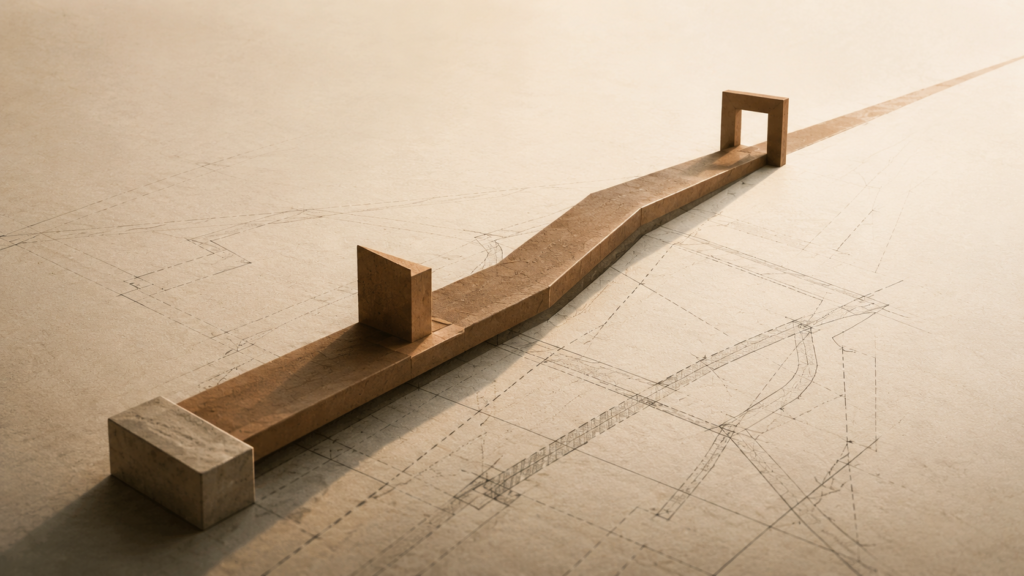
You do not need a ten-year plan. You need a two-year direction that is honest, simple, and structured enough to guide your decisions without trapping you.

Small daily wins are not dramatic, and they do not need to be. A few useful actions can reduce drift, protect what already works, and keep ordinary maintenance from becoming a larger repair.