

The Family Group Chat Is a Portable Home
A family group chat can become more than a stream of messages. Across distance, it can carry care, language, photographs, memory, obligation, and the ordinary presence that keeps a family connected.

A family group chat can become more than a stream of messages. Across distance, it can carry care, language, photographs, memory, obligation, and the ordinary presence that keeps a family connected.

What happens when you visit the country your family taught you to call home and discover that you are foreign there too? For many people in diaspora, ancestral return can bring recognition and estrangement at the same time.

People call it going back, even when you were never there. What happens when the homeland inherited through family stories finally meets the place as it exists now?

Many bilingual people notice that humor, confidence, intimacy, even the way they tell a story can shift with language. The change is real—but it is more complicated than having a different personality in each one.
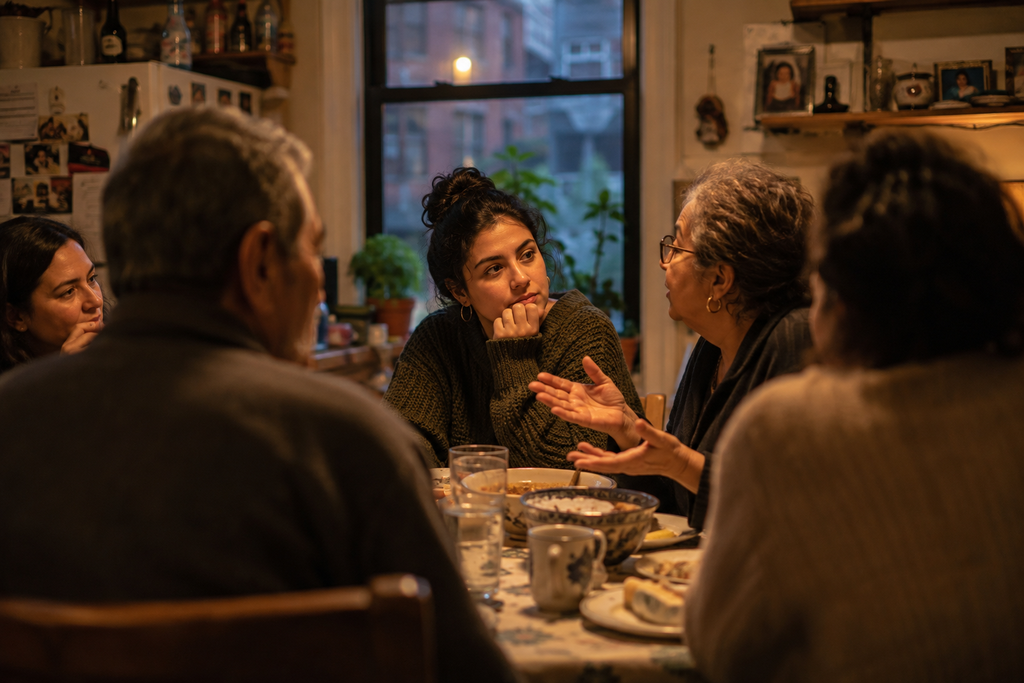
Why can you understand a heritage language but struggle to speak it? Receptive bilingualism reveals what family, memory, and identity can carry forward even when the words become harder to say.

Home is not always a place on a map. Explore how memory, relationships, and cultural identity create a lasting sense of belonging across generations.

Heritage language carries more than words. It preserves memory, identity, and belonging across generations. Explore why language is often lost quietly through everyday life rather than dramatic change.

Many children of immigrants become translators long before adulthood. They bridge languages, cultures, and generations while carrying responsibilities far beyond their years.

Every name carries more than identity. It preserves migration, memory, language, and belonging across generations. Discover how the invisible borders within families continue shaping who we become in the inaugural essay of Borderlines.