
Read Map
What makes a place feel like home is rarely geography alone.
A person can know an address, remember every turn on a childhood street, or claim a country as their own and still feel unsettled there. Home begins somewhere deeper, when enough of the surroundings become recognizable that the body no longer has to brace against them.
Someone knows your name. A familiar smell reaches the kitchen. A joke does not need explanation. A voice uses the language in which affection first made sense.
For people shaped by migration, diaspora, or family movement, those signals may no longer belong to one address. They travel. A recipe crosses an ocean. A prayer survives a move. A family saying enters another generation. Someone recreates a holiday in an apartment thousands of miles from the place where the tradition began.
Over time, home becomes layered. It can belong partly to a place that was left behind, partly to the place where life happens now, and partly to people whose presence makes either location recognizable.
This is one of the central tensions of Borderlines: some borders divide countries, while others divide the places we inhabit from the places that continue inhabiting us.
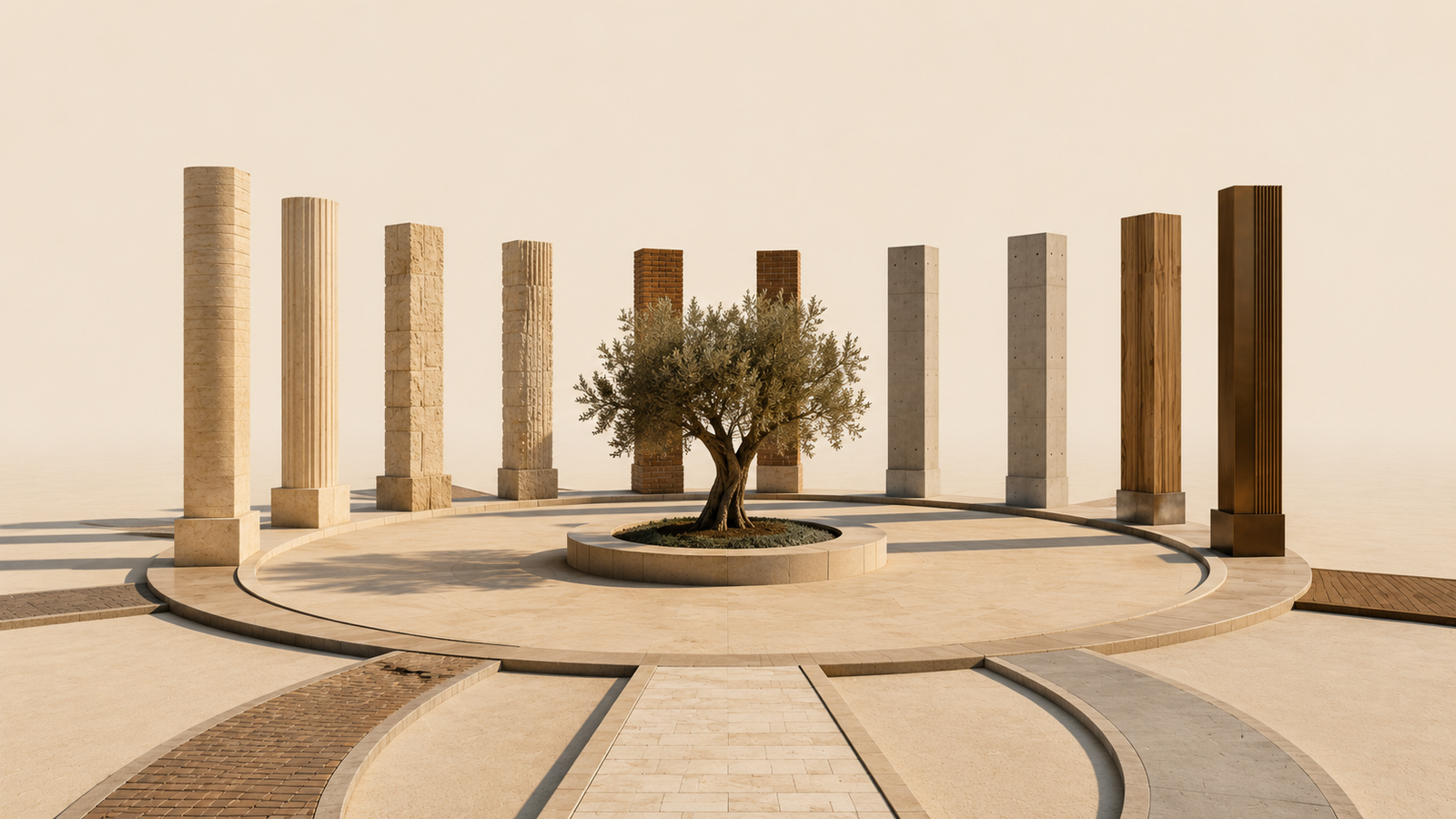
What Makes a Place Feel Like Home?
Home forms through recognition.
Someone understands the story behind your habits. Another person remembers the recipe, the greeting, the silence, or the song. You do not have to explain why a certain date matters or why one particular smell can pull childhood abruptly into the room.
Recognition changes the experience of place. A house can shelter people without making them feel rooted. A hometown can become unfamiliar after enough time passes. A country can be legally yours while still asking you, in room after room, to explain yourself.
Geography matters, but it cannot do all the work. What makes a place feel like home also includes where the self can settle without constant performance.
That distinction becomes especially important after migration because the first version of home often survives in memory. People search backward for it, sometimes expecting the old place to provide exactly what it once did.
Yet belonging can also be built ahead of us. Some forms of home are inherited. Others have to be made again.
Belonging Beyond Geography
Belonging gives home its emotional structure. Without it, even a familiar place can feel temporary. With it, a modest room can become steady.
The difference is not square footage. It is the experience of being recognized without having to reduce yourself first.
For people who live between cultures, that recognition can be uneven. One country may recognize citizenship but know little about family history. Another place may recognize ancestry while questioning language, accent, cultural fluency, or whether someone has remained close enough to claim it.
Family memory complicates the picture further. A person may feel attached to a town, island, neighborhood, or country they never fully inhabited because stories made that place part of the family imagination long before they ever visited it.
Home then stops behaving like a single point on a map. Several places can shape one life without canceling one another out.
That is not necessarily confusion. Sometimes it is simply the architecture of diaspora.
Place, Memory, and Identity
Place still matters because memory needs somewhere to gather.
A kitchen can hold a family system. A church basement can carry community history. A front step can contain childhood. A storefront, school hallway, garden, block, or holiday table can accumulate more emotional meaning than its physical dimensions suggest.
But memory does not stay trapped there. When families move, pieces of place move with them.
They appear in the way furniture gets arranged. They return through meals prepared on certain days. A language surfaces during anger, prayer, tenderness, or grief even when another language dominates everyday life.
This is one way identity remains connected to place after geography changes. Families rarely recreate the old home perfectly; they build adaptations instead.
A version of home appears in a new apartment. Another forms around a holiday table. A child’s name can carry a geography forward without the child ever having lived there.
Memory makes place portable, but never unchanged.
Family as Portable Home
For many people, family becomes the first portable home. That does not mean every family provides safety, and the distinction matters.
Some families wound, silence, control, or demand loyalty without offering care. Blood alone cannot guarantee belonging. A family relationship becomes a carrier of home only when it contains enough recognition, safety, responsibility, and care to make return meaningful.
When family does function that way, it can provide orientation that survives distance. A parent recreates part of home through a meal. A grandparent restores it through a saying. Shared humor between cousins can collapse years and miles in seconds. An elder may preserve names and stories that would otherwise disappear.
These acts create continuity .
In that sense, home is not only inherited land. It can also be inherited attention: someone remembers enough to pass something forward, another person keeps asking questions, and a younger relative learns why a ritual matters instead of merely repeating it.
The family becomes portable not because nothing changes, but because enough remains recognizable while change is happening.
Rituals That Rebuild Home
Ritual gives belonging a schedule.
The acts themselves may be small: a weekly phone call, a birthday dish, the holiday recipe, a greeting at the door, a song everyone knows, or the phrase an elder repeats whenever someone leaves. Repetition gives those acts weight until the ritual becomes a route of return.
For families spread across cities, countries, languages, and generations, these patterns can provide some of the structure geography no longer supplies.
A ritual cannot replace a homeland. It can, however, preserve continuity when the homeland is distant, inaccessible, transformed, or remembered differently by different generations.
This is why what makes a place feel like home often has less to do with walls than with patterns of return. The body learns repetition. Families do too.
What happens again and again begins to tell people what belongs to them, what they belong to, and where they can still find one another.
Diaspora and the Portable Home
Diaspora produces a particular relationship with home because home is remembered and remade at the same time.
Portable home can appear in a neighborhood containing many versions of elsewhere. It may surface in a grocery aisle, a religious service, a restaurant, a family group chat, a summer visit, or a song played loudly because someone wants to feel close to a place they cannot reach.
These experiences are not inferior substitutes for a supposedly “real” home. They are among the ways dispersed communities make continuity possible across distance.
Portable home can also carry grief.
The childhood neighborhood changes. A family house is sold. Elders die. The language softens across generations. Recipes adjust to ingredients available somewhere else. Even the homeland itself continues moving through politics, development, economics, climate, and ordinary time.
The place remembered by someone who left thirty years ago may not be the place encountered by the grandchild who visits today. Both can be real, and neither can fully recover the other.
Home can therefore be lost without disappearing. Sometimes time changes it until memory and geography no longer match.
The Signals of Home
What makes a place feel like home can be understood as a set of signals rather than one permanent feeling.
- recognition
- safety
- shared memory
- language
- ritual
- belonging
- familiar rhythm
- emotional permission
Recognition tells a person they are not invisible. Safety allows the body to stop preparing for dismissal. Shared memory means history has witnesses, while language can remove the need to translate every part of experience.
Ritual gives people a path back. Belonging allows the self to participate without constantly auditioning for place.
Because these signals work together, home can appear somewhere unexpected. A rented room may feel steadier than a childhood house. A friend’s table can feel safer than a family gathering. A community formed later in life may provide more recognition than the town where someone grew up.
That does not weaken the meaning of home. It makes the meaning more precise.
When Home Changes Shape
Home can change before people are ready to admit it.
The street may still exist while the people who made it familiar are gone. A house can remain standing after the feeling attached to it has shifted. A country may still be reachable even though returning no longer feels simple.
Traditions change too. A family may prepare the same meal every year, yet the person who once gave the ritual its meaning is missing from the table.
Grief often enters through this gap between continuity and change. People keep searching for the old form of home because memory tells them it should still be there.
But home is not a preserved room behind glass. It changes because the people inside it change, because neighborhoods change, because families gain and lose members, and because time alters what a place can offer.
The work is not to pretend otherwise. It is to notice what still carries belonging and what no longer does.
Without that distinction, people can remain loyal to places that stopped holding them while overlooking the relationships, communities, and practices that do.
Building Belonging
Belonging is not entirely accidental. Much of it is built through repeated care.
People contribute to it when they learn names correctly, make room for unfamiliar histories, and resist asking others to erase themselves before participating.
Families strengthen belonging when younger generations can ask questions without being mocked for what they do not know. Communities strengthen it when newcomers are allowed to contribute without pretending they arrived without a past.
Individuals have work to do as well. Living between places, languages, or cultures does not automatically mean someone lacks roots. Roots can travel through names, recipes, songs, stories, faith, humor, language, memory, and responsibility.
Once that becomes visible, building home becomes less about recovering one perfect place and more about creating conditions where belonging can continue.
Culture Survives Through Practice
Memory alone cannot carry everything.
Culture lasts when people continue doing something with what they inherited. A recipe has to be cooked. A story has to be told. A language needs speakers. A ritual needs people willing to gather again.
For broader international context, UNESCO’s Intangible Cultural Heritage programme focuses on living practices, expressions, knowledge, and traditions transmitted across generations.
That framework matters because much of what makes a place feel like home is intangible. A person cannot deed someone the feeling of a grandmother’s kitchen, but the recipe can still be taught. No archive can preserve every conversation an elder once had, yet stories can be remembered often enough that someone younger learns how to tell them.
This is the difference between memory as possession and memory as practice. One can remain private inside a person. The other becomes transferable.
Home survives through that movement from remembering something to keeping it usable.
Home Can Be Built Ahead of Us
There is another possibility that nostalgia sometimes hides: not every meaningful home has already happened.
People can build belonging in places where their ancestors never lived. A new city can become familiar. Friends can become witnesses to a life that family cannot fully understand. Children can create traditions that existed in neither parent’s childhood.
This does not erase what came before. It adds another layer.
That distinction matters for diaspora because a life organized entirely around recovering the past can make the present feel permanently temporary. A person can spend years treating the place where life is actually happening as though it were only a waiting room.
Some inheritances deserve recovery. Others need reconstruction. And some forms of home have to be invented for circumstances no previous generation encountered.
Belonging can honor inheritance without requiring life to move backward.
The Groundwork
What makes a place feel like home is not limited to geography. Home begins wherever memory becomes livable.
It grows where people are recognized without being reduced and where rituals continue carrying meaning across distance and generations. Sometimes that structure is a place. Sometimes it is a recurring pattern of return, recognition, care, and participation.
For people formed by migration, diaspora, or cultural crossings, home may never become singular again. That is not always loss. Sometimes the map has simply become more complicated because the life itself has expanded.
Expansion still requires structure. Without practice, memory can become decoration. Without transmission, belonging remains a private feeling instead of something another generation can receive, question, adapt, and carry forward.
The strongest homes are therefore not always built with walls. Some are built by people who remember accurately enough to teach. Others survive through rituals that return, languages that remain usable, names that continue carrying geography, and relationships capable of recognizing someone across change.
Home begins when belonging has somewhere to rest.
Sometimes that place is not a place at all.
Further Groundwork
Continue through the opening Borderlines arc on names, translation, language, memory, and home.
→ The Geography Inside Our Names
→ The Children of Translation: Growing Up Between Two Worlds
Build better. Every day.
Groundwork Daily examines the structures beneath culture, institutions, relationships, and everyday life. Get new Groundwork delivered directly, without noise or urgency.
Groundwork Daily Builder
Isabella Jean Ramírez
Isabella Jean Ramírez builds at the intersection of diaspora, migration, cultural identity, language, memory, and belonging. Her Borderlines work follows what people carry forward after geography changes and generations move.
Isabella’s Groundwork → • Explore Borderlines → • Culture, Media & Leadership →