

Smile, You’re an Algorithm
Most people do not lose privacy through force. They surrender it through convenience. The real question is why we keep saying yes.

Most people do not lose privacy through force. They surrender it through convenience. The real question is why we keep saying yes.

Degrees, titles, income, and professional success can demonstrate discipline and competence. They cannot tell you whether someone can communicate, repair conflict, receive care, share authority, or build a life with another person. Achievement matters. It just cannot do the work of connection.

Virality is not proof of value. Real Talk Blueprint examines how platform incentives, audience behavior, creator adaptation, and attention economics help determine what gets amplified online.
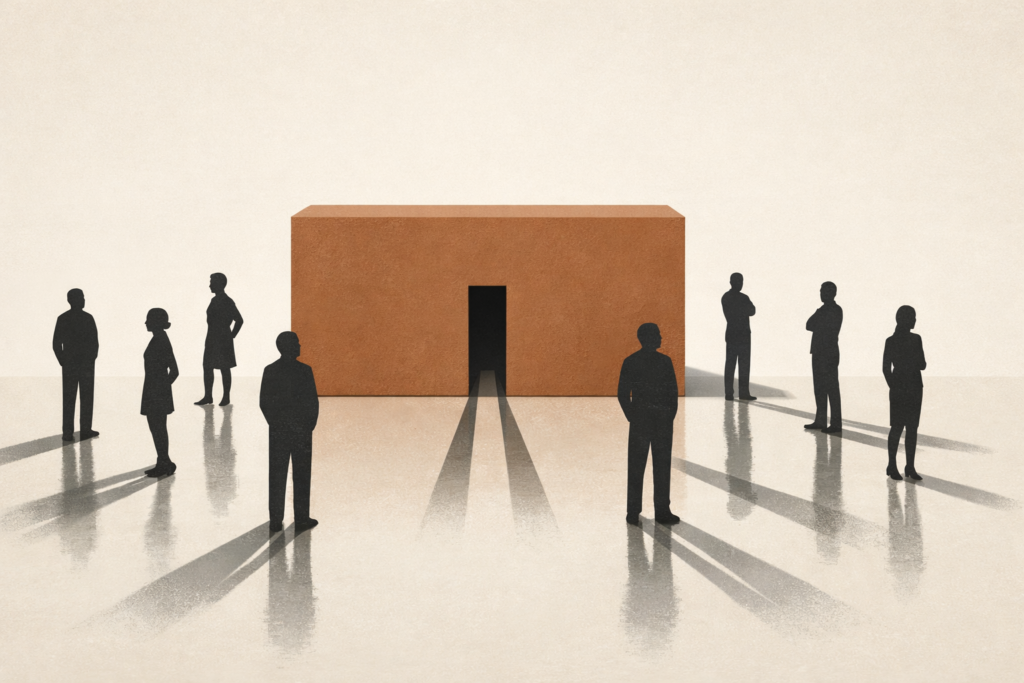
That is not solidarity. That is alignment until the incentive changes. Most people are not standing with you. They are standing where it still benefits them.

Outrage spreads faster than calm conversation online. The reason isn’t politics or culture. It’s the economics of attention.

Manual labor stigma did not happen by accident. For decades, culture treated skilled work as a fallback instead of the backbone of the economy.

House rules power determines outcomes. The game stays the same, but whoever controls the rules controls the result.

Algorithms reward the content that produces the strongest reactions. Over time, that incentive structure can quietly amplify polarization across online platforms.

Online platforms often amplify arguments because outrage spreads faster than calm conversation. Understanding the incentives behind modern media explains why conflict dominates the digital landscape.

For decades the college economy ran on prestige. Degrees were marketed as the only respectable path to success. But rising debt, labor shortages, and the return of skilled trades are exposing cracks in that status system.

The internet runs on attention, and media companies know it. Once platforms realized human focus could be measured and sold, the entire culture started reorganizing itself around clicks, outrage, and endless scrolling.

Black prom culture is often judged at the level of spectacle. This piece argues that the real story is structural: visibility, status, family labor, and the misalignment between celebration and long-term reward.