Where honesty gets the mic because the performance has already wasted enough time.
Let’s tell the truth for real.
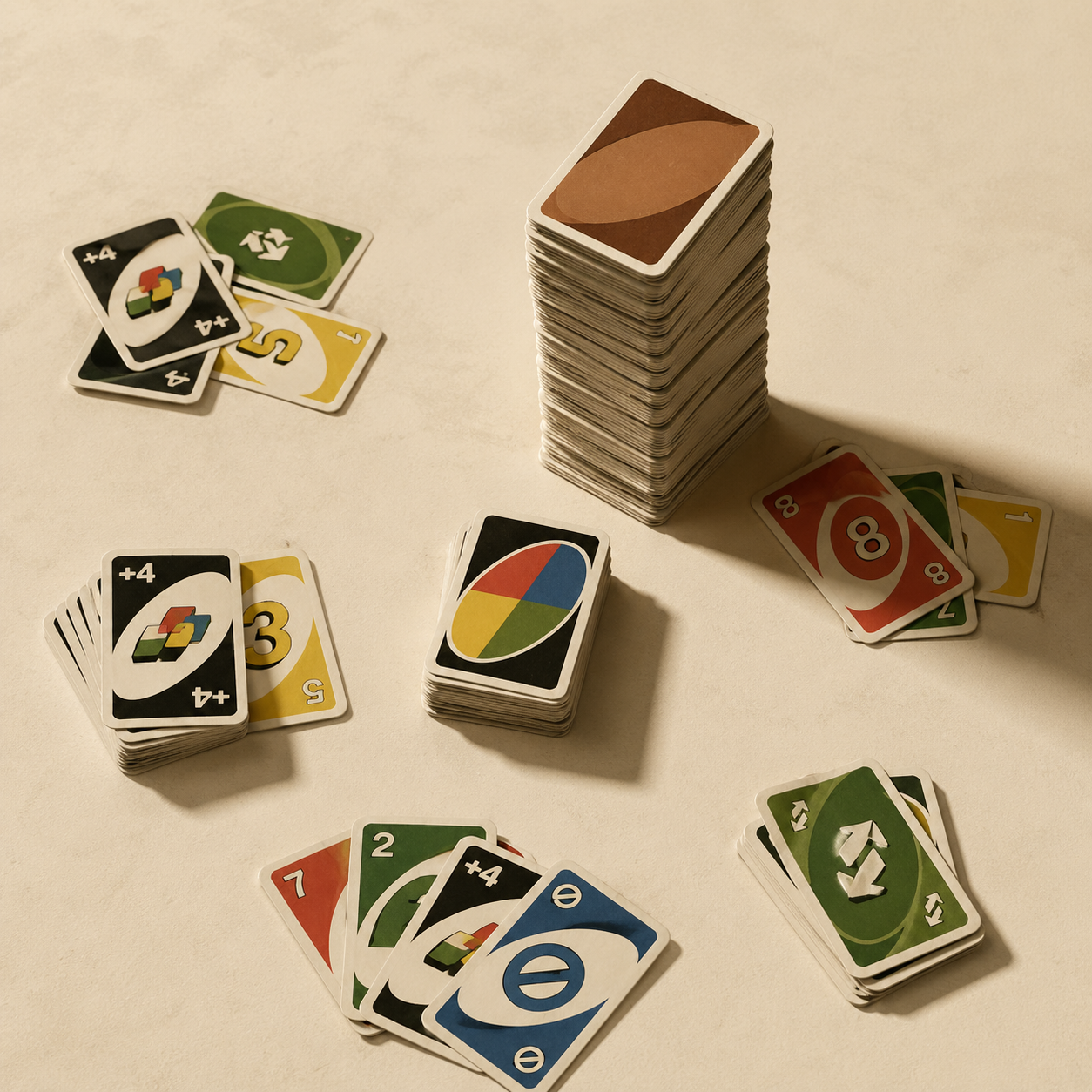
Every family has that one person during Uno night.
The Rule Ambassador. The “actually, according to the box” representative. The person acting like Mattel personally flew them in to protect the integrity of a card game being played on a folding table next to somebody’s paper plate.
And every single time they start talking, somebody from the other side of the table says:
“That’s not how we play here.”
Now the room changes.
Somebody leans forward. Somebody starts laughing too hard. Somebody says, “Here we go,” because they already know this is about to become a family hearing with no judge, no minutes, and everybody talking over the evidence.
That is when the truth walks in wearing house shoes:
The table decides.
Not the box. Not the website. Not the person with the cleanest explanation. The table. The people playing. The environment enforcing the rule.
And once you understand that, Uno stops being the joke and starts being the lesson.
People Love Fair Until Fair Stops Helping
People love talking about fairness right up until fairness interrupts their advantage.
Now suddenly everybody has concerns. Now the same person who was stacking Draw Twos five minutes ago wants to discuss “the spirit of the game.” Please.
That is not principle. That is convenience wearing a church hat.
And before somebody starts typing hard in the comments, no, this is not really about Uno. You know it. I know it. Grandma in the back eating pound cake knows it.
People defend the rules that protect their position. Then they call it fairness so it sounds cleaner.
The Table Decides Everything
Here is the uncomfortable part:
If everybody at the table agrees, then that becomes the rule.
Not the instruction manual. Not the official website. Not your personal opinion. The rule that gets enforced is the rule that matters.
That is why the same person can walk into another house and suddenly get destroyed playing the exact same game.
Different table. Different enforcement. Different outcome.
You can have the right cards and still lose if you misunderstand the table.
This Is How Real Life Works Too
Different workplace. Different rules.
One company says it rewards initiative, but the house rule rewards silence. One relationship says it values honesty, but the house rule punishes direct speech. One friend group says it wants growth, but the house rule says everybody better stay familiar or get talked about.
And people keep walking into environments assuming their personal intentions matter more than the culture already operating there.
Baby, no.
The house rules were active before you arrived.
That is why environments shape outcomes faster than effort does.
Why Some People Keep Losing
Some people are not failing because they are untalented.
They are failing because they keep playing by rules nobody else at the table respects.
Trying to be fair in rooms organized around leverage. Trying to be logical in emotionally political spaces. Trying to “keep it real” around people strategically performing every conversation.
Then looking confused when effort alone does not protect them.
Respectfully, what exactly did you think this was?
The table already decided what matters before you sat down.
Arguing Is Not Strategy
This is where people get stuck.
They spend more time arguing with the environment than studying it.
Complaining about the rules does not stop the rules from operating. Screaming “that’s not fair” while actively losing is not strategy. It is emotional resistance disguised as moral superiority.
That part hurts people’s feelings every single time.
Still true though.
The Real Talk Blueprint
You really only have three choices:
Learn the rules. Play the rules. Or leave the table.
That does not mean betray yourself. It means stop pretending confusion is a plan.
Some tables are worth learning. Some tables are worth challenging. Some tables need to be left before you become entertainment for people who were never confused about how the game worked.
But sitting there arguing while everybody else adapts?
That just turns you into the cautionary tale people bring up during the next game night.
Because the table keeps moving whether your feelings catch up or not.