Community Groundwork studies how community systems become stronger, drift, adapt, and endure through participation, maintenance, incentives, responsibility, and everyday behavior.
A community can have strong identity, good intentions, and deep affection for a place while its underlying systems slowly weaken.
That happens because shared life still requires ordinary work. Somebody maintains the hallway. Somebody reports the broken light. Somebody fills the volunteer shift. Somebody corrects the problem before everybody learns that the standard is optional.
Community Groundwork studies those moments because they reveal how the system actually works.
The territory includes homes, apartment buildings, neighborhood blocks, public spaces, schools, local businesses, community institutions, shared resources, and the routines people repeat when nobody is giving a speech about community.
The Category Position
Communities are maintained before they are strengthened.
Durable communities emerge when enough people continue maintaining what is shared, contributing what they can, correcting drift, and protecting systems that make participation worth the effort.
Start Here: Three Ways to Read Community Systems
Community problems do not all come from the same place. Therefore, Community Groundwork uses distinct lenses for different mechanisms.
Start with the question closest to what you are trying to understand.
Read behavior under pressure through informal rules, incentives, correction, enforcement, friction, status, and the standards people reveal through action.
Cultivating the Commons: Community Systems Everyone Uses
Shared environments become stronger or weaker through repeated behavior.
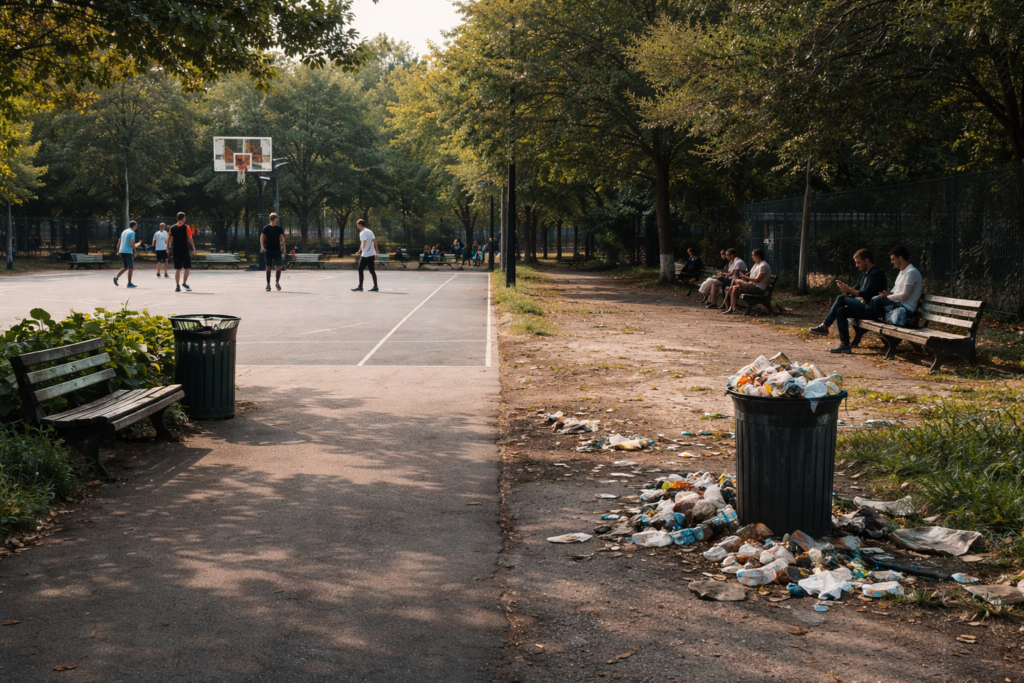
Cultivating the Commons examines households, public spaces, community institutions, maintenance systems, stewardship, shared resources, and the quiet work required to keep something usable after the initial attention disappears.
The problem starts with shared benefit. A hallway, park, kitchen, institution, neighborhood entrance, grocery store, library, block, or public restroom can serve many people without belonging to any one person.
As a result, responsibility can become unclear even while the benefit remains obvious.
That creates the Series question: Why do shared environments succeed or collapse?
Community Participation: When Contribution Starts to Narrow
Communities become more fragile when participation concentrates in fewer people.
Community Participation examines contribution, reliability, free riding, reintegration, trust, social burden, withdrawal, and the people who quietly become infrastructure because everyone assumes they will keep carrying the load.
Shared responsibility does not require equal contribution. People have different time, money, authority, skill, access, and capacity.
However, enough contribution has to remain visible for the system to keep working.
Once participation becomes less evenly distributed, dependable people usually absorb more of the burden. Eventually, that concentration stops being an individual problem and becomes a durability problem for the whole community.
Block Logic: Community Systems Under Real Pressure
People often reveal their incentives faster than they reveal their values.
Block Logic begins with that gap. It watches what people actually do when a shared standard becomes inconvenient, correction carries social cost, nobody appears to be watching, or personal benefit conflicts with community responsibility.
From there, the Series follows informal rules, public behavior, local order, status, friction, correction, enforcement, cooperation, and the exceptions that slowly redefine what a community considers normal.
The block is useful because the system is close enough to observe. You can watch a standard appear, weaken, get challenged, receive correction, or disappear in plain sight.
Community Groundwork is larger than its recurring editorial lanes.
That distinction matters. Forcing every community question into a Series would weaken the Series rather than strengthen the Category.
Institutional durability, neighborhood economics, local food systems, community reintegration, public restraint, organizational maintenance, shared infrastructure, and institutional continuity may stand on their own when Community Groundwork clearly owns the central problem.
Classification Rule
The Category owns the territory. A Series earns a narrower recurring lens inside that territory.
Therefore, a piece should not enter Cultivating the Commons, Community Participation, or Block Logic simply because Cyrus wrote it or because the subject feels adjacent.
How Community Systems Become Stronger or Weaker
Most community outcomes do not begin with crisis. Instead, they develop through behavior that repeats long enough to change expectations.
Consider a shared space that receives regular maintenance. People notice the care, and the care establishes a visible standard. Over time, that standard makes the environment more predictable.
Greater predictability can strengthen trust. In turn, trust makes participation easier because people can see that their effort is entering a functioning system.
The reverse develops just as quietly. Maintenance slips, a small violation goes uncorrected, and somebody adapts to the lower standard. Another person then learns that the exception carries no consequence.
Eventually, participation becomes less rewarding. Reliable people carry more of the burden, some contributors withdraw, and responsibility narrows around whoever remains.
By the time instability becomes obvious, the weakening may have been underway for months or years.
Community Groundwork Observation Path
Behavior
→
Pattern
→
Incentive
→
Participation
→
Consequence
→
Adaptation
This sequence is an observational path, not a new Groundwork Core Principle, Condition, or proprietary framework. Its job is simpler: follow visible behavior until the system underneath it becomes clear.
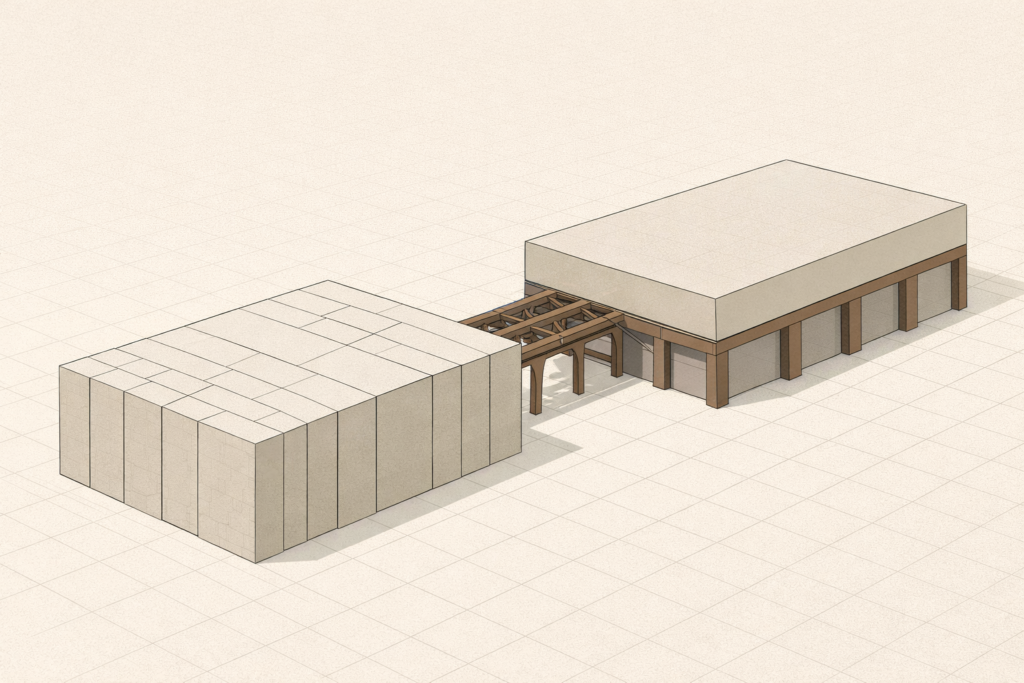
The Community Systems Map
Start with the behavior or failure you can observe. Then use the map to identify the lens that best explains it.
Cyrus Mbeki examines how communities become stronger or weaker through ordinary behavior. His work follows participation, stewardship, maintenance, incentives, contribution, public behavior, institutional durability, and the shared systems people often notice only after something stops working.
He starts with what people can see: the broken light, the empty volunteer list, the shopping cart left in the parking space, the person who always cleans up, or the rule everybody knows but nobody enforces.
From there, the work traces the structure underneath the behavior.
Watch the behavior long enough and the system usually tells you what it rewards.
Strong Community Systems Become Visible Before Failure Does
A community is not only what people say they value. Its operating structure becomes visible through what people repeatedly do.
Notice who still contributes after the excitement fades. Look at whether the shared space stays usable when nobody important is visiting.
Pay attention to whether correction happens before disorder becomes normal. Then ask whether reliable people can step away without taking the whole system down with them.
Those details are not peripheral. Together, they reveal whether responsibility is distributed or quietly concentrating around a few dependable people.
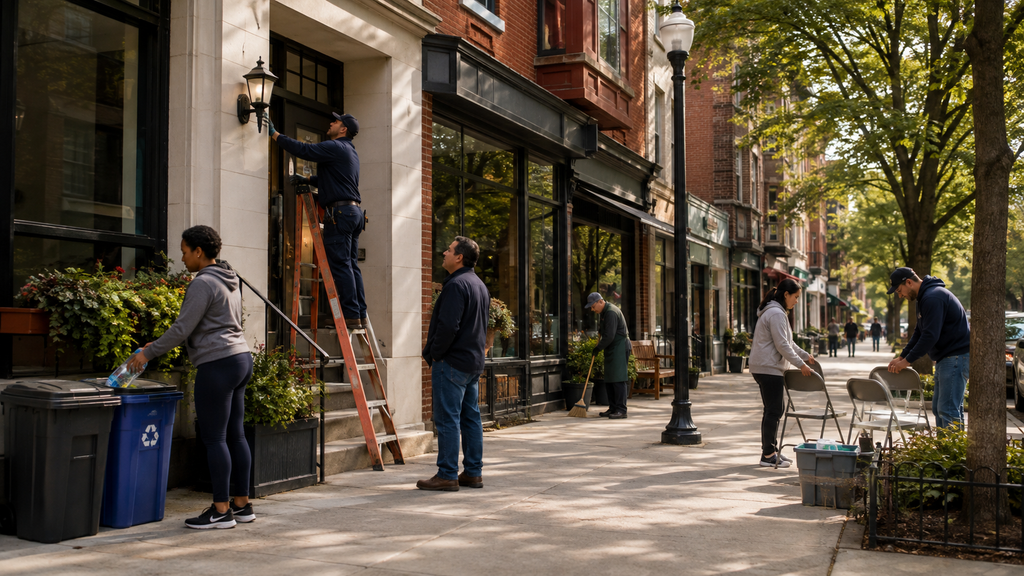
Durable communities make care repeatable. They keep responsibility visible, maintain what people share, and preserve enough participation to prevent a functioning system from becoming somebody else’s unpaid job.
Community Groundwork studies that structure while it is still ordinary enough to miss.
Strong communities are built in ordinary moments.
Groundwork Daily examines community systems, maintenance, participation, incentives, responsibility, institutional durability, and the structures that determine whether shared life can hold.
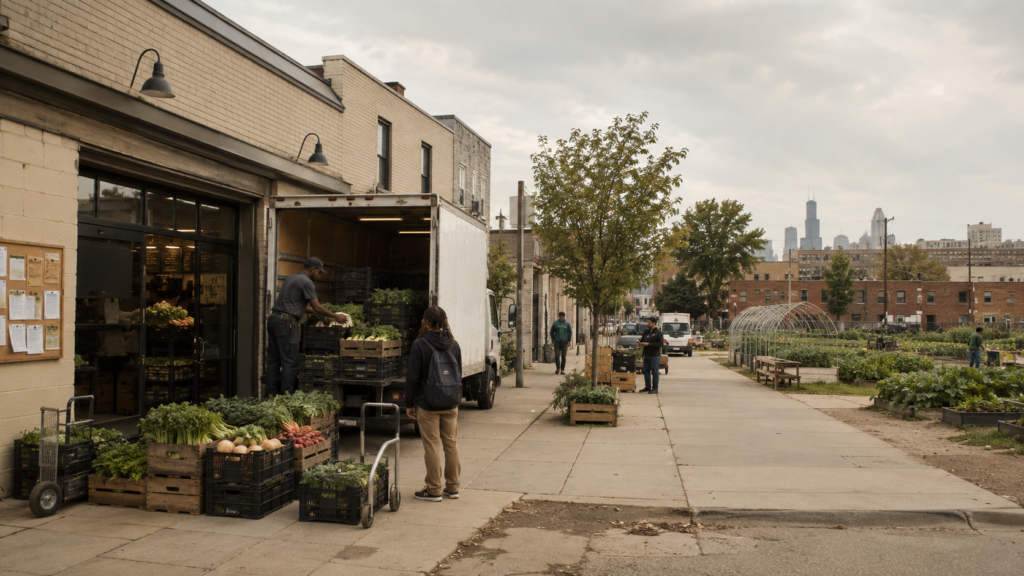
Community food systems are not built at checkout. They are built through ownership, distribution, participation, and local capacity. Grocery stores can become neighborhood infrastructure that strengthens resilience or another point of dependency.
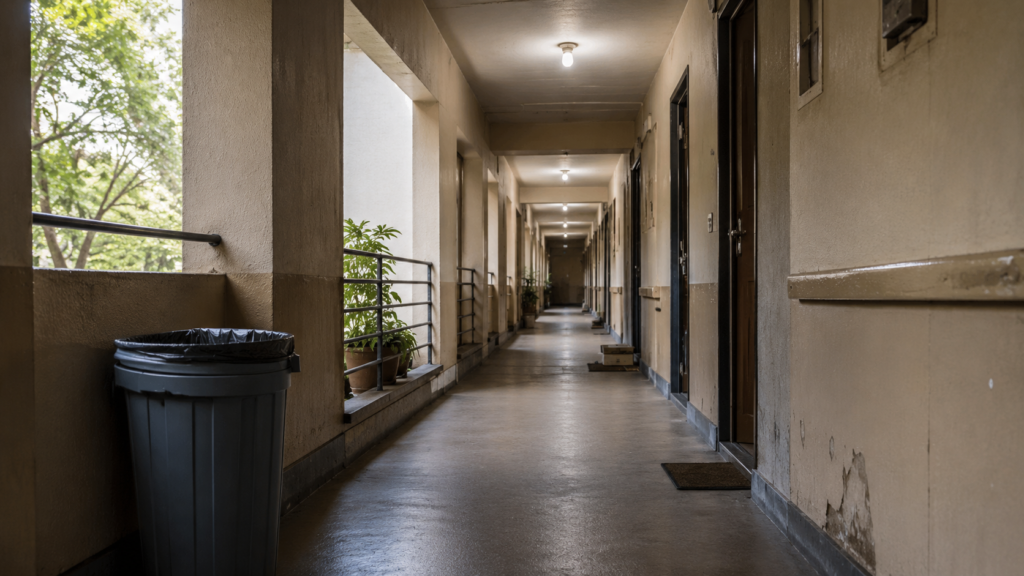
Maintenance is invisible until it disappears. This piece explores why maintenance behavior quietly determines whether homes, buildings, and shared spaces stay stable or begin to decline.
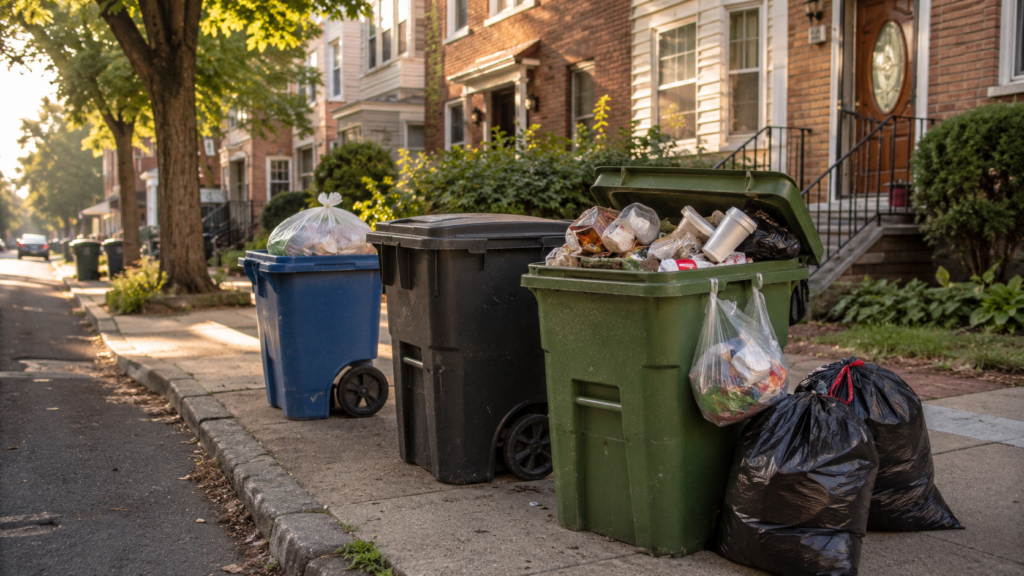
Household waste patterns reveal more than consumption. They expose routines, maintenance behavior, shared responsibility, and the systems operating inside the home.
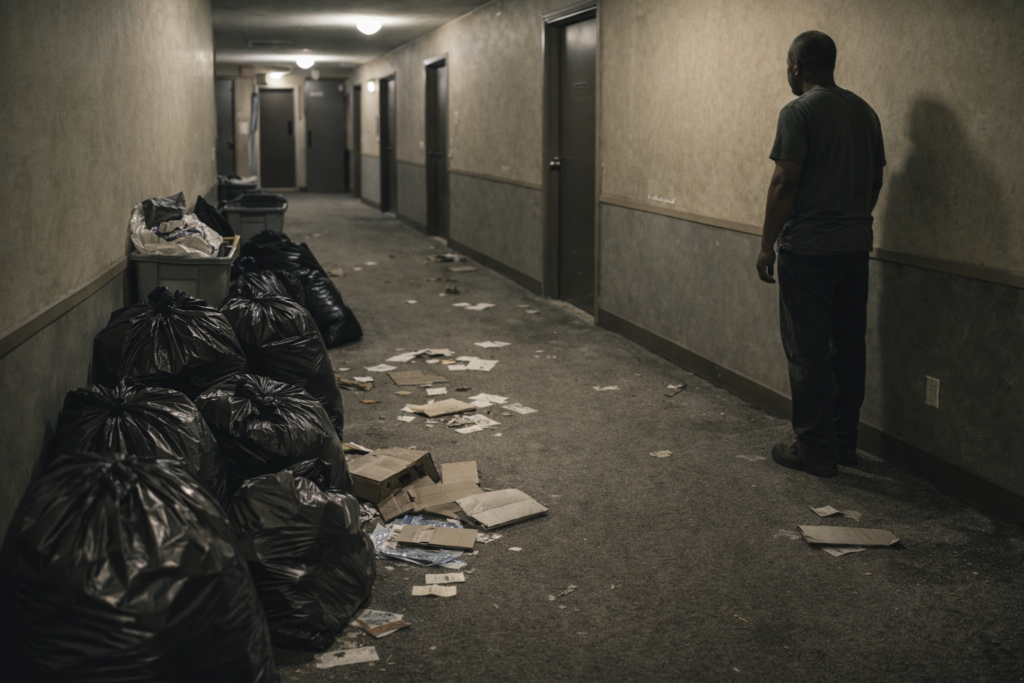
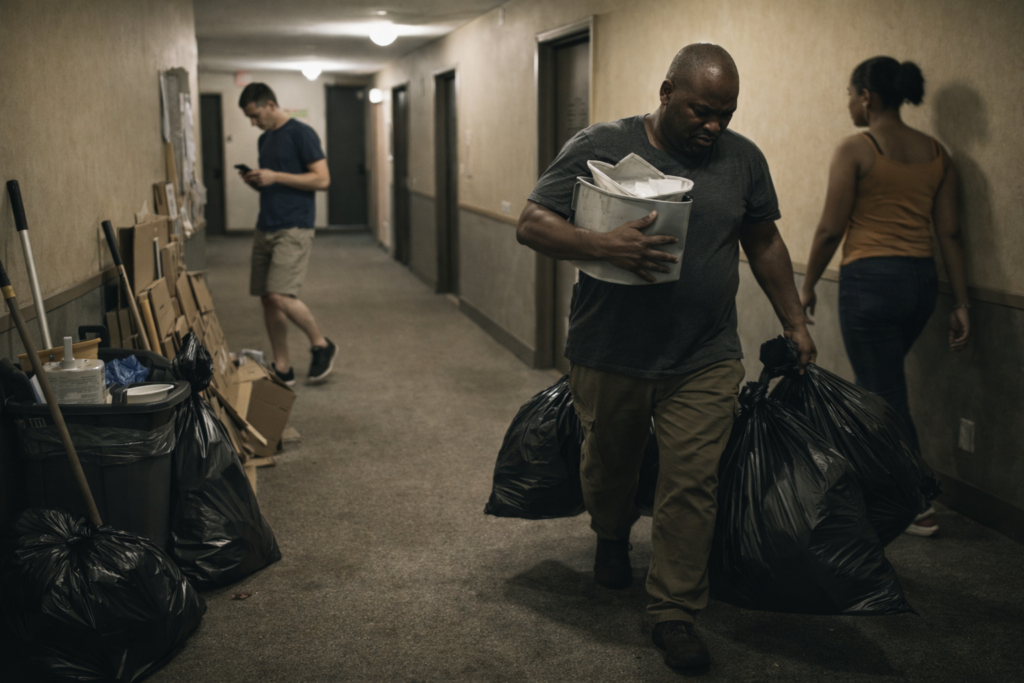
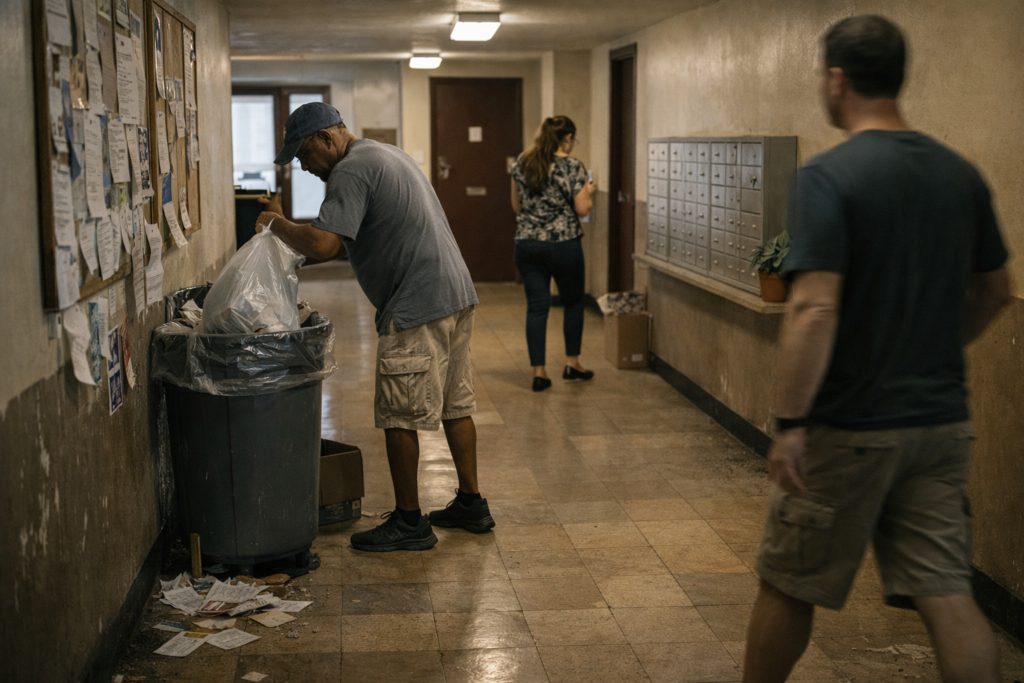
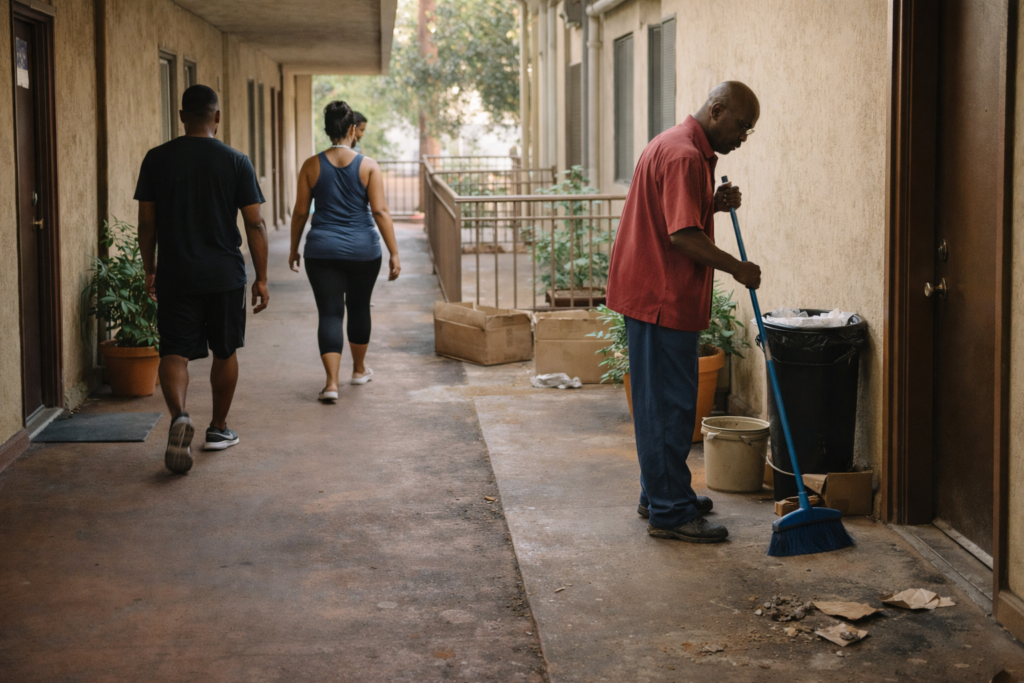
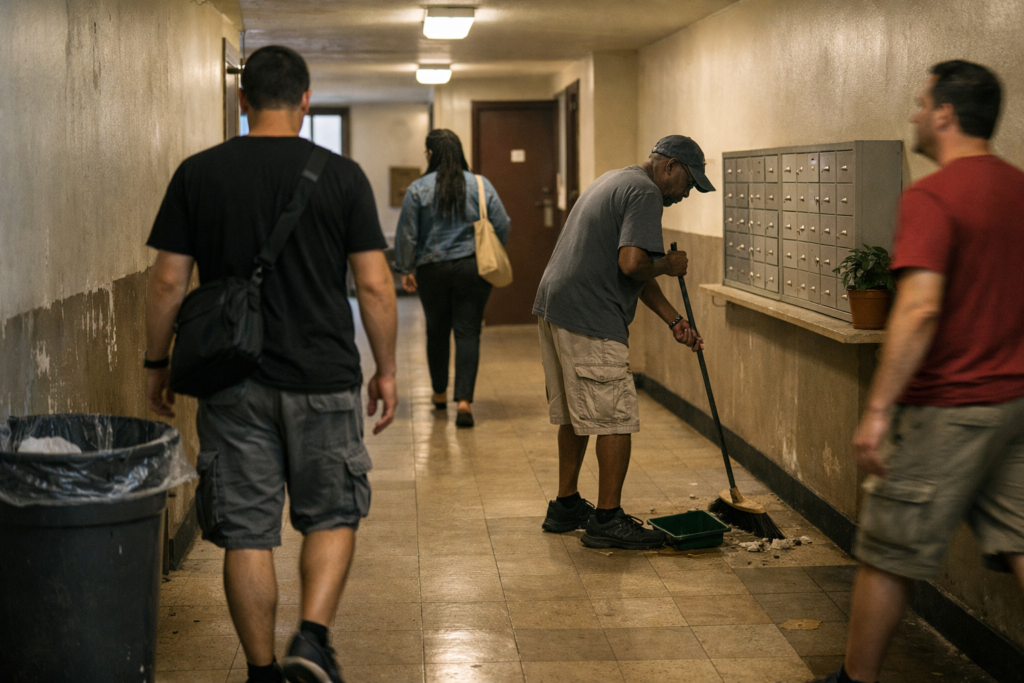
One person maintains the space. Everyone else uses it.
The hallway tells the truth quietly—order exists, but only where someone chooses to carry it.
The rest is drift. Not failure by accident, but neglect by design.
Ethnic identity and coalition politics shape modern democracy. Communities must decide whether to prioritize boundary clarity or build durable institutions that can convert shared interests into lasting civic power.
Community stability does not emerge from slogans. It grows from shared standards, neighborhood trust, and civic reciprocity. This piece explores how local order and mutual responsibility create durable social infrastructure.