
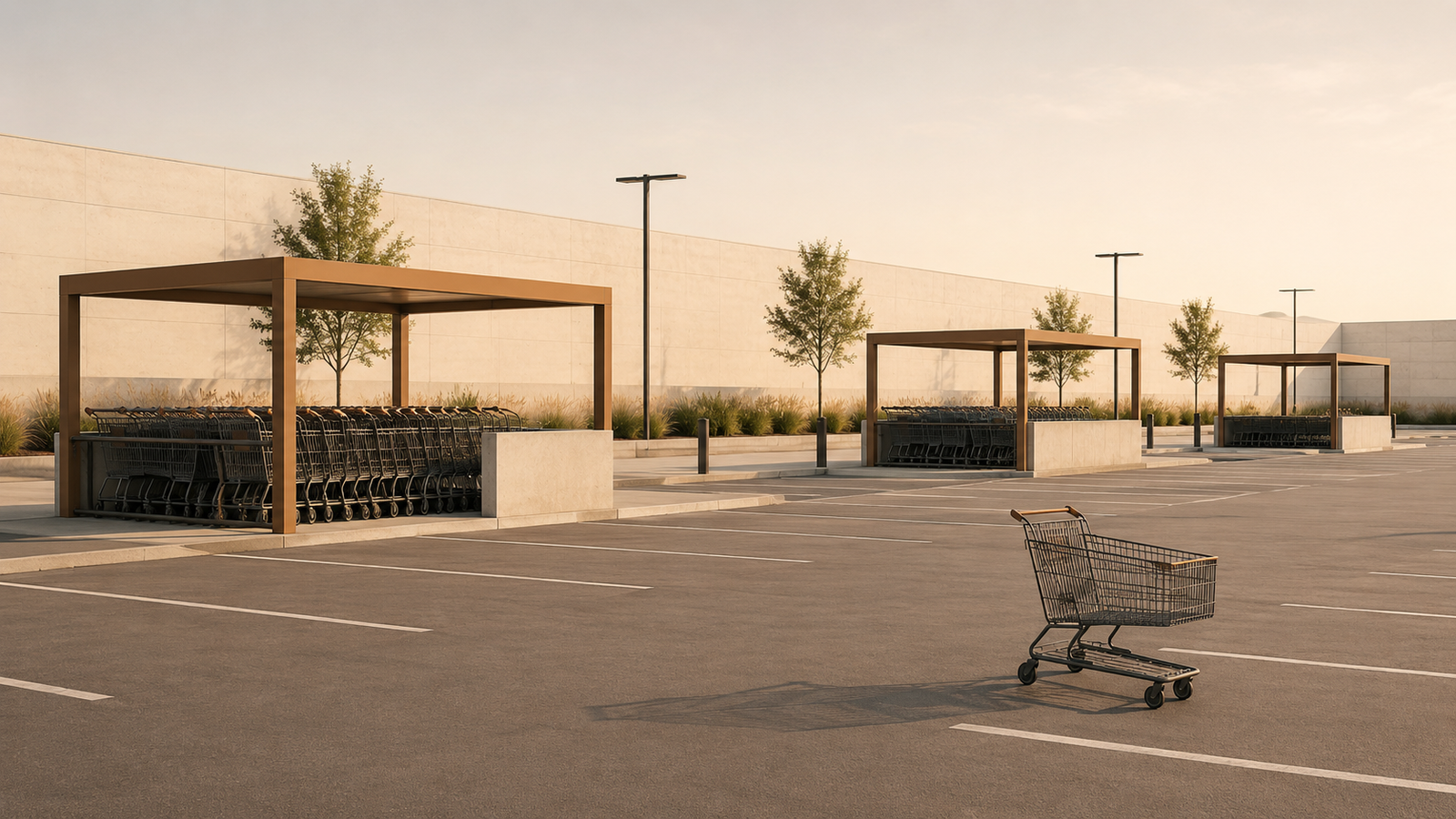
Why don’t people return shopping carts? The question looks small until you stand in a parking lot and watch the pattern repeat.
One cart sits three spaces away from the cart return. Another is left beside a curb. Another rests halfway across a parking line, close enough to move but far enough to become someone else’s problem.
The return bay is visible. The distance is manageable. The task is simple.
Still, the cart stays there.
That is why the shopping cart works as a clean public behavior test. No one is usually watching. There is no ticket. There is no applause. There is no immediate punishment for leaving the cart behind and no immediate reward for returning it.
So people reveal the system underneath the statement.
Most people would say they believe in responsibility. Most people would say they respect shared spaces. Most people would agree that carts should be returned.
Then the groceries are loaded, the trunk closes, the weather is inconvenient, and the real decision arrives.
People reveal incentives faster than values.
Why Don’t People Return Shopping Carts When It Is So Easy?
The easy answer is laziness.
That answer is not useless, but it is thin. It stops at the person and ignores the environment. Block Logic does not stop there. It asks what the system is asking people to do, what pressure is present, and what happens when the action becomes optional.
Returning a shopping cart is a low-stakes task, but low-stakes tasks reveal a lot. They show what people do when enforcement is weak and the benefit of cooperation is spread across strangers.
The person who returns the cart does not receive much. Maybe a cleaner parking space. Maybe a private sense of order. Maybe nothing visible at all.
The person who leaves the cart also pays almost nothing in the moment. They get to leave faster. They avoid walking back. They avoid rain, heat, wind, cold, or the friction of unloading children from a car seat just to walk a cart twenty feet.
That is the heart of the pattern.
The cost of doing the right thing is personal and immediate. The benefit is shared and delayed.
That kind of system depends on voluntary cooperation. It works only when enough people decide that a small inconvenience is worth protecting the shared environment.
The Behavior Is Small, But the Pattern Is Not
A loose cart does not feel like a civic emergency.
It is not a broken bridge. It is not a failing school. It is not a collapsed institution. It is one cart in one parking lot after one shopping trip.
But community systems rarely break all at once.
They usually weaken through repeated small withdrawals. One person leaves the cart. Another person sees carts already scattered and feels less pressure to return theirs. A third person decides the lot is already messy, so one more cart will not matter.
That is how visible disorder changes behavior.
When a space looks maintained, people receive a quiet signal. Someone is participating here. Someone is paying attention. The norm is still alive.
When a space looks abandoned, people receive a different signal. Nobody is watching. Nobody cares enough. The standard has already slipped.
The shopping cart is not just metal and wheels. It is a signal moving through a shared environment.
Returned carts say the system is still being honored.
Scattered carts say participation is optional and correction is weak.
Shopping Cart Theory Explains the Person, But Block Logic Explains the System
Many people know the phrase shopping cart theory. Online, it is often framed as a test of character. The idea is simple. Returning the cart is not required, but it helps others, so the choice reveals whether a person will do the right thing without being forced.
There is truth in that.
However, character is only part of the story. If the analysis stops there, the parking lot becomes a morality play. Good people return carts. Bad people leave them.
That is too easy.
Block Logic asks a harder question. Why does the same person return a cart in one parking lot and leave it in another? Why do some stores maintain orderly cart systems while others seem to accept scattered carts as normal? Why does cart behavior change when the weather turns bad, when the return bays are poorly placed, or when people are under pressure?
The person matters. The design matters too.
A cart return placed near the entrance creates one kind of behavior. A cart return placed far from the outer rows creates another. A parking lot with clear lanes creates one expectation. A chaotic lot creates another. A visible attendant collecting carts reinforces the norm. An unmanaged lot lets the norm decay.
That does not excuse the abandoned cart.
It explains why behavior spreads.
The Incentive Is Hidden in the Parking Lot
Every parking lot teaches behavior.
Some teach cooperation. Some teach convenience. Some teach drift.
A good cart system reduces friction. Return bays are close enough to be reasonable. They are visible. They are evenly spaced. The lanes are clear. Carts are collected before they pile up. Customers can see the expectation without needing a sign.
That is design doing quiet work.
A weak cart system increases friction. The return bay is too far away. The pathway is blocked. The cart area is already overflowing. The parking lot feels poorly managed. In that environment, the customer has to carry more of the system’s burden.
Some still do it.
Many do not.
This is where incentives matter. People are not machines, but they respond to friction. If the cost of cooperation rises and the consequence of noncooperation stays low, participation declines.
That same pattern appears everywhere.
People stop cleaning shared kitchens when the mess becomes normal. They stop showing up to meetings when the same three people do all the work. They stop respecting community spaces when maintenance disappears. They stop following informal rules when correction feels unlikely.
The parking lot is just the visible version.
Why People Leave Shopping Carts in Parking Lots
People leave shopping carts for different reasons.
Some are careless. Some are tired. Some are distracted. Some have children in the car. Some have mobility limitations. Some are dealing with weather. Some believe employees are paid to collect carts, so leaving the cart is not their responsibility.
Those differences matter.
Still, the public pattern remains the same. When the cart is left behind, the burden transfers.
It transfers to the store employee who has to collect it.
It transfers to the driver who loses a parking space.
It transfers to the customer whose car gets scratched by a cart pushed by wind.
It transfers to the next person who enters a space that feels less orderly than it did before.
The person leaving the cart may experience the action as small. The system experiences it as load.
One cart does not break the parking lot. But one cart teaches permission. If enough people accept that permission, the system adjusts downward.
That is how shared environments deteriorate. Not because everyone rejects responsibility at once, but because enough people decide their small withdrawal does not matter.
Voluntary Cooperation Is the Real Subject
The cart return is a simple structure. It cannot force participation. It can only invite it.
That makes the shopping cart useful for understanding voluntary cooperation.
Some systems run on rules. Some run on enforcement. Some run on payment. But many community systems run on small voluntary acts that are too ordinary to regulate every time.
Neighbors bring bins back from the curb.
Residents keep hallways clear.
Parents clean up after children at the playground.
People wipe down gym equipment.
Drivers let someone merge.
Customers return items to the correct shelf.
None of these actions will save the world. That is not the point.
They keep the shared system from becoming expensive, frustrating, and degraded.
This is why Community Groundwork treats ordinary behavior seriously. The ordinary is where the system exposes itself. Large outcomes begin as repeated small signals.
The Store Also Has Responsibility
It would be weak analysis to blame only customers.
Stores design the environment. They decide how many cart returns exist, where those returns sit, how often employees collect carts, and how clearly the parking lot communicates order.
If the store saves money by placing too few cart returns, the customer absorbs extra friction. If the store understaffs cart collection, disorder becomes visible. If the lot is poorly designed, cooperation becomes harder than it needs to be.
That matters because people often make decisions at the edge of convenience.
A person who would return a cart from one row away may not return it from six rows away in the rain. A parent with two young children may not walk across the lot if the return bay is badly placed. An elderly customer may not cross traffic lanes if the design feels unsafe.
None of that eliminates responsibility.
It clarifies the structure.
Good systems do not depend only on better people. Good systems make the better action easier to repeat.
The Employee Becomes the Backstop
When customers stop participating, employees become the backstop.
That is how many shared systems survive. One group benefits from the system. Another group absorbs the failure when participation declines.
In a parking lot, the employee collects the carts. In an apartment building, the custodian handles what residents ignore. In a neighborhood, the same few residents organize cleanup. In a workplace, the same person resets the shared room after everyone else leaves.
The pattern is familiar.
When cooperation declines, responsibility does not disappear. It concentrates.
That concentration creates fatigue. It also creates resentment. Eventually, the people carrying the excess load either stop caring or leave. Then the system becomes more expensive to maintain.
This is why the shopping cart question is not really about shopping carts.
It is about burden transfer.
One person chooses convenience. Another person inherits the work.
Why Returned Carts Create Order Faster Than Signs
Signs can help, but visible behavior teaches faster.
A sign that says return carts is a rule. A row of returned carts is a norm.
Rules tell people what should happen. Norms show people what is already happening.
That difference matters.
Most people do not want to be the first person to break visible order. If the carts are aligned, the return bay is clean, and the lot looks cared for, abandoning a cart feels more noticeable. The standard has presence.
However, if carts are already scattered, leaving one more feels easier. The person can tell themselves the system is already broken.
This is how disorder recruits more disorder.
It lowers the emotional cost of participating in the decline.
Returned carts do the opposite. They make cooperation visible. They remind the next person that the small action still matters.
This connects directly to the idea behind visible contribution. A contribution that can be seen does more than solve one problem. It reinforces the pattern for others.
The Community Lesson Inside the Cart Return
Every community depends on actions that cannot all be monitored.
There are too many small decisions. Too many shared spaces. Too many moments where a person can either preserve order or pass the cost forward.
No community can hire enough people to correct every small refusal. No institution can write enough rules to replace everyday cooperation. No public system can remain healthy if everyone treats shared space as someone else’s job.
That is the bigger lesson.
The cart return is a small public agreement. It says, after using this shared resource, place it back where the next person can use it safely.
That agreement works only when enough people honor it without needing supervision.
This is not about moral perfection. It is about minimum participation.
Communities do not need every person to be heroic. They need enough people to remain reliable in ordinary moments.
Reliability is not dramatic. It is structural.
Why This Behavior Spreads Beyond the Parking Lot
Once you understand the cart return, you start seeing the same pattern in other places.
The office refrigerator works the same way. So does the apartment laundry room. So does the community garden. So does the library table. So does the public bathroom. So does the neighborhood sidewalk after a storm.
Each space depends on people doing small things after they have already received their personal benefit.
That is the hard part.
People usually cooperate more easily before they benefit. They arrive with expectation. They want access. They want service. They want the system to work.
But after they get what they came for, the incentive changes.
The grocery trip is finished. The food is in the car. The customer is ready to leave.
That is when cooperation is tested.
Shared systems often fail after personal benefit has already been collected.
That is the moment Block Logic watches.
The Groundwork
The shopping cart does not tell the whole truth about a person. One decision in one parking lot is not enough to judge a life.
But repeated behavior in shared environments does tell the truth about a system.
If many people leave carts behind, the issue is not only individual courtesy. It is a coordination problem. It means the system depends on voluntary cooperation, but the incentive to cooperate is weak, the friction is too high, or the shared norm has become less visible.
The answer is not only more scolding.
The answer is better design, visible standards, repeated participation, and enough people willing to carry small responsibilities before they become large costs.
That is the practical lesson.
Return the cart because it keeps the system clean.
Place the chair back because the next person needs the room usable.
Clean the shared table because the standard should not depend on the person paid to fix what others ignore.
Participate while the task is still small.
That is how communities stay inexpensive to maintain.
Structural Takeaway
Why don’t people return shopping carts? Because the system makes cooperation voluntary while making the cost of noncooperation easy to pass along.
Some people return the cart anyway. They understand the invisible agreement.
Others leave it behind because the immediate incentive rewards convenience.
The cart is not the real issue.
The real issue is what happens when a shared environment depends on people doing small things after nobody can force them to do them.
Once you see that pattern in a parking lot, you will start seeing it everywhere.
Continue Building
This article is part of the Block Logic framework. Continue through the Community Groundwork system using the links below.
→ Framework: Block Logic
→ Community Groundwork: Community Groundwork
→ Related Mechanism: Contribution Must Be Visible or It Disappears
Meet the Builder

Cyrus Mbeki
Builder, Community Groundwork
Cyrus Mbeki explores how communities become stronger or weaker through the ordinary behaviors people repeat every day. His work examines stewardship, participation, maintenance, and shared responsibility, helping readers recognize the invisible systems that quietly shape neighborhoods, institutions, and public life.
Communities become stronger through ordinary acts of stewardship repeated over time.
Continue Building
→ Explore Community Groundwork
Reader Promise: Every Cyrus Mbeki article helps readers recognize the invisible systems that determine whether households, neighborhoods, institutions, and communities become stronger or weaker over time.