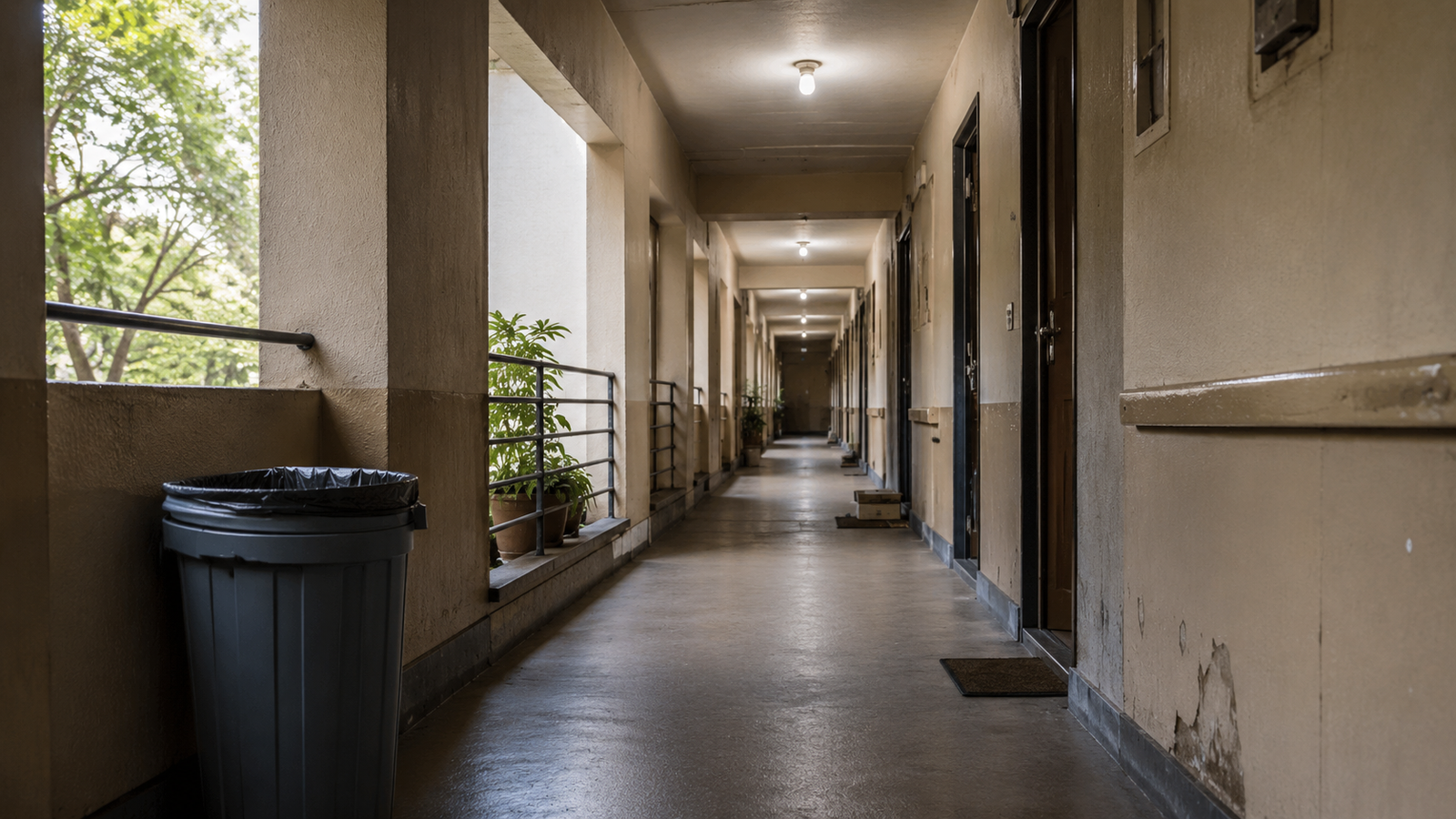
You usually do not notice maintenance when it is working. That is the trap. A clean hallway feels normal. A working elevator feels normal. A safe stairwell feels normal. A trash room that does not smell feels normal. People move through those spaces without thinking about the labor, planning, inspection, communication, and follow-through required to keep them that way.
Then something slips. A hallway light burns out and stays out. A bag of trash sits beside the bin for two days. The elevator starts making a noise nobody reports. A broken door handle becomes part of the building’s personality. At first, people adjust around the problem. They walk slower. They step over things. They complain quietly. Eventually, they stop expecting the space to be cared for.
That is how decline usually works. Not through one dramatic collapse, but through delayed attention. Maintenance behavior is the line between a shared environment that stays usable and one that slowly teaches people not to care.
Maintenance Behavior Starts Before Something Breaks
Maintenance behavior is the repeated work that prevents small problems from becoming expensive problems. It is not glamorous work. It does not usually receive applause. Most of the time, it looks like ordinary follow-through: replacing a bulb, checking a door, wiping a spill, tightening a loose screw, reporting a leak, emptying a bin, restocking supplies, or noticing that something is starting to fail before it becomes a crisis.
That kind of work matters because shared spaces are always under pressure. People use them, pass through them, take from them, ignore them, and depend on them. A lobby, hallway, school bathroom, playground, laundry room, office kitchen, church basement, bus shelter, or neighborhood corner does not remain stable because people have good intentions. It remains stable because somebody keeps paying attention.
This is where many people misunderstand the commons. They think shared spaces fail because people suddenly stop caring. Sometimes that is true. However, more often, people stop caring because the environment has already taught them that care does not matter. When broken things stay broken, when trash stays visible, when repairs are delayed, and when small problems are tolerated, the space sends a message. The message is simple: nobody owns this outcome.
Why Maintenance Work Gets Undervalued
Maintenance gets undervalued because it is easiest to notice when it fails. Nobody thanks the building team every day the lights work. Nobody praises the neighbor who keeps the sidewalk clear until the snow piles up. Nobody thinks about the person who checks the restroom until the supplies run out. When maintenance works, it disappears into the background.
That invisibility creates a dangerous management problem. Since people do not see the work, they assume it is easy. Since they assume it is easy, they underfund it, delay it, or assign it casually. Then the system weakens. The first cost is appearance. The second cost is trust. The third cost is money.
Deferred maintenance is never just a facilities issue. It is a signal of governance. It tells people what the system is willing to tolerate. A school with broken fixtures is not just dealing with broken fixtures. It is teaching students what adults accept. An apartment building with ignored leaks is not just dealing with water damage. It is teaching tenants that reporting problems may not matter. A park with overflowing trash is not just dealing with sanitation. It is teaching the neighborhood that public space has no reliable steward.
Once that lesson spreads, behavior changes. People stop reporting. They stop cleaning up after themselves. They stop correcting small problems. They stop believing that their contribution will be matched by anyone else. At that point, maintenance failure becomes participation failure.
When the Laundry Room Starts Teaching People Not to Care
Think about a shared laundry room in an apartment building. At first, the room works. Machines run. Floors are clean. The trash bin is emptied. Posted rules are followed because the room feels managed. Then one dryer breaks and stays broken. A few residents start leaving lint on the floor. Someone spills detergent and nobody cleans it. Another person leaves clothes sitting for hours because there is no visible standard being enforced.
The room has not collapsed. It is still usable. That is what makes the problem dangerous. Because the failure is gradual, people adjust. The broken dryer becomes normal. The sticky floor becomes normal. The overflowing trash becomes normal. Eventually, responsible residents either overfunction or withdraw. They either clean up after everyone else, or they stop caring too.
The solution is not a dramatic campaign. It is a maintenance system. Clear reporting. Fast response. Visible cleaning schedule. Basic rules enforced consistently. Replacement timelines posted when equipment breaks. The point is not perfection. The point is evidence that somebody is watching the system and responding before neglect becomes culture.
What a Park Teaches a Neighborhood
A neighborhood park can tell you the truth about local maintenance behavior. When trash cans are emptied on schedule, grass is cut, benches are repaired, lighting works, and playground equipment is checked, families use the space differently. People linger. Children play longer. Older residents sit. Community presence increases because the environment feels cared for.
When the same park is neglected, behavior changes. Trash collects near the bins. People stop using certain areas. Parents become more cautious. Small disorder invites more disorder. That does not mean everyone in the neighborhood became careless overnight. It means the maintenance system stopped sending a clear signal.
The solution is usually not mysterious. Public spaces improve when responsibility is assigned, schedules are visible, reporting is easy, and response time is tracked. A park does not need speeches about pride before it needs working lights, clean paths, safe equipment, and reliable waste removal. Pride follows evidence. People are more likely to protect what they can see is already being protected.
The House Learns What You Repeat
The same pattern shows up inside the home. A household does not fall apart because one drawer is messy or one repair is delayed. It weakens when small maintenance issues become the household standard. The dripping faucet stays. The broken cabinet stays. The cluttered counter stays. The overfilled closet stays. Nobody decides to live in disorder all at once. They simply keep postponing the work that would restore order.
Children notice this. They may not have language for it, but they notice whether adults respond to small problems. They notice whether broken things get fixed, whether shared rooms are respected, whether food is stored properly, whether tools are returned, and whether care is normal. That is how maintenance behavior becomes inheritance.
A better household system does not require perfection. It requires rhythm. One repair list. One weekly reset. One place for tools. One schedule for cleaning shared areas. One habit of fixing small things before they become expensive. The goal is not to make the home look staged. The goal is to make the home reliable.
What Happens When Maintenance Has No Owner
Shared spaces fail fastest when maintenance has no clear owner. Everybody uses the space, but nobody is accountable for the condition of the space. This is where the commons becomes fragile. The more people involved, the easier it becomes for each person to assume the work belongs to someone else.
That assumption creates a free rider problem. Some people benefit from the work without contributing to it. Others carry more than their share. Over time, the contributors become tired. They start asking a fair question: why am I maintaining what everyone else gets to use? If that question is not answered by structure, resentment replaces stewardship.
The answer is not to shame people into caring. Shame does not build durable systems. Structure does. Shared spaces need assigned responsibility, clear expectations, visible standards, and consequences for neglect. Without those pieces, maintenance becomes a personality trait instead of a system. The reliable people carry the load until they burn out, and the careless people learn that care is optional.
Why Shared Responsibility Needs Structure
Shared responsibility sounds good until nobody knows what it means. In practice, shared responsibility has to be made visible. Who checks the space? Who reports the problem? Who responds? How quickly? What happens if nobody follows through? Without answers, responsibility becomes a slogan.
This is why strong community maintenance depends on simple mechanisms. A building needs a repair log. A household needs a maintenance rhythm. A school needs fast reporting and visible response. A neighborhood needs reliable service schedules and residents who know how to escalate problems. None of this is exciting. That is exactly why it works.
People often confuse care with feeling. Care is not just concern. Care is action repeated long enough to become trustworthy. A shared environment does not need everyone to be passionate. It needs enough people to be consistent, and it needs the system to make consistency easier than neglect.
The Groundwork
Start with one shared space you use every week. It could be a kitchen, hallway, break room, laundry room, sidewalk, church room, classroom, lobby, or parking area. Do not start with a speech. Start with observation. What only works because somebody maintains it? What small issue keeps getting postponed? What problem has everyone learned to step around?
Then separate the issue into three categories. First, what needs attention now? Second, what needs a schedule? Third, what needs an owner? Those three questions turn frustration into structure. A dirty space may need immediate cleaning. A recurring mess may need a schedule. A neglected system may need a named person responsible for follow-up.
This is where most people fail. They want the outcome without the mechanism. They want clean without a cleaning rhythm. They want order without assigned responsibility. They want community without maintenance behavior. That does not work. The commons does not survive on wishes. It survives on repeated care.
How Solutions Actually Work
Solutions work when they make maintenance visible without turning it into theater. A posted cleaning schedule works because it shows rhythm. A repair log works because it shows follow-through. A shared checklist works because it makes responsibility concrete. A response deadline works because it prevents small issues from floating forever. Regular walkthroughs work because they catch decline early.
In a building, that might mean a weekly common-area inspection, a simple tenant reporting system, and visible updates when repairs are pending. In a household, it might mean a Saturday reset and a running repair list. In a school, it might mean students seeing adults report and resolve small problems quickly. In a neighborhood, it might mean organized cleanup days paired with reliable municipal service, not cleanup days replacing municipal responsibility.
The distinction matters. Volunteer effort can strengthen a system, but it should not be used to hide institutional neglect. A community cleanup is powerful when it builds pride. It becomes exploitation when residents are forced to compensate for services that should already exist. Maintenance behavior should reinforce responsibility at every level, not excuse failure from the people assigned to govern the system.
The Structural Takeaway
Most breakdowns do not begin with failure. They begin with work that stopped being noticed. A system weakens when maintenance becomes invisible, undervalued, delayed, and finally abandoned. By the time people call it decline, the structure has usually been asking for attention for a long time.
Maintenance is not glamorous. That is why it matters. It is one of the quiet ways people say a place still matters. It tells residents, children, workers, neighbors, and visitors that someone is paying attention. It also tells them that their own behavior is part of a larger standard.
The strongest systems rarely look impressive. They look cared for.
The strongest systems rarely look impressive. They look cared for. — Cyrus Mbeki
Next in Cultivating the Commons: read Maintenance Without Ownership to see what happens when everyone benefits from a shared space but nobody is clearly accountable for keeping it alive.
Continue Building
This piece is part of a larger framework exploring how shared environments strengthen or degrade over time.
→ Framework: Cultivating the Commons
→ Previous: What Your Trash Reveals About Your Household
→ Next: Maintenance Without Ownership