

What Is Administrative Rulemaking? How Laws Become Real-World Rules
Administrative rulemaking explains how laws become real-world rules. This Civic Education post breaks down how agencies turn legislation into enforceable action.
Civic Education teaches readers how to trace public power.
Groundwork Daily’s Civic Education series builds institutional literacy by showing how public authority actually works: which institution can act, where its authority comes from, how far that authority reaches, what mechanism turns authority into action, what limits apply, and who can lawfully review or change the result.
The series does not begin with a predetermined political conclusion. Instead, it gives readers a repeatable method for understanding the structure beneath public outcomes so that judgment, accountability, and disagreement can begin from a clearer view of the institutions involved.
Civic Education Series Hub
Civic Education: How Public Power Actually Works
Use the canonical Series Hub when you want the complete learning architecture: the Civic Power Trace, active curriculum levels, applied cases, reference tools, and guided paths through the Civic Education system.
The Civic Education Method
Trace authority before reacting.
Institution → Authority → Jurisdiction → Mechanism → Limits → Review / Change
Build your institutional literacy:
Governing Method
What Is Civic Education? Institutional Literacy Explained
Learn the full Civic Power Trace and how institutions, authority, jurisdiction, mechanisms, limits, and lawful change fit together.
Reference Layer
Civic Education Glossary: How Public Power Works
Use the Institutional Power Index for recurring concepts such as authority, jurisdiction, federalism, preemption, rulemaking, judicial review, and institutional control.
Active Curriculum · Level 1
Answer the foundational civic question: Who can legally do this?
Active Curriculum · Level 2
Follow authority in operation as institutions exercise power, interact, implement policy, encounter conflict, and operate within legal boundaries.
Complete Publication Archive
The articles below are the complete Groundwork Daily Civic Education publication stream. Browse here when you want individual lessons, cases, and newly published Civic Education work.
For a guided path through the method, curriculum levels, reference system, and larger knowledge architecture, begin with
Civic Education: How Public Power Actually Works
.
Administrative rulemaking explains how laws become real-world rules. This Civic Education post breaks down how agencies turn legislation into enforceable action.
Executive orders direct how federal law is carried out. This Civic Education post explains what they are, what they do, and where their limits begin.
Preemption explains when federal law overrides state law. This Civic Education post breaks down how authority conflicts are resolved in a layered system.
Federalism explains how power is shared between national, state, and local systems. This Civic Education post shows why authority is layered and why structure must be traced before reaction.

How constitutional amendments work begins with Article V. This Civic Education post explains proposal, ratification, and why constitutional change requires broad consensus.
Can the Supreme Court be overruled? Not by ordinary legislation. This Civic Education post explains judicial review, constitutional amendments, and how Supreme Court authority can change.
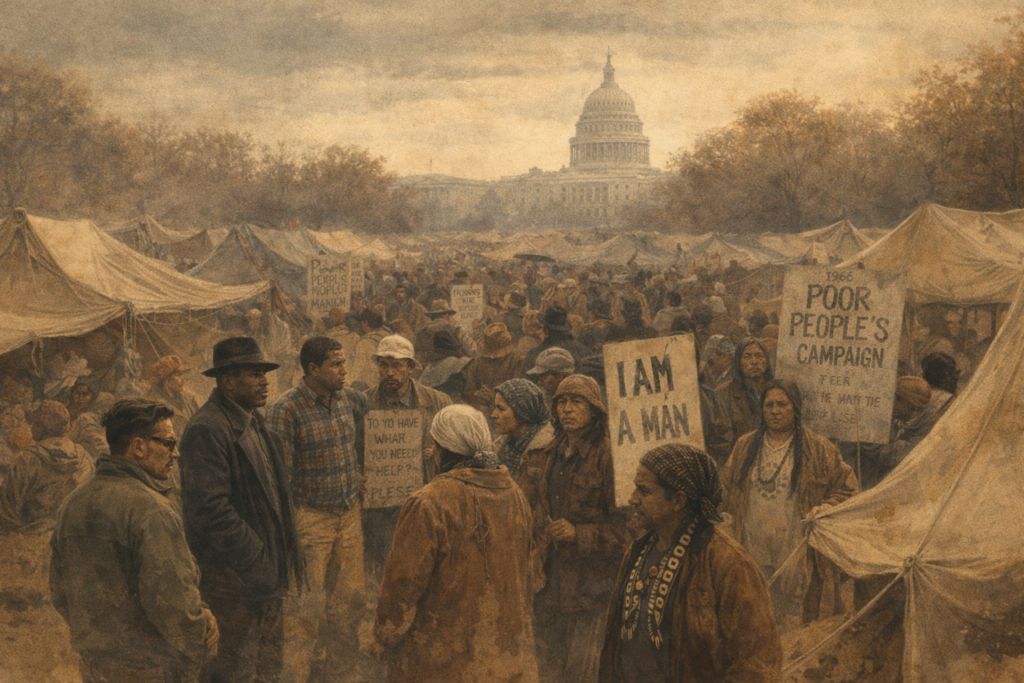
The Poor People’s Campaign was Martin Luther King Jr.’s final national movement. It sought to unite poor Americans across racial lines to demand jobs, housing, and economic justice from the federal government.
Who controls public schools depends on the decision. Trace how school boards, state governments, federal law, funding, rights, and courts divide education authority.
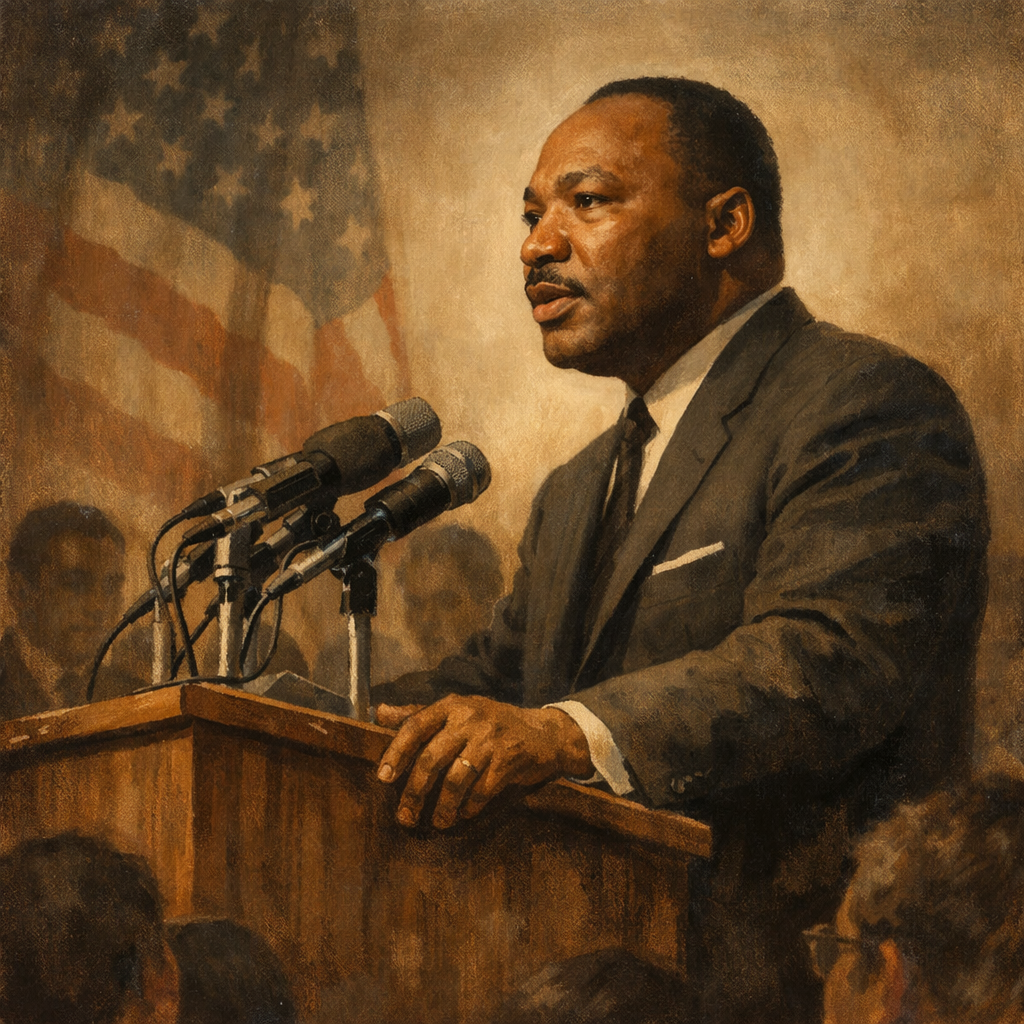
Martin Luther King Jr. supported a guaranteed income as part of his broader economic justice argument. His proposal was not simply about cash payments. It reflected a deeper belief that legal freedom remained incomplete when poverty stripped people of stability, choice, and economic power.

The MLK economic justice argument went beyond poverty relief. In his later work, Martin Luther King Jr. connected legal rights to jobs, wages, housing, political power, economic security, and the structures that determine whether freedom can hold in practice.
Can a state ignore federal law? The Constitution’s Supremacy Clause says no. This Civic Education post explains federal preemption, nullification myths, and how authority is structured.
Can a mayor override state law? No. This Civic Education post explains how local authority works, what preemption means, and why institutional literacy prevents civic confusion.