Cultural Structures

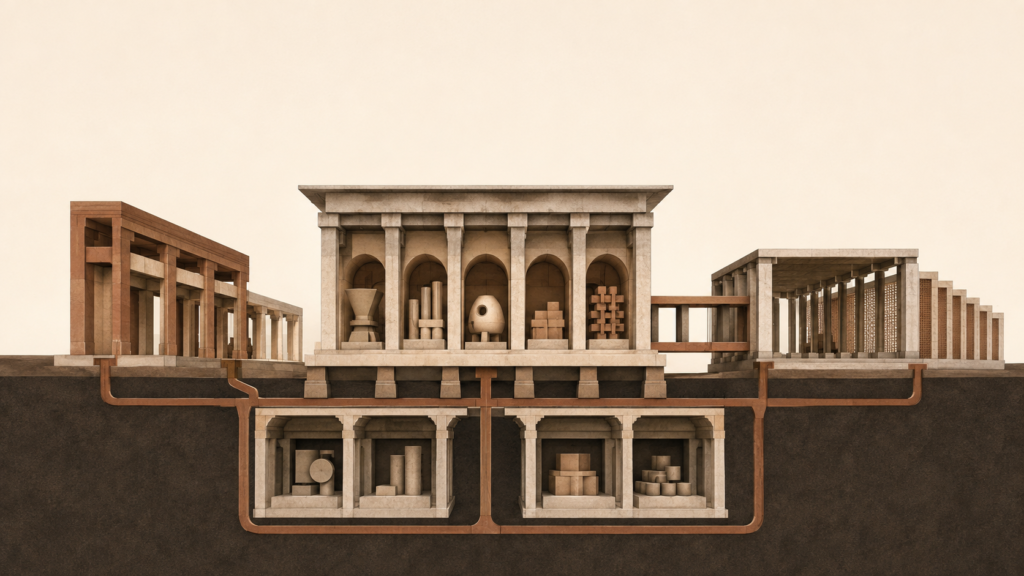
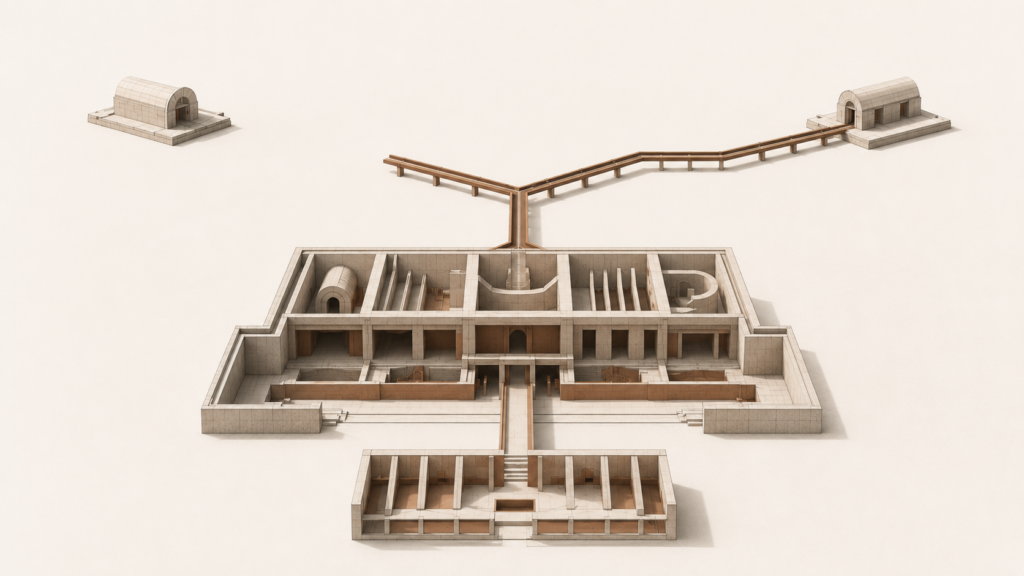
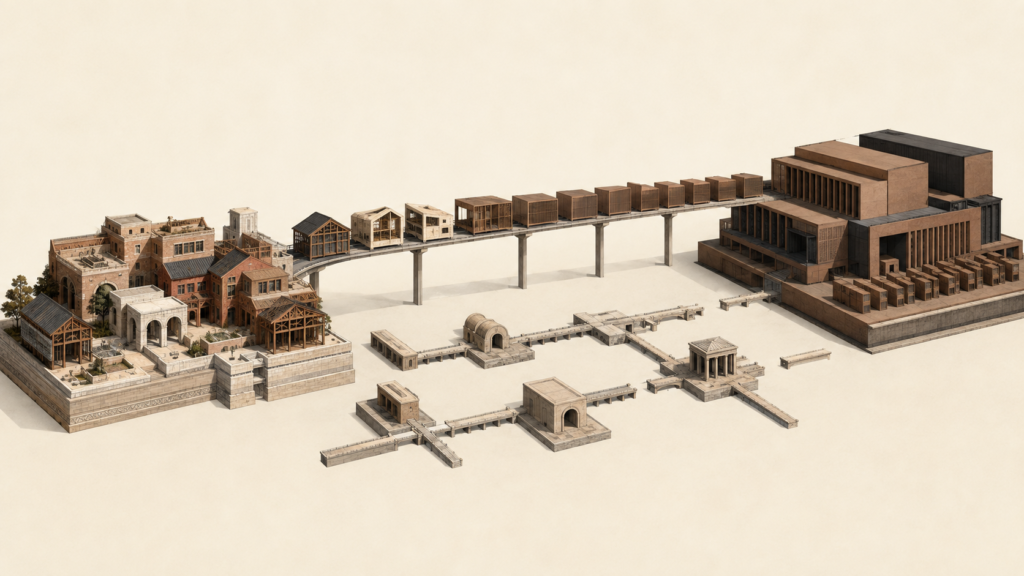
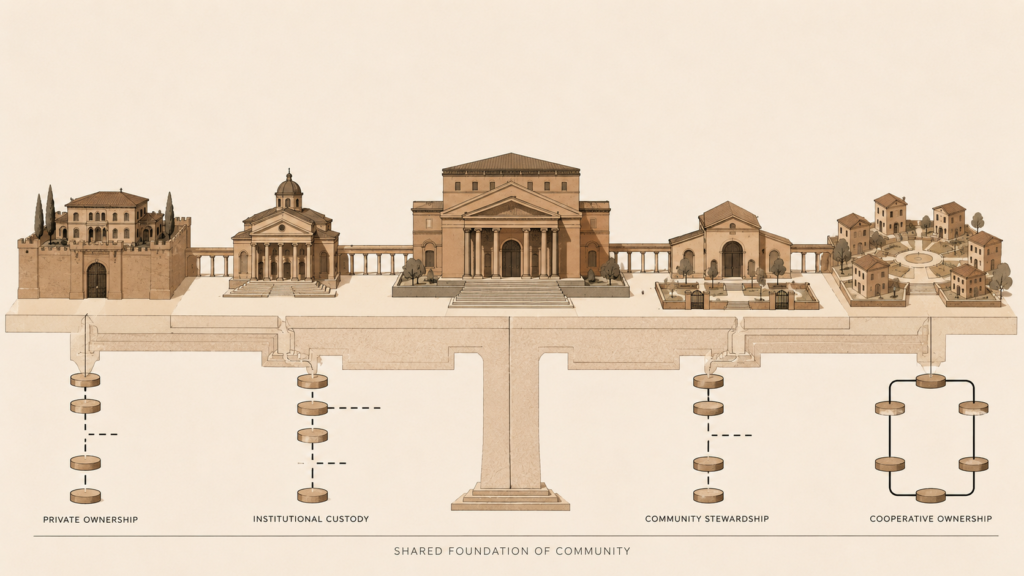
Minimalist architectural illustration comparing different ownership models for community history through civic archives, governance, stewardship, preservation, and succession.
Economy & Ownership

Who Should Own Community History?

Community history is valuable, but ownership determines who controls preservation, access, interpretation, and the benefits that flow from cultural memory. Learn how communities can balance stewardship, public access, and long-term institutional resilience.
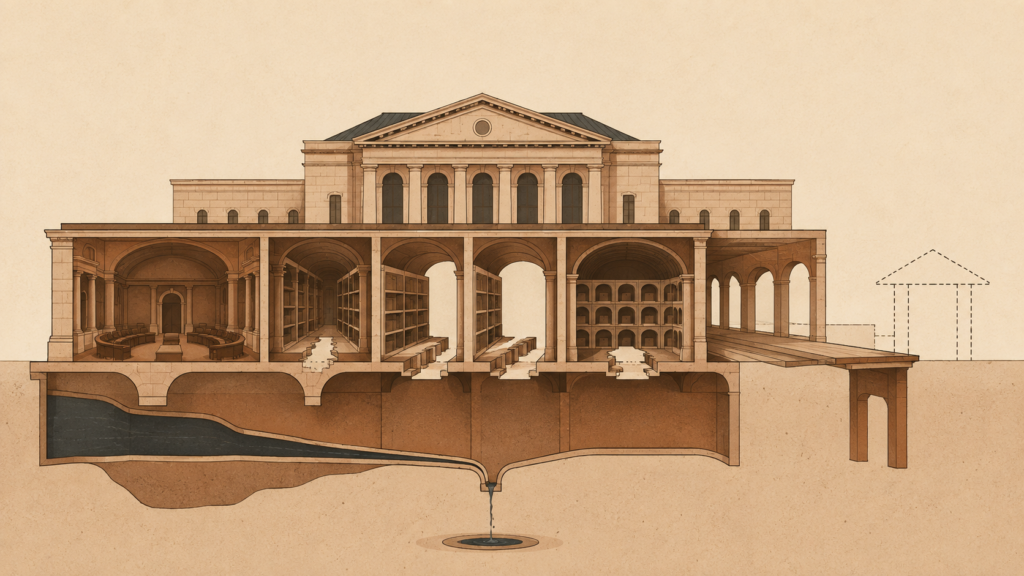
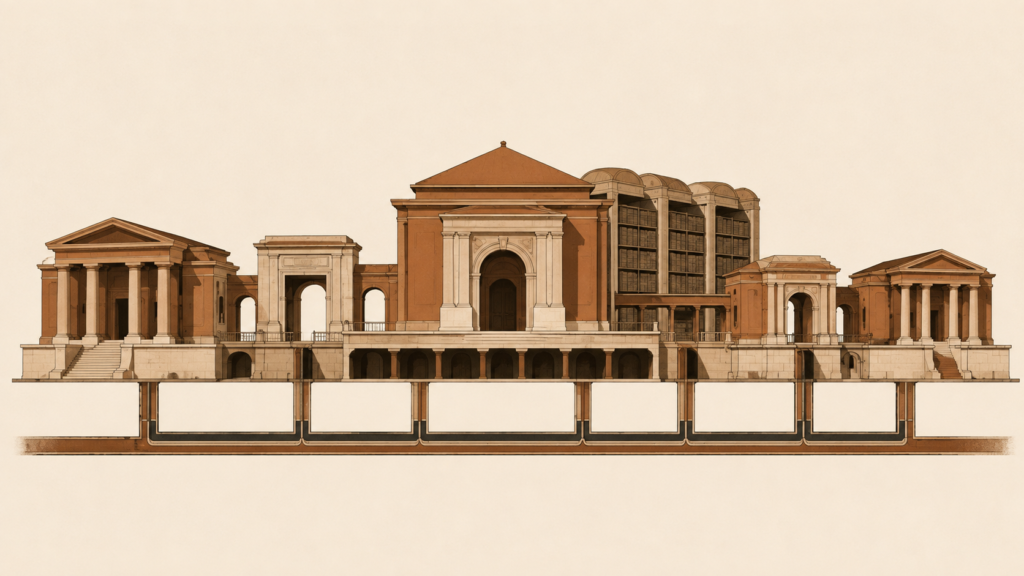
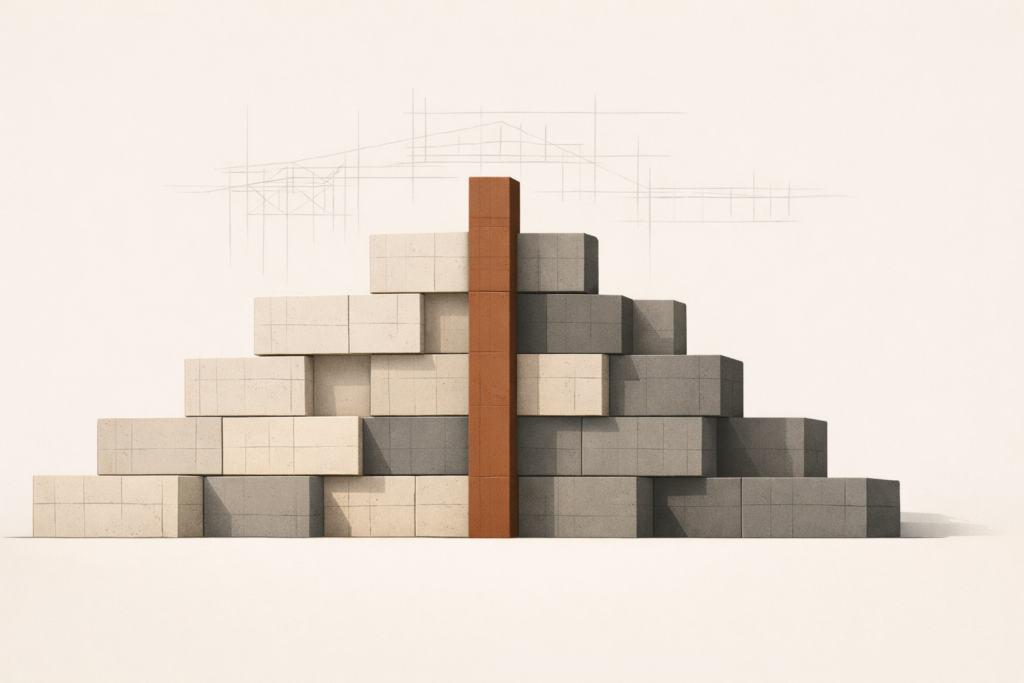
Cultural structures illustrated as partially constructed stone blocks aligned in an offset grid with a central clay-brown structural column, symbolizing culture as load-bearing infrastructure.
Economy & Ownership

When Declared Values and Incentives Collide

Organizations publish values. Systems reward behavior. When incentives contradict declared principles, cultural drift begins. Trust erodes quietly as people study what is rewarded rather than what is preached. Long-term stability depends on structural alignment between values and incentives.

Cultural structures illustrated as partially constructed stone blocks aligned in an offset grid with a central clay-brown structural column, symbolizing culture as load-bearing infrastructure.
Economy & Ownership

Culture Is Infrastructure, Not Performance

Culture is not mood. It is structure. Before a society debates identity, it quietly decides its load-bearing rules. Incentives, accountability, and shared norms determine whether ambition compounds or collapses. Treat culture like architecture and you will see what is holding — and what is drifting.

Scroll to Top