The question of who profits from viral culture begins long before a trend reaches a brand campaign, streaming playlist, runway, or television commercial.
It begins in a neighborhood, a private conversation, a dance rehearsal, a barbershop, a studio, a group chat, a local music scene, or some other place where people create without first asking whether the wider market will approve.
Then the internet arrives.
A phrase leaves the people who developed its meaning. A dance leaves the creator who designed its sequence. A sound leaves the city that gave it rhythm. A visual style leaves the community whose history made it legible.
The culture moves quickly. Credit moves slowly. Legal protection moves even slower. Revenue often takes a completely different route.
When Everywhere Started Looking the Same examined how digital distribution compresses local distinction. The economic question follows naturally: what happens when a community creates the cultural value, but somebody else controls the systems that distribute, package, and monetize it?
Who Profits From Viral Culture?
The shortest answer is rarely the person who created the first recognizable version.
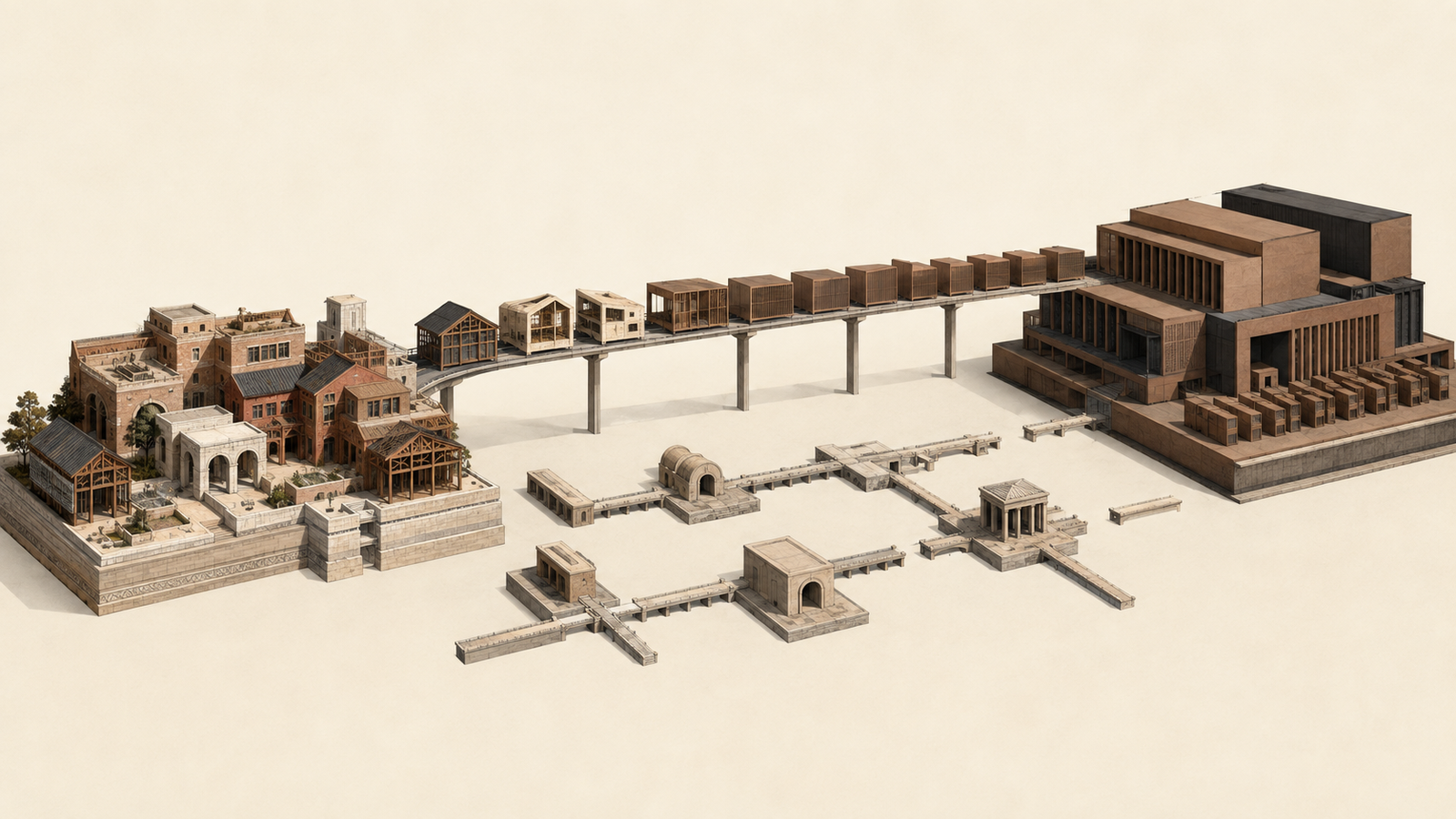
Platforms profit from attention. Advertisers profit from reach. Media companies profit from interpretation. Brands profit from association. Larger creators profit from audiences they already possess. Retailers profit by turning an emerging aesthetic into inventory.
The originator may receive visibility. Visibility can create opportunities, but it is not ownership. It does not automatically produce attribution, bargaining power, licensing income, archival authority, or control over future use.
This is the central imbalance in digital culture.
The people closest to creation are often farthest from the infrastructure that converts creation into durable value.
Cultural Creation and Value Capture Are Different Systems
Creation and value capture are often discussed as if they were the same process. They are not.
Cultural creation depends on imagination, shared experience, local knowledge, experimentation, and repetition. Value capture depends on contracts, capital, distribution, documentation, legal rights, audience ownership, production capacity, and commercial relationships.
One system produces meaning.
The other determines where the money lands.
A community can dominate cultural creation while remaining structurally weak in cultural ownership. Its influence may appear everywhere while its institutions remain underfunded. Its language may shape advertising while its publications disappear. Its music may drive global trends while local venues close. Its aesthetics may fill storefronts while neighborhood businesses struggle to secure capital.
Influence can travel without power.
That is why cultural visibility should never be mistaken for cultural equity.
Why Attribution Disappears Online
Digital platforms are built to accelerate circulation. They are not built to preserve provenance.
Reposts separate material from its first caption. Screenshots remove links. Audio clips detach sound from the original upload. Reaction videos place a larger personality between the audience and the source. Recommendation systems often surface the version generating the strongest engagement, not the version that appeared first.
Every additional layer makes the origin harder to see.
This does not always require deliberate theft. Sometimes attribution disappears because the platform treats origin as secondary metadata rather than essential information.
A 2025 study published in Social Media + Society examined the Melanin Mansion trend and the Black TikTok Strike. The researchers documented how Black creators used refusal to protest racism, appropriation, and creative theft within the platform environment.
The strike made the hidden labor visible. When Black creators stopped supplying new dance material, the absence exposed how much of the platform’s cultural energy depended on work that was not being credited or rewarded proportionately.
The lesson extends beyond one platform.
When attribution depends on voluntary courtesy inside a system optimized for rapid imitation, attribution will remain fragile.
Why Copyright Cannot Protect Every Cultural Contribution
Calls for creators to “just copyright it” sound practical until the actual limits of copyright law enter the room.
The U.S. Copyright Office explains that names, titles, slogans, catchphrases, and other short expressions generally do not contain enough authorship to receive copyright protection. Its guidance on choreography also states that individual movements, ordinary dance steps, social dances, and short routines may fall outside copyright protection.
That creates a structural gap.
Many of the cultural elements that travel fastest online are precisely the elements that formal copyright law may not protect easily: a phrase, a gesture, a short movement, a styling choice, a social format, or an aesthetic pattern.
Trademark law may protect a phrase or symbol when it identifies the source of particular goods or services. It does not grant universal ownership of ordinary language. Copyright can protect an original work fixed in a tangible form, but it does not give one person ownership of a broad style, idea, or cultural vocabulary.
Legal tools matter. They are not magic.
The hard truth is that cultural production often occurs collectively while intellectual property law usually asks for identifiable authors, fixed works, defined owners, and specific protected uses.
Cultural Ownership Is Not the Right to Control Everything
The phrase cultural ownership can become intellectually sloppy if it is used to suggest that one person should control an entire language, genre, style, or community tradition.
No individual owns a culture.
Culture develops through collective contribution, inheritance, adaptation, and exchange. People influence one another. Communities borrow, revise, remix, and transform what they encounter. That process cannot be governed through permanent cultural isolation.
Ownership in this context means something more disciplined.
It means preserving the relationship between origin and value.
That relationship can include accurate attribution, informed collaboration, meaningful compensation, narrative authority, access to distribution, community benefit, and the ability to challenge false claims of origin.
The World Intellectual Property Organization recognizes that traditional cultural expressions can include music, dance, art, designs, names, symbols, performances, architecture, and narratives. WIPO also notes that these expressions are tied to community identity, heritage, knowledge, and values.
That framework does not map perfectly onto every contemporary cultural trend. Still, it establishes an important principle: cultural expression can carry communal interests that individual intellectual property categories do not fully capture.
How Platforms Separate Culture From Its Source
Platforms do not need to claim ownership of a trend to capture value from it.
They control the environment through which the trend travels.
They organize discovery. They rank visibility. They sell advertising around engagement. They collect behavioral data. They determine which accounts receive recommendation traffic. They can change monetization requirements, search functions, attribution tools, and distribution rules without negotiating with the communities supplying the culture.
The platform therefore owns the road even when it does not own the vehicle.
That distinction matters because infrastructure captures tolls.
UNESCO’s 2026 global report on cultural and creative industries found that digital revenues had grown from 17 percent of creators’ income in 2018 to 35 percent. The same report warned that market concentration and opaque content-curation systems can marginalize lesser-known creators.
Digital distribution has expanded access. It has also increased dependence on systems creators do not govern.
The result is a familiar value chain:
- A community produces a distinctive cultural form.
- Creators translate that form into digital material.
- Platforms identify strong engagement signals.
- Larger accounts reproduce the most legible version.
- Brands package the trend for commercial audiences.
- The original context disappears.
- Revenue accumulates around distribution, scale, and ownership infrastructure.
By the time the market recognizes the trend, the originators may already be competing against polished versions of their own cultural language.
Why Going Viral Does Not Create Bargaining Power
Virality can create leverage, but only when supporting infrastructure already exists.
A creator who owns an audience list, documented catalog, registered business, production process, licensing framework, and negotiated rights can convert attention into a durable asset.
A creator without those systems may gain followers while remaining economically exposed.
The difference is not talent. It is readiness.
Platforms reward speed, but ownership requires preparation. By the time a cultural moment becomes obviously valuable, the strongest commercial players are already moving. They have attorneys, buyers, production partners, publicists, manufacturers, and distribution agreements.
Originators are often expected to assemble the same infrastructure while simultaneously proving that they created the value in the first place.
That is not a fair contest. It is an infrastructure gap disguised as a marketplace.
How Communities Can Protect Cultural Ownership
Protecting cultural ownership requires more than telling people to give credit. Credit matters, but courtesy cannot carry the entire system.
Communities need institutions capable of preserving origin and negotiating value.
Build cultural archives before disputes begin
Local publications, libraries, universities, museums, collectives, and independent archivists can document creators, scenes, terminology, timelines, performances, and places of origin.
An archive does not automatically create a legal right. It creates evidence, memory, and narrative authority. Those assets become critical when a trend is later presented as if it appeared from nowhere.
Create rights education close to the point of creation
Creators need practical access to copyright, trademark, contract, licensing, business-formation, and collaboration guidance before a work becomes valuable.
Sending someone to an attorney after a trend has crossed the globe is not a system. It is emergency response.
Develop collective attribution standards
Platforms, publishers, labels, brands, and media outlets can adopt sourcing practices that identify originators, choreographers, local scenes, and contributing communities.
Attribution should travel with the material. It should not depend on whether an individual viewer knows enough history to ask the right question.
Own direct distribution channels
Creators and cultural institutions need websites, newsletters, archives, membership systems, storefronts, mailing lists, and community media that are not fully dependent on platform discovery.
An audience rented from an algorithm can disappear when the recommendation system changes. A direct relationship remains reachable.
Build capital around cultural production
Legal filings, professional recordings, manufacturing, marketing, archiving, and distribution all require money. Communities that want stronger cultural ownership need funds, cooperatives, accelerators, legal clinics, and investment vehicles designed for cultural enterprises.
Talent without capital remains easy to admire and easier to exploit.
Negotiate benefit, not just recognition
Acknowledgment without material participation can become another performance.
When brands, institutions, or commercial partners use identifiable community-based cultural material, collaboration should consider compensation, licensing, employment, investment, shared production, or support for the institutions sustaining that culture.
Credit names the source. Benefit sharing helps the source remain capable of creating.
The Infrastructure Behind Cultural Power
Cultural ownership will never mean freezing culture in place. Culture survives because people use it, reinterpret it, and carry it into new environments.
The goal is not to stop exchange.
The goal is to prevent exchange from becoming extraction by default.
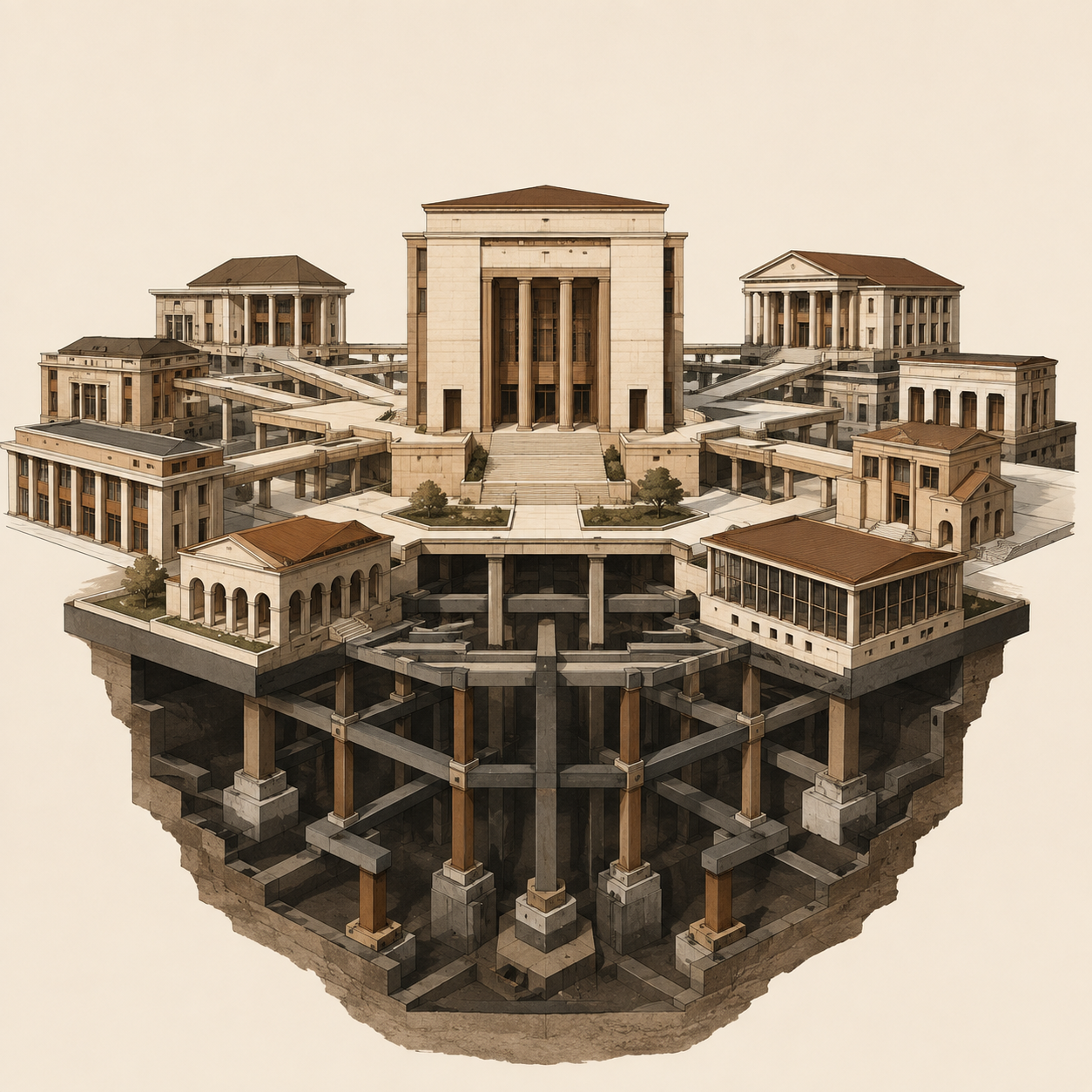
That requires a shift from cultural pride to cultural infrastructure. Pride recognizes influence. Infrastructure preserves evidence, negotiates rights, controls distribution, builds enterprises, and keeps a share of the value connected to its source.
The question of who profits from viral culture cannot be answered by studying the trend alone. Follow the contracts. Follow the platforms. Follow the trademarks. Follow the distribution channels. Follow the capital.
The culture may begin in the community.
Power begins with the system prepared to receive what that community creates.
Culture travels fast. Ownership must be built before it arrives.
Continue Building
Move from cultural influence to the systems that determine control, value, and durability.
→ Framework: The Culture Isn’t Broken. The Incentives Are
→ Ownership: The Ownership Lesson Behind the Tenderism Story
→ Foundation: Culture Is Infrastructure, Not Performance
Build beyond visibility.
Groundwork Daily examines the structures that determine who creates value, who controls it, and who keeps it.
Receipts
→ Social Media + Society: Black TikTok, Appropriation, and Creative Ownership
→ U.S. Copyright Office: Works Not Protected by Copyright
→ U.S. Copyright Office: Choreography and Pantomime
→ WIPO: Traditional Cultural Expressions and Intellectual Property
About Adrian Cole
Adrian Cole is the Groundwork Daily builder behind Cultural Structures, a series examining culture as economic and institutional infrastructure.
Cole studies how incentives, ownership, enforcement, and institutional capacity determine whether cultural influence becomes durable community power or value captured elsewhere.