Last updated: August 2026
How to build a community archive begins with governance, not scanners, boxes, software, or a website. The central question is whether the archive can still make sound decisions when the founding organizer is gone.
A collection can survive physically and still fail institutionally. The files may exist, yet nobody knows who controls them. Photographs may be digitized while their names, dates, and relationships disappear. Oral histories may remain online even though the consent forms cannot be found.
Meanwhile, a website can stay visible long after the people responsible for it lose the login, master files, or authority to move the collection elsewhere.
This is why a durable community archive must be built to hold. It also depends on continuity, because the essential purpose, knowledge, standards, and authority must survive when the carrier changes.
Why Cultural Archives Matter explains why records give communities leverage over provenance, context, and future interpretation. The next task is operational: building an institution capable of carrying that record forward.
A durable archive must pass five tests. It must know what it holds, why it holds it, who may decide, what rights travel with the material, and how the work continues when people, platforms, and funding change.
How to Build a Community Archive That Can Last
The weakest way to start an archive is to begin collecting everything.
At first, that approach feels productive because material begins accumulating immediately. However, each new item creates obligations before the institution has decided which obligations it can meet.
Every accepted item requires work. Someone must document where it came from, determine whether it fits the mission, clarify ownership, preserve it, describe it, respond to access requests, and decide what happens if the institution can no longer care for it.
For that reason, communities learning how to build a community archive should follow a controlled sequence:
- Define the mandate.
- Assign decision rights.
- Control intake and custody.
- Preserve context and rights.
- Build technical redundancy.
- Govern access.
- Fund recurring operations.
- Prepare for succession or transfer.
This sequence turns preservation from a temporary project into an operating system.
Archives that survive for decades rarely do so because they purchased better software. Instead, they survive because decisions, responsibilities, records, and recovery procedures remain understandable after individual organizers leave.
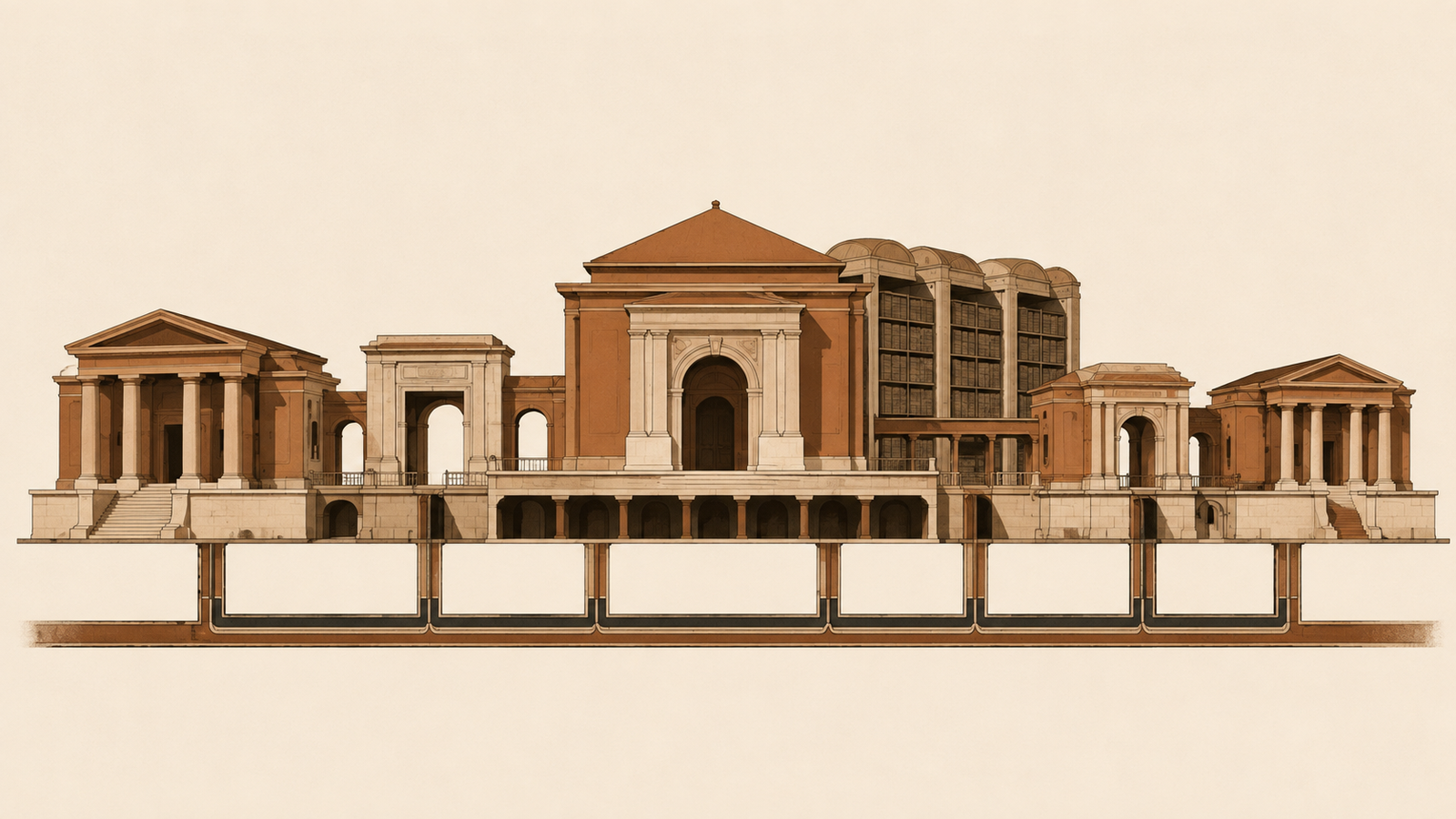
The Community Archive Operating System
Each layer protects the next. A weak early control becomes a later institutional failure.
Why Strong Archive Projects Still Fail
Many archive projects begin with urgency and public enthusiasm. Visible activity can make the work look stable long before stable systems exist.
Composite Example
This scenario combines common patterns in small cultural archives. It does not describe one specific institution.
A neighborhood oral history project spends two years recording longtime residents before a beloved local business closes. The recordings and donated photographs are uploaded to a free hosting platform. Soon afterward, the project is celebrated at a community event.
Three years later, the volunteer who managed the project moves out of state. Nobody else has the platform login. The consent forms also remain inside that volunteer’s email account.
Two interview agreements required additional review before publication. Because the records are missing, the organization cannot confirm which recordings were cleared for public use. It also cannot migrate the collection confidently to a new website.
The content still exists. The institution capable of governing that content does not.
A mandate and clear decision rights would not have prevented the volunteer from leaving. They would have ensured that somebody else could still open the door.
1. Build the Community Archive Mandate First
A community archive needs a short written mandate that answers four questions:
- Which community does the archive serve?
- What history, geography, institution, practice, or cultural form does it collect?
- What material falls outside its scope?
- Who should be able to use the collection, and for what purposes?
These questions are not ceremonial. If they remain unanswered, cost, trust, and institutional drift will eventually answer them instead.
For example, an archive devoted to a neighborhood’s music history should not quietly become a warehouse for every object anyone wishes to donate. Likewise, an organizational archive should not accept private family records without the policies and capacity required to manage them.
A digital archive should also avoid promising permanent public access if it has no rights process, maintenance budget, or exit plan.
Turn the Mission Into a Collecting Policy
The collecting policy should state what the archive accepts, declines, copies, borrows, or refers elsewhere. It should also explain whether the institution acquires original material, digital copies, oral histories, or some combination.
This is culture as infrastructure in its least glamorous form. The mission becomes durable only when boundaries convert intention into repeatable decisions.
2. Assign Authority Before Conflict Begins
Calling an archive community-led does not explain who has authority.
Acquisitions require approval. Agreements need authorized signatures. Sensitive material may require restrictions. Spending, partnerships, exhibitions, licensing, and removal decisions also require defined authority.
Those powers should never live only in the founder’s memory.
A basic governance structure can remain small. It may include a legal host organization, a working archive committee, a designated collections steward, and a community advisory group. The labels matter less than the allocation of responsibility.
What the Governance Policy Must Define
- who owns or legally hosts the archive;
- who holds custody of physical and digital material;
- who approves collection and access policies;
- who may enter contracts or accept donations;
- who resolves conflicts and conflicts of interest;
- who receives authority during an emergency or leadership transition.
Decision rules do not weaken community participation. They protect it.
Without defined authority, influence tends to flow toward whoever controls the password, bank account, building, or relationship with the funder.
That is an accountability problem as much as a governance problem. Authority must remain connected to responsibility and correction.
3. Build an Intake System That Can Prove Custody
Anyone studying how to build a community archive must understand that custody begins at intake.
The institution should be able to trace every collection from the moment it enters.
That process requires an accession record. At minimum, the record should identify the donor or source, describe the material, note the date received, document the terms of transfer, list restrictions, assign a unique number, and identify where the material is stored.
The Society of American Archivists explains that a deed of gift establishes the legal relationship between a donor and a repository. It can address ownership, intellectual property, use provisions, and the disposition of unwanted material.
Ownership Is Not the Same as Permission
That distinction is critical.
Owning a donated photograph is not automatically the same as owning its copyright. Holding a digital file does not automatically create permission to publish it. Receiving a recording does not necessarily allow the archive to edit, license, or place it online.
Therefore, every archive needs documents appropriate to what it collects. These may include deeds of gift, deposit agreements, oral history consent forms, reproduction permissions, loan agreements, and takedown procedures.
Legal review is appropriate when rights are unclear or the material creates privacy, copyright, contractual, or cultural concerns.
4. Create a Collection Control Spine
A durable archive needs one reliable system that tells staff what exists and how it may be managed.
Fortunately, this does not require expensive software on the first day. A well-designed spreadsheet or simple database can work if the institution uses consistent identifiers, controlled fields, documented backups, and clear permissions.
The Five Records Every Archive Should Connect
- Accession record: how and when the material entered.
- Location record: where the physical item and digital copies are stored.
- Description record: who created the material, what it documents, and how it relates to other records.
- Rights record: ownership, copyright, consent, restrictions, and permitted uses.
- Activity record: preservation work, movement, loans, reproductions, takedowns, and changes to access.
The system should also preserve original filenames, dates, formats, checksums when available, and relationships among items.
A photograph becomes more useful when it remains connected to its caption, event program, photographer, location, participants, and donor agreement.
Handled this way, metadata stops being paperwork attached to the collection. It becomes the infrastructure that allows the collection to remain intelligible without the original organizer standing beside it.
This is a practical application of the Structure Condition. Roles, pathways, records, constraints, and decision architecture must remain visible enough for the system to operate.
5. Use Preservation Controls the Institution Can Maintain
Technical ambition can become another form of fragility.
A complicated repository that only one volunteer understands is not stronger than a simpler system several trained people can operate.
Therefore, the goal is controlled preservation that the institution can repeat, document, test, and fund. Maximum sophistication is not the standard.
The Digital Preservation Coalition’s Community Archives Digital Preservation Toolkit organizes this work into practical areas such as selecting content, assigning roles, understanding assets, controlling storage, making copies, planning access, preserving websites, and preparing for risk.
Minimum Digital Preservation Controls
- an inventory of digital assets and storage locations;
- master files separated from lower-quality access copies;
- multiple copies stored in more than one location;
- scheduled checks that files still open and have not changed unexpectedly;
- documented file-naming and folder rules;
- controlled administrative access and account recovery;
- preferred formats and a plan for format migration;
- an exit strategy for every vendor or cloud platform.
Test Recovery Instead of Assuming It Works
The National Digital Stewardship Alliance’s Levels of Digital Preservation offers a framework for assessing and strengthening a preservation program over time.
The purpose is not to imitate a national institution. It is to identify the next responsible level of control.
A backup that has never been restored is still an assumption. Consequently, preservation plans should include periodic recovery tests, not merely proof that another copy exists.
This is where durability becomes visible. A system holds because normal wear, maintenance, change, and repeated load are managed before they become failure.
6. Govern Access Without Surrendering Trust
Knowing how to build a community archive also means knowing how to govern access.
An archive that nobody can use has limited public power. However, an archive that releases everything without judgment can violate trust.
Between those failure modes sits an access policy that distinguishes among types of use.
Material may be open online, available only in a reading room, restricted for a defined period, limited to approved researchers, withheld because of privacy concerns, or governed by community-specific cultural protocols.
Define How Access Decisions Are Made
The access policy should explain who makes those decisions, how requests are reviewed, whether copies may be published, and how people can challenge descriptions or request takedown.
The Society of American Archivists’ Core Values and Code of Ethics supports broad access while recognizing legitimate legal, contractual, privacy, and cultural restrictions.
Discoverability also matters. A public collection guide, basic catalog, or finding aid can reveal what the archive holds without exposing every item online.
Good description should identify creators and communities in language they recognize, preserve historical context, and create a documented process for correction.
Access should produce accountability, education, scholarship, and community knowledge without requiring the archive to surrender custody, context, or ethical judgment.
7. Fund the Operating Cycle, Not Just the Launch
Most archives can attract support for a visible beginning.
A scanning day, website launch, exhibition, or anniversary project creates a clear story. By contrast, recurring storage, cataloging, insurance, staff training, rights review, cybersecurity, conservation, and software maintenance are harder to celebrate.
Nevertheless, those recurring costs determine whether the archive survives.
A Council on Library and Information Resources review identified a recurring sustainability challenge in digital cultural heritage: institutions may treat initiatives as special projects even when the resulting obligations become permanent.
Separate Startup Costs From Annual Costs
A durable financial model should distinguish startup spending from annual operations.
The annual budget should account for people, physical care, digital storage, security, software, professional consultation, description, public access, and emergency reserves.
No single revenue source is automatically superior. An archive may combine memberships, donations, institutional support, public grants, foundation grants, service agreements, licensing revenue, research fees, events, and partnerships.
Treat Funding Concentration as Risk
The dangerous model is not small funding. It is concentrated funding without a replacement plan.
If one grant, donor, sponsor, or founder covers nearly everything, the archive should treat that concentration as an operational risk.
Funding diversity is preservation insurance as much as it is a growth strategy.
8. Treat Succession as Part of Preservation
A complete answer to how to build a community archive must include succession.
An archive has not been preserved if its operation cannot survive a leadership transition.
At least two authorized people should know how to reach the collection, recover key accounts, locate agreements, understand the catalog, contact vendors, and perform the most important recurring procedures.
Build an Operations Manual
The institution should maintain an operations manual that records:
- roles and decision authority;
- storage locations and account ownership;
- backup and recovery routines;
- vendor contracts and renewal dates;
- collection, rights, access, and emergency policies;
- current risks, unresolved rights questions, and restricted material;
- the process for transferring custody if the archive closes.
Plan for Closure and Transfer
The transfer clause matters.
If the institution becomes unable to continue, governing documents should identify how a successor repository will be selected, how donors and communities will be consulted, and how restrictions will follow the material.
Closure is not the only transition worth planning for. Founders retire. Volunteers move. Board members rotate. Technology vendors disappear. Buildings change hands.
Healthy succession planning converts predictable changes from crises into governed handoffs.
This is the central job of Continuity: preserving essential function, knowledge, standards, and purpose when the carrier changes.
How to Build a Community Archive in the First Year
Communities do not need to finish every system before beginning. However, they do need to build in the correct order.
| Period | Primary Job | Core Actions |
|---|---|---|
| First 90 Days | Establish Authority | Write the mission and scope. Identify the legal host. Assign responsibilities. Inventory current holdings. |
| Months 4–6 | Establish Control | Create accession numbers, rights forms, a collection register, separate master files, backups, and account recovery procedures. |
| Months 7–9 | Establish Use | Publish a collection guide. Define access procedures. Train multiple people. Test recovery and one complete research request. |
| Months 10–12 | Establish Continuity | Build the next operating budget. Review funding concentration. Approve succession and emergency transfer plans. Audit the system. |
The sequence is intentionally conservative.
It favors control before scale because unmanaged growth can make a young archive less durable, not more.
The Community Archive Durability Test
Before calling an archive stable, ask:
- Custody: Can the institution prove how the material arrived and who controls it?
- Context: Can a future user understand the material without relying on one person’s memory?
- Rights: Can the institution distinguish ownership, copyright, consent, restrictions, and permitted use?
- Continuity: Can another trained person operate the system tomorrow?
- Access: Can people discover and use the collection under clear, defensible rules?
- Recovery: Can the archive restore its files and continue after a technical or organizational failure?
- Finance: Is the next year of basic stewardship funded or credibly fundable?
If one of these questions cannot be answered, the archive has identified its next institutional priority.
The Groundwork
Community archives often begin with urgency. Records are disappearing. Elders are aging. Buildings are closing. Digital platforms are flattening history into content.
That urgency is legitimate. It cannot remain the operating model.
The institution eventually has to move from rescue to stewardship. It must decide what it can hold, document the terms, preserve the context, control the technology, fund the routine, govern access, and prepare the next person to carry the work.
That is the difference between saving records and building something capable of carrying them.
A lasting archive is not the largest collection. It is the one whose relationships, authority, context, and operating knowledge remain intact after the original keepers leave.
Preservation keeps the record.
Structure keeps the archive capable of using it.
Continue Building
This piece is part of the Cultural Structures framework. Move from the cultural argument to the records, ownership, and institutional systems that allow communities to preserve authority over time.
→ Framework: Culture Is Infrastructure, Not Performance
→ Mechanism: Who Owns the Archive Owns the Story
→ Mechanism: Culture Travels Faster Than Ownership
Receipts
→ Digital Preservation Coalition: Community Archives Digital Preservation Toolkit
→ National Digital Stewardship Alliance: Levels of Digital Preservation
→ Society of American Archivists: A Guide to Deeds of Gift
→ Society of American Archivists: Core Values and Code of Ethics
→ Council on Library and Information Resources: Sustainability of Digital Cultural Heritage
Groundwork Architecture The principle and structural conditions carrying this article.
Primary Core Principle
Build What Holds
A worthwhile structure must carry load, receive maintenance, survive pressure, transfer, and remain useful over time.
Primary Condition
Continuity
The archive must preserve essential function, knowledge, standards, and purpose when the people carrying the work change.
Supporting Conditions: Durability, Accountability, and Structure.
Meet the Builder
Adrian Cole
Adrian Cole builds Cultural Structures for Groundwork Daily. His work examines how institutions, incentives, ownership, governance, and shared norms shape what communities inherit, preserve, and pass forward.
Rather than treating culture as entertainment or symbolism alone, Cole studies the systems beneath visible cultural change. His work asks what structures create legitimacy, preserve continuity, reward behavior, and determine whether cultural influence becomes durable community power or value captured somewhere else.
“Culture rarely changes first. The institutions beneath it do.”
Reader Promise: Cultural Structures makes the invisible architecture beneath culture easier to see, test, and understand.