Infrastructure treated as performance eventually sends the bill back to the public.
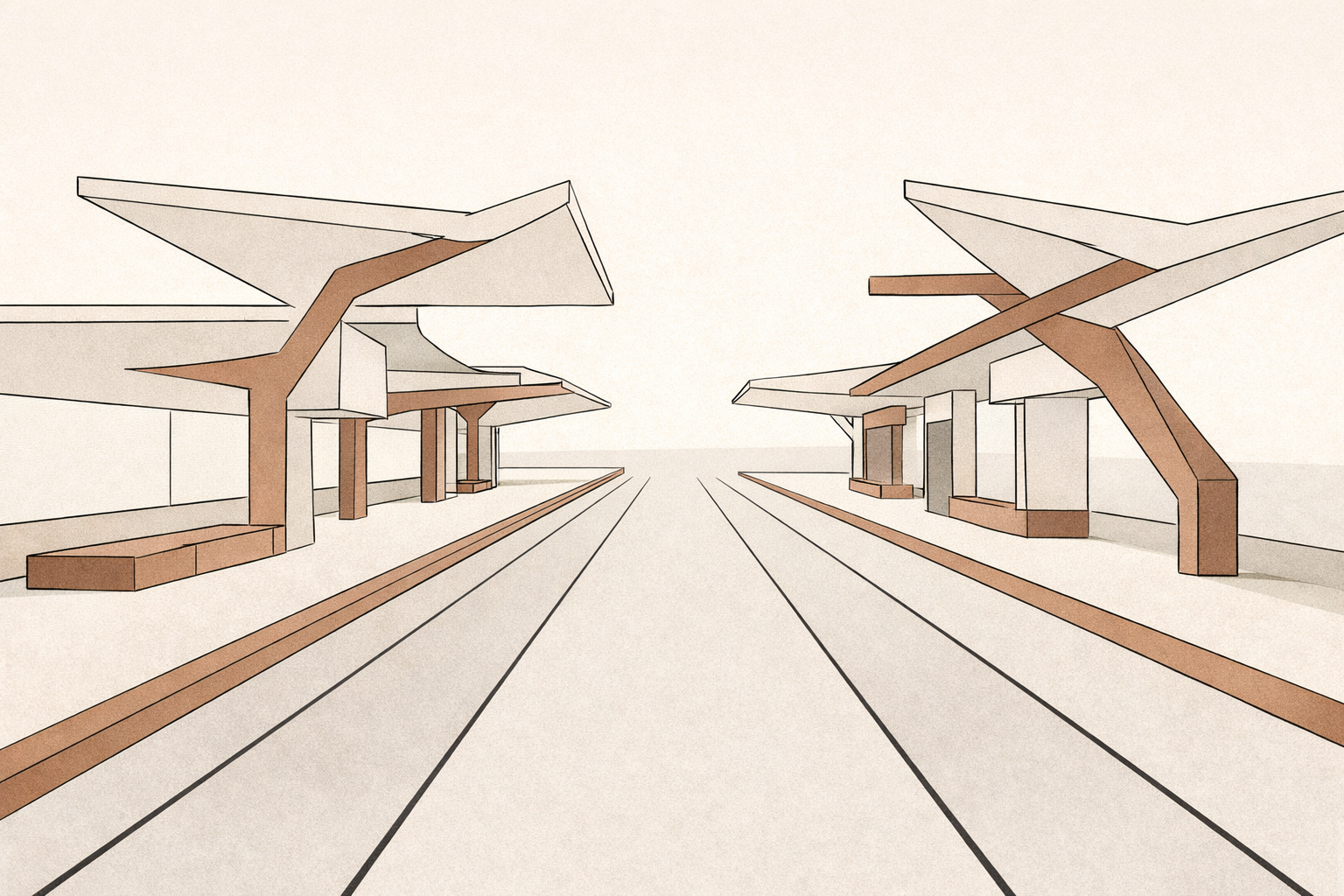
The cost of treating infrastructure as entertainment does not arrive all at once. Instead, it accumulates quietly through deferred maintenance, reduced capacity, and the slow erosion of public trust. What looks impressive today can become an expensive liability tomorrow.
Infrastructure exists to perform reliably, not to impress. Roads, transit systems, utilities, and public spaces are not cultural statements. They are assets. When leaders treat them as stages for visibility rather than systems for service, the ledger eventually balances itself, and the public pays the difference.
This is not a cultural critique. It is an accounting problem.
This article is part of The Analyst’s Ledger, Groundwork Daily’s series on economic interpretation. Throughout the series, we examine how incentives, maintenance, ownership, labor, housing, and public investment shape household reality over time.
Contents
Infrastructure Is an Asset Class, Not a Mood
Every piece of infrastructure carries a balance sheet reality. It has an upfront capital cost, an expected lifespan, and an ongoing maintenance requirement. When those requirements are ignored in favor of aesthetics, symbolism, or short-term applause, the asset depreciates faster than planned.
Maintenance debt is not abstract. It shows up as slower trains, broken elevators, leaking roofs, power outages, unsafe platforms, and ballooning repair bills. These failures are often framed as unfortunate accidents, but they are almost always the result of prior decisions.
When systems are designed to look innovative rather than endure stress, they fail under ordinary use. Consequently, throughput declines. Downtime increases. Costs rise. From a ledger perspective, none of this is surprising. It is exactly what happens when durability gets traded for display.
That is why infrastructure belongs inside the same economic framework as The Ownership Equation. Lasting control depends on maintaining productive assets, not merely possessing or announcing them.
Spectacle Spending Crowds Out Boring Competence
Entertainment logic favors visibility over reliability. Ribbon cuttings attract attention. Preventive maintenance does not. As a result, budgets drift toward projects that photograph well while unglamorous work gets deferred.
This pattern creates a false sense of progress. New stations open while old ones decay. Digital displays multiply while core systems lag. The public sees motion without improvement. Over time, confidence erodes because performance no longer matches presentation.
As explored in Order Is Not Oppression, systems fail when norms collapse. The same principle applies economically. When the norm shifts from stewardship to spectacle, enforcement and emergency repair are forced to replace maintenance discipline.
Deferred Maintenance Is a Compounding Liability
Maintenance debt behaves like interest. Each year of deferral increases the eventual repair cost. Components designed for steady upkeep suffer accelerated wear when neglected. Temporary fixes become permanent. Emergency spending then replaces planned investment.
From a ledger standpoint, this is irrational behavior. Yet it persists because the political and cultural incentives reward short-term wins. Leaders benefit from announcing projects, not from extending the life of existing ones.
The result is predictable. Budgets strain under reactive spending. Service becomes inconsistent. Public frustration grows. Institutions respond with messaging instead of repair, which deepens the trust gap. In practice, the asset was not managed like an asset.
This is the public-sector version of a household problem described in Housing and Credit: pressure does not disappear when payment is delayed. It compounds.
Performance Replaces Throughput
Infrastructure exists to move people, energy, goods, and information efficiently. When design prioritizes spectacle, throughput often suffers. Spaces become harder to maintain. Systems become more fragile. Failure points multiply.
Implied motion replaces actual capacity. The system looks active but delivers less. This is the economic equivalent of marketing without production. Meanwhile, the maintenance backlog expands in the background.
As discussed in Authority Without Escalation, legitimacy depends on consistent performance. When infrastructure fails visibly, authority is forced to intervene more aggressively, not because rules changed, but because systems no longer support normal behavior.
Why the Bill Always Arrives Later
The true cost of infrastructure neglect is delayed. Failures appear years after the decisions that caused them. By then, the decision-makers have moved on, and the public absorbs the impact.
This delay creates moral hazard. Leaders can externalize cost into the future while capturing credit in the present. The ledger, however, does not forget. It records every skipped inspection, every underfunded repair, and every design choice that favored form over function.
Eventually, the system reaches a tipping point where incremental fixes no longer suffice. Large-scale rehabilitation becomes unavoidable and far more expensive than steady maintenance would have been.
That gap between official presentation and lived consequence is the same gap explored in Why Economic Headlines Rarely Match Household Reality. The headline may say progress. The structure may say exposure.
Infrastructure Failure Is Not Neutral
When systems degrade, the costs are unevenly distributed. People with resources adapt. They change routes, work remotely, or move. Those without flexibility absorb longer commutes, unsafe conditions, and reduced access.
This is why treating infrastructure as entertainment is not merely inefficient. It is inequitable. The communities least able to buffer failure pay the highest price for neglect.
The dynamic mirrors the pattern described in Shared Space Requires Shared Restraint. When systems fail, individuals are forced to compensate, often at personal cost. That compensation can become normal, which quietly trains the public to tolerate decline.
Maintenance Is Governance in Physical Form
Maintenance discipline reflects institutional maturity. Systems that prioritize upkeep signal long-term thinking. Systems that chase visibility signal fragility.
Good governance does not require constant innovation. It requires consistency. Clear standards. Predictable investment. The willingness to fund what no one will praise.
From a ledger perspective, maintenance is one of the cheapest forms of intervention. Every dollar spent early can save multiples later. This is not ideology. It is arithmetic.
Maintenance is not a cost center. It is the mechanism that preserves productive capacity. Every dollar deferred today becomes a larger liability tomorrow.
Why Entertainment Logic Keeps Winning
Entertainment logic persists because it aligns with media incentives. Spectacle spreads. Reliability does not. A functioning system generates no headline. A failure does.
As a result, institutions begin to perform for attention rather than durability. Over time, they forget what success looks like. Performance metrics replace service metrics. Optics replace outcomes.
The consequence is chronic instability. Systems lurch from crisis to crisis, each one framed as unexpected despite being entirely foreseeable.
The Cost of Treating Infrastructure as Entertainment Over Time
If you are trying to understand how infrastructure fails, the answer is rarely dramatic at first. Instead, it is cumulative. Small decisions stack. Deferred repairs accumulate. Design compromises compound.
The antidote is not austerity or spectacle. It is ownership. Clear responsibility for assets. Transparent maintenance schedules. Budgets that privilege longevity over novelty.
This is the economic spine beneath civic stability. Without it, authority escalates, enforcement hardens, and public trust erodes, not because people reject order, but because systems no longer earn confidence.
Ultimately, the cost of treating infrastructure as entertainment is paid in time, reliability, and civic trust. Infrastructure treated as entertainment may satisfy a moment. Infrastructure treated as an asset sustains a generation.
→ The Ownership Equation
→ Housing and Credit
→ Why Economic Headlines Rarely Match Household Reality
→ Authority Without Escalation
For infrastructure procurement and investment analysis, review Brookings Institution: Rethinking How America Buys Infrastructure.
For national infrastructure condition grading, review the American Society of Civil Engineers Infrastructure Report Card.
For research on public capital and productivity, review the National Bureau of Economic Research: Public Capital and Productivity.
For federal infrastructure oversight and investment issues, review the U.S. Government Accountability Office: Physical Infrastructure Challenges and Investment Options.
The Ledger Takeaway
Infrastructure does not fail because it lacks spectacle. It fails because the underlying asset discipline breaks.
The ledger asks whether the system can endure use, absorb stress, and justify its cost over time. That question is less glamorous than a ribbon cutting, but it is far more honest.
Infrastructure tells the truth eventually. Budgets can delay it. Politics can distract from it. Public relations can soften it. The asset still keeps score.
The books stay open here.