Deferred maintenance is not a backlog. It is a bill waiting for a weaker hand.
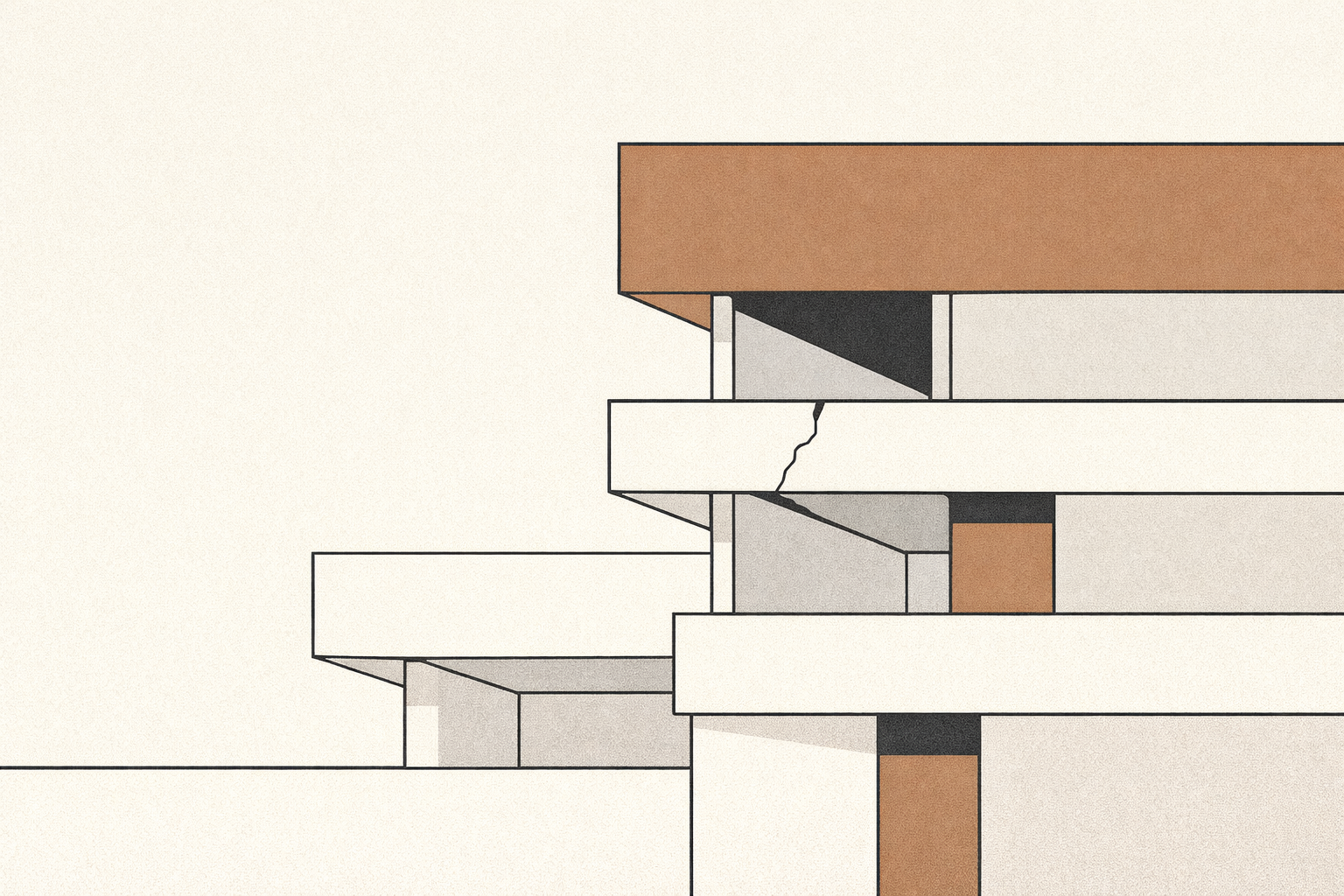
Deferred maintenance moral hazard is the quiet deal that breaks cities, agencies, and balance sheets: postpone the upkeep, bank the applause, and hand the bill to whoever comes next. This is not an engineering oversight. It is incentive design. The institution captures short-term benefit while exporting long-term risk to the public, the workforce, and the next budget cycle.
In other words, deferred maintenance is not a backlog. It is a liability strategy.
Moreover, it is a governance strategy. When maintenance is postponed, the system does not pause. It continues to age, corrode, leak, and fatigue on schedule. The only thing that changes is who carries the consequence and when the cost becomes unavoidable.
Infrastructure shapes daily life even when people rarely notice it. Every commute, delivery, utility bill, public service, and safety system depends on assets that must keep performing long after the announcement ends. That is why infrastructure deserves to be understood as an economic system rather than a political symbol.
This article is part of The Analyst’s Ledger, Groundwork Daily’s framework for understanding how incentives, assets, labor, housing, public investment, and economic measurement shape household reality.
“The future is already here—it’s just not evenly distributed.”
— William Gibson
Deferred maintenance distributes the future unevenly. People with options reroute. People without options absorb the delay, the hazard, the outage, the missed shift, the extra childcare hour, the lost paycheck, and the lost trust. Consequently, what looks like saving money becomes a slow tax on the least flexible.
Contents
Deferred Maintenance Is a Moral Hazard
A moral hazard appears when decision-makers can take risks without paying the full cost of those risks. In finance, it shows up when losses are socialized and gains are privatized. In infrastructure, it shows up when leaders underfund state of good repair while overspending on visibility and novelty.
Practically, the deferred maintenance moral hazard works like this:
- Credit today: budgets look lean, headlines look bold, ribbon cuttings look modern.
- Cost tomorrow: failures arrive late, blame is diffuse, and the repair bill multiplies.
- Payment by the public: disruptions, safety risks, and emergency appropriations fill the gap.
Therefore, maintenance is not operations. It is policy in physical form. It decides whether a city runs as a service system or as a recurring crisis.
Maintenance Debt Compounds Like Interest
Deferred maintenance is often described as maintenance debt. That is not a metaphor. It behaves like debt because it compounds. As components age without preventive care, the probability of failure rises and the cost of restoring function increases.
Emergency repairs are almost always more expensive than planned work. They require overtime, rush procurement, shutdown logistics, and temporary fixes that create more work later.
Additionally, deferred maintenance disrupts planning. Capital improvement schedules become reactive. Asset management becomes guesswork. Eventually, the organization stops forecasting and starts surviving.
From a ledger perspective, this is the core problem: deferral converts predictable, budgetable expense into volatile, reputationally damaging loss.
This is the infrastructure version of a household pattern explored in Housing and Credit: pressure does not disappear when payment is delayed. It compounds, narrows options, and eventually forces a more expensive correction.
Why Enforcement Fails When Norms Collapse
Systems do not collapse into disorder all at once. They degrade. They drift. Then, they snap.
When maintenance is neglected, the physical environment begins to train the public to expect failure: broken escalators, leaking ceilings, inconsistent service, unsafe conditions, and confusing detours. Predictability disappears.
As a result, norms weaken. People stop believing the system will do its part, so they stop doing theirs. That dynamic is explored directly in Order Is Not Oppression: Why Enforcement Fails When Norms Collapse.
The enforcement apparatus then gets pressured to compensate for a maintenance failure it did not create. Consequently, the organization escalates posture instead of improving performance.
That is how order becomes brittle, not because rules exist, but because reliability disappears.
Asset Management Is Governance, Not Aesthetics
Infrastructure is an asset class. Every roadbed, pump, platform, elevator, boiler, and power system has a life-cycle profile: capital cost, useful life, condition curve, and maintenance requirement.
When budgets ignore that profile, the organization is not saving. It is borrowing against the future without recording the loan.
Meanwhile, spectacle spending looks productive. It photographs well. It travels well on social. It signals momentum. However, the ledger does not reward the performance. The ledger rewards throughput, reliability, and a disciplined maintenance plan that keeps the asset producing value.
This is why the entertainment model is so expensive. When infrastructure becomes a stage, leaders optimize for visibility, not durability. That entire logic was unpacked in The Cost of Treating Infrastructure as Entertainment.
A new facade does not replace a maintenance plan. A redesign does not replace a spare-parts inventory. A press release does not replace inspections.
The same ownership logic applies here. As explained in The Ownership Equation, control only matters when the asset can be sustained, improved, and transferred. Infrastructure ownership without maintenance discipline is not control. It is exposure.
Deferred Maintenance Creates Diffusion of Responsibility
When a system fails, everyone points somewhere else. Procurement blames finance. Finance blames leadership. Leadership blames unexpected conditions. The public blames frontline staff.
That is diffusion of responsibility at the institutional scale: the more actors involved, the less any one actor feels accountable to intervene early.
Psychology names the pattern plainly. Diffusion of responsibility describes how accountability can weaken when it is spread across a group. That same drift shows up inside institutions: the larger the system, the easier it becomes to delay the moment of ownership.
Groundwork Daily has mapped this dynamic socially in When No One Signals “Enough” and operationally in Signal Early. The same rule applies to maintenance: when nobody signals enough in budget meetings, the backlog grows. Then, when the failure arrives, accountability dissolves.
Therefore, the fix is not just technical. It is structural: assign ownership, publish condition targets, and require early escalation when the system begins to drift.
How the Bill Arrives
The deferred maintenance moral hazard becomes visible through a consistent pattern of costs:
- Capacity loss: slower service, reduced throughput, and longer cycle times.
- Reliability loss: outages, breakdowns, missed trips, and cascading delays.
- Safety risk: hazards increase as systems exceed their design envelope.
- Emergency spending: reactive repair replaces planned investment.
- Trust loss: the public stops believing the system can deliver.
In addition, deferred maintenance inflates the soft costs that never make the headline: overtime, contractor premiums, temporary workarounds, staff burnout, customer refunds, litigation exposure, and reputational damage that reduces public support for future funding.
That gap between official presentation and lived consequence is why economic headlines often fail to explain reality. As discussed in Why Economic Headlines Rarely Match Household Reality, institutional language can describe progress while people experience pressure.
Maintenance as Policy
Maintenance discipline is governance you can touch. It is standards, budgets, schedules, inspections, and early interventions that keep systems stable.
It is also the quiet proof of legitimacy: the organization does what it says, consistently, over time.
This is why doctrine matters. Authority Without Escalation frames legitimacy as steady performance under pressure. Maintenance is how that legitimacy is earned.
When the system is reliable, authority stays calm. When the system is unreliable, authority is forced into posture, enforcement, and crisis management that burns trust faster than it can be rebuilt.
In short, maintenance prevents escalation because it prevents the conditions that require escalation.
Ledger Principle
Infrastructure is not maintained because failure is possible.
Infrastructure is maintained because failure compounds. Every inspection skipped, repair delayed, and condition target ignored becomes part of a larger public bill.
That principle is the difference between stewardship and spectacle. Stewardship preserves capacity. Spectacle consumes attention. One sustains systems. The other waits for collapse to create urgency.
→ The Ownership Equation
→ Housing and Credit
→ Why Economic Headlines Rarely Match Household Reality
→ The Cost of Treating Infrastructure as Entertainment
→ ASCE Infrastructure Report Card
→ APA Dictionary: Diffusion of Responsibility
The Ledger Takeaway
Deferred maintenance moral hazard is not just a technical failure. It is a governance failure.
It turns predictable upkeep into public exposure. It converts manageable cost into future crisis. It lets one leadership cycle capture credit while another inherits collapse.
The ledger does not treat that as savings. It treats it as transferred risk.
Infrastructure tells the truth eventually. Budgets can postpone it. Politics can obscure it. Marketing can soften it. The asset still keeps score.
The books stay open here.