
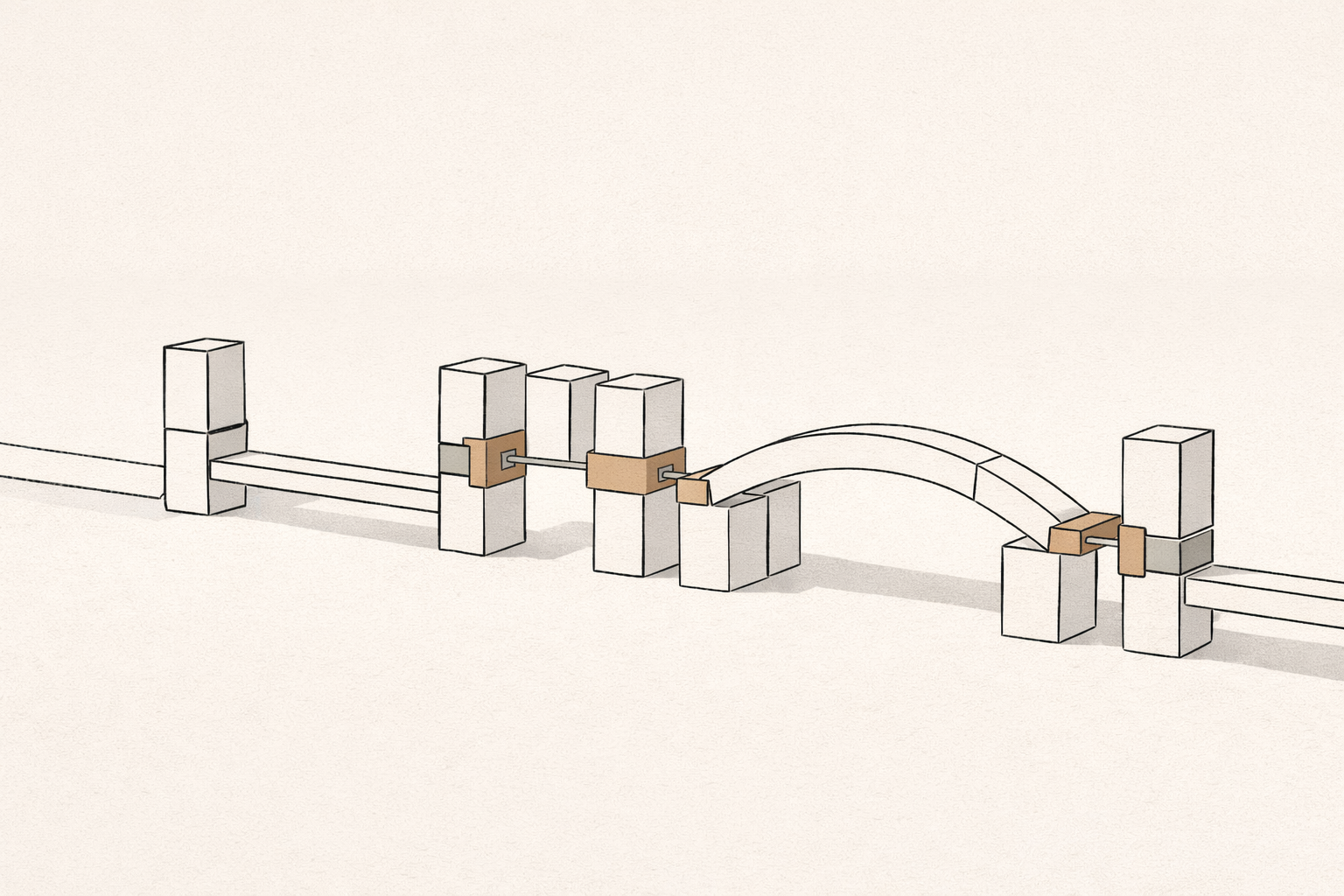
Legacy In Motion · Family Architecture
We spend a lot of time teaching children how to be good. We spend far less time teaching them how to be good to somebody when they are tired, disappointed, angry, afraid, or no longer getting their way.
That difference matters because love is easy to describe when nothing is being asked of you. The real test arrives when another person’s needs collide with your own.
A child can learn to say “I love you” years before understanding what love actually requires.
Nobody should be surprised by that. We do not expect children to understand money simply because they can recognize a dollar. We do not expect them to understand work simply because they can name a job.
Yet with relationships, we often assume the emotional part will somehow teach the structural part.
It does not.
Love eventually asks a person to hear something they do not want to hear. It asks them to apologize without making the apology about themselves. It asks them to carry responsibility when nobody is applauding. It asks them to respect a boundary they dislike.
Sometimes it asks them to stay at the table long enough to repair something they helped break.
Those are not romantic instincts. They are practiced capacities.
And practice usually begins at home.
The House Is Teaching Even When Nobody Is Giving a Lesson
Picture an ordinary kitchen table.
Somebody is irritated. Somebody forgot something. A parent is tired. A sibling has crossed a line. Nobody planned a lesson on emotional maturity that evening.
But the lesson is happening anyway.
The child is watching who gets heard. Who gets interrupted. Who can be angry without becoming cruel. Who apologizes. Who never does. Who carries the invisible work. Who gets rescued from responsibility.
Children may not have adult language for any of this.
They still recognize patterns.
Over time, repeated patterns become familiar. Familiar patterns can eventually become expectations.
That is where family architecture becomes legacy.
The Transmission
What children repeatedly experience at home helps teach them what relationships are allowed to feel like.
Five Things Children Need to Practice Before Partnership
Not memorize. Not repeat on command. Practice.
Boundaries: Love Has Edges
A child needs to know that caring for another person does not require disappearing inside that person’s needs.
They also need the opposite lesson: loving someone does not give you unlimited access to them.
Repair: Conflict Does Not Have to Mean Abandonment
Families are going to hurt one another sometimes. People get impatient. They misunderstand. They speak too sharply. They fail to follow through.
The lesson is not that good families avoid every rupture. The lesson is that mature people know how to return, acknowledge harm, correct behavior, and rebuild trust.
Regulation: Feelings Are Real. They Are Not Always in Charge.
A child should be allowed to be disappointed.
That does not mean disappointment must change the answer.
“I know you’re upset” and “the boundary still stands” can live in the same household. That is how children learn that emotion deserves attention without becoming the sole authority.
Responsibility: Belonging Includes Contribution
Children should never have to earn love.
But as they become capable, they should increasingly participate in maintaining the family system they belong to. Put something away. Keep a promise. Help prepare a meal. Take responsibility for a mistake. Carry a reasonable share.
Reciprocity: Care Must Be Able to Move Both Ways
Children need enormous amounts of care. That is part of childhood.
Growing up means gradually learning to notice somebody besides yourself.
That does not mean keeping score. It means understanding that mature relationships involve giving, receiving, adjusting, responding, and carrying weight together.
Children Notice the Things Adults Think They Miss
A child may not know the phrase emotional labor.
The child still knows who remembers everybody’s appointments.
A child may not understand the language of relational accountability.
The child still knows whether Dad says sorry.
A child may not understand reciprocity.
The child still knows whether Mom is always the one who has to bend.
They know who can raise their voice and who gets punished for doing the same. They know whether affection disappears when someone disappoints an adult. They know whether promises mean something.
They are collecting evidence.
That evidence becomes part of their first definition of normal.
A child can grow up deeply loved and still be poorly trained for partnership.
Affection is part of the inheritance. So are habits, expectations, conflict patterns, boundaries, responsibility, and the way people respond when love becomes inconvenient.
Kindness Alone Cannot Carry a Relationship
We should raise kind children.
But kindness without accountability can become avoidance.
Empathy without boundaries can become self-erasure.
Emotional expression without regulation can become chaos.
Independence without reciprocity can become selfishness wearing mature language.
The goal is not to produce children who are agreeable.
It is to raise adults who can remain decent when agreement disappears.
What am I feeling, and what do I owe the people affected by what I do next?
That is a much more mature question than simply asking whether a feeling is valid.
Family Legacy Is More Than What We Leave in an Account
When people hear the word legacy, money usually enters the room first.
Property. Insurance. Investments. A house. Something with a beneficiary line.
Those things matter.
But children inherit much more than assets.
They inherit ideas about what an apology looks like. They inherit expectations around masculinity, femininity, caregiving, authority, money, affection, loyalty, conflict, privacy, and responsibility.
Some families pass down strength without ever naming it.
Some pass down instability the same way.
Legacy work therefore cannot stop at asking, “What will they receive?”
We also have to ask, “What will feel normal to them because they lived with us?”
The Groundwork
Pay Attention to What the House Is Rehearsing
Do not ask only whether your children know they are loved.
Ask what love looks like inside the house.
- What happens after somebody causes harm?
- Can someone say no without being punished for it?
- Does one person quietly carry most of the household?
- Do children see adults admit when they were wrong?
- Does responsibility grow as children become more capable?
- Can frustration enter the room without respect leaving it?
- What relationship behavior is becoming normal through repetition?
You do not have to build a flawless family.
Nobody lives in one.
But you can build a house where correction is normal, boundaries are respected, care moves both ways, responsibility grows with capacity, and love does not disappear every time somebody gets disappointed.
One day the child leaves the house. The patterns may travel with them.
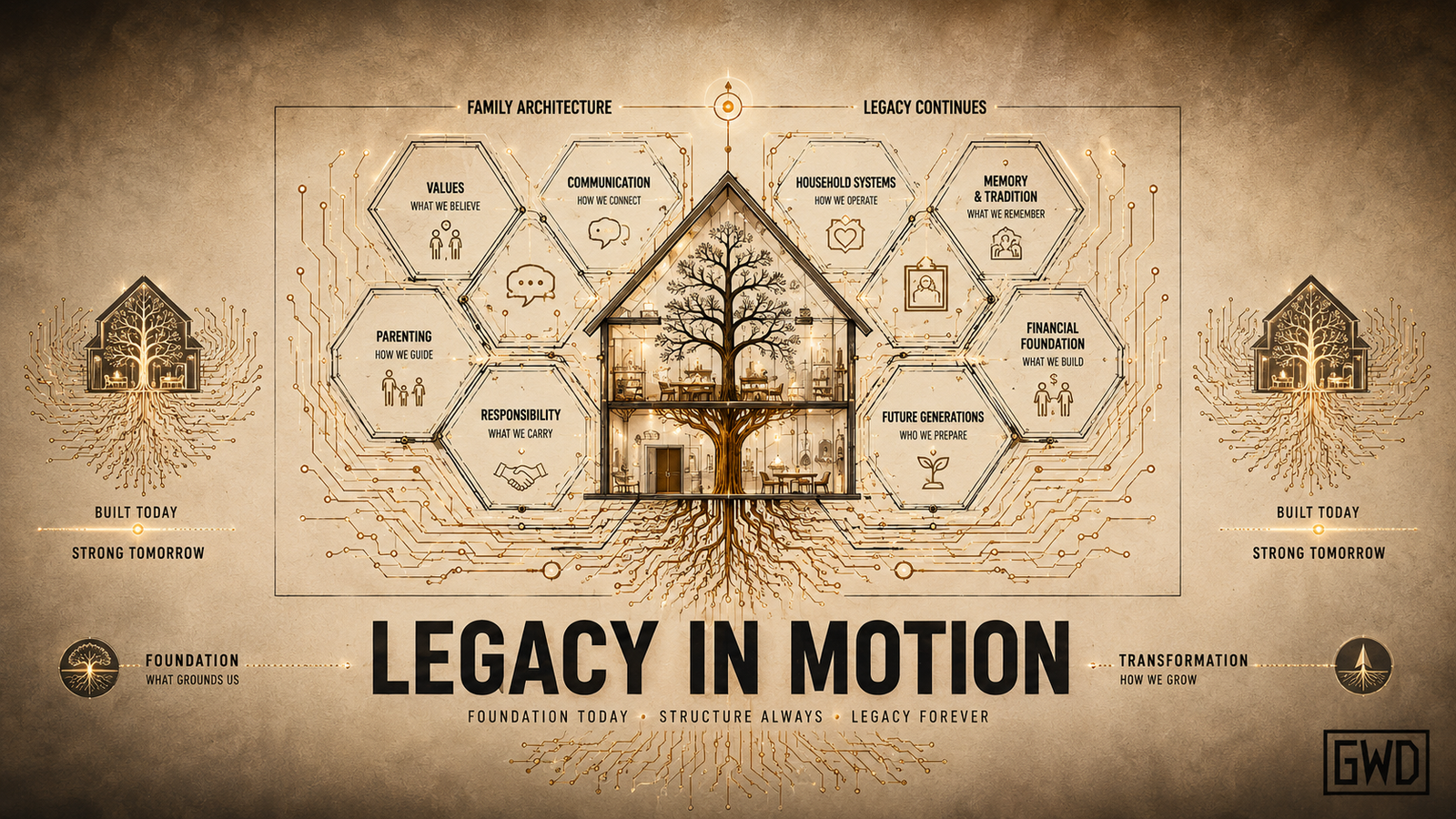
Built by
Marcus Vaughn
Money, Ownership, Family & Generational Structure
Marcus Vaughn writes about ownership, financial discipline, family structure, and generational continuity. Through Money Monday and Legacy In Motion, he examines the systems that turn income into stability, responsibility into structure, and today’s decisions into tomorrow’s inheritance.
Groundwork Daily
Build what the next generation can stand on.
Ideas are useful. Structure is what allows them to survive pressure.
Join the Groundwork List