
1870 Wall genealogy describes a familiar research barrier for Black American families tracing ancestors who survived slavery. The 1870 federal census was the first census after emancipation to list Black Americans broadly by name as members of households. Before that point, an enslaved ancestor often disappears from the federal population census as an identifiable person.
That does not mean the record ends in 1870. It means the research method has to change. Earlier federal records often tracked enslaved people through slaveholders, age, sex, property records, legal documents, military records, Freedmen’s Bureau material, and local archives rather than through the person-centered household records genealogists rely on after emancipation.
The wall is therefore real, but it is not always a dead end. It is a transition from one records system to another. Understanding that distinction changes genealogy from a search for one missing census entry into a broader reconstruction of family continuity.
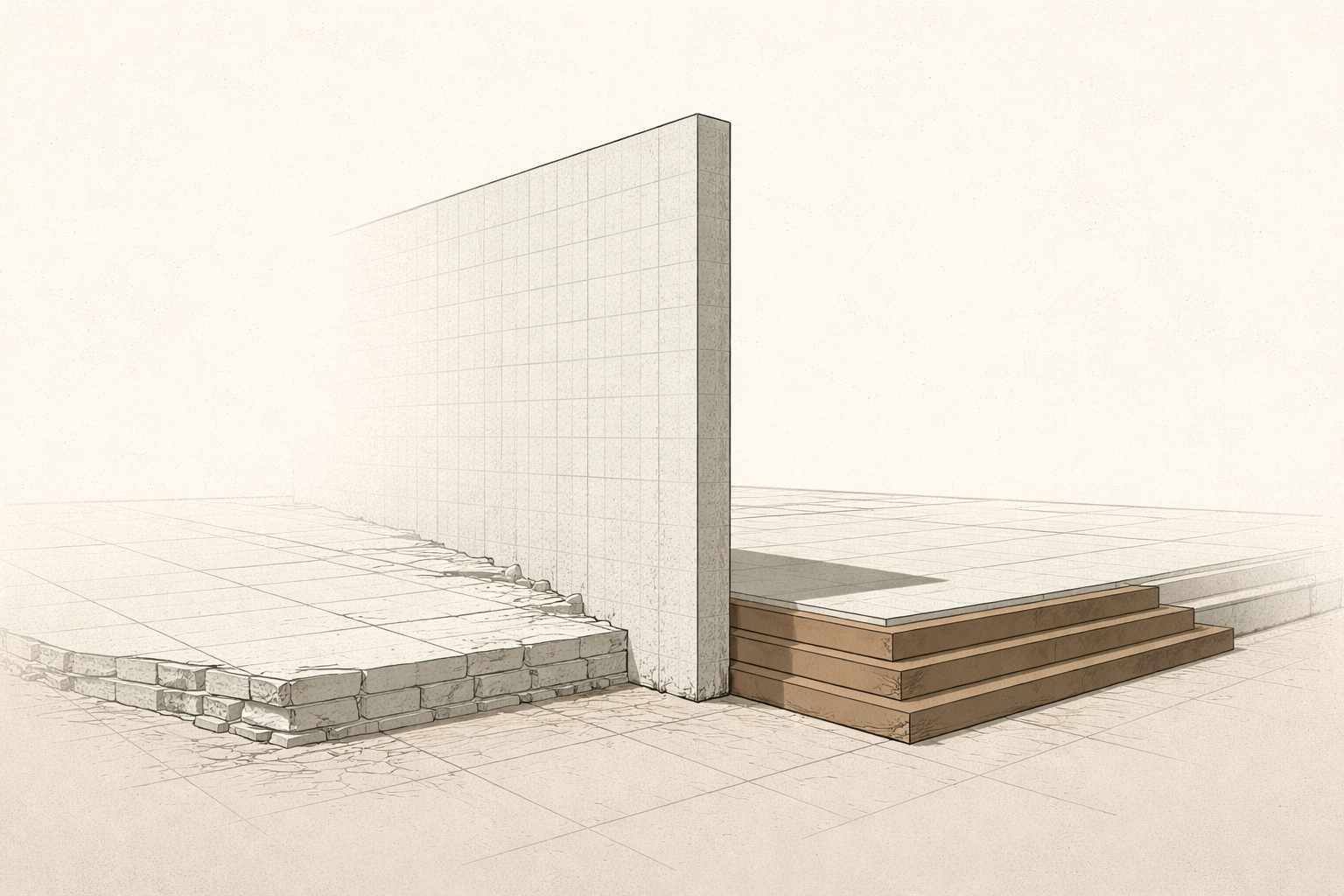
What the 1870 Wall in Genealogy Actually Represents
The phrase 1870 Wall is useful because it identifies a real change in the federal record. The 1870 census was the first federal census taken after the Civil War and abolition of slavery. According to the National Archives, it was also the first federal census in which all Black Americans were listed by name. :contentReference[oaicite:1]{index=1}
That statement needs precision. Free Black Americans had appeared by name in earlier census records. Free Black heads of household could be named before 1850, and the 1850 and 1860 free population schedules named individual household members. The archival rupture primarily affects people who were enslaved before emancipation. :contentReference[oaicite:2]{index=2}
For descendants of those families, 1870 can therefore feel like the point where the ancestor suddenly becomes visible as a named person inside the federal population record. Moving backward from that person often requires leaving the ordinary census trail and entering a different documentary system.
The Record Changed Because Legal Status Changed
The difference was not simply better clerical practice. Slavery organized recordkeeping around a legal system in which enslaved people could be treated as property. After emancipation, the federal census no longer required a slave schedule, and formerly enslaved people could appear in ordinary household enumeration.
That makes 1870 historically important without turning it into a mythical starting point. Black life did not begin when a census enumerator wrote down a name. Rather, the federal record became more capable of preserving individual identity after the legal structure that had obscured it was abolished.
1870 Wall Genealogy Begins With Understanding the Slave Schedules
The 1850 and 1860 censuses contained separate schedules for enslaved people. These records generally listed the slaveholder by name and recorded enslaved people through characteristics such as age, sex, and color. They normally did not record each enslaved person’s name. Rare exceptions exist, but researchers cannot assume that an ancestor will appear by name. :contentReference[oaicite:3]{index=3}
That is the core research difficulty. A person who appears in 1870 as a forty-year-old farmer, mother, laborer, or child may appear ten years earlier only as an unnamed person of roughly the same age and sex in a slaveholder’s schedule. The researcher must then establish whether those records refer to the same individual through additional evidence.
The Slaveholder Often Becomes a Research Lead
This is uncomfortable, but methodologically important. Moving beyond 1870 often requires identifying the person or estate that enslaved the ancestor. Once that relationship becomes plausible, the research universe expands into wills, probate files, inventories, deeds, estate divisions, tax records, bills of sale, court cases, plantation papers, and other local records.
The slaveholder’s surname should never be treated as proof by itself. Some formerly enslaved people adopted a former enslaver’s surname, while others did not. Names could change, spellings varied, and families moved. Therefore, good genealogy depends on multiple records pointing toward the same conclusion.
After 1870: begin with the named person and household.
Before 1870: reconstruct the person through relationships,
locations, ages, legal records, labor records, property records, and community evidence.
Records That Can Help Break Through the 1870 Wall
The strongest mistake a researcher can make is assuming that the census is the whole archive. It is not. Slavery and Reconstruction produced many other records, although their survival and accessibility vary dramatically by state, county, institution, and family.
Freedmen’s Bureau Records
The Bureau of Refugees, Freedmen, and Abandoned Lands was established in 1865. Its records include material connected to labor contracts, schools, hospitals, relief, legal disputes, transportation, marriages, military claims, and family reunification. The National Archives describes the collection as especially valuable for historians and genealogists studying slavery and Reconstruction. :contentReference[oaicite:4]{index=4}
Marriage records can be particularly useful because relationships formed during slavery were not always legally recognized at the time. Bureau records sometimes documented couples, children, former residences, or other family information that can reconnect people across the emancipation divide. :contentReference[oaicite:5]{index=5}
Probate, Estate, and Court Records
Wills and probate files may identify enslaved people as part of an estate. Inventories can record first names, approximate ages, family groupings, valuations, or transfers. Estate divisions may show people being distributed among heirs, which can explain why relatives later appear in different households or counties.
Courthouse records may also contain deeds, manumissions, lawsuits, tax records, marriage documents, guardianship files, and other material. Because many of these records were created locally, researchers often have to move beyond national databases and work with county archives, state repositories, libraries, historical societies, or digitized local collections.
Military and Pension Files
Civil War military records can open another route. Black men who served in the United States Colored Troops may have generated service and pension records. Pension files can be especially rich because applicants sometimes had to document marriages, children, residences, witnesses, disabilities, and other details about their lives.
No single record type should be treated as universal. The useful strategy is to build a network of evidence rather than wait for one document to answer every question.
A Practical Method for 1870 Wall Genealogy Research
Research should move backward from what can be established, not forward from what someone hopes to prove. That sounds obvious, but genealogy becomes unreliable when a familiar surname, family story, or DNA match is allowed to outrun the documentary evidence.
1. Build the Post-1870 Family Completely
Begin with the 1870 household, but do not stop there. Follow the same family through 1880 and later censuses, death certificates, marriage records, obituaries, cemetery records, city directories, military records, and local newspapers. The goal is to establish names, approximate birth years, spouses, children, occupations, locations, and migration patterns.
2. Track Neighbors and Community Connections
Families rarely moved through history alone. Neighbors, witnesses, church members, employers, in-laws, and people living nearby in 1870 can provide clues about where the family lived before emancipation. Researchers sometimes describe this as studying a person’s broader network rather than treating the ancestor as an isolated record.
3. Identify Plausible Pre-Emancipation Locations
Once the family can be located geographically, compare ages and household clues with the 1860 and 1850 slave schedules. Those schedules cannot establish identity by themselves because enslaved people were generally unnamed. Instead, they can narrow the field and identify slaveholders whose probate or plantation records deserve further examination.
4. Build a Case From Multiple Sources
Strong genealogy resembles historical investigation. A Freedmen’s Bureau labor contract, an estate inventory, a marriage record, a census entry, and a pension affidavit may each contain only part of the story. When independent records converge on the same people, places, ages, and relationships, the lineage becomes more defensible.
5. Separate Evidence From Family Tradition
Oral history deserves respect, but it should be labeled correctly. A family story is evidence of what the family remembered; it is not automatically proof that every detail is historically exact. Preserve the story, record who told it, and then test its claims against the surviving documentary record.
The 1870 Wall Is Also a Continuity Problem
Genealogy matters because families transmit more than names. They transmit knowledge, obligations, property, stories, relationships, documents, and an understanding of where the next generation fits inside a longer sequence. When those records disappear, each generation is forced to reconstruct information that could have been preserved.
Slavery created an extraordinary historical rupture that present-day families did not choose. Yet there is a separate lesson inside that history: the records created now will shape how easily descendants can understand this generation later.
Repair Means Preserving the Records We Control
Modern family stewardship cannot repair every archival loss. It can, however, prevent avoidable losses in the present. Birth certificates, marriage records, photographs, funeral programs, military papers, deeds, wills, family interviews, migration stories, and carefully labeled digital archives all become part of the next generation’s evidence.
- Preserve vital records in secure physical storage.
- Create encrypted digital backups in more than one location.
- Record interviews with elders before names and stories disappear.
- Label photographs with names, dates, places, and relationships.
- Maintain current wills, beneficiary designations, and property documents.
- Document the source of family-history claims rather than passing guesses forward as fact.
- Review the family archive periodically and transfer access deliberately.
This is where genealogy becomes more than historical curiosity. Research reaches backward, while stewardship reaches forward. Together, they create continuity.
Inheritance is easier to carry when memory has structure. Preserve the record so the next generation does not have to reconstruct what this generation already knew.
Genealogy Can Anchor Identity Without Turning It Into Myth
Historical gaps can carry emotional weight. A researcher may find names after 1870 and then encounter anonymous entries, destroyed records, separated families, or conflicting evidence when moving backward. That experience can make ancestry feel both intimate and inaccessible.
Still, the answer is not to replace missing documentation with certainty. Responsible genealogy leaves room for what is unknown. A carefully documented partial history is stronger than a complete lineage built on assumptions.
That principle connects directly to Identity Without Structure Is Noise . Identity gains durability when memory is supported by records, institutions, practices, and knowledge that can survive the person currently carrying it.
FAQ: 1870 Wall Genealogy
What is the 1870 Wall in Black genealogy?
The 1870 Wall is the research barrier many descendants of enslaved Americans encounter when tracing a family backward from the 1870 federal census. After emancipation, Black Americans were broadly enumerated by name in ordinary census households. Before emancipation, enslaved people were usually not named in federal census slave schedules.
Was 1870 the first census to name Black Americans?
No. Free Black Americans appeared by name in earlier federal censuses. The National Archives identifies 1870 as the first federal census to list all Black Americans by name, following the Civil War and abolition of slavery. :contentReference[oaicite:6]{index=6}
Were enslaved people named in the 1850 and 1860 census?
Usually not. Slave schedules generally named the slaveholder and listed enslaved people by characteristics such as age, sex, and color. Rare exceptions exist, so researchers should inspect original records rather than assume every schedule follows the same pattern. :contentReference[oaicite:7]{index=7}
Can genealogy research move beyond the 1870 Wall?
Yes, although the difficulty varies by family and location. Freedmen’s Bureau records, probate files, estate inventories, wills, deeds, church records, military and pension files, court documents, newspapers, and local archives can provide evidence that links post-emancipation families to earlier generations.
Why are Freedmen’s Bureau records useful for genealogy?
Bureau records can contain information about marriages, labor, education, legal matters, family reunification, military claims, transportation, and other parts of life during Reconstruction. Because of that range, the National Archives describes the collection as an important resource for genealogists researching formerly enslaved families. :contentReference[oaicite:8]{index=8}
Does a matching surname prove who enslaved an ancestor?
No. A surname can provide a lead, but it is not proof. Researchers should combine names with location, age, family relationships, probate records, slave schedules, Bureau records, and other evidence before drawing a conclusion.
Receipts
Primary archival guidance used to establish what federal census records contain and which Reconstruction-era records can help researchers move beyond 1870.
Federal Census Records
- National Archives — 1870 Census Records
- National Archives — Civilian Records Relating to Slavery
- National Archives — 1850 Census Records
- National Archives — 1860 Census Records
Reconstruction Records
The Wall Changes the Method, Not the Obligation to Keep Looking
1870 Wall genealogy is difficult because slavery disrupted both families and the records later generations use to reconstruct them. The census after emancipation made millions of Black Americans more visible as named individuals, but it did not restore every relationship or record that slavery had fractured.
Moving backward therefore requires different tools. Census schedules give way to Bureau files, probate records, court documents, military records, local archives, and networks of circumstantial evidence. Good research accepts that complexity instead of inventing certainty where the record is silent.
Moving forward requires a different discipline. Families can preserve the names, documents, stories, property records, photographs, and legal structures available now. That work cannot erase the historical rupture, but it can prevent another avoidable one.
The archive inherited may be incomplete. The archive passed forward does not have to be.
Continuity Carries Forward
Continuity preserves essential knowledge, standards, relationships, and purpose when the carrier changes. Family records perform that same structural job. They allow memory to survive the people who currently hold it.
Join the Groundwork List
Get practical frameworks for building stronger families, clearer systems, and legacies designed to survive the people who begin them.
From Family Memory to Durable Continuity
Foundation: Build Family Structure
The Family Stability Framework
Move from inherited history to the systems that help a family hold under pressure
across generations.
Identity: Give Memory Structure
Identity Without Structure Is Noise
Examine why identity becomes more durable when it is carried by records,
institutions, practices, and knowledge.
Historical Context: Follow the Classification Shift
From Freedmen to African American
Follow how Black naming changed across emancipation, political mobilization,
institutional classification, and modern identity.
