
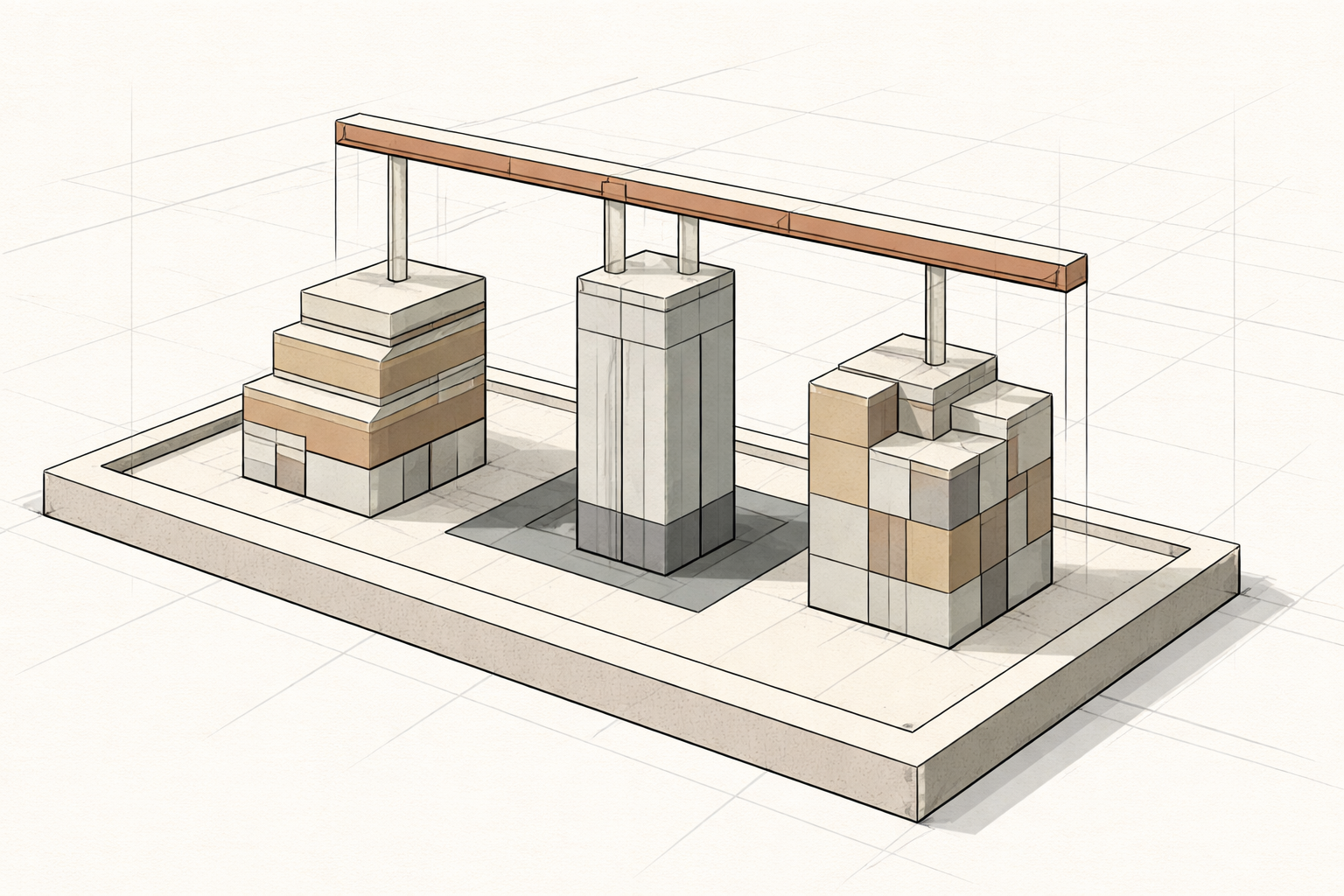
Ethnicity in a multiracial democracy is not only a cultural question. It becomes a structural question when identity shapes public claims, legal categories, political expectations, or demands on institutions.
Plural societies cannot rely on sentiment alone. They need shared law, clear rules, legitimate institutions, and enough civic discipline to manage disagreement without turning every difference into a struggle for control.
That creates a difficult design problem. Some people fear that stronger ethnic delineation will fragment democracy. Others argue that suppressing ethnic identity creates resentment and instability.
Neither position settles the harder question.
Can carefully governed delineation strengthen civic stability without placing lineage above citizenship?
Lineage and Delineation
This essay is the central civic argument inside the Identity, Delineation & Civic Stability hub. The hub connects the legal, historical, psychological, economic, and institutional layers of the larger question.
Ethnicity in a Multiracial Democracy Requires Structure
Ethnic identity does not disappear because public institutions avoid naming it. People form identities through ancestry, family, culture, memory, language, migration, place, and shared historical experience.
Therefore, the serious question is not whether ethnic identity exists. The question is how democratic institutions respond when that identity becomes politically or legally relevant.
Ignoring identity can create its own problems. Informal classifications may continue operating even when official language pretends that categories have disappeared. At the same time, overly rigid classifications can turn flexible human identities into administrative boxes that carry consequences far beyond their original purpose.
That is why ethnicity in a multiracial democracy requires structure rather than denial.
Government does not need to make ethnicity sovereign in order to recognize that identity can shape social experience. However, any recognition must remain subordinate to constitutional rules, equal citizenship, and legitimate public authority.
The state does not need to decide which identity matters most. It needs to know which distinctions it may legitimately recognize, why it is recognizing them, and what limits prevent those distinctions from becoming permanent hierarchy.
Delineation and Civic Stability Are Not Opposites
Delineation means making a distinction clear. It does not automatically establish superiority.
That difference matters.
A boundary can define eligibility, responsibility, history, or membership without declaring that one group possesses greater human worth. Likewise, a category can help institutions administer a narrow public purpose without turning that category into the organizing principle of the entire state.
Democratic systems already make distinctions. Citizenship is a distinction. Residency is a distinction. Jurisdiction is a distinction. Eligibility rules create boundaries as well.
The important question is whether the distinction serves a legitimate purpose and whether the rules governing it are appropriately constrained.
American constitutional law places significant limits on governmental classifications. For example, classifications subject to strict scrutiny must satisfy demanding constitutional requirements. The government must establish a compelling interest, and its action must be narrowly tailored to that interest.
Those constraints matter because classification without limits can become favoritism, exclusion, or arbitrary administration.
By contrast, a carefully bounded classification may serve a legitimate administrative function without controlling the wider civic order.
Clarity is not supremacy.
However, clarity without constraint can become power. That is why delineation needs law.
Civic Unity Needs Layered Identity
A person can belong to an ethnic lineage and a civic body at the same time.
That is not a contradiction. In a plural democracy, it is ordinary civic life.
People carry many identities at once. Family, religion, region, profession, ancestry, neighborhood, and nationality can all matter without demanding exclusive control over the person.
Problems begin when one layer is expected to erase the others.
If civic identity requires cultural erasure, people may experience the public order as hostile to meaningful parts of themselves. On the other hand, if ethnic loyalty overrides civic obligation, equal citizenship becomes difficult to maintain.
Therefore, ethnicity in a multiracial democracy works best when civic identity remains the governing frame.
Ethnic affiliation can live inside that frame. It can shape memory, culture, association, and political priorities. However, it cannot sit above shared constitutional authority.
This is where public debate often becomes sloppy. Recognition gets confused with domination. Meanwhile, unity gets confused with sameness.
Neither mistake produces durable stability.
Ethnic Identity in Plural Societies Needs Civic Design
Identity does not operate in isolation. Institutions influence how identity enters public life.
Electoral systems affect political incentives. Courts define legal limits. Schools shape civic knowledge. Civil rights law establishes protections. Public agencies translate classifications into administrative practice.
As a result, civic design can either reduce unnecessary conflict or reward escalation.
When institutions create predictable rules and equal pathways for participation, differences are easier to manage. By contrast, when systems reward permanent grievance, selective enforcement, or zero-sum competition, identity can become a vehicle for institutional conflict.
That distinction is important because political incentives shape behavior.
The legal layer of this cluster is examined more directly in Ethnic Classification in American Law. Meanwhile, Pride Without Contempt examines how identity can develop without requiring hostility toward outsiders.
This essay moves the discussion to the civic level. The question is not simply how people understand themselves. It is how institutions maintain legitimacy while governing a population that does not share one ancestry, culture, or historical experience.
Democracy and Ethnic Nationalism Are Not the Same
The clearest limit appears when lineage becomes a claim to ownership of the state.
That is where delineation and ethnic nationalism separate.
In a constitutional democracy, sovereignty operates through civic institutions and equal legal standing. Citizenship establishes membership in the political community. Ancestry does not automatically grant superior constitutional authority.
Ethnic nationalism makes a different claim. It generally places a particular ethnocultural group at the center of the nation and may treat that group’s identity as foundational to political membership or state ownership.
Those are different systems.
Therefore, delineation can contribute to civic stability only if the constitutional order remains above lineage competition.
The state may recognize historical experience. It may collect demographic information. It may enforce anti-discrimination law. It may study inequity or create remedies that survive constitutional review.
However, public authority still requires a common civic frame.
Institutions also need humility. Legislatures cannot manufacture social harmony through slogans. Courts cannot erase historical memory by refusing to discuss it. Communities cannot build durable power by pretending that every conflict is merely a communication problem.
What institutions can do is establish rules, apply them predictably, correct violations, and preserve equal standing.
Predictability matters because legitimacy depends partly on whether people can understand what the system will do and whether comparable cases receive comparable treatment.
Long-Term Civic Stability Depends on Clear Rules
Stable systems require predictability. Predictability requires rules. Rules require definitions.
When ethnic delineation remains vague, political actors can exploit ambiguity. When delineation becomes rigid, exclusionary, or supremacist, conflict can intensify.
The more durable path is narrower: meaningful cultural recognition inside equal constitutional standing.
That is harder than it sounds.
Public leaders must separate cultural pride from political entitlement. Communities must distinguish historical memory from permanent contempt. Institutions must also distinguish legitimate classification from administrative overreach.
Economic and educational capacity matter as well. Identity alone cannot create capital, institutional knowledge, civic literacy, professional networks, or durable organizations.
A community with weak infrastructure may begin asking symbolic identity to perform work that only institutions can perform.
That is a bad trade.
Identity can create solidarity. It cannot substitute for governance.
Similarly, symbolic recognition cannot substitute for economic capacity, education, competent administration, or durable civic organizations.
This is why the wider Lineage and Delineation cluster eventually moves from identity toward law, capital, psychology, and institution building. The argument has to mature beyond naming.
What Strengthens Civic Stability?
A multiracial democracy needs more than tolerance. It needs an operating model capable of holding difference without converting every distinction into political hierarchy.
Several requirements follow.
Shared Constitutional Authority
Civic rules must remain above competing lineage claims.
Equal Legal Standing
Public classifications cannot become excuses for permanent civic hierarchy.
Clear Boundaries
Institutions need to know what a category governs and where its authority ends.
Cross-Group Participation
Democracy weakens when every civic question becomes an ethnic zero-sum contest.
Institutional Capacity
Rules mean little when institutions cannot administer them consistently.
A Larger Civic Story
Citizens still need a reason to see one another as participants in the same political system.
These conditions do not erase disagreement. Instead, they give disagreement somewhere to go.
That is the real value of structure.
What Must Hold
Difference can survive inside democracy. Hierarchy cannot become the price of recognition.
A durable multiracial democracy must be able to recognize history without surrendering equal citizenship, define legitimate boundaries without manufacturing supremacy, and allow communities to preserve identity without turning ancestry into superior political authority.
The system holds when identity has room, law has authority, boundaries remain clear, and every citizen still stands inside the same constitutional frame.
Delineation Works Only When the Civic Frame Holds
Ethnicity in a multiracial democracy does not threaten stability by default.
Instability grows when identity becomes detached from shared rules, when government classifications escape meaningful limits, or when one group’s historical claim becomes a claim to superior civic standing.
Carefully governed delineation can do something more useful. It can clarify history, distinguish legitimate claims, protect cultural memory, and create cleaner conversations about responsibility and remedy.
However, the civic frame must remain stronger than the identity dispute.
That is the test.
Democracy does not require people to forget who they are. It requires them to build a political structure strong enough that difference does not have to become domination.
Continue Building
This essay sits inside a larger identity and civic stability framework. Continue from the civic argument into the legal, psychological, and institutional layers.
→ Framework: Identity, Delineation & Civic Stability
→ Mechanism: Ethnic Classification in American Law
→ Mechanism: Identity Without Structure Is Noise
Receipts
→ Cornell Legal Information Institute: Strict Scrutiny

Build Better. Every Day.
Groundwork Daily examines the systems beneath identity, institutions, community, ownership, discipline, and civic life. Get new essays and frameworks delivered directly.