
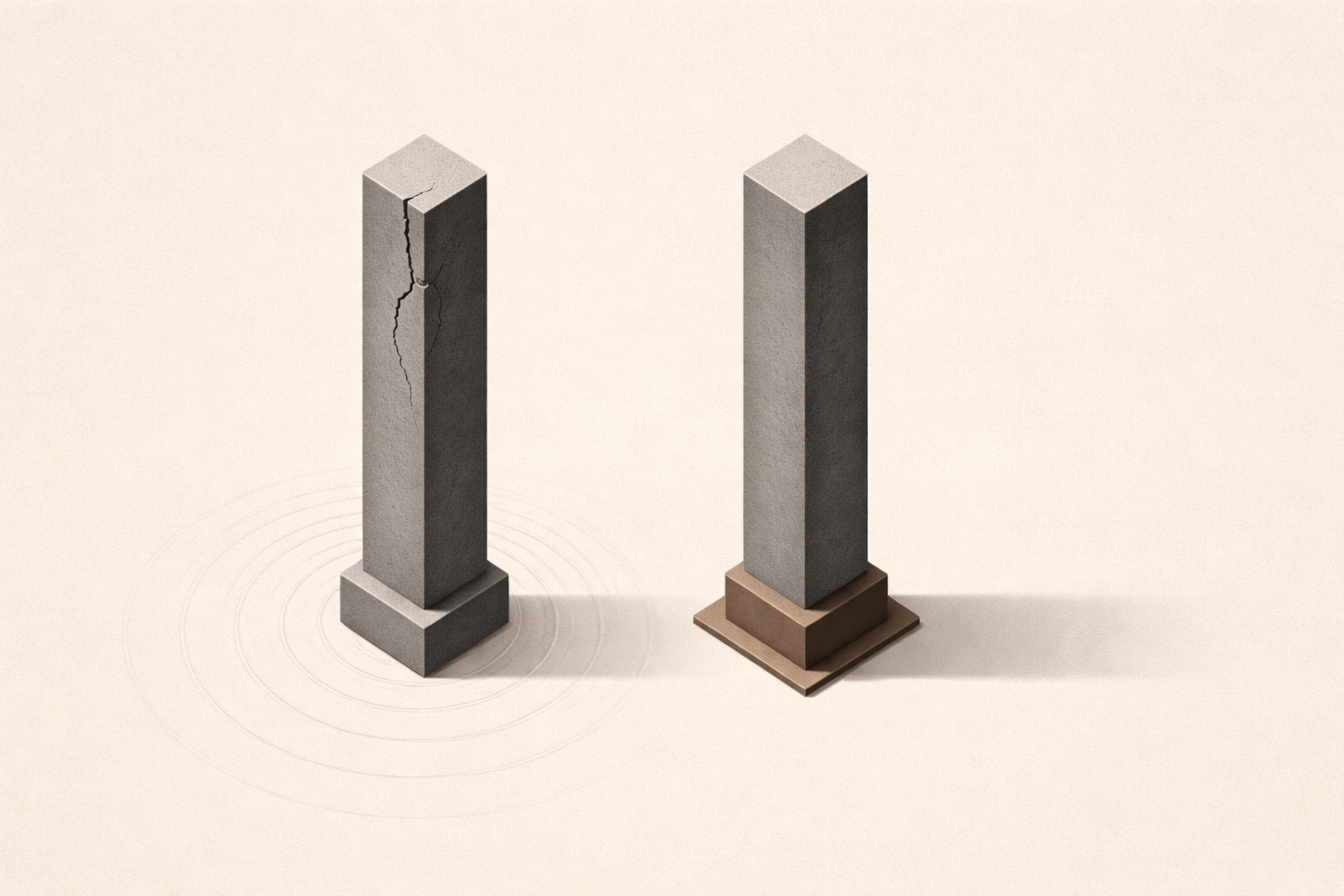
Is validation-seeking a trauma response or an identity deficit? The answer is not ideological. It is structural.
Validation-seeking can originate in trauma. It can also emerge from undeveloped identity. The behaviors may look identical from the outside. However, the internal engine is different.
When Validation-Seeking Is a Trauma Response
In trauma-informed psychology, approval-seeking can function as protection. A child who learns that disagreement leads to emotional withdrawal may adapt by becoming agreeable. A teenager who is criticized harshly may adapt by becoming hyper-performative. A partner who experiences volatility may adapt by appeasing to avoid escalation.
This pattern overlaps with insecure attachment theory. Individuals with anxious attachment may regulate safety through reassurance and approval.
Additionally, clinicians often describe a fawn response, a survival strategy where appeasement replaces confrontation. In this framework, validation-seeking is not vanity. It is self-preservation.
When approval equals safety, disapproval feels like danger.
Real-world example: A man stays in a relationship where he is consistently disrespected. He avoids addressing it, over-accommodates, and buys gifts to “fix” tension. He is not being generous. He is regulating fear of loss.
Another example: An employee never challenges leadership, even when decisions are flawed. They over-agree, overwork, and seek praise to feel secure. The behavior is not ambition. It is anxiety dressed as performance.
When Validation-Seeking Is an Identity Deficit
Not all validation-seeking behavior originates in trauma. Sometimes it begins in the absence of internal structure.
An identity deficit occurs when a person has not built stable values, boundaries, or competence. Instead of asking, “Is this aligned with who I am?” the person asks, “Will this be approved?”
This is not a trauma response. It is a construction gap.
In this case, validation-seeking functions less like protection and more like substitution. External reactions temporarily replace internal definition.
Real-world example: Someone constantly changes their opinions depending on the room they are in. With one group, they are outspoken. With another, they go silent. There is no consistent position because there is no anchored identity.
Another example: A man builds his lifestyle around social media validation. His decisions—what he wears, what he says, what he posts—are driven by engagement, not conviction. Remove the audience, and the identity collapses.
How to Tell the Difference
The distinction is subtle but important.
- Trauma-driven validation-seeking feels urgent and fear-based. Rejection triggers anxiety or panic.
- Identity-deficit validation-seeking feels restless and approval-hungry. Praise temporarily boosts confidence, but it fades quickly.
One pattern is rooted in threat conditioning. The other is rooted in underdeveloped self-definition.

Why the Distinction Matters
Modern discourse often flattens everything into trauma language. That may sound compassionate, but it can remove accountability. Not every insecurity is trauma. Not every poor pattern deserves a diagnosis.
At the same time, dismissing trauma entirely erases legitimate nervous system conditioning. Some people learned approval as survival. Others never built enough internal structure to stand without it.
Structural maturity requires both compassion and responsibility.
Rebuilding Identity Structure
Whether validation-seeking began as trauma adaptation or identity deficit, adulthood requires reconstruction.
- Define non-negotiable values.
- Practice disagreement without emotional collapse.
- Develop competence in areas unrelated to approval.
- Build boundaries before building attachment.
- Match investment to reciprocity instead of hope.
This aligns with Discipline Before Dollars: structure precedes stability.
Approval feels stabilizing. Structure actually is.
FAQ: Validation-Seeking, Trauma, and Identity
Is validation-seeking a trauma response?
It can be. In some cases, validation-seeking develops as a survival adaptation in environments where approval equals safety. However, it can also come from an identity deficit where internal structure is missing.
What is the fawn response in relationships?
The fawn response is an appeasement-based survival strategy where a person prioritizes pleasing and avoiding conflict to reduce perceived threat.
How do you fix validation-seeking behavior?
You fix it by building internal structure. Define values, set boundaries, practice disagreement, and develop competence independent of approval.
