
Culture, Media & Leadership
Media incentives and culture are engineered, not accidental. Modern platforms reward spectacle, speed, and conflict because those signals hold attention. Over time, what gets amplified stops feeling like an exception and starts feeling like reality.
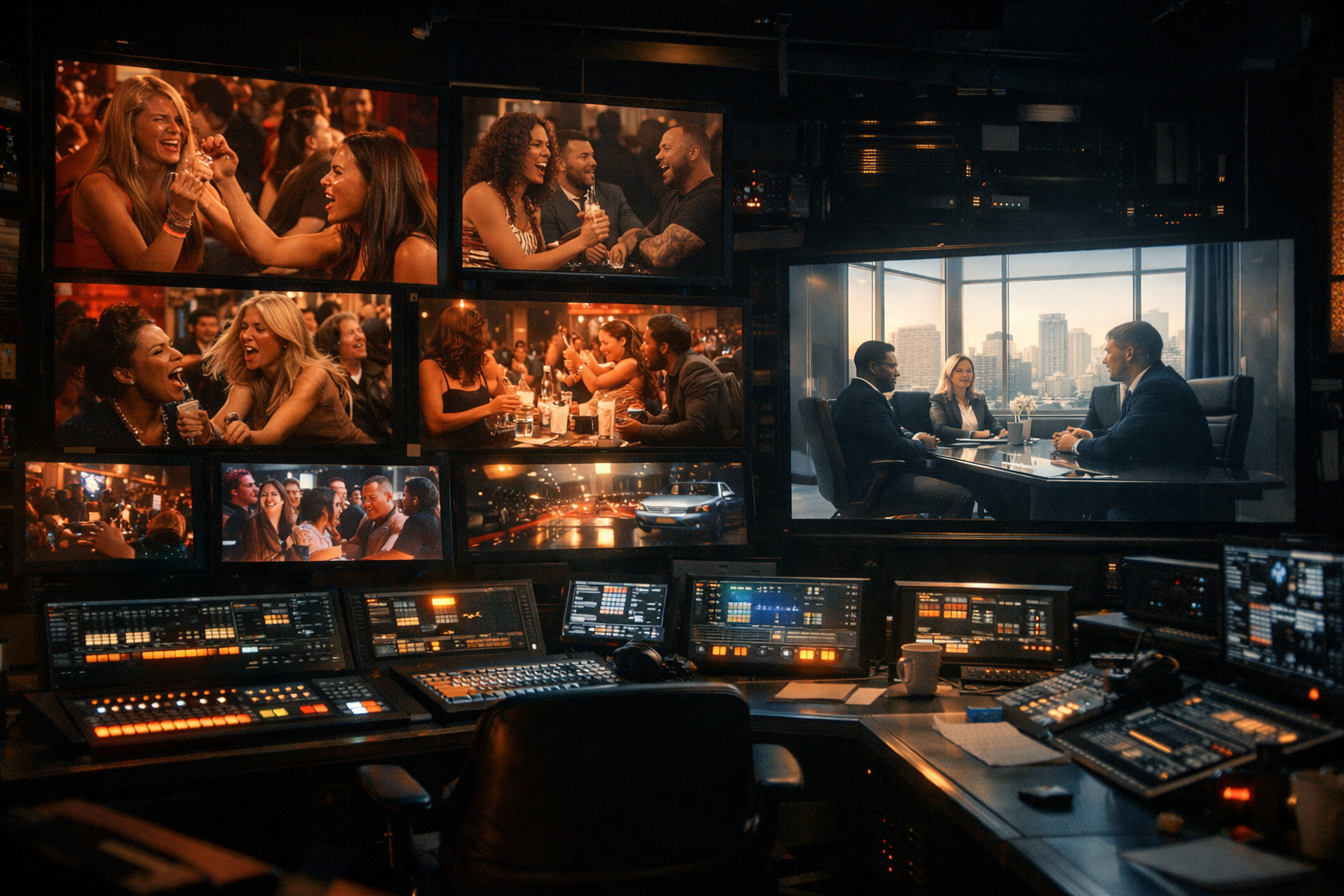
Media incentives and culture do not drift. The attention economy does not reward truth. It rewards what spreads. Noise scales faster than substance, so noise becomes dominant. Then dominance gets mistaken for demand. Content selection does not just reflect behavior. It trains it.
A convenient story keeps making the rounds. It says Black audiences do not support positive content. It says people would rather watch dysfunction than depth. It says the culture prefers spectacle over substance.
That explanation collapses under scrutiny.
What people consume is not just a reflection of private values. It is also a reflection of what gets surfaced, promoted, clipped, repeated, and rewarded. Platforms do not merely mirror taste. They shape it. As a result, any serious conversation about media incentives and culture has to begin with the system, not just the audience.
Blaming the audience is convenient. It is also incomplete.
Too much commentary drifts toward moral blame. Viewers get accused of choosing the worst version of themselves. Communities get described as addicted to noise. Yet that analysis skips past the machinery behind the screen.
Media Incentives and Culture Start With System Design
At the center of the issue sits incentive design, not simple audience preference.
Content built around confrontation performs well because it delivers fast emotional payoff. It is easy to clip, easy to react to, and easy to circulate. Most importantly, it creates spikes, and the current system rewards spikes.
By comparison, slower and more grounded storytelling asks for patience. It asks viewers to stay with character, process, and consequence. That kind of engagement can be richer. Even so, it rarely wins in environments organized around velocity.
Therefore, conflict scales not because it is more meaningful, but because it is more efficient inside the logic of the feed.
Related Groundwork: Real cultural repair requires more than reaction. It requires responsibility, structure, and standards that hold under pressure.
→ Accountability Is a Form of Strength
Conflict Is the Product
Many people call this a trauma economy. That phrase gets close, but it does not go far enough.
What scales most consistently is not just pain. Instead, performance drives the cycle. Conflict becomes a product because it is legible, dramatic, and easy to package. It gives audiences instant orientation. Someone is wrong. Someone is loud. Someone is humiliated. The reaction writes itself.
Consequently, spectacle keeps winning. It offers emotional clarity without requiring intellectual depth.
Repeated exposure normalizes distortion as well. Over time, people start to mistake what is amplified for what is true. The loudest version of a group becomes the representative version. In turn, the performance becomes the pattern.
Media Incentives and Culture Train Demand
Supply does not wait for demand. It manufactures it and then calls the outcome organic.
When platforms repeatedly elevate content built on humiliation, volatility, and interpersonal collapse, that choice does more than entertain. It teaches viewers what to expect. It teaches creators what gets rewarded. It teaches executives what to greenlight next.
Over time, that feedback loop hardens into a cultural habit.
So the issue is not whether people are capable of appreciating healthier stories. The issue is whether the system gives those stories enough visibility, tension, and narrative force to compete. That is where media incentives and culture become inseparable.
The Cost of Living Inside the Spectacle
Another consequence deserves more honesty.
When conflict becomes the primary engine of visibility, the people at the center of it stop being treated as full human beings. They become assets in a format. Their reputation becomes recyclable content. Their worst moments become a business model.
Meanwhile, the system profits from exposure, while the individual carries the residue.
That imbalance rarely gets discussed because it forces a more serious question: what kind of attention is worth having if public degradation is the price of staying visible?
The Principle: Freedom without structure collapses into drift. The same is true for media. Incentives always shape outcomes.
→ Structure Builds Freedom
What Actually Needs to Change
Telling people to support better content is not enough. That is aspiration without strategy.
If the goal is to shift outcomes, the work has to happen at the level of design. Better content must be compelling, not merely respectable. It must carry stakes, movement, and consequence without falling back on caricature.
Just as important, the deeper shift requires ownership. Distribution matters. Whoever controls the pipeline controls the pattern. As long as legacy platforms reward speed over substance, creators who want something fuller will keep negotiating against the grain.
For a broader look at how digital platforms shape public behavior, review Pew Research Center’s work on social media. → Pew Research Center
Still, the audience is not helpless. The diagnosis simply has to be honest. People respond to what is visible, immediate, and emotionally charged. Change those conditions, and behavior changes with them.
The Signal Beneath the Noise
Critics often say the culture is broken. In reality, the system keeps rewarding the wrong signals and then pretends the results appeared on their own.
Media incentives and culture connect at the level of structure, not surface behavior. What gets amplified starts to feel normal. Then what feels normal gets repeated.
The real question is not what people prefer. It is what they are being trained to prefer and who benefits from keeping that cycle in place. Until that changes, the output will not change either.
