
Slow growth discipline is the practice of letting each new layer prove that it can hold before asking the system to carry more.
Most collapses look sudden only from the outside. Inside the system, strain usually arrived earlier: a schedule widened faster than recovery, responsibilities accumulated faster than review, or output increased before the supporting structure became strong enough to absorb it.
Fast growth can create momentum. Slow growth creates something harder to replace: capacity that has had time to become real.
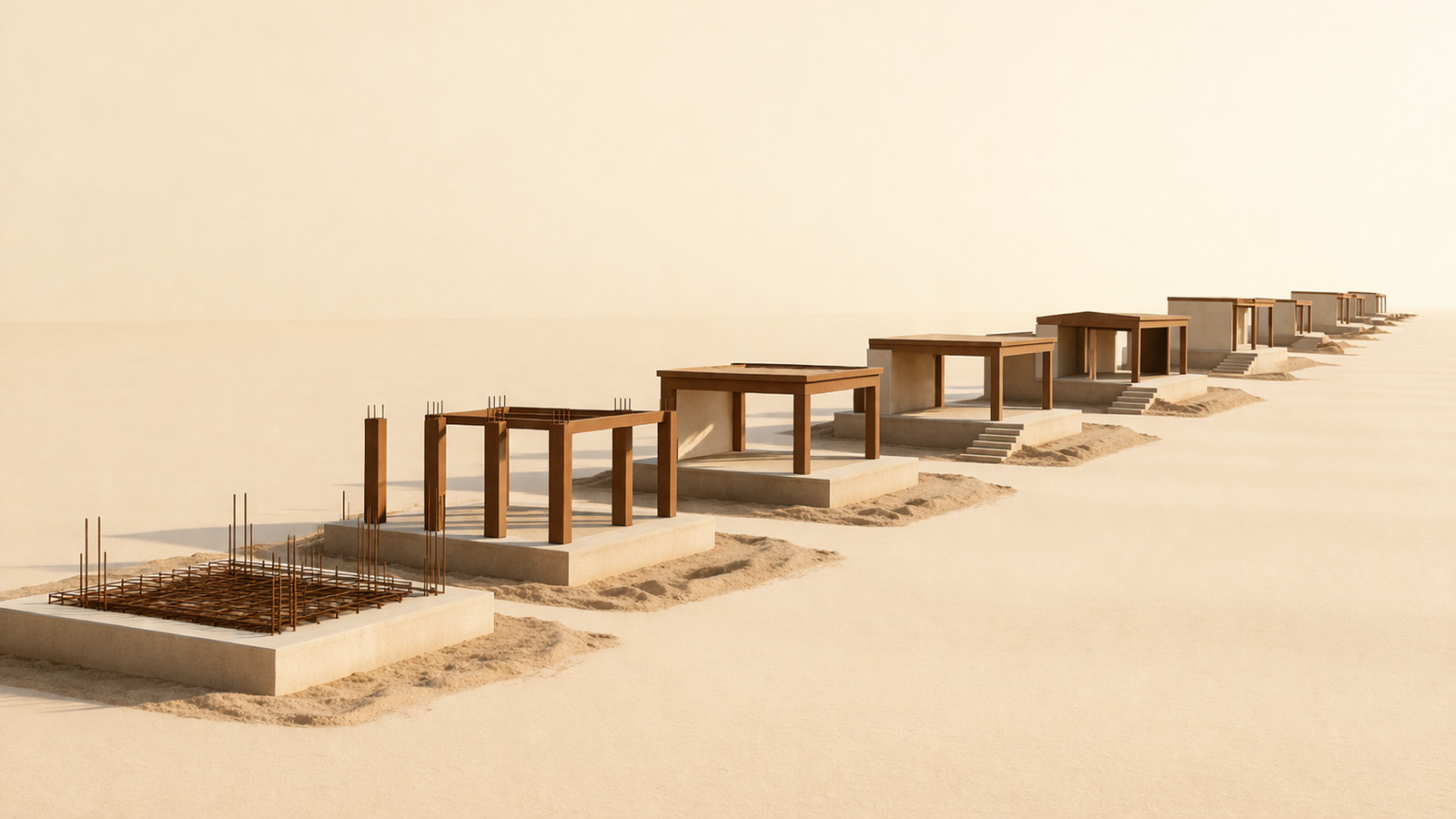
Built from years of watching routines, workloads, and personal systems fail for the same reason: something useful was expanded before the structure underneath it had finished adapting.
Growth should earn the next layer.
A routine may feel successful after a week. A larger workload may seem manageable for a month. A new responsibility may fit while attention is unusually high. None of those moments proves the expanded system will still work once the new layer becomes ordinary.
That is why slow growth discipline matters. Time reveals what enthusiasm cannot: where the friction is, what recovery costs, what keeps slipping, and whether the base became stronger or simply busier.
Growth itself is not dangerous. Unreinforced growth is.
Why Slow Growth Discipline Matters
Speed can hide weakness because the system has not yet been exposed to enough repetition.
The new workload still feels fresh. The added routine still has attention behind it. The larger schedule has not yet lived through a crowded week, a poor night’s sleep, an unexpected obligation, or the ordinary boredom of doing the same thing again.
Time changes the evidence. What felt easy on day three may feel expensive by week six. A small friction point may become a recurring maintenance problem. Something that looked like increased capacity may turn out to have been a temporary push.
Time Gives Weaknesses a Chance to Become Visible
That is the practical advantage of moving slowly. A pause between additions gives the current layer time to show what it actually costs.
If recovery shortens, you see it. If an older routine begins slipping, you see it. If the new responsibility needs more support than expected, the structure has time to respond before another layer is placed on top.
Slow growth is not hesitation. It is observation built into expansion.
Slow Growth Discipline Uses Four Stages
Durable expansion becomes easier to judge when growth follows a repeatable sequence instead of a constant push forward.
Add
Introduce one meaningful layer rather than several simultaneous changes.
Hold
Live with the new load long enough for friction, maintenance, and tradeoffs to become visible.
Test
Let the expanded system operate under ordinary pressure rather than ideal conditions.
Expand
Add another layer only after the current one has proved that it belongs.
This sequence may feel slower than ambition prefers. That is exactly why it works. It forces growth to survive evidence before receiving another investment.
Holding Is Part of Building
The least glamorous stage is often the most important one.
Holding means allowing the system to operate without immediately changing it again. You give the new layer time to become boring. You learn what recurring maintenance it creates. You see whether the surrounding life can absorb it without constant compensation.
Without a holding period, every weakness gets buried beneath another addition.
Slow Growth Discipline Protects the Base
Strong growth does not begin by celebrating how much was added. It checks what happened to the foundation afterward.
Did recovery remain intact? Are the core routines still reliable? Can important work still receive enough attention? Has the new layer improved the structure, or has it simply made the system busier?
If the base weakens every time the system grows, expansion is being financed by the structure that made it possible.
The Base Should Not Have to Keep Sacrificing
There is always some adjustment when life becomes larger. A new responsibility may require a new boundary. A stronger workload may need clearer sequencing. That is normal.
The warning appears when the same foundational needs keep losing ground: sleep, recovery, ordinary maintenance, relationships, or the routines that keep the rest of life usable.
Growth should require adaptation. It should not require permanent erosion.
What Week 5 Was Actually Building
Week 5 was never about doing more simply because more was possible. It was about building a disciplined relationship with expansion.
The sequence matters:
- Add carefully so growth does not outrun capacity.
- Strengthen the structure before higher output becomes permanent.
- Carry the workload repeatedly to test whether it fits ordinary life.
- Review the expanded system so stale decisions and unnecessary load do not become permanent.
- Grow slowly enough for each layer to prove that it can hold.
Ignore that sequence and the system can look successful while borrowing from tomorrow. Follow it and expansion becomes slower, but far easier to trust.
Where Fast Growth Usually Breaks
Fast growth rarely breaks during the exciting part. It breaks during repetition.
The calendar gets crowded. Recovery moves later. Review becomes optional because there is always something more urgent. Old layers stay in place while new ones arrive. Eventually, the system spends more energy supporting its own complexity.
Speed hides weaknesses. Repetition exposes them.
Watch for Growth That Requires Constant Rescue
A larger system should not require repeated heroics simply to remain functional.
If every difficult week becomes a recovery project, if small disruptions create disproportionate damage, or if the expanded workload survives only because someone keeps working around the structure, the pace of growth has probably outrun reinforcement.
That is a design signal, not a character flaw.
Higher Demands Need Adequate Resources and Recovery
The broader relationship between demands, resources, and strain also appears in occupational health research. The National Institute for Occupational Safety and Health describes work stress in part as a mismatch between job demands and the worker’s capabilities, resources, or needs.
The Daily Build applies that idea to expansion more broadly: when demands rise faster than reinforcement, the difference eventually has to be absorbed somewhere.
How Slow Growth Discipline Builds Durability
Durability comes from giving each layer time to become real.
Add one thing. Let it settle. Observe the cost. Correct what needs correction. Keep the layer only if it continues creating enough value to justify the load.
Then decide whether the next addition belongs.
Ambition Is Not the Structure
Ambition can point toward possibility. It cannot determine whether the existing system has enough capacity to carry that possibility yet.
The structure has to answer that question.
This builds naturally on Expansion Without Review Creates Drift. Review keeps new growth aligned after the initial decision has had time to produce real evidence.
It also extends What You Add Must Be Carried Daily. If a new layer cannot survive repetition without weakening the life around it, it has not earned permanence.
A Life Does Not Need to Grow at Maximum Speed
There is enormous pressure to turn every new capacity into another obligation.
You become more capable, so you add more work. The schedule gets cleaner, so you fill the new opening. A routine becomes easier, so another routine takes its place beside it.
Eventually, improvement can become a machine that consumes every bit of margin it creates.
Slow growth discipline leaves room for a different possibility: some increased capacity can remain capacity. Some open time can stay open. Some strength can exist without immediately being converted into another demand.
That is not wasted potential. It is resilience.
Slow Growth Discipline on Difficult Days
When progress feels frustratingly slow, it is tempting to force another layer just to feel movement.
Return to the structure instead:
Keep the base stable.
Strengthen one layer.
Test it honestly.
Build again when it holds.
That may not look impressive today. Its value becomes obvious when life applies pressure later.
Run the Slow Growth Check
Before adding the next layer, look at the one you most recently added.
Ask Five Questions
- Stability: Has the current layer become reliable enough to feel ordinary?
- Cost: Do I understand its real maintenance, attention, and recovery cost?
- Pressure: Has it survived a difficult or crowded period without collapsing the base?
- Correction: Have the weaknesses revealed by repetition been addressed?
- Margin: Is there still enough capacity left that another addition would not consume the system’s remaining breathing room?
If the current layer has not settled, keep building there. Expansion can wait.
Slow Growth Discipline Makes Expansion Durable
Growth determines how large the system becomes. Reinforcement determines whether that larger system survives.
Add carefully. Hold the new layer long enough to learn from it. Test it under ordinary pressure. Review what changed. Correct the weaknesses before asking the structure to carry more.
The goal is not to move slowly forever. It is to move at a pace that allows strength to catch up with ambition.
That is how growth becomes something you can keep.
Build What Holds
Growth should move slowly enough for the structure to learn from each new layer. Reinforcement, review, and margin are not delays in the build. They are part of what makes the build durable.
Do Not Add the Next Layer Yet
For two days, resist the urge to expand one area that is already working. Instead, reinforce what exists: close a weak point, restore margin, simplify one maintenance step, or review the real cost of the current layer. Let stability earn the next addition.
National Institute for Occupational Safety and Health — Stress at Work
Context on the relationship between work demands, available resources, work design, and occupational strain.
Continue Building
Add Carefully or Pay for It Later
Start with the discipline required before a new layer is added.
More Output Requires Better Structure
Reinforce the frame before expecting it to support a larger load.
What You Add Must Be Carried Daily
Repetition reveals whether added responsibility truly belongs.
Expansion Without Review Creates Drift
Review catches stale decisions and unnecessary load before they harden into the system.
The Discipline of Expansion
Read the complete five-part Week 5 collection in sequence.
The Daily Build · Week 5
The Discipline of Expansion
This build closes Week 5 by bringing the expansion sequence together: add carefully, strengthen the frame, carry the workload, review what changed, and grow only after the current layer has proved durable.
Explore the Week 5 collection →End of Season One
The Next Test Is Whether the Structure Can Recover
Season One ends with disciplined expansion. Season Two begins by asking what happens after real life interrupts the structure: fatigue, missed days, changed conditions, maintenance burden, and the need to begin again without rebuilding everything.
Continue with Starting Again Is Part of the Build →The Daily Build
Explore the Full Series
The Daily Build examines practical systems, recovery, resilience, maintenance, adaptation, rhythm, and structures designed to remain useful under real conditions.
Explore The Daily Build →Build Better. Every Day.
Groundwork Daily looks beneath visible progress for the structures carrying the weight. Follow The Daily Build for practical systems designed to hold, recover, and adapt under ordinary life.
Join the Groundwork
Small structures. Useful corrections. Growth built slowly enough to hold.