Economic pressure migration flow begins long before a border crossing, policy debate, or public argument. Movement does not start at the edge of a system. Instead, it starts inside a system that can no longer carry the weight placed on it.
When wages weaken, jobs narrow, prices rise, and local stability erodes, pressure accumulates. Households do not experience that as theory. Rather, they experience it as daily compression. Options shrink. Risk rises. As a result, the future becomes harder to plan.
Under those conditions, movement becomes less emotional and more structural. People are not simply chasing preference. They are responding to a system that has changed the cost of staying.
What Economic Pressure Migration Flow Really Means
Economic pressure migration flow does not mean poverty automatically creates migration. That is too simple. Many people remain in difficult economic conditions for years because family, culture, land, language, and familiarity still hold value.
Pressure becomes migration flow when instability changes the decision environment. At that point, staying begins to feel less secure than leaving. The household calculation shifts. Risk no longer sits only in movement. Risk also sits in remaining where opportunity keeps narrowing.
That distinction matters. Poverty is a condition. Pressure is a force. Economic pressure becomes migration pressure when people begin to believe that the current system cannot support their future.
This is why migration analysis must look upstream. If the analysis begins only at the border, it begins too late. The movement is already visible by then. The system failure started earlier.
How Economic Pressure Builds Inside Systems
Most migration analysis begins with visible movement instead of the conditions producing it. That is weak diagnosis. The real issue is upstream. Economic pressure migration flow forms when a local environment stops producing enough stability to support ordinary life.
In most cases, this pressure builds through repetition, not spectacle. Income becomes less reliable. Informal work becomes more common. Infrastructure becomes less trustworthy. Food, housing, transportation, and basic services take a larger share of household resources.
Meanwhile, planning becomes harder. Parents cannot confidently map a path for their children. Workers cannot rely on steady income. Young people cannot see a clear future in the local labor market. Over time, the system teaches people the same lesson: remaining in place carries rising cost.
That lesson shapes behavior. It changes how families assess risk, opportunity, and survival. Consequently, migration is not random motion. It is patterned response.
Decision Thresholds and Migration Pressure
Pressure alone does not guarantee migration. However, sustained pressure changes decision thresholds.
A decision threshold is the point where a household begins to see departure as more viable than staying. That threshold is not the same for everyone. Some families move after job loss. Others wait until prices rise beyond wages. Some leave after public safety deteriorates. Others move when education, health care, or infrastructure no longer supports a reasonable future.
Because thresholds differ, migration rarely appears evenly across a population. Some people leave early. Others wait. Some cannot afford to leave at all. That matters because migration requires resources, information, networks, and perceived pathways.
This is where policy begins to matter. Economic pressure creates urgency, but pathways shape direction. If one destination appears more accessible, more stable, or more connected to existing networks, movement begins to follow that route.
Why Economic Pressure Becomes Migration Flow
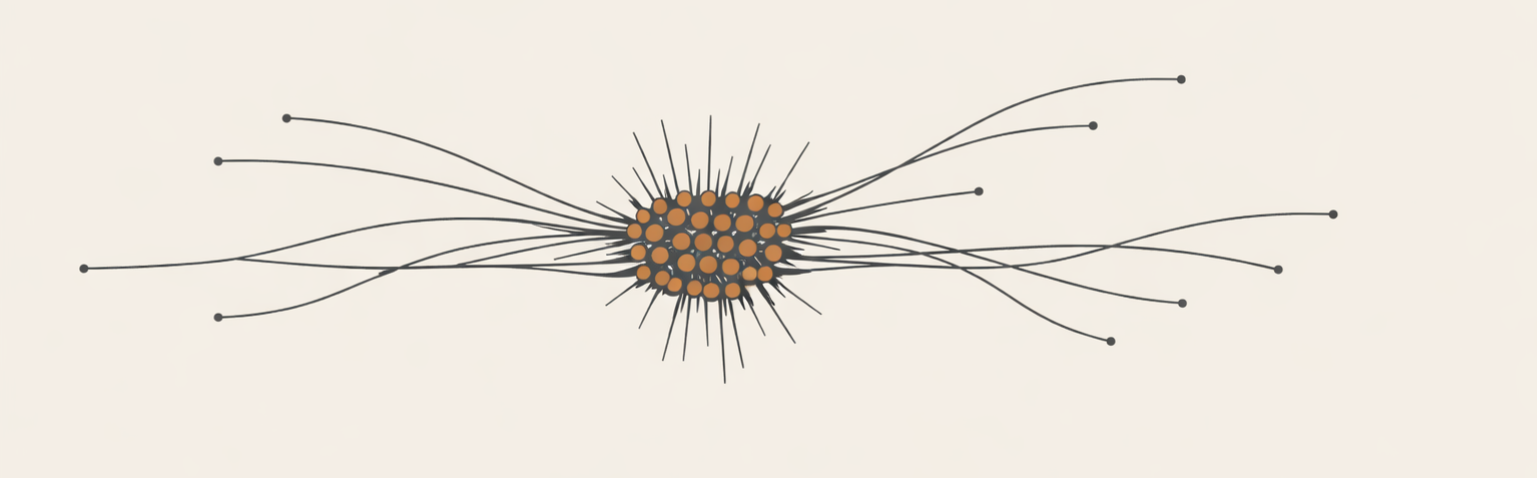
Economic pressure becomes migration flow when private decisions start to form a public pattern. One household moves. Then another follows. Information travels back through family networks, work contacts, and community channels. Over time, movement becomes more organized.
That does not mean migration becomes easy. It means people begin to see movement as a possible strategy. The path becomes legible. Risks remain, but they become comparable to the risks of staying.
This is why pressure matters so much in the broader framework. Policy Design Signals Migration Pathways explains how systems signal direction. By contrast, this post explains why people become willing to move in the first place.
Together, those two layers matter. Pressure creates urgency. Incentives create route logic. Once those forces connect, migration flow becomes easier to understand.
Real-World Examples of Economic Pressure Migration Flow
Economic pressure migration flow appears across many contexts. The details differ, but the system logic repeats.
In some countries, inflation and wage collapse push people to seek work elsewhere. In others, rural areas lose population because agricultural income no longer supports family stability. During periods of industrial decline, workers often move toward regions with stronger labor demand. After repeated climate or disaster shocks, households may leave because rebuilding becomes financially impossible.
The United States saw this pattern during the Dust Bowl, when environmental and economic collapse pushed many families to move west in search of work and stability. More recently, Venezuela has shown how economic breakdown can create large-scale regional migration pressure. Rural-to-urban migration in many countries also reflects this same logic: people move when local opportunity no longer matches household needs.
The point is not that every case is identical. The point is that economic pressure often changes the structure of choice. When the current system cannot provide stability, movement becomes a rational response.
Why Economic Pressure Alone Is Not Enough
Economic pressure is powerful, but it does not operate alone.
People still need information. They need routes. They need networks. They need some belief that movement could improve their situation. Without those elements, pressure may produce frustration, instability, or internal displacement rather than cross-border migration.
That is why economic pressure migration flow must be understood as one layer inside a larger system. Pressure begins the process, but policy pathways, institutional capacity, and public narrative shape what happens next.
If receiving systems lack capacity, movement can produce visible strain. If public narratives distort the causes, the debate becomes reactive. Then the original economic pressure gets buried beneath arguments about identity, enforcement, and blame.
Economic Pressure in the Migration Systems Framework
Economic pressure is the first major layer in The Migration Systems Framework. It explains why movement begins before the public notices the result.
The sequence is simple but powerful:
- Pressure builds when local systems weaken.
- Pathways shape where movement goes.
- Capacity determines whether receiving systems stabilize or strain.
- Narrative shapes how the public understands the outcome.
When this sequence is ignored, migration gets misread. People see arrivals but miss origins. They see border pressure but miss economic pressure. They see local strain but miss the capacity problem underneath it.
That is why this layer matters. If economic pressure continues to build, movement pressure will continue to rise. Ignoring it does not stop the system. It only delays understanding.
Frequently Asked Questions
What is economic pressure migration flow?
Economic pressure migration flow describes how weak wages, rising costs, limited opportunity, and local instability create pressure that can lead people to move toward more stable systems.
Does poverty automatically cause migration?
No. Poverty alone does not automatically cause migration. Migration usually requires pressure, perceived opportunity, information, networks, and a pathway that makes movement seem possible.
Why does economic pressure lead to migration?
Economic pressure leads to migration when staying becomes less viable than leaving. As options narrow, households may treat movement as a strategy for stability and long-term survival.
The Groundwork
Economic pressure migration flow is not a side issue. It is one of the earliest system signals in the migration sequence.
If conditions inside a system continue to deteriorate, movement pressure will continue to build. When that pressure is ignored, the visible outcome gets misread as sudden crisis instead of structural response.
The stronger question is not only where people are going. The stronger question is what made staying stop working.
Continue Building
This post explains the pressure layer of the migration system. Continue through the sequence using the links below.
→ Framework: The Migration Systems Framework
→ Next Layer: Policy Design Signals Migration Pathways
→ Capacity Layer: Institutional Capacity Limits Migration Absorption