Contents
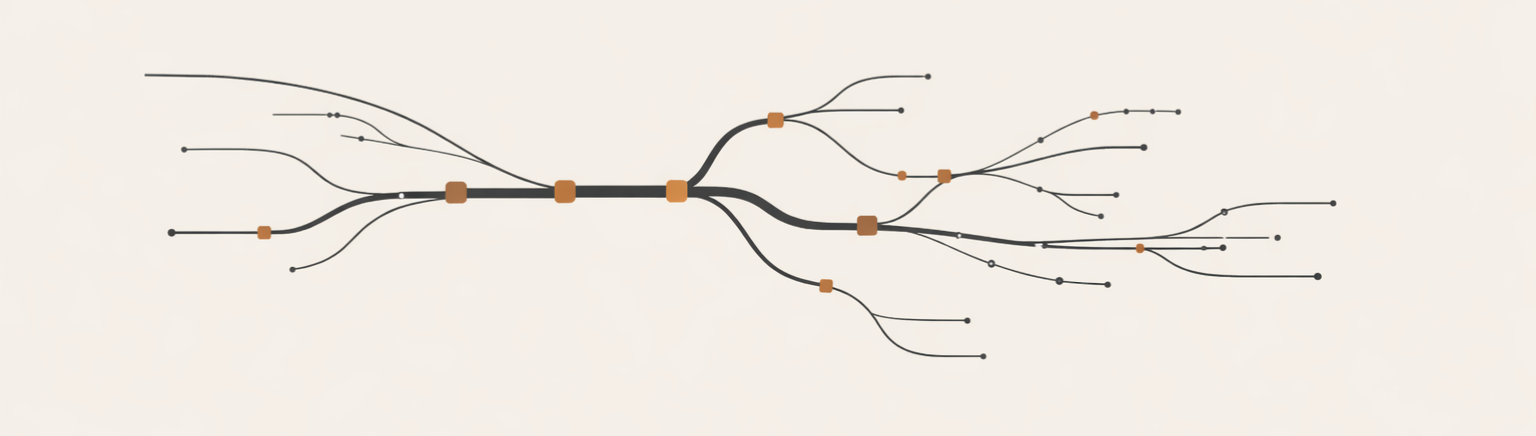
Policy design signals migration pathways whether leaders intend that outcome or not. Systems communicate through structure, not statements. A rule can say one thing while its design teaches people something else.
That is why migration policy must be read as a signal system. Every rule creates an incentive. Every threshold creates a pathway. Every delay creates a workaround. Every enforcement gap creates a calculation.
Migration does not move through desire alone. It moves through pressure, information, access, risk, and perceived possibility. Policy helps shape all of those conditions.
Policy Design Signals Migration Pathways Through Incentives
When policy creates uneven access or inconsistent enforcement, behavior adjusts. People follow what systems reward, tolerate, delay, or leave unclear. They do not only respond to what officials announce.
This is not unique to migration. All systems create behavioral signals. Tax systems shape financial choices. Housing rules shape development patterns. School admissions rules shape family decisions. In the same way, migration rules shape movement patterns.
If one route appears faster, safer, more predictable, or more likely to produce work access, people notice. If another route appears blocked, costly, or impossible, people adapt. Over time, those adaptations become pathways.
That is the core point. Policy does not simply manage migration after it happens. Policy helps organize migration before it becomes visible.
Signals That Shape Movement
Several policy signals shape migration behavior. Some are formal. Others emerge from practice. Either way, they influence how people assess movement.
- Legal entry thresholds: define who can enter through formal channels.
- Processing timelines: shape expectations around delay and uncertainty.
- Enforcement gaps: create perceived openings or tolerated routes.
- Work access after entry: affects whether movement can become sustainable.
- Family reunification rules: influence destination choice and timing.
- Humanitarian pathways: signal when protection may be available.
- Local capacity limits: shape whether receiving systems absorb or strain.
None of these signals are neutral. Each one structures movement. Together, they tell people which routes are possible, which risks are worth taking, and which systems appear more navigable.
How Policy Signals Become Migration Pathways
A pathway forms when repeated behavior begins to follow the same route. That route may be legal, informal, temporary, humanitarian, employment-based, or family-based. The important point is that people learn the system.
They learn from family members. They learn from employers. They learn from social networks. They learn from delays, approvals, denials, and enforcement patterns. Eventually, policy becomes more than written law. It becomes lived information.
This is why policy design matters so much. A poorly designed system can produce the opposite of its stated goal. It may claim to reduce movement while creating uncertainty that encourages irregular channels. It may claim to manage flow while starving processing systems of capacity. It may claim to protect order while pushing people toward informal work or unstable housing.
In that sense, policy is not only a rulebook. It is a map.
Why Enforcement Alone Cannot Fix Bad Design
Enforcement matters. However, enforcement cannot repair a poorly designed signal system by itself.
If economic pressure remains high, people will keep looking for pathways. If legal access remains too narrow, informal channels may expand. If processing timelines remain too slow, uncertainty will grow. If labor markets depend on migrant labor while policy restricts formal entry, the system creates contradiction.
That contradiction matters. People do not respond only to government language. They also respond to labor demand, wages, family networks, and visible outcomes. If the lived system teaches that movement is possible, policy statements alone will not erase that signal.
Strong policy design aligns intention, capacity, enforcement, and incentives. Weak policy design separates them. Once those pieces separate, migration pathways become harder to manage.
Policy Design Inside the Migration Systems Framework
Policy design is the second layer in The Migration Systems Framework. The first layer is pressure. The second layer is pathway.
Economic Pressure Drives Migration Flow explains why people become willing to move. This article explains why movement follows certain routes once pressure already exists.
The sequence matters:
- Pressure creates urgency.
- Policy shapes direction.
- Capacity determines whether systems absorb or strain.
- Narrative shapes how the public interprets the result.
When policy design is weak, the pathway layer becomes unstable. Movement may still happen, but it becomes harder to process, explain, and govern.
For the next layer, read Institutional Capacity Limits Migration Absorption. That piece explains what happens when receiving systems cannot carry the pressure that policy pathways help direct.
Why Policy Intentions Are Not Enough
Intentions are not infrastructure. A policy can be morally framed, politically popular, or rhetorically clear and still fail in practice.
The reason is simple. Systems produce outcomes through design. If the design creates delay, confusion, contradiction, or uneven access, people respond to that structure.
This is why serious migration analysis cannot stop at what a policy claims to do. It has to ask what the policy makes easier, harder, faster, slower, safer, riskier, and more predictable.
Those are the real signals. Once people understand them, behavior follows.
The Groundwork
Policy design signals migration pathways because systems communicate through incentives. A rule is never just a rule. It is also a signal about access, risk, timing, and possibility.
Policy is not control by itself. It is communication. Systems signal behavior through design, not intention.
The stronger question is not only what a policy says. The stronger question is what behavior the policy teaches.
Continue Building
This post explains the pathway layer of the migration system. Continue through the framework using the links below.
→ Framework: The Migration Systems Framework
→ Pressure Layer: Economic Pressure Drives Migration Flow
→ Capacity Layer: Institutional Capacity Limits Migration Absorption