
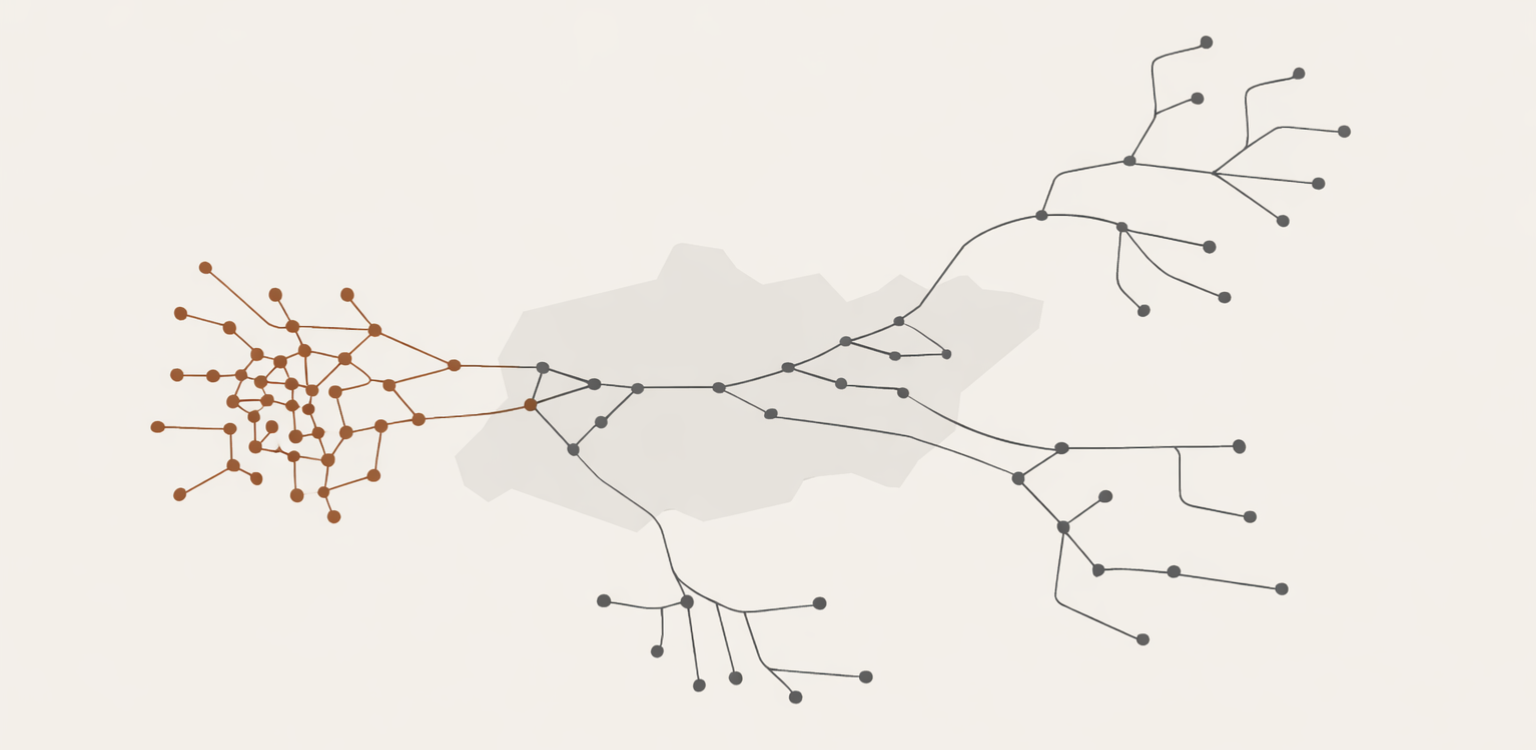
What causes migration? People migrate because economic conditions, conflict, family ties, policy, education, environmental pressure, safety, and opportunity can change the balance between staying and leaving.
However, those forces rarely operate alone. A wage problem can overlap with weak public services. Political instability can increase economic uncertainty. Family networks can make relocation less risky. Meanwhile, policy can open one route while closing another.
Therefore, migration makes more sense when it is understood as a system. Pressure changes the cost of staying. Pathways affect where people can go. Networks reduce uncertainty. Finally, receiving institutions determine how well additional demand can be absorbed.
Migration becomes visible when people move. Yet the system usually begins changing much earlier.
Public debate often starts with the visible event. A recession hits. Conflict begins. Housing costs rise. A border policy changes. New arrivals appear in a city. As a result, the event becomes the explanation.
That approach is too narrow. A stronger analysis asks what made staying less viable, what made another destination more possible, which routes existed, and whether the receiving system had enough capacity to carry the added demand.
What Causes Migration in Real Systems?
The causes of migration are connected. Economic, political, social, demographic, environmental, and personal conditions can all influence whether someone stays or moves.
For example, one household may leave because wages no longer support basic costs. Another may move because conflict makes daily life unsafe. A student may relocate for education, while a worker follows labor demand. In another case, environmental stress may weaken an existing livelihood.
Although the circumstances differ, each example changes the relationship between risk and possibility. Movement becomes more likely when remaining in place carries greater costs or when another location offers a more workable path.
The Main Drivers of Migration
- Economic drivers: wages, employment, inequality, living costs, and access to opportunity.
- Political drivers: conflict, persecution, insecurity, discrimination, governance, and state instability.
- Social drivers: family relationships, education, community connections, and established networks.
- Demographic drivers: population change, age structure, and labor-market imbalances.
- Environmental drivers: disasters, environmental degradation, climate pressure, and changing livelihoods.
- Policy drivers: visas, asylum rules, labor programs, family reunification, border systems, and enforcement.
Still, a list alone does not explain movement. The important question is how these drivers interact inside a larger system.
Pressure changes the viability of staying.
Pathways shape where movement can go.
Networks change the cost and uncertainty of moving.
Capacity determines how receiving systems absorb demand.
Narrative influences how the public interprets the outcome.
Economic Pressure and What Causes Migration
Economic pressure is a major migration driver. However, that pressure does not require absolute poverty.
A household can have employment and still lose confidence in its future. For instance, wages may fall behind housing, food, transportation, education, or health costs. Work may also become unstable. In addition, young adults may see few credible paths toward independence.
Under those conditions, the calculation changes. People begin comparing the risk of movement with the long-term cost of remaining where they are.
That mechanism is examined more closely in Economic Pressure Drives Migration Flow . Economic stress does not automatically produce movement. Instead, it changes how households evaluate risk, opportunity, and stability.
Why Poverty Alone Does Not Explain Migration
International migration itself requires resources. Transportation costs money. Documentation can be expensive. Housing must be secured. Information matters as well.
Consequently, people facing the greatest hardship are not always the people most able to move long distances. Some households experience intense pressure but lack the money, network, documentation, or physical access needed to leave.
This distinction matters because it weakens a common assumption. More hardship does not always produce more international migration. Sometimes hardship reduces mobility instead.
Policy Pathways Help Explain What Causes Migration Patterns
Pressure helps explain why someone may want or need to move. By contrast, policy helps explain how that movement becomes organized.
Governments create pathways through work visas, student programs, family reunification, humanitarian protections, asylum processes, and seasonal labor programs. At the same time, enforcement decisions alter risk. Administrative delays and eligibility requirements can also change which routes appear workable.
Therefore, policy does more than respond after migration occurs. Rules shape the environment in which people make decisions.
Policy Design Signals Migration Pathways examines this layer directly. Rules create constraints, but they also communicate information to migrants, families, employers, advocates, and institutions.
Family Networks Can Make Migration More Possible
Movement often becomes easier after someone else has already made the journey.
A relative may explain paperwork, transportation, housing, schools, employment, or local expectations. Likewise, friends can offer temporary shelter. Community organizations may connect newcomers with services. Diaspora communities can also reduce uncertainty before departure.
As a result, networks change the practical cost of moving. They do not cause every decision. Instead, they affect whether movement feels achievable.
Consider two households facing similar economic pressure. One has relatives abroad, reliable information, and temporary housing available. The other has none of those supports. Although the economic pressure may be similar, their ability to respond can be very different.
Why Migration Pathways Can Reinforce Themselves
Earlier migration can create infrastructure for later migration. People share information. Families build relationships across borders. Employers learn where workers are available. Transportation routes become familiar.
Over time, those connections can reduce friction. Consequently, movement may continue along an established corridor even when several destinations appear economically similar.
That pattern helps explain why migration flows often cluster around particular cities, regions, or countries instead of spreading evenly.
Institutional Capacity Shapes Migration Outcomes
Migration does not end when someone reaches a destination. Instead, arrival transfers demand into another system.
Housing, schools, transportation, health services, immigration processing, employers, local government, and nonprofit organizations may all carry part of that demand. Therefore, the receiving system matters as much as the movement itself.
This is where capacity becomes critical.
One city may have housing, staffing, processing ability, public infrastructure, and labor-market flexibility. Another city may already be operating close to its reliable limits. Consequently, similar migration levels can produce very different local outcomes.
When New Demand Meets Thin Capacity
If capacity is already weak, strain can appear quickly. Shelter systems fill. School enrollment rises. Case-processing backlogs grow. Housing pressure becomes more visible. Local budgets may also tighten.
At that point, public discussion often treats migration itself as the entire problem. However, that interpretation may overlook existing weaknesses inside the receiving system.
Sometimes migration creates new pressure. In other cases, it exposes a housing, staffing, administrative, or coordination problem that was already present. Frequently, both forces operate together.
For a deeper examination of this mechanism, continue with Institutional Capacity Limits Migration Absorption .
Why Migration Patterns Are Not Random
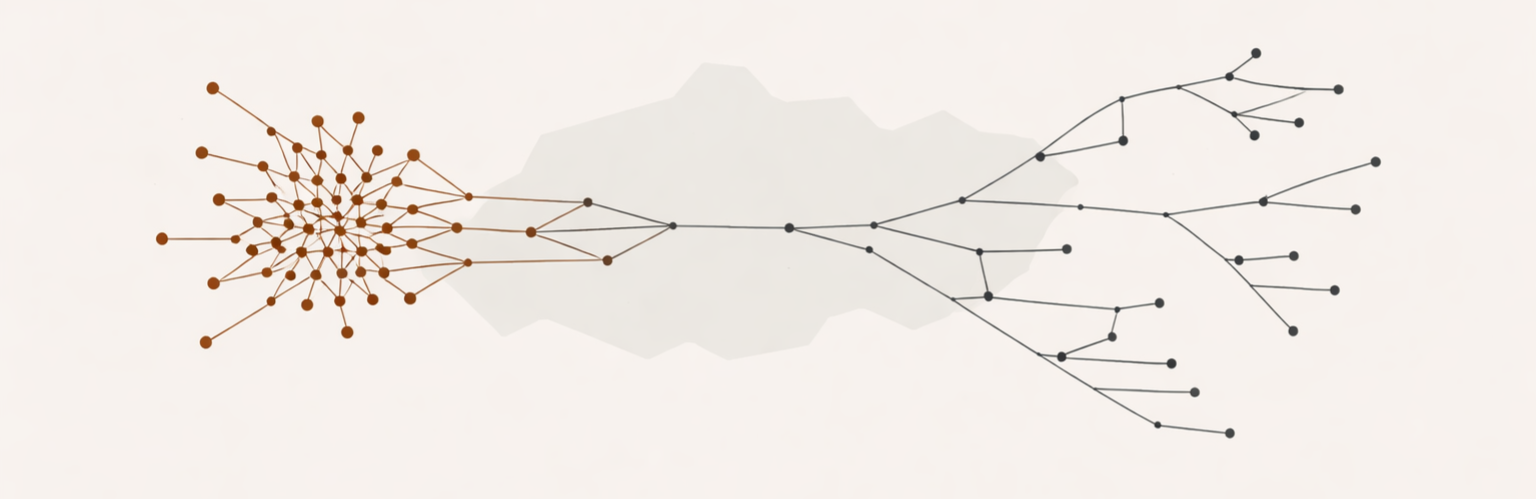
Migration can appear chaotic when attention begins at the border, airport, shelter, or arrival point. Yet the surrounding pattern is often more structured.
People compare conditions. They respond to risk and opportunity. In addition, they use available information and established networks. Employers create labor demand. Governments open or restrict routes. Institutions then absorb the resulting movement with different levels of effectiveness.
For that reason, migration is neither perfectly planned nor random. It is structured behavior under changing conditions.
Similar Pressure Can Produce Different Outcomes
The surrounding system explains why similar pressures do not create identical results everywhere.
For example, conflict may produce displacement primarily into neighboring countries. A large wage gap may create labor migration along an established corridor. Environmental stress may first increase internal migration rather than cross-border movement.
Meanwhile, family networks can draw people toward one city while bypassing another that appears equally attractive on paper. The interaction between pressure and pathway matters more than either force by itself.
What Causes Migration Across Borders?
Cross-border migration occurs when a reason to move intersects with a viable route into another country.
That reason may involve work, family, education, persecution, conflict, environmental pressure, or several conditions at once. The available route may involve a visa, labor recruitment, family sponsorship, asylum, humanitarian protection, or irregular movement.
However, international migration is only one part of human mobility. Many people move within their own countries, and most people continue to live in the country where they were born.
Cross-border movement receives greater political attention because international boundaries make migration highly visible. Still, visibility should not be confused with scale or universality.
A Systems Framework for Understanding What Causes Migration
A useful migration framework has to do more than list push and pull factors. More importantly, it must explain how those factors connect.
Pressure can increase without producing movement. Likewise, a legal pathway can exist without creating demand. A destination may need workers while lacking housing. A government may have funding but weak administrative coordination.
Therefore, movement depends on relationships between systems rather than one isolated variable.
Pressure, Pathways, Capacity, and Alignment
Pressure changes the attractiveness of staying. Pathways determine which forms of movement are practical. Networks reduce uncertainty. Capacity determines what receiving institutions can reliably carry.
In addition, alignment determines whether policy, resources, institutional authority, labor demand, infrastructure, and public expectations move in compatible directions.
When those parts become misaligned, friction increases. Backlogs grow. Public frustration rises. Institutions begin transferring pressure from one part of the system to another.
The Migration Systems Framework organizes these relationships into a larger architecture. It is the canonical Groundwork Daily map for understanding how migration pressure becomes movement and how receiving systems respond.
Frequently Asked Questions About What Causes Migration
What causes migration?
Migration can result from economic opportunity, employment conditions, conflict, persecution, family ties, education, demographic change, environmental pressure, political conditions, and policy pathways. Several drivers often interact.
Is migration caused by one factor?
Usually not. Migration decisions often reflect several pressures and opportunities at the same time. Their relative importance changes across people, places, and forms of migration.
What are the main drivers of migration?
Major drivers include economic conditions, conflict and insecurity, family networks, demographic pressures, environmental change, education, labor demand, and government policy.
Why do people migrate across borders?
People migrate across borders when a reason to move intersects with a viable international pathway. Work, family, education, safety, humanitarian protection, and long-term stability can all influence the decision.
Does poverty always cause migration?
No. Poverty can increase pressure, but international migration also requires resources, information, access, or networks. Therefore, people facing severe hardship may have fewer opportunities to move long distances.
The Groundwork
What Causes Migration Begins Before Movement Is Visible
What causes migration is not one event, one policy, or one economic condition. Instead, movement emerges from the interaction between pressure, opportunity, safety, networks, rules, and institutional structure.
Therefore, the stronger question is not simply why people moved.
Ask what changed the viability of staying. Then ask what made movement possible. Identify the pathway that shaped direction. Finally, examine whether the receiving system had the structure and capacity to carry what arrived.
The movement is visible. The system usually started changing earlier.
Continue Building
This article answers the entry question. Continue into the framework to examine the mechanisms that turn pressure into movement.
→ Framework: The Migration Systems Framework
→ Mechanism: Economic Pressure Drives Migration Flow
→ Mechanism: Policy Design Signals Migration Pathways
Receipts
→ International Organization for Migration
Groundwork Architecture
The Structure Under This Article
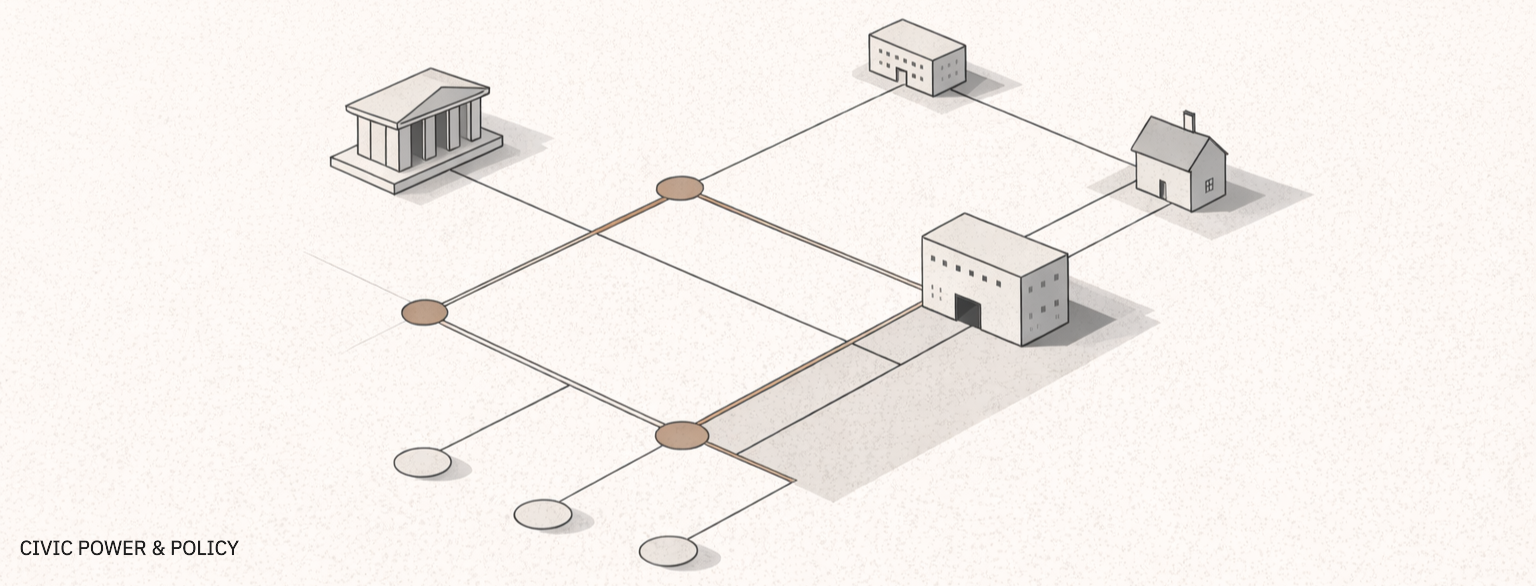
This analysis connects migration to Groundwork Daily’s larger operating architecture. Structure governs the pathways. Capacity governs the load. Alignment determines whether policy, resources, authority, and action work together.
Core Principle
Clear structure creates usable pathways, limits, relationships, and decision space.
Primary Condition
Structure organizes roles, pathways, constraints, relationships, and system behavior.
Meet the Builder

Langston Reed
Builder · Civic Power & Policy
Langston Reed helps readers understand how institutions, governance, public policy, and civic systems shape everyday life. His work looks beneath visible events to examine the structures that made them possible, the incentives moving through them, and the patterns that remain after public attention shifts.
“Headlines describe movement. Systems explain movement.”
Reader Promise: Move past the visible event and understand the system underneath it.