Community systems fail long before most people call it failure.
At first, nothing looks urgent.
A trash can overflows and stays that way. A broken bench remains broken. A hallway light stays out. A volunteer list gets shorter. A community meeting still happens, but fewer people attend. The group chat has complaints, but almost no one takes responsibility for the next step.
The system is still visible.
The structure is still there.
The park is still open. The building still functions. The school still holds events. The block association still sends messages. The neighborhood still looks like a neighborhood.
But something underneath has changed.
Contribution has slowed.
That is where community systems failure begins.
Not with collapse.
With withdrawal.
The First Signs of Community Systems Failure Are Usually Small
Most community systems do not fail through one dramatic event. They weaken through repeated moments when nobody responds.
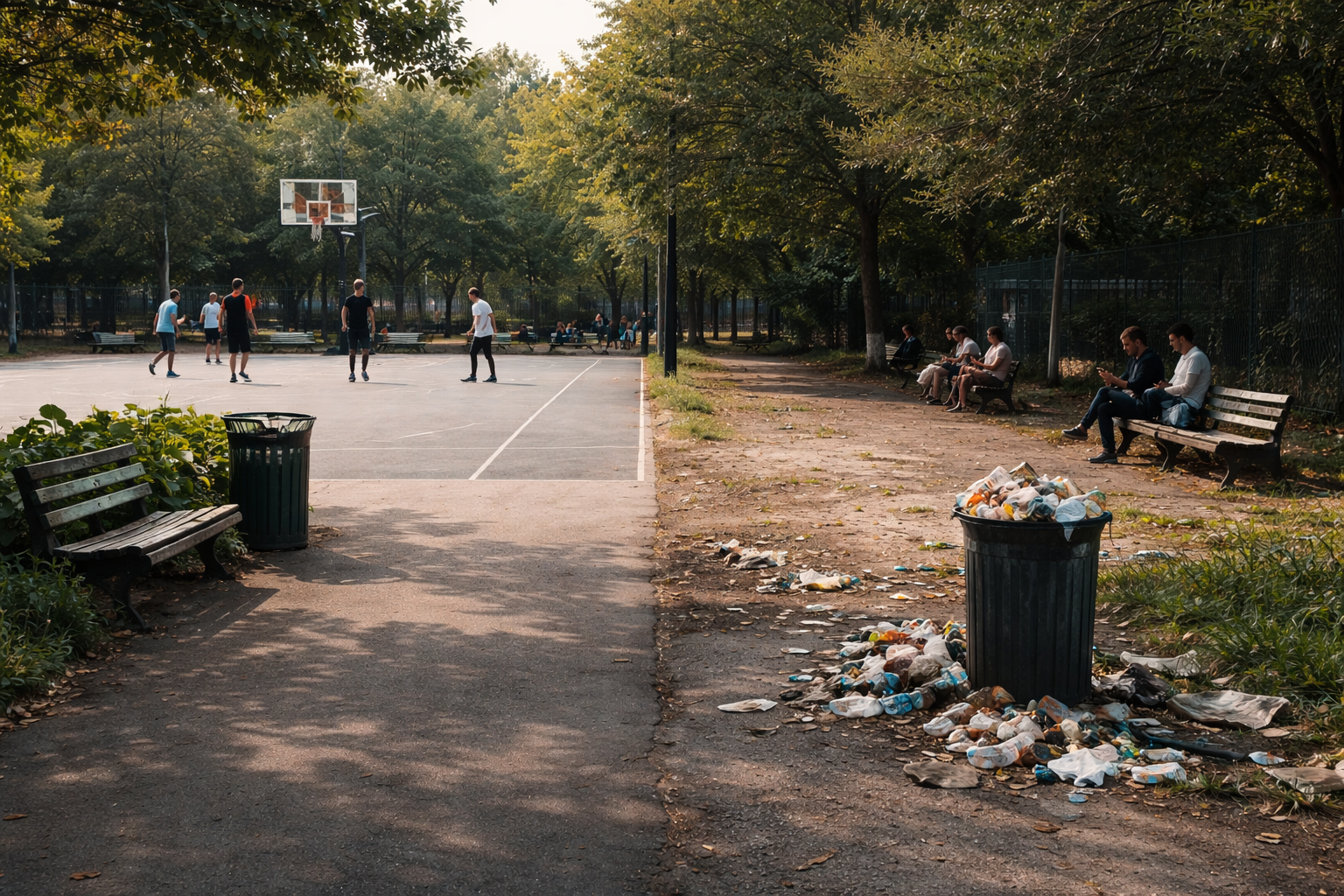
A neighborhood park makes the pattern easy to see.
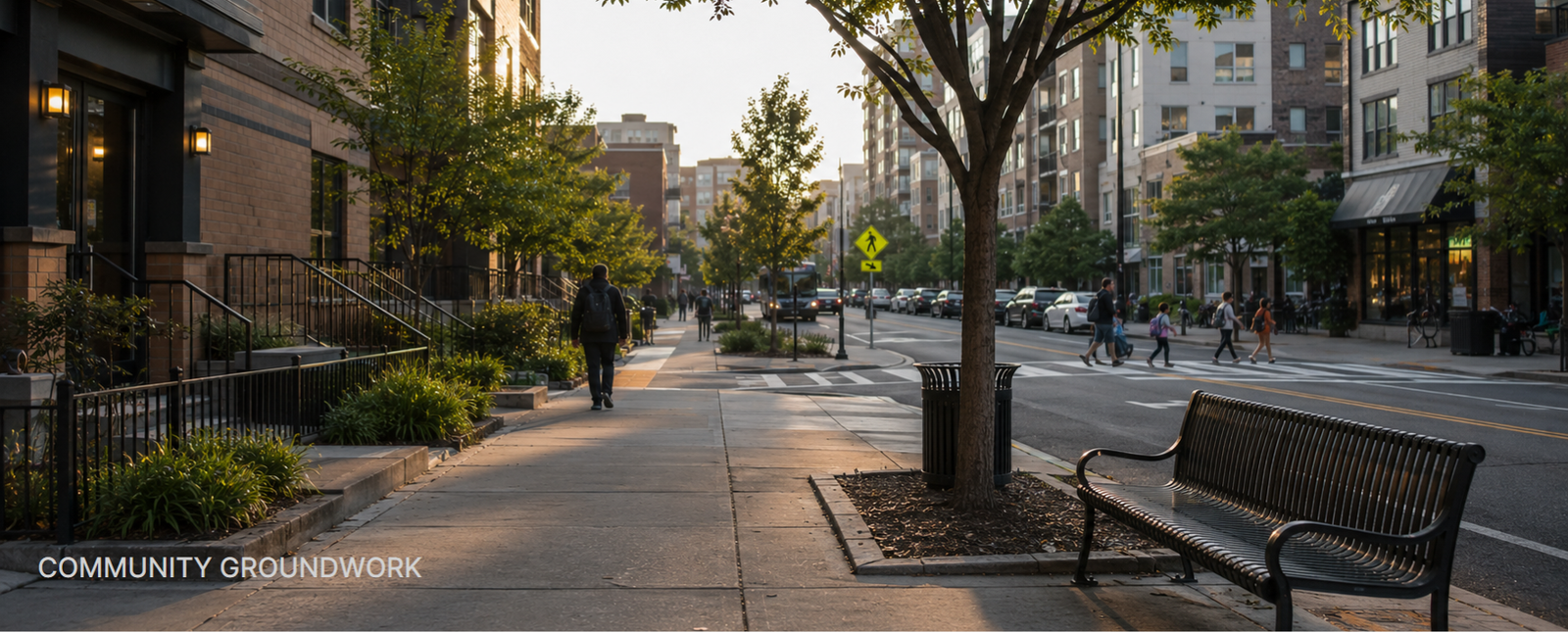
One side remains active and cared for. Families gather there. People throw trash away properly. Someone resets a moved chair. Someone reports damage before it spreads. The space feels stable because contribution is still active.
A short distance away, the atmosphere changes.
Trash collects near benches. Maintenance slows down. Small damage remains visible longer. People continue using the area, but fewer people intervene when problems appear.
Same park.
Same city.
Same public resources.
Different contribution pattern.
That difference matters more than most people realize.
When contribution remains active, people read the environment as cared for. When contribution disappears, people read the environment as unmanaged. Over time, that reading changes behavior.
Shared Spaces Reflect Shared Responsibility
Communities reveal their internal health through shared environments.
People often think disorder appears randomly. It does not. Visible decline usually reflects weakening participation underneath the surface.
When people continue contributing, systems stabilize.
When responsibility becomes uneven, the environment begins signaling that maintenance is optional.
Eventually, people adapt to that signal.
That adaptation starts quietly.
Someone stops picking up what they did not drop. Someone stops reporting what they already reported twice. Someone stops attending the meeting because the same concerns return every month. Someone stops volunteering because the work never rotates.
None of those choices seems like a major failure alone.
Together, they change the system.
A community does not need everyone to quit for decline to begin. It only needs enough people to decide their contribution no longer matters.
People Adjust to What They Repeatedly See
Human behavior responds to environmental signals.
When people repeatedly observe neglect without correction, expectations begin changing.
The overflowing trash can stops looking temporary. The broken bench stops looking unusual. The lack of intervention starts feeling normal. The space teaches people what the standard is.
This is one of the most important dynamics in community systems failure.
Disorder is contagious.
Responsibility is contagious too.
If maintenance appears active, participation becomes easier. If neglect appears permanent, disengagement spreads.
That does not mean people are bad. It means people are adaptive. They look around and decide whether their effort will be reinforced, ignored, or wasted.
If the system repeatedly tells them effort does not matter, withdrawal becomes rational.
That is the dangerous part.
Once disengagement starts making sense, the system is already weakening.
Trust Leaves Before People Do
Most people assume communities collapse when people physically leave.
Often, trust leaves first.
Residents stop believing problems will be corrected. Contributors stop believing effort matters. People begin protecting their own energy instead of protecting the shared environment.
That shift changes the relationship between people and place.
The environment no longer feels shared.
It starts feeling unmanaged.
Once that perception spreads, participation becomes harder to sustain.
This is why community systems failure is not only about trash, benches, meetings, or maintenance. Those are signals. The real failure is the loss of belief that shared effort still produces shared results.
Once that belief weakens, people may still live in the same place, use the same spaces, and benefit from the same systems.
But they no longer behave like the system belongs to them.
Why Contribution Stops
Contribution rarely stops for one reason.
Sometimes people are tired. Sometimes they are busy. Sometimes the system made participation difficult. Sometimes leadership failed to follow through. Sometimes people contributed for years and realized the burden was not being shared.
One of the most common causes is invisible imbalance.
The same people keep carrying the load.
The same parent volunteers. The same resident reports issues. The same neighbor organizes cleanup. The same staff member stays late. The same elder holds the institution together through memory and habit.
At first, the system benefits from their reliability.
Then the system begins depending on it.
Eventually, reliability turns into infrastructure.
That is not strength.
That is risk.
When the dependable few become the operating system, everyone else becomes a user. They benefit, but they do not carry. They expect, but they do not reinforce.
That imbalance does not hold forever.
Community Systems Fail When Burden Becomes Concentrated
At first, responsible people often compensate for weakening participation.
They continue cleaning. They continue reporting problems. They continue organizing. They continue correcting small issues before they grow.
Meanwhile, the people contributing less continue benefiting from the system without interruption.
Eventually, the imbalance becomes visible.
Once contributors notice that responsibility is uneven, fatigue increases.
That fatigue matters.
Because systems rarely fail when everyone stops caring at once.
They fail when the people still carrying the system begin stepping back.
At that point, decline accelerates quickly.
The trash piles up faster. Meetings lose momentum. Response times slow. Standards loosen. The people who were quietly holding the system together stop absorbing the difference.
Then everyone notices what those people were doing.
Usually too late.
Community Systems Teach Behavior
A neglected environment does not simply reflect disorder.
It teaches disorder.
People learn from what systems tolerate.
If spaces remain neglected, neglect becomes normal. If contribution disappears without consequence, participation begins feeling unnecessary. If disorder remains unresolved long enough, people stop expecting correction entirely.
That expectation shift is difficult to reverse.
Once people stop believing the system will hold, disengagement becomes easier to justify.
This is why visible contribution matters.
People need to see responsibility being carried. They need to see that effort produces response. They need to see that contribution is not swallowed by a broken process.
Otherwise, the system teaches them to stop trying.
The Cost Is Bigger Than Maintenance
The visible damage is not the deepest loss.
The deeper loss is legitimacy.
People stop trusting that shared systems are fair, stable, or collectively maintained.
That distrust spreads outward.
Fewer people volunteer. Fewer people intervene. Fewer people invest emotionally in the environment around them. Fewer people believe their presence changes anything.
Over time, social cohesion weakens because participation no longer feels connected to outcomes.
That is how communities slowly drift from shared responsibility into passive coexistence.
People remain near each other.
But they stop building together.
The Groundwork
Community systems do not survive on good intentions alone.
They survive through repeated visible contribution.
Look at one shared system around you this week.
Ask:
- Who contributes regularly?
- Who benefits without contributing?
- Who carries more than others realize?
- What would happen if that person stopped?
- Is contribution visible enough for others to copy?
Those questions will show you the real condition of the system.
If contribution is distributed, the system has resilience.
If contribution is concentrated, the system has exposure.
If contribution has disappeared, the system is already failing, even if the structure is still standing.
The Structural Takeaway
Community systems fail when contribution stops.
Not because people stop using the system.
They often keep using it.
That is part of the problem.
They benefit from the system while fewer people maintain it.
Over time, that imbalance becomes culture.
Then culture becomes environment.
Then environment teaches everyone else how little they need to carry.
A system does not collapse only because people stop caring.
It collapses because too many people stop contributing while still expecting the structure to hold.
Continue Building
This article belongs to the Community Participation lane inside Community Groundwork. It examines what happens when shared systems keep being used, but fewer people help carry them.
→ Framework: Community Groundwork
→ Mechanism: Communities Become Stable When Responsibility Stays Distributed
→ Related: The Work Nobody Notices Until It Stops
Receipts
→ Britannica — Tragedy of the Commons
→ Stanford Encyclopedia of Philosophy — Collective Action Problems