The Free Rider Problem Starts Small and Ends Expensive
The free rider problem is not only a theory.
It is what happens when people keep benefiting from a shared system after they stop helping maintain it.
At first, nothing looks broken.
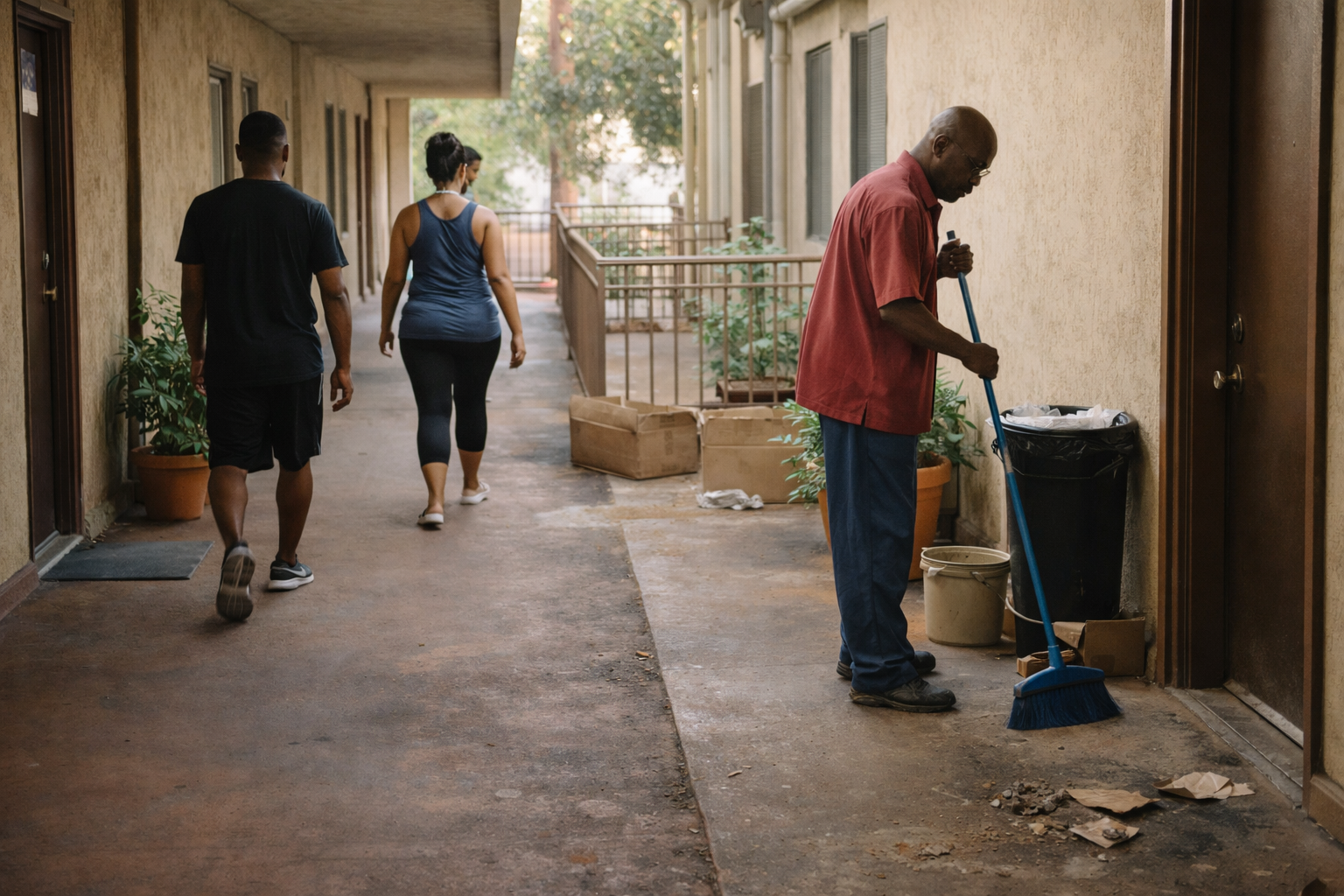
The hallway still gets cleaned. The trash still gets removed. The meeting still happens. The family gathering still comes together. The work still gets finished. The park still looks usable. The group project still gets submitted.
From the outside, the system appears stable.
That appearance is misleading.
The system is not holding because everyone is contributing.
It is holding because someone is absorbing the imbalance.
That is where the free rider problem begins.
Not when people stop benefiting.
When they keep benefiting without carrying their portion of the responsibility.
What the Free Rider Problem Looks Like in Real Life
The free rider problem appears anywhere people share space, resources, benefits, or responsibility.
It appears in apartment buildings when one resident always reports maintenance problems while others walk past them.
It appears in workplaces when reliable employees absorb unfinished work because managers know they will not let the project fail.
It appears in families when one person becomes the calendar, cleaner, planner, reminder system, emotional manager, and backup plan.
It appears in schools when the same parents volunteer every time while everyone else benefits from the event.
It appears in neighborhoods when people expect clean blocks, maintained parks, safe spaces, and working systems without participating in the work that keeps those systems alive.
The setting changes.
The pattern does not.
One group contributes.
Another group consumes.
The system continues for a while because the contributors keep carrying the load.
That can look like stability.
Underneath, responsibility has already shifted.
Why the Free Rider Problem Starts Small
Most shared systems do not fail immediately.
They weaken through small tolerated imbalances.
One person always takes out the trash.
One neighbor always reports the broken light.
One coworker always finishes the extra work.
One family member always remembers what everyone else forgets.
One volunteer always stays late to clean up.
At first, this looks like helpfulness.
Over time, it becomes dependency.
The problem is not that someone contributes more once in a while. Strong systems can absorb temporary imbalance. People have different capacity at different times.
The problem begins when uneven contribution becomes the operating model.
That is when generosity stops being support and starts becoming hidden infrastructure.
Once that happens, the system begins rewarding nonparticipation.
The people who do less still receive the benefit.
The people who do more receive more responsibility.
That is not a stable design.
That is a slow transfer of burden.
Benefit Without Responsibility Changes Behavior
The free rider problem matters because it separates benefit from obligation.
Once people learn that they can receive the benefit without contributing, the system starts teaching the wrong lesson.
People learn that the hallway will still be cleaned.
The meeting will still be organized.
The work will still be completed.
The event will still happen.
The shared space will still function.
So they adjust.
They contribute less.
Not always because they are malicious.
Often because the system has made contribution feel unnecessary.
That is the part people do not like admitting.
The free rider problem is not only about lazy people.
It is also about weak system design.
When a shared system does not make contribution visible, expected, and protected, it trains people to consume stability without helping produce it.
The Free Rider Problem Is Usually Hidden by Reliable People
Every free rider problem has a masking layer.
That masking layer is usually a reliable person.
Reliable people hide system weakness because they keep things from falling apart.
They cover the gap.
They make the call.
They send the reminder.
They clean what others left.
They stay late.
They absorb the unfinished task.
They keep the standard alive.
Because of that, everyone else gets to pretend the system works.
But the system does not work.
The reliable person works.
That difference matters.
A system that depends on one person’s quiet overfunctioning is already fragile. It may look organized. It may look stable. It may even look successful.
But remove that person and the truth appears quickly.
Why Free Riding Spreads
The free rider problem spreads because people copy what the system rewards.
If neglect carries no cost, neglect becomes rational.
If contribution receives no recognition, contribution starts to feel foolish.
If responsible people are expected to carry everything quietly, responsibility becomes punishment.
That is how shared systems decay.
Not through one dramatic collapse.
Through repeated moments where contribution becomes optional and benefit remains guaranteed.
People are always reading the room.
They notice who gets asked.
They notice who gets excused.
They notice who carries the work.
They notice whether contribution leads to respect or more burden.
When people see that doing more only gets them assigned more, they begin pulling back.
That is not selfishness.
Sometimes it is self-preservation.
The Hidden Cost of Free Riding
The free rider problem does not only create unfairness.
It accelerates decline.
The people carrying the system eventually notice the weight. They begin to reduce their contribution. When that happens, the system loses its last reliable layer of stability.
The pattern is predictable.
- Small problems remain unresolved.
- Shared standards become unclear.
- Trust weakens.
- Reliable people become resentful.
- Participation declines further.
- The environment starts reflecting the imbalance.
At that point, recovery becomes harder.
The issue is no longer just the trash, the hallway, the meeting, the household, the workplace, or the shared resource.
The issue is behavior.
Once people learn that benefit continues without contribution, the system must rebuild expectations before it can rebuild outcomes.
Where the Free Rider Problem Shows Up
The free rider problem is easy to miss because people usually explain it as personality.
They say someone is lazy.
They say someone is selfish.
They say someone does not care.
Sometimes that is true.
But the stronger question is structural:
What does the system allow?
In an office kitchen, free riding looks like people using the space while never cleaning the counter, replacing supplies, or reporting broken equipment.
In a neighborhood, it looks like people expecting safety, cleanliness, and maintenance while never attending meetings, reporting issues, volunteering, or supporting the people doing the work.
In a family, it looks like one person carrying invisible labor while everyone else treats that labor as personality instead of work.
In a workplace, it looks like dependable employees becoming the unofficial safety net for weak processes.
In every version, the warning is the same.
Any system that separates benefit from responsibility eventually becomes unstable.
The Free Rider Problem Is a Systems Warning
The free rider problem is often treated like a complaint.
That is too shallow.
It is a systems warning.
A shared system cannot survive if contribution is optional, invisible, or endlessly transferred to the same people.
When responsibility concentrates, the system becomes fragile.
When contributors withdraw, the weakness becomes visible.
By then, the damage has usually been building for a long time.
Strong systems do not rely on quiet sacrifice forever.
They distribute responsibility before resentment becomes culture.
They make contribution visible.
They make expectations clear.
They protect the people who carry real weight.
They do not confuse reliability with unlimited capacity.
The Groundwork
A shared system only holds when contribution is expected, visible, and repeated.
Look at one system around you.
It can be a workplace, family, building, neighborhood, group project, school committee, volunteer team, or shared public space.
Ask:
- Who benefits from this system?
- Who contributes to keep it working?
- Who carries more than others admit?
- Who has stopped contributing but still expects the benefit?
- What happens if the reliable person steps back?
Those questions will show the real structure.
If contribution is visible and distributed, the system has resilience.
If contribution is hidden and concentrated, the system has exposure.
If benefit continues without responsibility, the free rider problem is no longer theoretical.
It is already operating.
The Structural Takeaway
The free rider problem starts small and ends expensive.
It starts with one person not doing their part.
Then another person adjusts.
Then the reliable people compensate.
Then compensation becomes expected.
Then contribution becomes uneven.
Then resentment grows.
Then the system weakens.
The collapse may come later.
The failure began much earlier.
A system does not become unstable only because people stop caring.
It becomes unstable when too many people keep benefiting while too few people keep carrying.
Continue Building
This article belongs to the Community Participation lane inside Community Groundwork. It examines what happens when shared systems keep producing benefits, but responsibility stops being carried fairly.
→ Framework: Community Groundwork
→ Mechanism: Community Systems Fail When Contribution Stops
→ Related: Communities Become Stable When Responsibility Stays Distributed
Receipts
→ Investopedia — Free Rider Problem