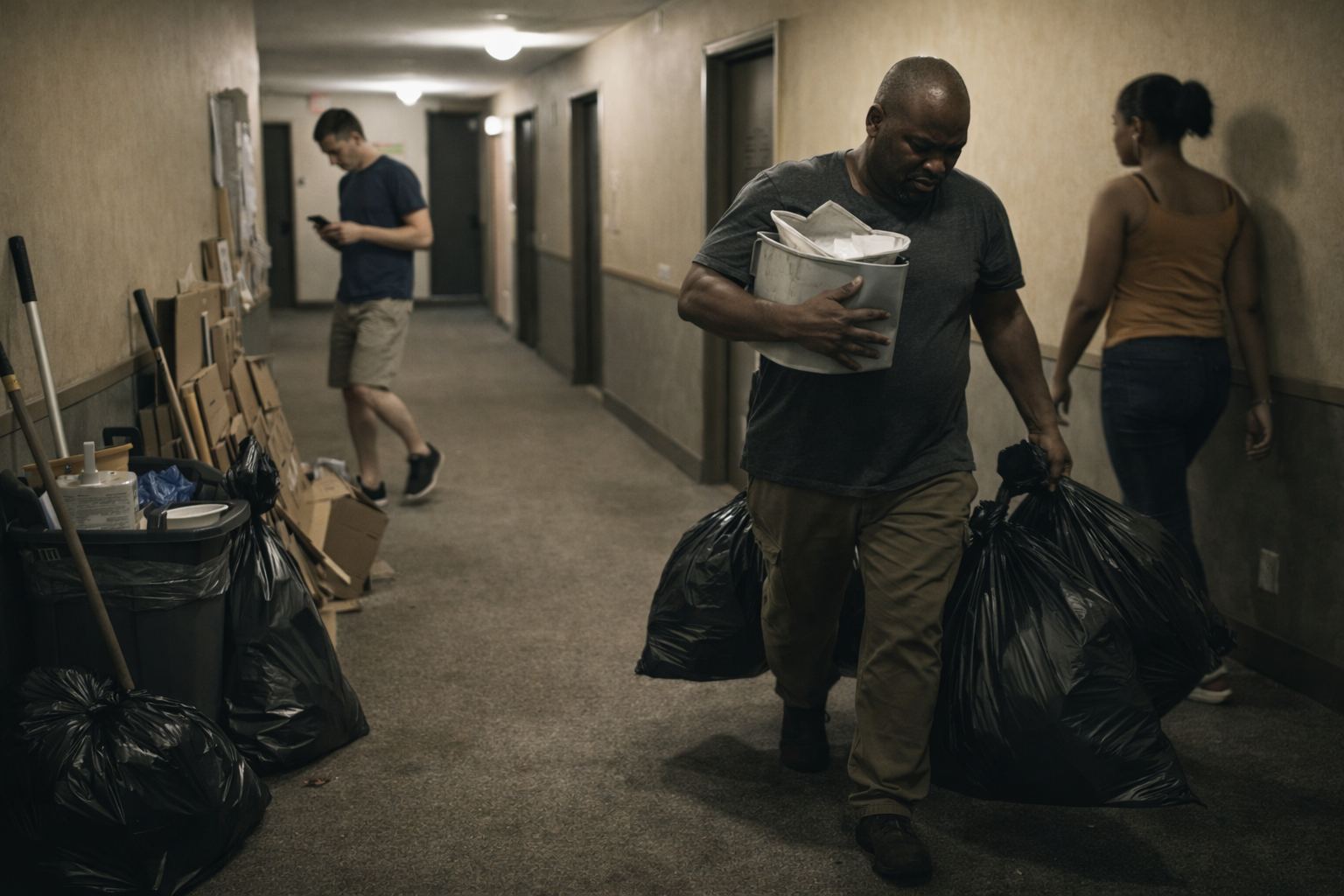
Unequal responsibility in communities does not just weaken the system. It extracts from the people who keep showing up after everyone else has decided they do not have to.
That is the part most people miss. They notice the hallway stays clean. They notice the trash still moves. They notice the shared space still works well enough to use. What they do not notice is who keeps paying the cost.
In most environments, that cost is not shared evenly.
It concentrates on the same people, over and over, until contribution stops feeling like participation and starts feeling like unpaid maintenance for everyone else.
The Problem
Shared systems rarely collapse the moment participation becomes uneven. For a while, they appear to hold.
That appearance creates a dangerous illusion. It makes people think the system is more stable than it is. In reality, a few reliable contributors are covering the gap.
One person keeps cleaning. One person keeps reporting the problem. One person keeps handling the inconvenience before it becomes visible to everyone else.
That is not resilience. That is load concentration.
What’s Actually Happening
The system is shifting from shared responsibility to unequal burden.
Once that shift takes hold, the strongest contributors stop functioning as participants inside the system and start functioning as shock absorbers for it. They carry the work that others avoid, and they do it often enough that the avoidance becomes normalized.
That is how unequal responsibility in communities becomes self-reinforcing. The more reliable someone is, the more the system leans on them. The more the system leans on them, the easier it becomes for everyone else to step back.
Over time, responsibility stops being a common expectation and becomes a personal trait attached to the same few people.
Why It Keeps Happening
It keeps happening because systems reward visible reliability and tolerate quiet withdrawal.
People notice who always handles things. Then they adapt around that person. They assume the work will get done because it usually does. That assumption removes pressure from non-contributors and adds pressure to contributors at the same time.
No formal decision has to be made. No one has to say it out loud. The pattern becomes operational anyway.
And because the space still functions, many people misread the situation. They see order and assume health. They see maintenance and assume fairness. They see continuity and assume the burden is sustainable.
It is not.
The Cost
The cost of carrying everyone else shows up first as fatigue.
Reliable contributors begin noticing that the work keeps finding them. They become the ones who anticipate the problem, absorb the inconvenience, and close the gap before anyone else has to deal with it.
After fatigue comes resentment. Not because the work itself is impossible, but because the imbalance becomes impossible to ignore.
Then comes withdrawal.
That is the real turning point. Once the people subsidizing the system begin pulling back, decline speeds up. Standards fall faster. Friction increases. Small problems remain unresolved longer because the invisible labor force has stopped carrying what everyone else was quietly depending on.
Unequal Responsibility in Communities Always Has a Human Cost
Unequal responsibility in communities is not just a structural issue. It is a human one.
Every shared system that over-relies on the disciplined few eventually depletes the very people keeping it intact. That depletion matters because strong systems do not just need contribution. They need contributors who still believe the burden belongs to everyone, not just to them.
- Fatigue reduces willingness
- Resentment reduces trust
- Withdrawal reduces stability
- Reduced stability increases disorder
That sequence is predictable. Once responsibility concentrates long enough, the people doing the most work begin questioning why they should keep doing it at all.
The Structural Rule
A system that depends on over-functioning contributors is already in trouble.
Strong communities do not merely celebrate the people who always step up. They prevent the same people from carrying the entire burden in the first place. They make responsibility visible. They make contribution expected. They reduce the distance between benefit and obligation.
Weak systems do the opposite. They silently reward disengagement by leaning harder on whoever still cares.
That works for a while.
Then the strongest people get tired.
The cost of carrying everyone else is never just extra effort. It is the slow depletion of the people a weak system keeps depending on to hide its imbalance.
Free Rider Problem in Communities: Contribution Is the Price of Belonging
How shared systems begin weakening when benefit becomes disconnected from contribution.
Community Participation Failure Starts When Responsibility Turns Optional
Why shared spaces begin to erode once participation becomes a choice instead of a norm.
Next in cluster: When Contributors Stop Showing Up
What happens when the people carrying the system finally step back.