Why does negative content spread faster? Because negative information can possess an attention advantage before accuracy, usefulness, or importance has even been evaluated.
A disturbing headline can earn a click before the reader knows whether the underlying story deserves one.
An infuriating claim can earn a comment before anyone verifies it. Meanwhile, alarming information can be shared because somebody believes other people need to see it.
That distinction matters.
Content does not have to be true to attract attention. Likewise, it does not have to be useful, representative, or important.
It first has to win the competition for notice.
In an environment where visibility begins with attention, negativity can gain an early structural advantage.

The Groundwork Position
Negative content can gain a distribution advantage because negative information often attracts attention and engagement. When digital systems use those behaviors as signals, an attention advantage can become a visibility advantage.
Attention Economy Cluster
This article examines the distribution advantage that negative information can acquire. For the larger territory, visit the Attention Economy Framework. For the operating architecture behind attention, explore the Attention Economy System.
Why Negative Content Spreads Faster Online
Human attention is not neutral.
Negative information can receive disproportionate attention because potential threats, losses, conflict, and other adverse information may carry immediate relevance.
That tendency is often described as negativity bias.
Negative Language Can Increase Attention
This is more than an intuition about sensational headlines.
A large 2023 study published in Nature Human Behaviour examined more than 105,000 headline variations that generated roughly 5.7 million clicks across more than 370 million impressions.
The researchers found that negative language increased news consumption. For a headline of average length, adding one negative word increased click-through rate by approximately 2.3 percent.
Importantly, the study compared different headlines for the same underlying stories. Therefore, the result provides unusually strong evidence that negative wording itself can affect whether people click.
That does not prove that every negative post will outperform every positive one. It establishes something more useful: negativity can alter the probability that content wins attention.
The Negativity Advantage in the Attention Economy
Groundwork Daily calls this potential distribution edge the Negativity Advantage.
Groundwork Term
The Negativity Advantage
The Negativity Advantage is the potential visibility advantage negative information gains when it attracts attention, clicking, sharing, or reaction more readily than competing information.
Notice what the term does not claim.
It does not mean negativity always wins.
Nor does it mean positive information cannot become enormously popular.
Humor, awe, inspiration, surprise, usefulness, identity, and novelty can all generate powerful engagement.
The narrower claim is that negative information can possess an attention advantage that matters inside systems where attention influences distribution.
How Negative Content Moves From Attention to Distribution
A click is not the same thing as a share.
A share is not the same thing as algorithmic recommendation.
Recommendation is not the same thing as belief.
Keeping those stages separate makes the system easier to understand.
The Negativity Distribution Sequence
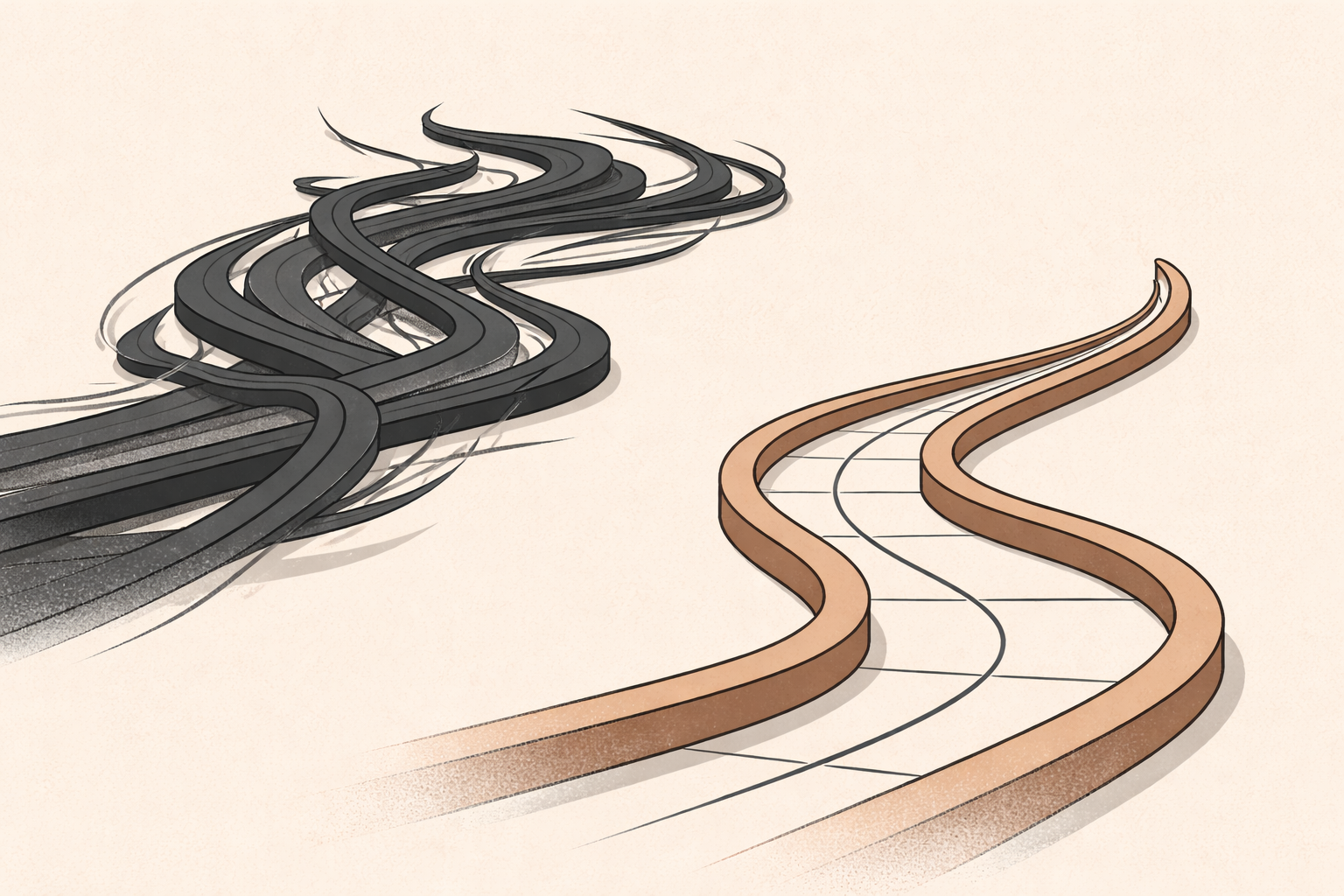
Negative Signal → Attention → Engagement → Distribution Signal → Greater Exposure → New Engagement
Negative Signal: a headline, image, claim, or event communicates conflict, danger, loss, outrage, or another adverse condition.
Attention: the content earns notice.
Engagement: some users click, comment, share, watch, or otherwise respond.
Distribution Signal: those behaviors may become inputs into ranking or recommendation systems.
Greater Exposure: additional people encounter the content.
New Engagement: the expanded audience creates another opportunity for the sequence to continue.
The important point is that an initial attention advantage can propagate through a larger distribution system.
Do Platforms Prefer Negative Content?
Saying that platforms simply “prefer negativity” is too crude.
Ranking and recommendation systems differ by platform, product, user, context, and time. Their precise objectives are also not always publicly visible.
Performance Can Still Create an Indirect Advantage
The more defensible mechanism is indirect.
If a system uses behavioral signals to determine what receives additional distribution, then content that produces those signals effectively can gain an advantage.
Negative material does not need a special “promote negativity” instruction for this to happen.
A system can amplify negativity without explicitly selecting for negativity if it selects for behaviors that negativity is particularly good at producing.
That is a much stronger explanation than assuming that every platform is intentionally trying to make people angry.
How Negative Content Creates a Reinforcement Loop
Distribution is only one side of the system.
Production can adapt too.
When publishers, creators, commentators, or organizations discover that particular forms of content consistently attract attention, they gain an incentive to produce more of them.
Performance Can Reshape Production
A headline performs.
The format gets repeated.
Audiences become accustomed to it.
Competitors notice.
Similar content enters the environment.
Consequently, a distribution pattern can eventually become a production pattern.

Research published in Scientific Reports in 2024 provides additional evidence for this broader pattern. The study found that negative online news articles were shared to social media more often than positive articles.
That matters because distribution incentives do not stop with the audience. They can travel backward toward the people deciding what to create.
Why Viral Visibility Is Not Evidence of Truth
This is where the attention economy creates a dangerous category error.
People can see enormous engagement and unconsciously interpret that visibility as evidence of importance.
Yet engagement answers a different question.
Visibility tells you that something traveled.
Engagement tells you that people responded.
Neither tells you whether the claim is accurate.
Neither tells you whether the event is representative.
Reaction Is Not Verification
A person can share something because it is outrageous.
Another can comment because the claim is obviously wrong.
Someone else can repost it to criticize it.
All three actions can increase measurable engagement even though none demonstrates belief.
Therefore, distribution should never be confused with validation.
Not All Negative Content Is the Same
Negativity is not automatically harmful.
Bad things happen. Corruption deserves exposure. Dangerous conditions deserve attention. Public failures should be reported. People need information about genuine risks.
The Problem Is Incentive Distortion
The problem begins when the attention advantage of negativity starts influencing what gets selected, framed, repeated, or exaggerated.
A system optimized around reaction can create incentives to make ordinary disagreement appear catastrophic, isolated incidents appear universal, and uncertainty appear settled.
Meanwhile, slower information can lose visibility even when it provides more context.
The issue is therefore not negative information itself. The issue is what happens when the economics of attention reward intensity more reliably than proportion.
How to Resist the Negativity Advantage
You cannot redesign the entire information environment from your phone.
However, you can change the signals that receive authority over your own attention.
Separate Reaction From Distribution
Before sharing something because it made you angry, ask whether distributing it serves any purpose beyond extending its reach.
Verify Before Amplifying
Strong emotion is a reason to slow verification down, not speed distribution up.
Look for Base Rates and Context
A vivid event may be real while still being statistically unusual. Visibility alone cannot tell you how representative something is.
Build Stopping Points
If a feed repeatedly moves from outrage to outrage, interrupt the sequence.
This is where attention economy boundaries become practical rather than theoretical.
Before You Amplify
Is it true?
Is it representative?
Is important context missing?
Am I sharing information or exporting my reaction?
Does this deserve more distribution?
What Research Shows About Why Negative Content Spreads
The evidence is strongest when the claims remain specific.
Negative Headlines Can Increase Clicking
Robertson and colleagues analyzed thousands of randomized headline experiments involving more than 370 million impressions. They found a causal effect of negative headline language on click-through behavior.
For an average-length headline, one additional negative word increased click-through rate by approximately 2.3 percent.
Negative News Can Receive More Social Sharing
A 2024 study published in Scientific Reports examined whether negativity in external news articles influenced how frequently those articles were introduced into social media through sharing.
The researchers found that negative news articles were shared more frequently.
The Evidence Does Not Establish a Universal Law
Neither finding means every negative story outperforms every positive one.
Likewise, these studies do not establish that every recommendation algorithm intentionally favors negative information.
They establish something narrower and more defensible: negativity can increase particular forms of attention and distribution, creating an advantage that matters inside competitive information environments.
Frequently Asked Questions About Why Negative Content Spreads Faster
Why does negative content spread faster?
Negative information can attract disproportionate attention and engagement. When those behaviors influence distribution, an initial attention advantage can become a larger visibility advantage.
What is negativity bias?
Negativity bias describes the tendency for negative information to receive greater attention or weight than comparable positive information in many contexts.
Do social media platforms intentionally promote negative content?
Not necessarily. Ranking systems differ considerably. However, when a system rewards behavioral signals such as engagement, content that generates those signals effectively may gain additional distribution even without an explicit preference for negativity.
Does negative content get more clicks?
Research on online news has found that negative headline language can increase click-through rates. One large randomized study found that an additional negative word in an average-length headline increased click-through rate by about 2.3 percent.
Is viral content more likely to be true?
No. Visibility measures distribution and engagement measures response. Neither establishes whether a claim is accurate, representative, or properly contextualized.
Can positive content still spread widely?
Yes. Positive content can generate substantial engagement through humor, inspiration, awe, usefulness, novelty, identity, and other mechanisms. The Negativity Advantage describes a tendency, not an absolute rule.
The Groundwork
What Moves Fastest Should Not Automatically Matter Most
The attention economy can turn an advantage in reaction into an advantage in visibility. That still does not make visibility evidence of truth, importance, or value.
Negative information sometimes deserves attention.
Sometimes it deserves urgent action.
The problem begins when the speed of the reaction becomes a substitute for judging the substance.
What makes you angry is not automatically important.
What frightens you is not automatically representative.
What everyone is sharing is not automatically true.
Attention is the beginning of the evaluation. It should never be the end of it.