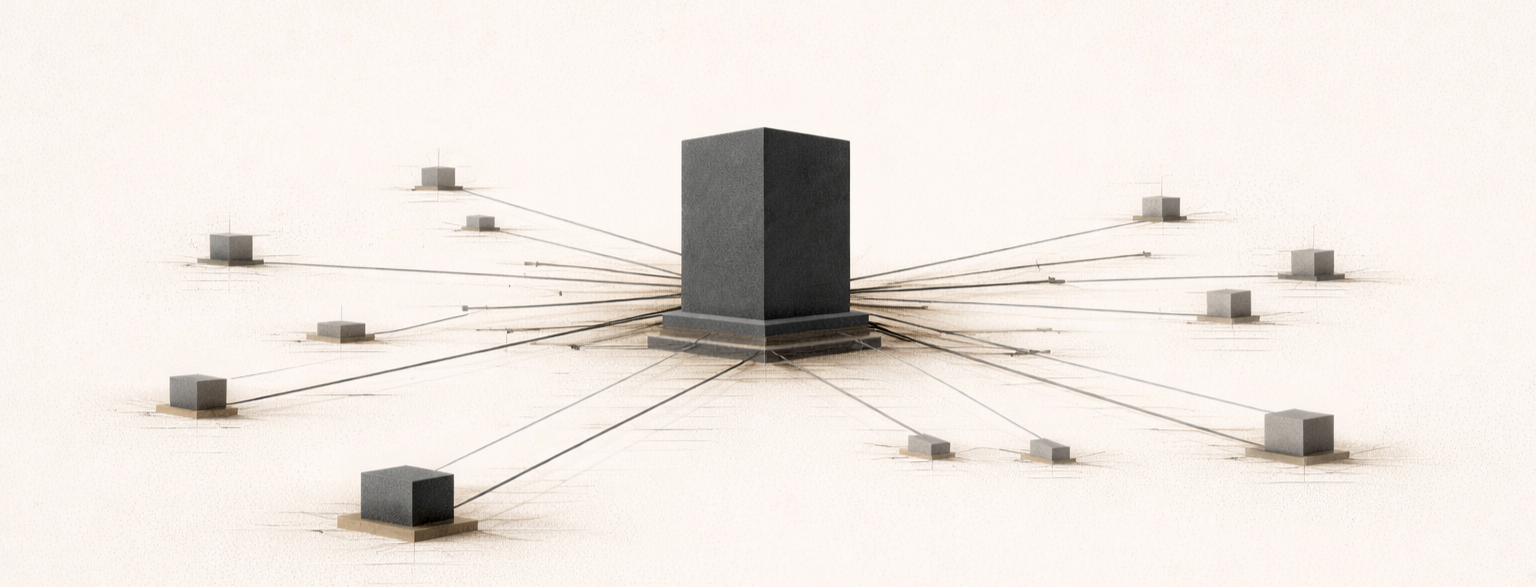
Was American slavery the worst in history? The question is simple. The answer is not.
Most people answer from instinct. They reach for moral weight, emotional force, or one brutal example. However, that is not enough. If the goal is clarity, the question needs a framework.
Across history, slavery has taken many forms. Some systems were vast but temporary. Others were violent but loosely structured. Meanwhile, some allowed manumission, absorption, or eventual freedom. By contrast, others eliminated exit and reproduced status across generations.
That structural difference matters. Therefore, the real answer begins with comparison.
Was American slavery the worst in history? Define the question first
The word worst carries moral force, but it lacks analytical precision. Therefore, the question has to be measured through criteria. Without criteria, the answer becomes opinion. With criteria, the comparison becomes clearer.
A serious framework should measure:
- Scale: how many people were affected
- Duration: how long the system operated
- Brutality: severity of violence, mortality, and coercion
- Heritability: whether enslaved status passed to children
- Exit pathways: whether freedom was legally or socially possible
- Economic integration: how central slavery was to the economy
- Identity permanence: whether status remained socially fixed after freedom
Once those criteria are applied, the conversation changes. The question is no longer only whether American slavery was brutal. It clearly was. Instead, the sharper question is whether its structure made it uniquely durable.
Global comparison chart: slavery systems across history
When compared globally, American slavery was not the longest system. It was also not the largest by every estimate. However, scale and duration do not tell the full story. A system can be large without being permanently hereditary. Likewise, it can last for centuries without creating the same racialized afterlife.
| System | Duration | Estimated Scale | Heritability | Exit Possible? | Economic Role |
|---|---|---|---|---|---|
| Roman Empire | Centuries | Very high over time | Partial | Often possible | Integrated |
| Arab and Islamic slave trades | More than 1,000 years | Very high | Variable | Limited | Regional, military, domestic |
| Transatlantic slavery | About 350 years | About 12.5 million transported | Yes | Minimal | Plantation extraction |
| American South | More than 250 years | About 4 million by 1860 | Absolute | Near zero | Foundational |
This chart shows the core tension. American slavery does not dominate every category. Nevertheless, it becomes uniquely severe when heritability, racial permanence, economic integration, and lack of exit are considered together.
What made the American system different?
American chattel slavery became a closed system. It fused race, law, inheritance, property, and economy into one operating structure.
In practical terms, that meant status was not only imposed on the enslaved person. It was passed forward. Children inherited the condition of the mother through the doctrine commonly summarized as partus sequitur ventrem. As a result, birth itself became part of the system.
This is why American slavery was unique. It did not only extract labor. It reproduced the labor force internally. After the 1808 federal ban on the international slave trade, the system did not collapse. Instead, it adapted. Enslaved women’s reproductive capacity became part of the economic machinery of the South.
That point is uncomfortable, but it cannot be softened. A system that turns reproduction into capital is not merely cruel. It is engineered.
Why structure matters more than brutality alone
Some slave systems were more immediately lethal. Roman mines, plantation regimes, military enslavement, and forced labor camps produced mass suffering. However, brutality alone does not determine historical afterlife.
Structure determines whether harm ends, fades, or compounds.
Roman slavery, for example, often allowed manumission. Freed people could sometimes integrate into civic life. Over time, categories could blur. By contrast, American slavery created a racial identity category that remained legible after abolition.
That distinction is critical. Even after slavery ended legally, the logic of the system remained visible through segregation, labor control, property exclusion, and racial hierarchy. In other words, the structure changed form, but it did not immediately disappear.
For deeper related analysis, read Open vs. Closed Slavery Systems: What the Difference Really Means.
Second comparison chart: structural severity
To answer whether American slavery was the worst in history, the better question is not only how many people suffered. Instead, the better question is how completely the system closed off future mobility.
| System | Race-Based | Inherited Status | Family Protection | Long-Term Social Mark |
|---|---|---|---|---|
| Roman Empire | No | Limited | Variable | Lower |
| Arab and Islamic systems | Mixed | Variable | Mixed | Variable |
| Transatlantic slavery | Yes | Yes | Weak | High |
| American South | Yes | Absolute | Systematically disrupted | Extreme |
That is where the American system becomes especially severe. It did not only exploit people. It turned identity into infrastructure.
Economic integration made the system harder to dismantle
Another reason American slavery stands apart is its economic centrality. Enslaved people were not only laborers. They were treated as property, collateral, inheritance, and balance-sheet value.
Because of that, abolition threatened more than plantation labor. It threatened wealth, credit, political power, and regional identity. Therefore, when injustice becomes profitable, institutions learn to defend it as stability.
For broader institutional context, see the Smithsonian National Museum of African American History and Culture’s overview of Slavery and Freedom.
For a modern forced labor reference point, see the International Labour Organization’s overview of forced labour.
Continue building the structure:
Open vs. Closed Slavery Systems: What the Difference Really Means
Frequently asked questions
Was American slavery the worst in history?
It depends on the metric. American slavery was not the longest or largest system. However, it was uniquely severe because it combined racial identity, inherited status, economic integration, family disruption, and long-term social consequences.
Why was American slavery different from Roman slavery?
Roman slavery was brutal, but it often allowed manumission and social integration. American slavery created a closed racial system where status was inherited and social identity remained fixed.
What made American slavery a closed system?
American slavery became closed because enslaved status passed through birth, exit was severely restricted, race became tied to legal condition, and the economy depended on enslaved people as labor and property.
Was American slavery the largest slave system?
No. Other systems lasted longer or affected more people over time. However, the American system stands out for how tightly it fused race, law, inheritance, and economic power.
Did slavery end completely after abolition?
The legal institution ended, but many structures created by slavery did not disappear immediately. As a result, patterns of exclusion continued through labor systems, property access, public policy, and social hierarchy.
The System Update
Systems are not defined by what they claim. Instead, they are defined by what they reproduce.
Some systems extract labor and eventually dissolve. Others build hierarchy into the foundation and carry it forward across generations.
American slavery did not just exist.
It replicated.
It scaled internally.
It fixed identity into structure.
That is the difference.
So, was American slavery the worst in history?
Not by every metric.
However, by structural completeness, it stands among the most durable and destructive systems ever built.
That is the verdict.
Not outrage.
Not slogan.
Structure.