
The Proposition
Financial stability is engineered through systems that direct income, protect margin, absorb disruption, and keep ordinary pressure from becoming crisis.
Most people assume financial stability begins when income rises. That assumption makes sense because a larger paycheck can create more room, flexibility, and protection.
However, additional income does not automatically create order. Expenses can expand almost as quickly as earnings when no system governs what happens next.
Housing gets more expensive. Vehicles improve. Subscriptions multiply. Convenience becomes normal. At the same time, larger obligations become easier to justify because the paycheck appears able to carry them.
As a result, income can rise while resilience barely moves. Earning more creates capacity, but structure determines what that capacity becomes.
Therefore, the real financial question is not simply how much money enters the household. The better question is whether that money enters a system strong enough to direct it.
The Architecture
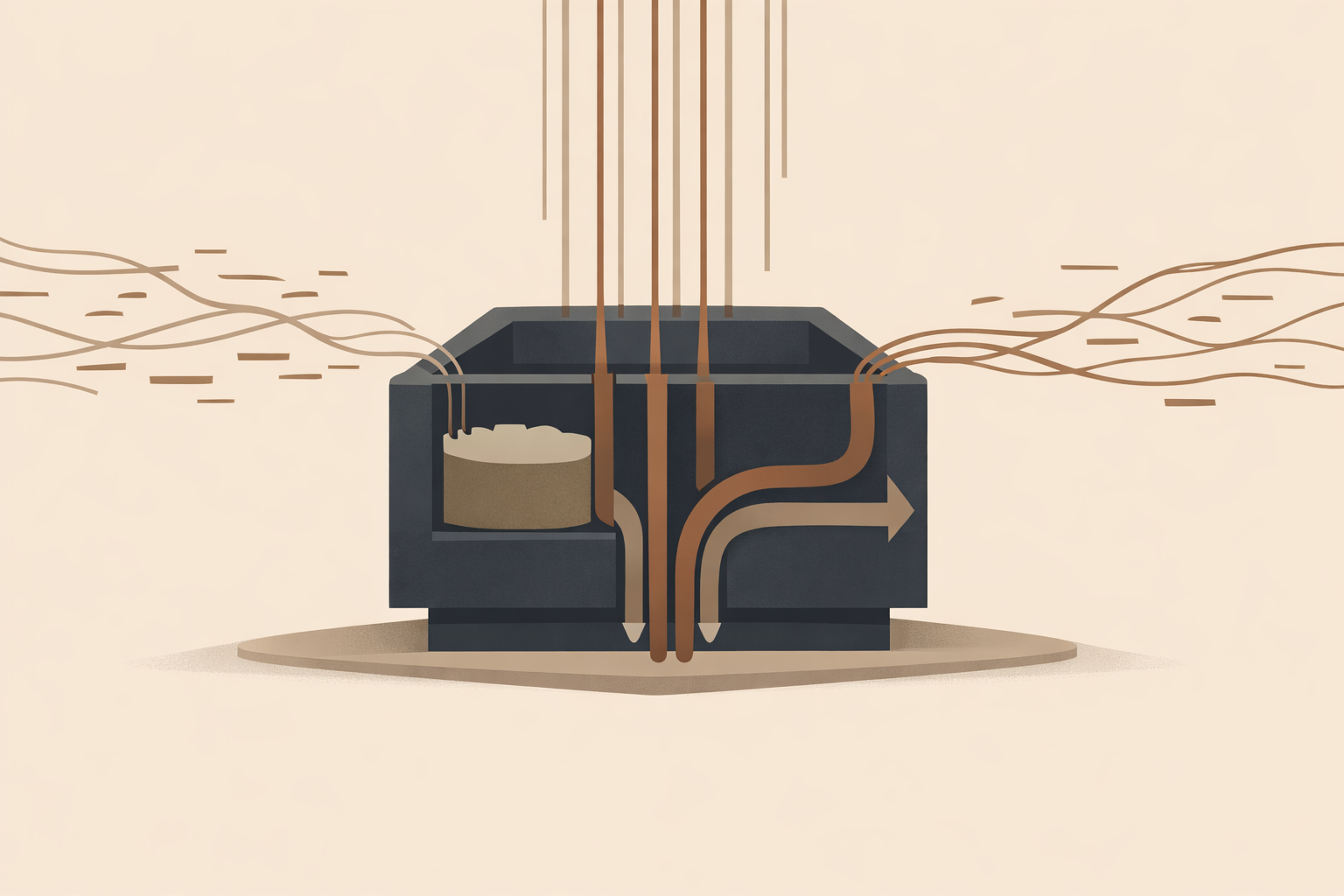
Income is fuel.
Structure is containment.
More fuel increases capacity. Without containment, however, greater capacity can also create greater exposure. For that reason, money needs direction before pressure decides where it goes.
What Financial Stability Really Means
Financial stability is not the same as having money available today. Instead, it describes the ability to remain functional when ordinary financial friction arrives.
A car needs work. A medical bill appears. Work hours get cut. Insurance increases. A household appliance fails. Although none of these events is extraordinary, each can expose weak financial structure.
Stability does not prevent disruption. Rather, it changes what disruption is allowed to become.
Stability is the capacity to absorb ordinary disruption without turning every disruption into a crisis.
Stability Reduces Reactive Decisions
In a stable household, bills are visible, savings happen deliberately, and emergency reserves remain separate from ordinary spending. Likewise, debt has boundaries and recurring obligations stay within the household’s carrying capacity.
Consequently, fewer decisions have to be made under panic because the structure existed before the pressure arrived.
Why Income Alone Does Not Create Stability
Income solves real problems. It can reduce scarcity, create breathing room, and expand available choices.
Even so, additional income does not automatically solve financial disorganization.
A household can earn more while remaining fragile if nearly every dollar is already committed. Housing rises, transportation becomes more expensive, subscriptions accumulate, and credit balances grow.
Eventually, the paycheck becomes larger while the available margin stays small.
Margin Is the Missing Variable
This pattern explains why people with respectable incomes can still feel financially cornered. Often, earning power is not the core problem. Instead, the issue is how much load that income must carry.
Without enough margin, every paycheck arrives already carrying yesterday’s decisions.
Why Financial Stability Is Engineered
Financial stability is engineered because money must be directed before it can reliably protect anything.
Consider a load-bearing beam inside a building. Its purpose is not decorative. Instead, the beam distributes weight so pressure does not collect in places that cannot carry it.
Financial systems perform a similar job. A budget distributes income. Savings create stored capacity. Emergency reserves absorb shocks. Debt boundaries limit exposure.
Financial Systems Distribute Pressure
When no structure exists, the loudest expense often wins. By contrast, a strong system establishes priorities before money has a chance to drift.
In practice, that means a dollar can have a destination before the household feels tempted to spend it somewhere else.
Without Reinforcement
- Income expands expenses automatically.
- Unexpected costs trigger reactive decisions.
- Debt becomes the pressure-release valve.
- Progress resets after disruption.
- Stress remains high even when income improves.
With Reinforcement
- Income has direction.
- Spending has boundaries.
- Savings happen intentionally.
- Buffers absorb ordinary shocks.
- Growth has a floor beneath it.
Structure Changes the Decision Environment
When systems are weak, nearly every financial choice competes for attention. Strong systems, however, settle many routine decisions in advance.
The difference is not motivational. It is structural.
Five Systems That Build Financial Stability
A stable financial life does not require a complicated machine. Instead, it requires a few repeatable systems that reduce dependence on memory, mood, and last-minute decisions.
1. A Fixed-Cost Guardrail
Housing, transportation, insurance, utilities, subscriptions, minimum debt payments, and other recurring commitments consume flexibility before discretionary spending begins.
Instead of treating one percentage as a universal rule, establish a household-specific ceiling that preserves meaningful room for saving, variable expenses, and disruption. The objective is margin.
2. Automated Savings
Savings should not depend entirely on whatever remains after spending. Otherwise, every competing desire gets a vote before the future does.
Automation changes saving from a recurring choice into an operating rule. Although the starting amount may be small, consistency creates a structure that future income can scale.
3. A Separate Emergency Reserve
An emergency fund is not extra spending money. It is financial shock absorption.
The appropriate reserve depends on income reliability, essential expenses, dependents, insurance, employment risk, and other obligations. Consequently, the right target varies by household.
4. Debt Boundaries
Debt becomes structurally dangerous when borrowing is required to keep ordinary life functioning.
Credit can serve useful purposes. However, when debt repeatedly fills routine cash-flow gaps, future capacity is being consumed to maintain the present.
5. A Quarterly Structural Review
Daily account balances can create noise. By contrast, periodic reviews create perspective.
Track assets, liabilities, reserves, recurring obligations, debt direction, and savings capacity. Ultimately, the useful question is not simply how much money exists today. It is whether the structure is becoming stronger.
Financial Stability Scorecard
Stability becomes easier to evaluate when comfort is replaced by a harder question: can the structure absorb pressure?
Can you identify recurring obligations quickly?
Does income exceed commitments by enough to create room?
Can disruption be handled without new debt?
Do important transfers happen automatically?
Is borrowing serving strategy rather than routine survival?
Can the system recover without starting over?
What Happens When the Financial System Is Weak?
Financial fragility often stays hidden while conditions remain predictable. Once pressure arrives, however, the weakness becomes visible.
An unexpected expense may feel catastrophic. Meanwhile, lifestyle creep becomes difficult to reverse and credit begins absorbing recurring shortfalls.
Because the household lacks protected capacity, anxiety can remain present even after earnings improve.
Income Growth Can Hide Structural Weakness
A larger paycheck can temporarily cover poor financial architecture. Yet once income stops growing, the underlying weakness becomes harder to ignore.
The income changed.
The operating system did not.
Weak Systems Increase Emotional Labor
Financial pressure can narrow attention and make immediate relief more attractive than long-term protection. Consequently, weak systems force people to solve the same kinds of problems repeatedly.
Stronger systems reduce that burden because many responses have already been designed.
How to Engineer Financial Stability
Financial stability is engineered through sequence. Therefore, the order of operations matters.
Do not begin with investment complexity or lifestyle upgrades. Likewise, do not begin with an imagined future version of wealth.
First, Make the Load Visible
List recurring obligations and identify where income is already committed. Afterward, protect enough margin so every increase in earnings does not disappear into a larger baseline.
Next, Build Automatic Protection
Automate saving before discretionary spending competes for the money. Then build an emergency reserve appropriate to the household’s actual risks.
Finally, Reinforce the Structure
Reduce destabilizing debt and review the system periodically. In this stage, the objective is not simply to accumulate more. Instead, it is to make the existing structure harder to knock over.
Stability stays quiet until it is needed.
Financial Stability Comes Before Financial Freedom
Financial freedom is not the first layer. Rather, it rests on stability, discipline, margin, and productive ownership compounding over time.
Before investment, stability.
Before leverage, containment.
Before scale, reinforcement.
Stability Creates Optionality
Ambition without structure creates fragility. By contrast, a reinforced financial base creates enough capacity to pursue opportunity without making every opportunity another source of pressure.
This is why Discipline Before Dollars remains foundational.
Similarly, Stability Is a Requirement explains why growth depends on load-bearing capacity.
Finally, Structure Builds Freedom shows why freedom expands when systems reduce chaos and preserve choice.
The Stability Framework
Stability moves outward. Personal structure supports emotional regulation, while physical capacity supports financial discipline. In turn, financial containment strengthens civic and community resilience.
- Stability Is a Requirement, Not a Request
- Emotional Stability Is a Discipline
- Physical Stability and the Nervous System
- Financial Stability Is Engineered, Not Earned — You Are Here
- Civic Stability and Institutional Drift
- Community Stability and Shared Responsibility
The Groundwork
Instead of beginning with how much more money you need, examine what your current income is already required to carry.
Pull the last three months of statements. Review recurring obligations, automatic transfers, available reserves, and revolving debt. Afterward, calculate the margin between income and committed spending.
Ask This
If my income stopped growing tomorrow, would the structure I already built become stronger, remain stable, or begin to fail?
Financial stability is engineered before pressure proves why the engineering mattered.

Financial Stability FAQ
What does financial stability mean?
Financial stability means having enough structure, margin, liquidity, and control to absorb ordinary financial disruption without repeatedly creating new crises.
Why doesn’t higher income automatically create stability?
Higher income expands capacity, but expenses and obligations can expand with it. Therefore, stability requires systems that retain margin and direct income.
Why is financial stability engineered?
Financial stability is engineered because repeatable systems direct income, protect savings, control recurring costs, create liquidity, and reduce dependence on reactive decisions.
How much should an emergency fund contain?
There is no single correct amount for every household. Instead, the appropriate reserve depends on income reliability, essential expenses, dependents, insurance, employment risk, and other obligations.
Does financial stability come before financial freedom?
Yes. Durable financial freedom depends on a stable base. Without margin, liquidity, and financial discipline, growth and leverage can amplify fragility instead of freedom.
Build Better. Every Day.
Build the structure before you need it.
Groundwork Daily examines money, ownership, family, work, institutions, and the systems underneath everyday life. Join the Groundwork List for new frameworks, analysis, and practical structure.
Groundwork Daily provides educational analysis, not individualized financial, tax, legal, or investment advice. Financial circumstances vary, and specific decisions may require qualified professional guidance.