
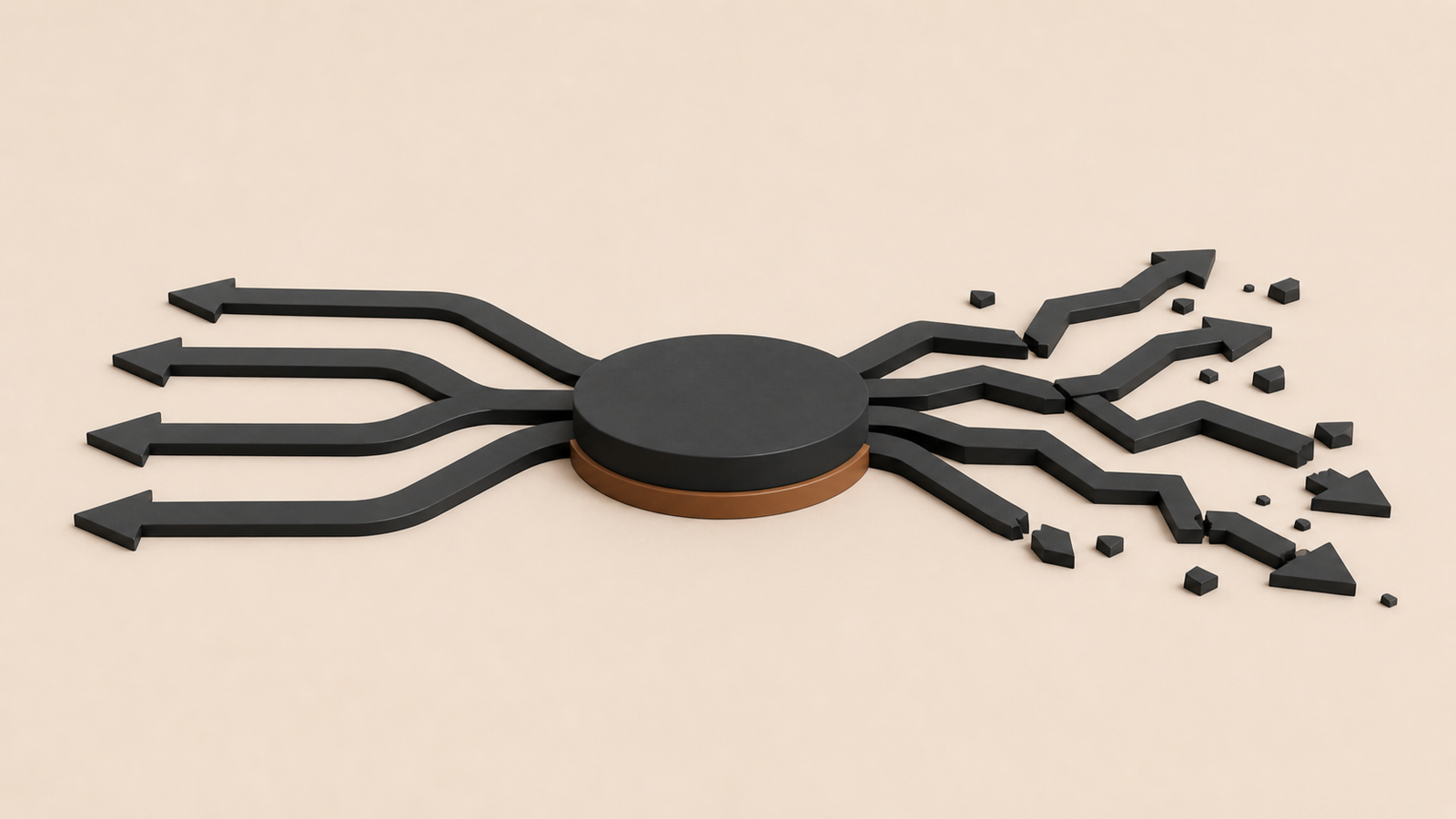
Your default state determines your decisions. Most people assume decisions are made in the moment. That assumption is wrong. Decisions are shaped long before the moment arrives.
The system never starts from zero. Instead, it starts from a baseline condition. That baseline quietly influences what feels urgent, what feels acceptable, and what feels possible.
If the baseline is unstable, decisions follow that instability. If the baseline is controlled, decisions reflect clarity.
What Default State Means
The default state is the condition your system returns to when it is not under active control. It includes mental clarity, emotional stability, physical energy, and attention alignment.
In practice, this state becomes the starting point for every decision you make.
If the system is calm, decisions tend to be measured. However, if the system is reactive, decisions tend to be rushed. That difference compounds over time.
Most people attempt to fix decisions without fixing the state that produces them. As a result, they repeat the same patterns with different intentions.
Why Decisions Are Not Neutral
Decisions are not isolated events. Instead, they are outputs generated by a system already in motion.
The output reflects the condition of the system at the time the decision is made. Therefore, two people can face the same situation and produce completely different outcomes.
Even the same person can produce different decisions depending on their baseline condition.
This is why inconsistency appears. It is not always a discipline problem. More often, it is a baseline instability problem.
A person may believe they are choosing freely, but the choice is still being shaped by fatigue, stress, hunger, distraction, resentment, fear, urgency, or clarity. The condition comes first. The choice follows.
How Default State Distorts Outcomes
When the default state is unstable, perception shifts before decisions are made.
For example, fatigue narrows thinking. Meanwhile, stress increases urgency. In addition, distraction reduces clarity. Finally, emotional overload compresses time.
Each condition alters how the system interprets reality.
As a result, the system begins to prioritize relief instead of alignment. That shift leads to short-term decisions that create long-term instability.
In other words, the system is not choosing poorly on purpose. It is choosing based on distorted input.
This is why unstable decisions often feel reasonable in the moment. The decision matches the state. The problem only becomes obvious after the state changes and the person can see the choice from a clearer baseline.
Connection to Internal Systems
Internal Systems define how input, processing, and output interact. The default state sits beneath all of them.
Attention controls what enters the system. Emotion controls response timing. Thought loops distort urgency. Identity stabilizes behavior.
However, the default state influences all of these systems simultaneously.
If the baseline is unstable, each system operates with distortion. Conversely, if the baseline is stable, each system operates with clarity.
This is not a surface-level improvement. It is a foundational shift.
Why Effort Alone Fails
Most people try to solve decision problems with effort. They try harder, focus more, and push through resistance.
That approach works temporarily. However, it does not scale.
Effort fluctuates. Energy drops. Focus breaks. Eventually, the system returns to its default state.
If that default state is unstable, effort becomes a short-term override rather than a long-term solution.
This explains why motivation cycles appear. It also explains why consistency breaks after initial progress.
Effort is not the problem. The baseline is.
How to Audit Your Baseline
The first step is not changing every decision. The first step is identifying the state that keeps producing those decisions.
Start by looking for patterns. When do poor decisions usually happen? What condition is present before they happen? What state keeps showing up before the same mistake repeats?
The answer is usually visible before the behavior appears.
- Low energy often produces short-term decisions.
- High stress often produces urgency and overreaction.
- Uncontrolled attention often produces scattered priorities.
- Emotional overload often produces distorted interpretation.
- Identity misalignment often produces inconsistent discipline.
Once the baseline is visible, the decision pattern becomes easier to understand. The goal is not to shame the choice. The goal is to identify the operating condition that made the choice predictable.
That is where correction begins.
How to Stabilize the Default State
Stabilizing the default state requires structural consistency across multiple inputs. It is not one change. It is a system.
1. Control inputs
First, reduce unnecessary noise. Limit exposure to distractions that fragment attention.
2. Regulate energy
Second, maintain sleep, nutrition, and physical condition. Without energy stability, mental clarity cannot hold.
3. Structure attention
Next, direct focus intentionally. Avoid constant switching, which weakens baseline stability.
4. Align identity
Then, ensure behavior reflects identity. Misalignment creates friction that destabilizes the system.
5. Interrupt distortion
Finally, recognize when thought loops or emotional reactivity begin to distort perception.
Each of these actions reinforces the baseline. Over time, the system becomes predictable and controlled.
What Changes When the Default State Is Stable
When the baseline stabilizes, decisions improve without additional effort.
Urgency decreases. Clarity increases. Response timing becomes deliberate instead of reactive.
The system begins to evaluate instead of react.
This is where real control appears. Not in the decision itself, but in the state that produces the decision.
A stable default state does not remove pressure. It changes how pressure is processed. That difference matters because pressure will always return. The question is whether the system meets it from clarity or from collapse.
You do not decide from the moment. You decide from your state.
FAQ
What is a default state?
The default state is the system’s baseline condition when it is not actively controlled. It shapes how decisions are made.
Why do decisions change daily?
Because the baseline changes. Energy, stress, and attention levels all influence outcomes.
Can decision-making improve?
Yes, but indirectly. Improving the baseline improves decisions without relying on effort alone.
What is the fastest improvement?
Stabilize the baseline. Reduce noise, regulate energy, and maintain alignment.
The Groundwork
Your default state determines your decisions.
Decisions are outputs. The baseline is the system that produces them.
If decisions are inconsistent, examine the state. The issue is often structural, not situational.
Fix the baseline and the decisions will begin to change. Ignore the baseline and the same choices will keep returning under new circumstances.