
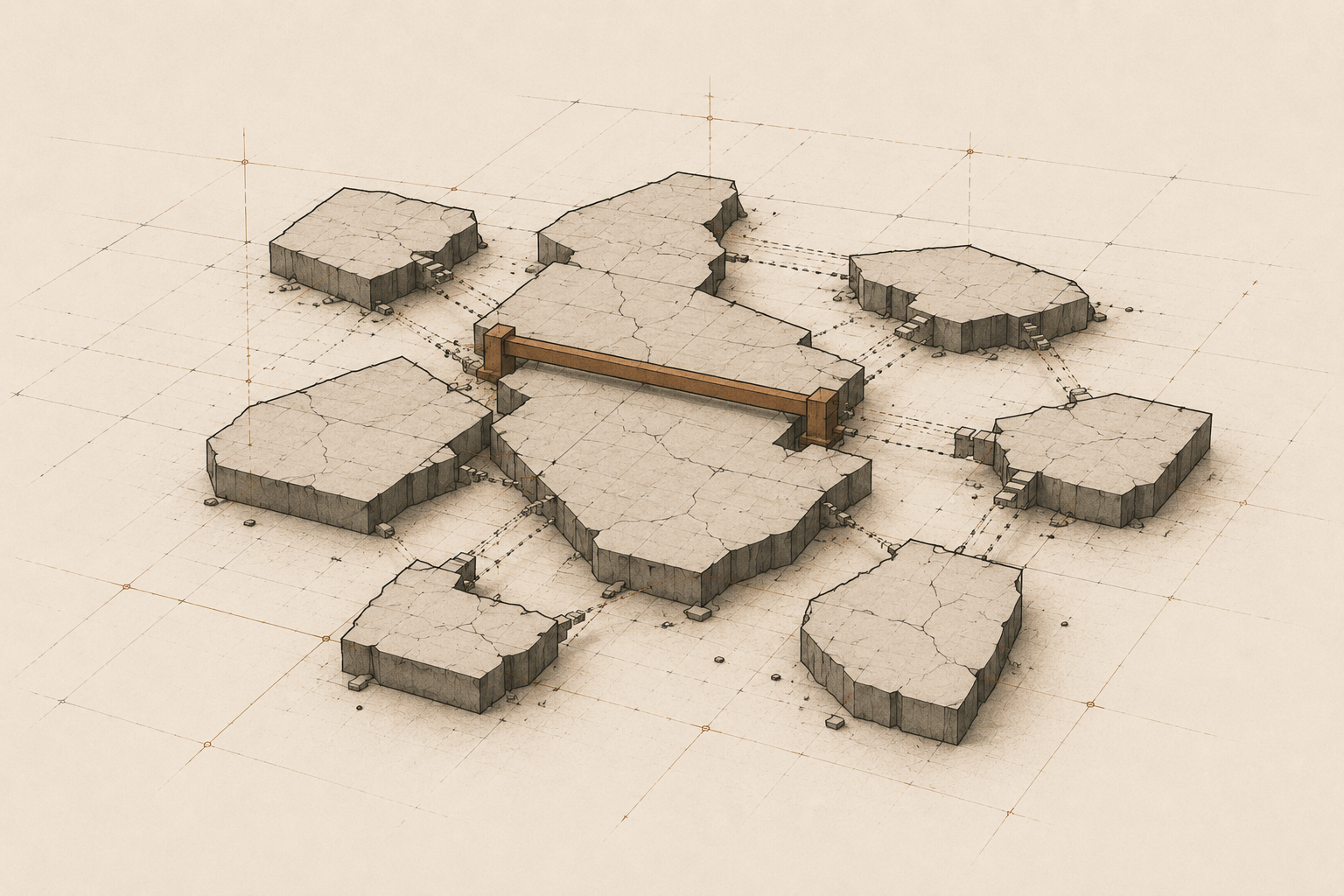
Heirs property Black land loss is one of the clearest examples of how wealth can vanish without a family ever intending to sell. Land can be inherited, occupied, remembered, and emotionally claimed, yet still become legally fragile when title, ownership, and transfer are left unresolved.
Table of Contents
- Heirs Property Black Land Loss
- What Heirs’ Property Actually Is
- Why Black Land Loss Matters
- How Families Lose Property Without Selling It
- Probate, Fragmentation, and Forced Sales
- The Historical Scale of Black Land Loss
- Why Clear Title Matters
- The Economic Cost of Heirs’ Property
- Family Conflict and Ownership Instability
- The Uniform Partition of Heirs Property Act
- Estate Planning as Land Protection
- Practical Family Protection Strategies
- Frequently Asked Questions
Heirs Property Black Land Loss
Heirs property Black land loss is not only a legal issue. It is a wealth leak, a family governance failure, and a structural warning about what happens when assets outlive the systems built to protect them.
Many families think land is safe because everyone knows it belongs to the family. That assumption is dangerous. Memory is not title. Family agreement is not always enforceable. A verbal understanding does not protect land from probate confusion, unpaid taxes, outside buyers, partition actions, or disputes among descendants.
This is why heirs’ property sits at the center of any serious conversation about Black generational wealth. Wealth is not only difficult to build. It is also easy to lose when legal continuity is weak.
A family can inherit land and still lack clear authority to use it. It can pay taxes for decades and still face ownership disputes. It can maintain a house, farm, or parcel and still lose it because one fractional owner sells an interest or forces a court process.
That is the hard truth. Land does not protect itself. Families must build continuity on purpose.
Wealth is not protected because it is meaningful. It is protected because the legal structure can hold.
What Heirs’ Property Actually Is
Heirs’ property usually occurs when a landowner dies without a will or other clear estate plan. Instead of passing to one named person or into a trust, the property passes to multiple heirs under state inheritance law.
Those heirs often become tenants in common. That means each heir owns an undivided interest in the entire property. One person may own 25 percent. Another may own 10 percent. Another may own a much smaller share. Yet no one owns a specific room, acre, corner, or physical section unless the property is later divided legally.
At first, this may not seem like a problem. A family may continue using the property the same way it always has. One relative lives there. Another cuts the grass. Someone else pays taxes. A cousin stores equipment on the land. The family still calls it “grandma’s house” or “the family land.”
However, over time, the ownership structure becomes more complicated.
When one heir dies, that heir’s share passes again to another set of descendants. Then those descendants die. More shares divide. More people inherit smaller pieces. Some heirs move away. Some lose contact. Some never knew they had an ownership interest. Some want to keep the land. Others want cash.
After several generations, one parcel can have dozens of owners. In some cases, it can have hundreds.
That is where the asset begins to fracture.
Why Black Land Loss Matters
Black land ownership has always carried more than financial meaning. Land represented autonomy after slavery, safety after displacement, and a rare form of control in a country that often denied Black people access to capital, housing, credit, voting power, and legal protection.
For many families, land was the first durable asset. It was where food was grown, homes were built, family members gathered, and future options became possible.
Therefore, Black land loss is not only a story about acres. It is a story about lost collateral, lost inheritance, lost farming capacity, lost community roots, lost housing security, and lost leverage.
When land disappears, families lose more than a place. They lose a platform.
This connects directly to Estate Planning Is Infrastructure. Estate planning is not paperwork for wealthy people. It is the operating system that determines whether assets survive transition.
Without that operating system, land becomes vulnerable to conflict, confusion, and extraction.
How Families Lose Property Without Selling It
The most dangerous part of heirs’ property is that families can lose land without making one clear decision to sell.
Most people imagine land loss happening through foreclosure, eviction, fraud, direct seizure, or a voluntary sale. Those things happen. However, heirs’ property reveals another pathway.
Families can lose land through administrative fragmentation.
That means the structure of ownership becomes so unclear, divided, or unstable that the land becomes difficult to manage, finance, repair, insure, defend, or transfer.
One relative may stop paying taxes. Another may want to sell. Another may refuse to communicate. Another may be impossible to locate. A distant heir may sell a fractional interest to an investor. A creditor may attach an heir’s interest. A developer may identify the family’s weak title as an opportunity.
The family may still feel emotionally united around the land. Yet the legal structure may be breaking apart underneath them.
That is the distinction that matters.
Emotional ownership does not equal legal control.
Probate, Fragmentation, and Forced Sales
Probate is the court process used to settle a person’s estate after death. When there is no will, trust, or clear transfer plan, probate can determine who inherits and how ownership is distributed.
For land, this can become complicated quickly.
If a parent dies without a will and leaves land to several children, the children may become co-owners. If those children die without estate plans, their shares may pass to their children. Over time, the ownership percentages become fragmented across branches of the family.
Fragmented ownership creates practical problems.
Who has authority to sell? Who can approve a lease? Who pays taxes? Who can apply for disaster relief? Who can sign loan documents? Who can authorize repairs? Who decides whether the land should be farmed, rented, developed, preserved, or sold?
If the family cannot answer those questions clearly, the asset becomes unstable.
Forced sales are one of the most serious risks.
In many heirs’ property situations, a co-owner can seek a partition action. A partition action asks a court to divide or sell the property. If the property cannot be physically divided in a practical way, the court may order a sale. Historically, this has allowed outside investors to buy a small fractional interest from one heir, then use that interest to force a sale of the entire property.
That is how a family can lose land even when most relatives want to keep it.
The weak point is not love. The weak point is legal structure.
The Historical Scale of Black Land Loss
Black land loss did not happen through one mechanism. It happened through many.
After emancipation, Black families fought to acquire land despite violence, exclusion, discriminatory credit systems, exploitative labor arrangements, and political hostility. By the early twentieth century, Black land ownership had grown significantly, especially in the South.
That ownership represented extraordinary discipline under hostile conditions.
Then came the losses.
Black farmers and landowners faced discriminatory lending, tax sales, legal manipulation, violence, partition abuse, lack of access to legal counsel, denial of federal support, and predatory acquisition strategies. Over generations, millions of acres moved out of Black family control.
Heirs’ property did not cause all of that loss. But it became one of the systems that made land easier to extract.
When title is unclear, families have less protection. When ownership is fragmented, decision-making weakens. When legal documents are missing, outside pressure becomes more dangerous.
This is why heirs’ property is not a narrow technical issue. It is part of the larger Black wealth architecture.
Land was built through sacrifice. It can be lost through paperwork failure.
Why Clear Title Matters
Clear title means ownership is legally recognizable, documented, and transferable. It tells institutions who owns the property and who has authority to make decisions.
Without clear title, a family may face major obstacles.
- Mortgage lenders may refuse financing.
- Banks may deny home improvement loans.
- Insurance claims may become complicated.
- Disaster recovery aid may be delayed or denied.
- Government programs may require ownership proof.
- Buyers may walk away from a sale.
- Developers may exploit confusion.
- Family members may fight over authority.
Clear title turns memory into enforceable structure.
That matters because institutions do not operate on family stories. They operate on documents, signatures, ownership records, court filings, tax records, deeds, and authority.
This does not mean family memory is meaningless. It means memory needs legal reinforcement.
A family may know the land belongs to them. But if the county records, probate history, and ownership documents do not align, the system may not respond to what the family knows.
In wealth terms, unclear title weakens the asset.
The Economic Cost of Heirs’ Property
Heirs’ property reduces wealth because it limits what families can do with land.
A parcel with clear title can support financing, farming, leasing, development, repair, insurance, sale, or transfer. A parcel with unclear ownership may sit underused for years because no one can act with confidence.
That creates economic drag.
The land may have value, but the family cannot fully use it. The home may need repairs, but no one can secure a loan. The property may qualify for assistance, but the paperwork cannot prove authority. A family member may want to build on the land, but ownership disputes block the plan.
In practice, heirs’ property can turn an asset into a stalemate.
That stalemate carries costs:
- deferred maintenance
- tax penalties
- legal fees
- lost rental income
- lost agricultural income
- missed development opportunities
- reduced resale value
- family conflict
- forced sale risk
This is why Homeownership Alone Cannot Close the Gap belongs beside this article. Ownership must be paired with protection, valuation, liquidity, and transfer planning.
Otherwise, the asset may exist but fail to function.
Family Conflict and Ownership Instability
Heirs’ property also exposes a hard family truth.
Assets do not automatically create unity.
A family may love the same land and still disagree about what should happen to it. One person wants to preserve it. Another wants to sell. Another wants to rent it. Another wants to live there. Another does not care until money appears.
These conflicts are predictable. They are not always signs of bad character. Sometimes they are signs of bad structure.
When ownership rights are unclear, expectations become emotional. People rely on memory, contribution, proximity, and personal sacrifice to make claims. The cousin who paid the taxes feels entitled to more control. The sibling who cared for the parent feels overlooked. The heir who moved away wants liquidity. The heir who stayed wants preservation.
Without governance, every disagreement becomes personal.
Strong structure does not remove every conflict. However, it gives conflict a container.
That container may include a will, trust, family agreement, LLC, buyout terms, tax payment plan, maintenance plan, or written decision process.
The worst strategy is pretending everyone will agree later because everyone loves the family.
That is not strategy. That is avoidance.
The Uniform Partition of Heirs Property Act
The Uniform Partition of Heirs Property Act, often called UPHPA, was created to reduce some of the damage caused by forced partition sales.
The law gives families stronger protections when heirs’ property is involved. While the details depend on the state, the general purpose is to make the process fairer before land is sold out from under families.
UPHPA protections may include an independent appraisal, notice to co-owners, a right for family members to buy out the heir who wants to sell, and a preference for partition in kind when practical. Partition in kind means physically dividing the property instead of selling it, when that can be done fairly.
This law matters because forced sales have historically allowed land to be sold below full market value. Families lose the property. Outside buyers gain the opportunity. The gap between true value and sale outcome becomes another wealth transfer.
UPHPA is not a complete solution. Families still need estate planning. They still need clear title. They still need documents. They still need communication. However, the law can create a stronger defense when a partition action threatens family land.
Families should find out whether their state has adopted UPHPA or a related heirs’ property protection law.
Legal tools matter. But they must be known before the crisis.
Estate Planning as Land Protection
Estate planning is land protection.
That sentence needs to be direct because too many families treat estate planning as optional, morbid, or only necessary for wealthy people. That thinking is expensive.
If a family owns land, a home, a business, or any meaningful asset, estate planning is not extra. It is infrastructure.
A will can name beneficiaries and reduce confusion. A trust can help transfer property outside probate. A family LLC may create governance around shared ownership. A transfer-on-death deed may be available in some states. Life insurance may provide liquidity so heirs do not have to sell land to cover expenses.
The exact tool depends on the state, the asset, the family, and the legal advice received.
However, the principle is stable.
Assets need transition instructions.
Without those instructions, the legal system creates a default plan. That default plan may not match family intent. It may divide ownership in ways that increase conflict. It may expose the property to probate delays, court costs, and future fragmentation.
This connects to Business Ownership Is a Wealth Multiplier as well. Businesses and land share a similar vulnerability. If they cannot transfer cleanly, they can collapse after the founder is gone.
Legacy requires more than possession. It requires continuity.
Practical Family Protection Strategies
Families do not need to wait for a crisis before organizing around land protection.
The first step is inventory.
Identify what the family owns, where it is located, whose name is on the deed, whether taxes are current, whether there is a mortgage, whether insurance exists, and whether prior owners had wills or probate cases.
The second step is documentation.
Gather deeds, tax bills, surveys, wills, death certificates, mortgage documents, insurance policies, lease agreements, and any court records connected to the property.
The third step is title review.
A real estate attorney, title company, legal aid group, or heirs’ property clinic may help determine whether title is clear or fragmented.
The fourth step is family governance.
Decide who communicates with professionals, who tracks taxes, who maintains records, who gathers relatives, and how decisions will be documented.
The fifth step is estate planning.
Each current owner should have a plan for what happens to their ownership interest. Otherwise, the next generation inherits more confusion.
A practical protection checklist includes:
- Confirm whose name is on the deed.
- Check whether property taxes are current.
- Collect all estate and title documents.
- Identify every possible heir or co-owner.
- Review whether probate was ever completed.
- Ask whether the state has heirs’ property protections.
- Consult a qualified estate or real estate attorney.
- Create wills, trusts, or transfer documents where appropriate.
- Document family agreements in writing.
- Teach younger relatives how the property is owned and protected.
This work is not glamorous. It will not feel like a viral wealth strategy. It will feel slow, administrative, and uncomfortable.
That is why it matters.
Most wealth protection happens before anyone applauds it.
Frequently Asked Questions
What is heirs’ property?
Heirs’ property is property inherited by multiple family members, often after an owner dies without a will. The heirs usually own undivided shares as tenants in common, which can create fragmented ownership and legal uncertainty.
How does heirs property Black land loss happen?
Heirs property Black land loss can happen when unclear title, fractional ownership, unpaid taxes, family conflict, or forced partition sales make land vulnerable to outside buyers or court-ordered sales.
Why is clear title important?
Clear title proves who owns the property and who has authority to act. Without clear title, families may struggle to get loans, insurance, disaster aid, repairs, or clean transfer to the next generation.
Can heirs’ property be fixed?
In many cases, yes. Families may need legal help to identify heirs, complete probate, clear title, create agreements, or use estate planning tools. The process can be slow, but delay usually makes the problem worse.
What is the Uniform Partition of Heirs Property Act?
The Uniform Partition of Heirs Property Act provides protections in partition cases, including appraisal requirements, notice, buyout rights for co-owners, and safeguards against below-market forced sales.
How can families protect land before a crisis?
Families can protect land by confirming title, paying taxes, collecting records, creating wills or trusts, documenting agreements, discussing succession, and getting qualified legal guidance before conflict begins.
How to Build Generational Wealth as a Black Family
Estate Planning Is Infrastructure
Homeownership Alone Cannot Close the Gap
The Hidden Cost of Appraisal Bias
Business Ownership Is a Wealth Multiplier
Uniform Law Commission: Uniform Partition of Heirs Property Act
American Bar Association: Heirs’ Property Overview
Southern Poverty Law Center: Heirs’ Property and Land Loss
USDA Farm Service Agency: Heirs’ Property Relending Program
Land does not stay in the family because the family remembers. It stays when the structure can survive transition.

This article is part of the broader Generational Wealth Architecture framework from Groundwork Daily. The framework examines how ownership, investing, estate planning, governance, protection systems, succession, and long-term family continuity work together to build durable intergenerational stability. Explore the complete architecture to understand how each layer connects into a larger wealth preservation system.