
The Black origins of Memorial Day begin in Charleston, South Carolina, on May 1, 1865, when newly freed Black Americans turned a former Confederate prison camp into sacred ground.
Most Americans know Memorial Day as a national day of mourning. That account is not wrong. However, it is incomplete.
The deeper history begins before the holiday became broad, federal, and abstract. Roughly 10,000 people gathered at the Washington Race Course in Charleston. The site had once served the city’s planter elite. During the Civil War, Confederate authorities converted it into an outdoor prison camp for captured Union soldiers.
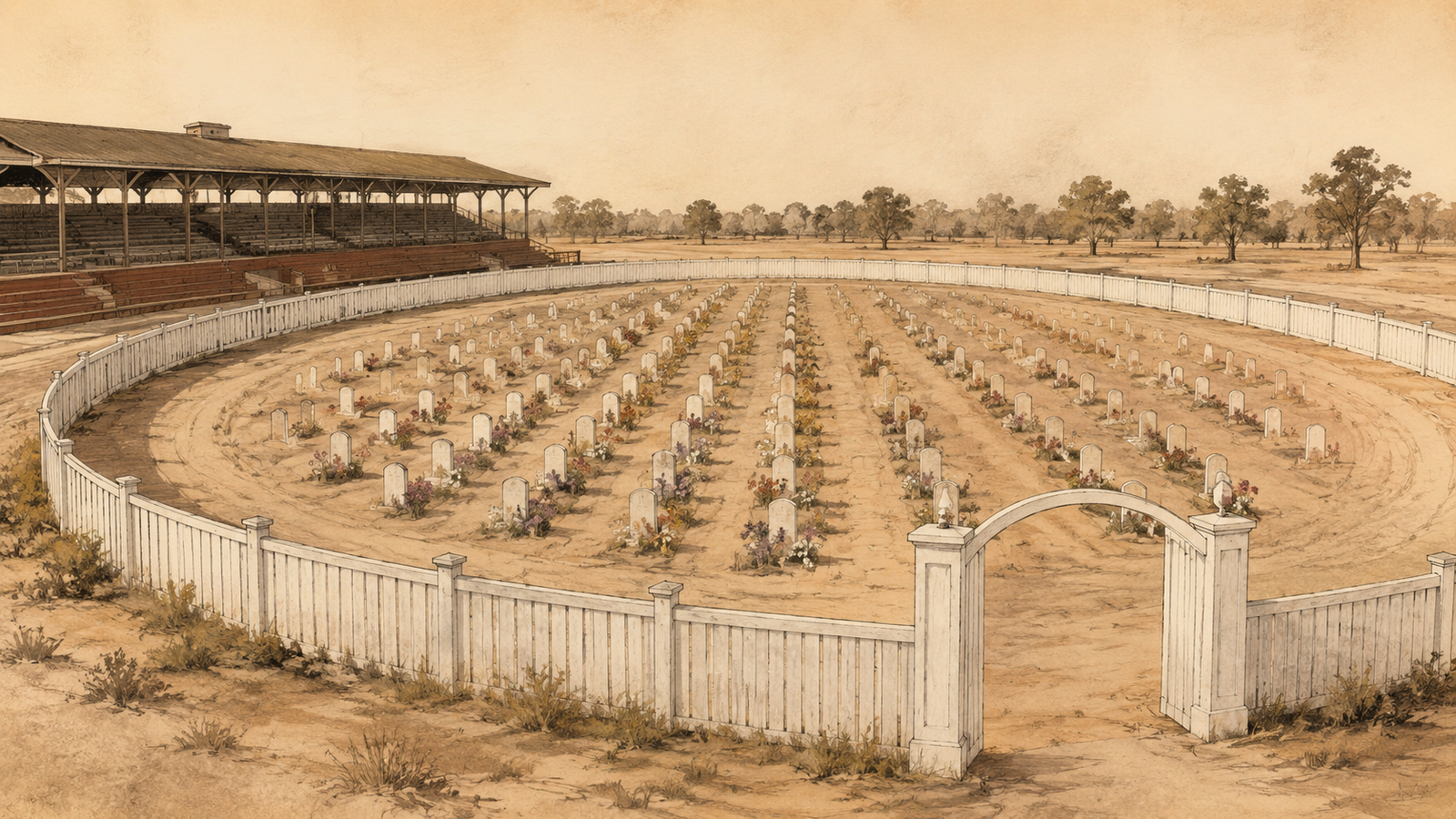
Hundreds of Union prisoners died there from disease, hunger, exposure, and untreated wounds. Their bodies were placed in a mass grave behind the grandstand. After Charleston fell, Black workers recovered the dead, reburied them individually, and created a cemetery called the “Martyrs of the Race Course.”
Because of that labor, the Black origins of Memorial Day are more than a footnote. They reveal a public declaration about emancipation, citizenship, and national memory.
Article Map
The Race Course Before Liberation
Before the Civil War, the Washington Race Course represented Charleston’s slaveholding power structure. The South Carolina Jockey Club used the racetrack as a social arena for wealth, status, and hierarchy.
The site carried another meaning as well. It stood inside a civic world shaped by slavery. Elite leisure and human bondage occupied the same landscape.
Eventually, war changed the ground. By 1864, Confederate authorities needed space for captured Union soldiers. They turned the racecourse into an open-air prison camp.
The conditions quickly became brutal. Many prisoners lacked shelter, food, and medical care. At least 257 Union soldiers died there.
Confederate officials did not honor the dead. Instead, they discarded them in a mass grave.
As a result, the racecourse became a layered site. It held slavery, elite power, military collapse, and unmarked death in one place.
Charleston After the Confederacy
Charleston surrendered to Union forces on February 18, 1865. After Confederate authority collapsed, the city’s newly freed Black population gained temporary control over public space in one of the Confederacy’s symbolic capitals.
That control mattered because public space shapes public meaning. Whoever controls the ritual often controls the story that follows.
For Black Charlestonians, the mass grave at the racecourse was a moral emergency. It was also a civic responsibility. The Union dead had become martyrs to emancipation, so their burial required repair.
Therefore, the first move was not speech. It was labor.
The Friends of the Martyrs
In April 1865, Black laborers organized under the name “Friends of the Martyrs.” They worked with the Patriotic Association of Colored Men and began the hard task of recovering the Union dead.
The workers exhumed the bodies from the mass grave and reburied each soldier in an individual grave. Then they marked the graves with whitewashed wooden headboards.
Afterward, they built a whitewashed fence around the cemetery and placed a clear inscription over the entrance.
Martyrs of the Race Course
The phrase carried the argument. These men were not anonymous casualties. They were witnesses to a war that had become a struggle for freedom.
This is where the Black origins of Memorial Day become structural. The community did not wait for permission to define the meaning of the war. It built the memorial first.
The First Decoration Day
On May 1, 1865, thousands gathered to dedicate the cemetery. The event became one of the earliest large-scale Decoration Day ceremonies in American history.
The procession began with about 3,000 Black schoolchildren. They carried flowers and sang Union songs. Behind them came Black women with baskets of flowers and wreaths.
Black men from civic groups and mutual aid societies marched in formation. Ministers, teachers, missionaries, Unionists, and Black soldiers also took part. Together, they joined mourning with civic order.
The ceremony did more than honor the dead. It showed discipline, organization, and a newly freed people claiming public authority.
One symbolic act made the meaning unmistakable. Participants buried a coffin labeled “Slavery” near the cemetery grounds. That act connected the death of Union soldiers with the death of the institution they helped defeat.
In contrast, many later Memorial Day traditions leaned toward reconciliation between white Northerners and white Southerners. Charleston’s Decoration Day centered emancipation.
That difference changes the story.
The Erasure of Black Memory
The memory of the Charleston ceremony did not fade by accident. Political power changed, and public memory changed with it.
After Reconstruction collapsed, white Redeemer governments returned to power across the South. The Lost Cause narrative then reframed the Confederacy as noble and minimized slavery as the central cause of the war.
That project required selective memory.
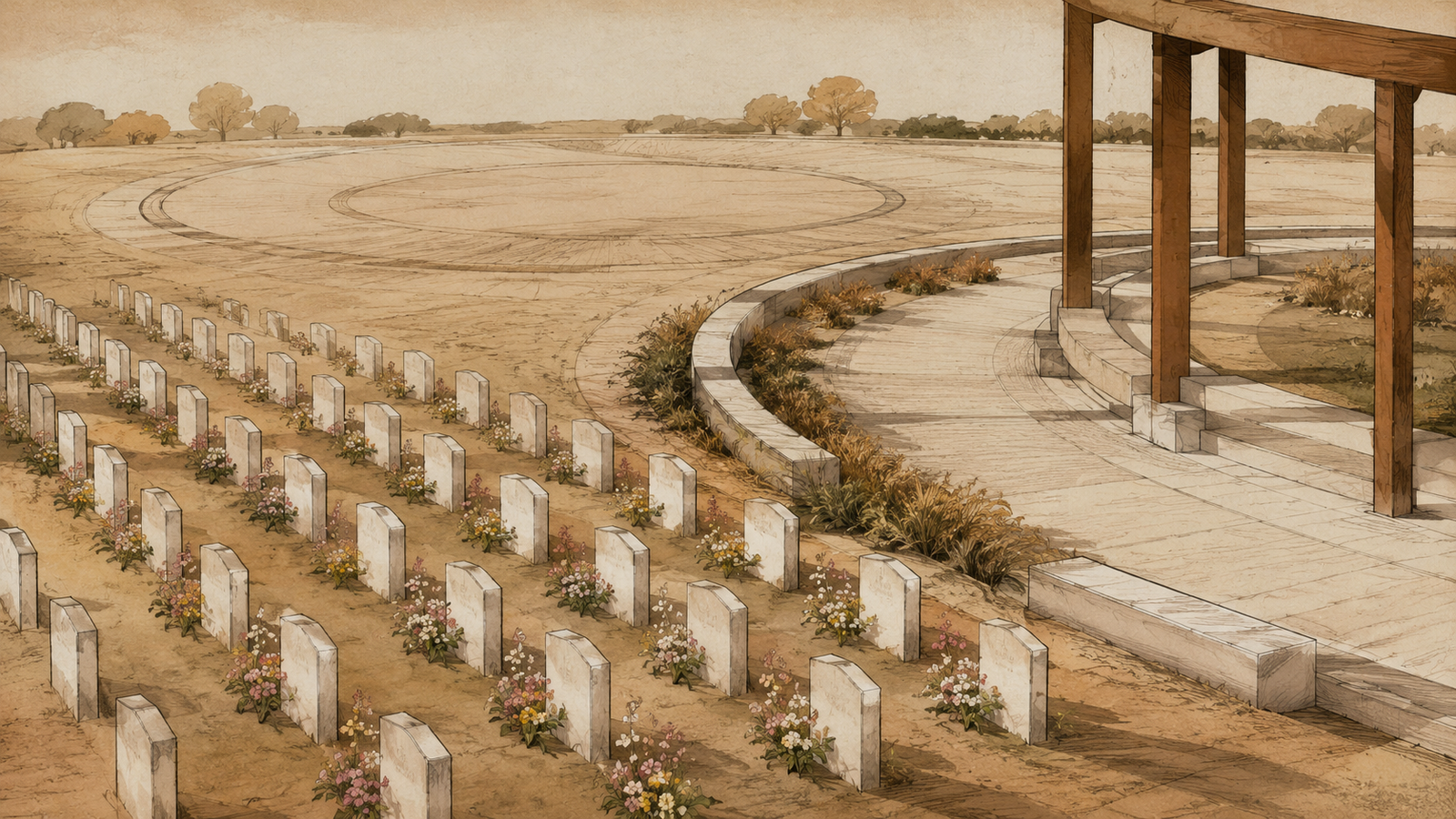
Eventually, the racecourse cemetery was dismantled. Officials moved the Union dead to Beaufort National Cemetery. The land later became Hampton Park, named after Wade Hampton III, a Confederate general, slaveholder, and Redeemer governor.
In other words, the landscape itself changed sides.
A site where Black Charlestonians had declared emancipation became a public park tied to the political order that worked to bury Reconstruction.
Rediscovering the History
The story remained outside mainstream memory for more than a century. However, historian David W. Blight later uncovered archival evidence while researching Civil War memory.
The documents described the May 1, 1865 ceremony in Charleston and confirmed its scale, structure, and political meaning. His work helped return the Charleston event to the national conversation.
This history complicates the official story. Waterloo, New York, still holds federal recognition as the birthplace of Memorial Day. Yet Charleston’s ceremony predates that observance and carries a very different meaning.
The Charleston event was not primarily about reconciliation. It was about liberation.
That is why the Black origins of Memorial Day matter. They reveal a holiday rooted not only in mourning, but also in the public defense of freedom.
Why This History Matters Now
The debate over Memorial Day’s origins is not only about dates. It is about authorship.
Newly freed Black Charlestonians did not simply decorate graves. They interpreted the Civil War in public. They declared that Union sacrifice, Black freedom, and national rebirth belonged in the same frame.
Later America made Memorial Day safer. The holiday became broader, quieter, and more abstract. Still, the first large-scale observance carried sharper meaning.
It said the dead had not died for nostalgia. They had died for the end of slavery.
That is the history America tried to soften. It is also the history worth restoring.
The Black origins of Memorial Day remind us that nations do not only fight wars. They also fight over what those wars are allowed to mean.
Further Groundwork
Historical memory is infrastructure. When public rituals are rewritten, public meaning changes with them.
Receipts
National Park Service: Background on the African American origins of Memorial Day and the Charleston ceremony.
Read the National Park Service overview
Library of Congress: Context on Decoration Day, Memorial Day, and the evolution of the national holiday.
Review the Library of Congress Memorial Day entry
National Archives: Civil War and Reconstruction records that help frame the institutional stakes of emancipation and memory.
Explore National Archives Civil War records
Build better. Every day.