

New partner boundaries matter most when a child already has an active father because the goal is not to manufacture another parent. The goal is to build a role that allows a new partner to become dependable, useful, and trusted without turning family life into a competition for position.
Blended families can become unnecessarily complicated when adults confuse importance with authority. A mother’s partner may eventually become one of the most trusted adults in a child’s life. He may drive to practice, sit through homework, help with dinner, notice when something is wrong, contribute to the household, and remain present through years of ordinary life.
None of that requires pretending the child’s father disappeared. Meaningful relationships do not become stronger because another relationship has been diminished first.
The real question is whether the adults have built enough family structure for everyone to understand where parental authority, household responsibility, emotional connection, and earned influence actually belong. When those lines remain vague, the child often becomes the person forced to interpret them.
Role
New Partner Boundaries Start With Role Clarity
Families do not become stronger because every caring adult receives the same title. Strength comes from dependable people understanding what they are responsible for and consistently carrying that responsibility.
That distinction becomes especially important when a child’s father is already involved. There is no structural reason another caring man must diminish him in order to develop a meaningful relationship with the child. A healthy blended family can make room for another source of stability without first manufacturing a vacancy.
In real life, the contribution is often ordinary. A new partner may become another dependable ride, another adult who remembers the school project, somebody willing to wait through an emergency-room visit, or simply the person who is consistently at the dinner table. Those moments carry more relational weight than a title ever could.
Strong new partner boundaries allow that relationship to become valuable on its own terms. The new partner does not have to imitate the father, and the child should not have to compare the two men in order to justify caring about both.
Structural Distinction
Relationship importance and parental authority are different forms of standing. A new partner may become profoundly important without needing to erase, imitate, or compete with an active parent.
Loyalty
New Partner Boundaries Should Keep Children Out of Adult Loyalty
Children read a room long before they have language for what they are seeing. They hear the change in somebody’s voice when Dad comes up, notice who becomes stiff at a school event, and recognize when a harmless story about the other household suddenly changes the temperature.
Over time, some children learn to manage that tension. Stories get edited. Affection gets softened. Certain details are shared with one adult but carefully withheld from another. The child becomes skilled at protecting grown people from feelings those grown people should be managing themselves.
No child should have to minimize love for a father to reassure a mother’s partner. Likewise, a genuine relationship with the new partner should not become evidence of disloyalty to the biological parent.
Adults do not have to become close friends to prevent that pressure. Healthy new partner boundaries simply keep unresolved adult territory with the adults instead of quietly handing it to the child.
A child should be free to love the people who reliably love them without being asked to rank the adults.
Boundaries
Healthy New Partner Boundaries Protect Everyone in the House
Conversations about blended families often focus almost entirely on restraint. The new partner hears what he should not do: do not overstep, do not discipline, do not interfere, and do not act like the parent. Some caution is justified, but a durable family role cannot be built entirely from prohibitions.
The new partner also needs to understand what he is responsible for. When a man is expected to help carry a household, the adults need enough clarity for him to know what he is actually carrying.
Otherwise, responsibility quietly expands while authority remains vague. That arrangement may function for a while, especially when everyone is trying to be accommodating. Pressure eventually exposes the imbalance.
Parents
Parental responsibilities should not be casually transferred simply because another adult is available.
Partner
A new partner should not be assigned unlimited family labor while being treated as though his role has no legitimate standing.
Child
Not being the biological parent does not make an adult fair game for disrespect inside a shared household.
Conflict
Disagreements about authority belong between adults rather than being performed through the child.
That is the real work of new partner boundaries. A boundary does more than tell somebody to stay back. It clarifies where responsibility begins, where authority ends, and which burdens should never cross the line in the first place.
Influence
New Partner Boundaries Leave Room for Earned Influence
Adults can assign a title, but a bond develops differently. Children tend to make their own assessment through repetition: who keeps a promise, who remembers what matters, who listens without turning every conversation into a lecture, and who remains steady after disagreement.
Those ordinary moments slowly answer a larger question: Can I trust this person? Once trust becomes real, influence often follows naturally.
A child may eventually seek the new partner’s advice, call him when something breaks, look for him after a bad decision, or expect him to be present at important milestones. None of that has to be demanded in advance.
Good new partner boundaries actually create more room for that kind of relationship because they remove the pressure to perform closeness before closeness exists.
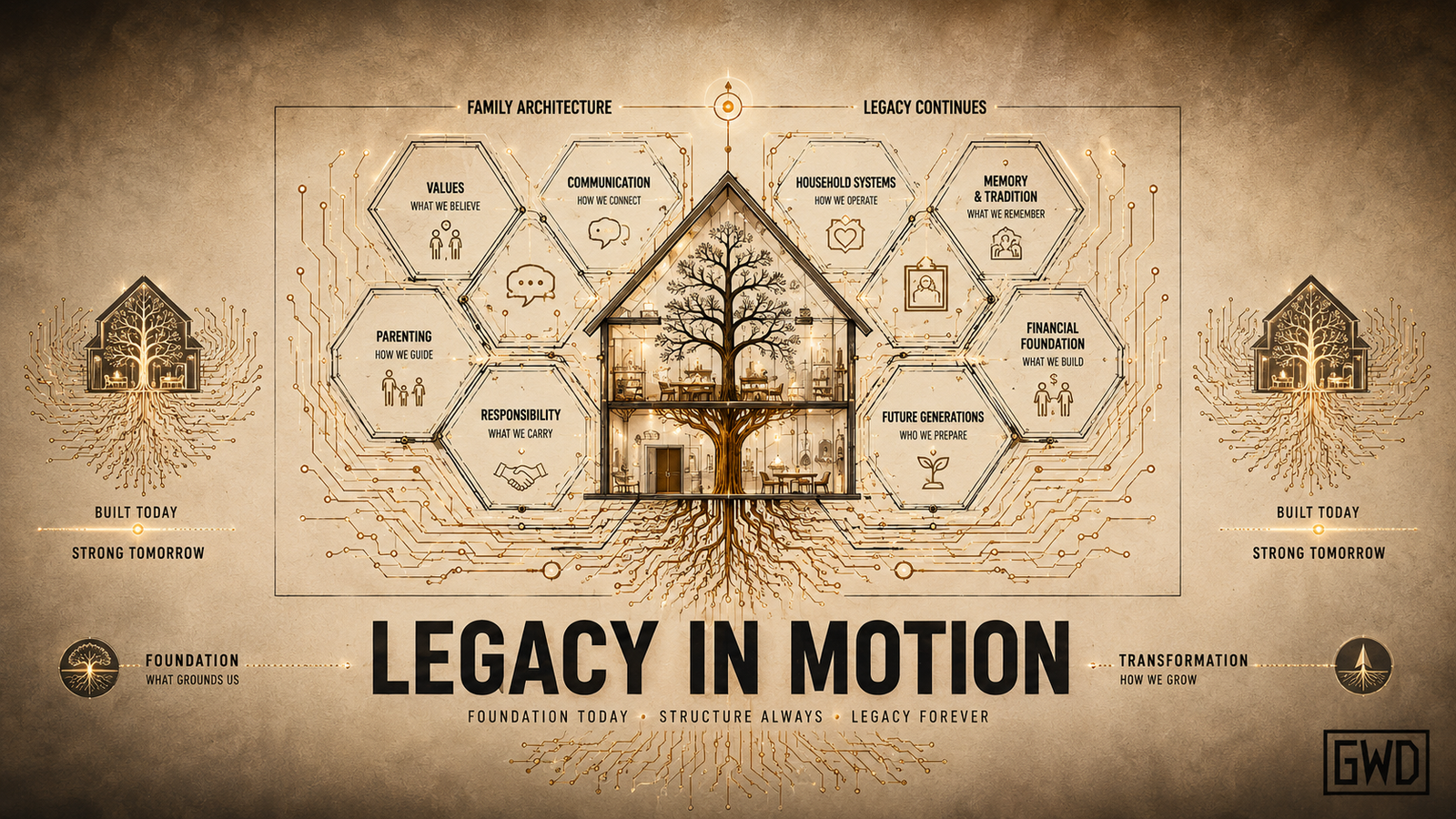
Legacy In Motion Framework
Addition Without Replacement
01
Presence
Show up without demanding emotional status.
02
Trust
Let repeated behavior establish reliability.
03
Relationship
Allow the bond to develop without comparison.
04
Influence
Let guidance grow from earned credibility.
Presence → Trust → Relationship → Influence
Standards
New Partner Boundaries Still Require Household Standards
Families can overcorrect when they become so worried about overstepping that the home develops no coherent authority at all. That is not sensitivity. It is another form of ambiguity.
A child can have an active father and still be expected to follow reasonable rules in another household. Bedtimes, chores, language, privacy, guests, shared spaces, safety, and basic respect do not stop mattering because an adult helping operate the home is not the biological parent.
The distinction becomes easier once the adults stop treating household standards and parental authority as though they are the same thing.
Household standards govern the home.
Parental authority governs the parent-child relationship.
Those systems overlap, but they are not identical. Strong new partner boundaries clarify the difference before the child has to discover it through conflict.
Family Architecture
Define the Role Before Pressure Defines It for You
Nobody needs a fifty-page household constitution. Adults do need enough agreement to answer a few practical questions before those questions arrive disguised as arguments.
Parental Authority
Which decisions remain clearly with the child’s parents?
Household Authority
Which rules apply to everybody who lives in or regularly occupies the home?
Partner Responsibility
What is the new partner actually expected to supervise, provide, coordinate, or protect?
Conflict
How will disagreements between adults be handled without recruiting the child?
Relationship Freedom
Is the child free to develop affection without pressure toward or away from either adult?
Review
When will the adults revisit these agreements as the child and household change?
Family roles are not frozen. A structure that worked when a child was seven may need adjustment when that child is fourteen. Clarity should evolve with the household rather than disappear because an earlier arrangement once seemed good enough.
The Groundwork
Build the Agreement Before the Next Conflict
A new partner does not have to become less important in order to respect an active father. What he needs is a role that is honest, useful, and clear enough to survive pressure.
Before the next disagreement, the adults should settle what belongs to the parents, what belongs to the household, what responsibility the partner is carrying, what authority reasonably accompanies that responsibility, and which emotional burdens should never be placed on the child.
Write the agreement down if that helps. Legal language is unnecessary. A page at the kitchen table is enough when everybody understands the arrangement and is willing to live by it.
Good family boundaries do not decide who matters most. They make it possible for everybody to know where they stand.
Groundwork Core Principle
Structure Is Mercy
Clear roles absorb preventable burden before a child, partner, or household has to carry the confusion personally.
Explore the Principle →
Groundwork Condition
Boundaries Contain
Boundaries define where responsibility, access, authority, obligation, and consequence begin and end. In a blended family, that containment protects relationships from avoidable confusion.
Explore The Conditions →
Continue Building
Follow the Structure Further
Co-Parenting
New Partner Role in Co-Parenting
Build a clearer place for support, responsibility, authority, and cooperation.
Partnership
Reciprocity Is the Missing Relationship Skill
See how responsibility, attention, support, adjustment, and repair move between adults.
Series
Legacy In Motion
Explore family architecture, parenting, responsibility, partnership, boundaries, and continuity.
Receipts
Family Transitions Work Better When Children Stay Out of Adult Conflict
The American Psychological Association provides additional context on divorce, child custody, family transitions, and children’s adjustment when household structures change. American Psychological Association ↗
Groundwork Daily
Build the Structure Before You Need It
Essays and frameworks on money, family, ownership, responsibility, culture, systems, and the structures that keep ordinary pressure from becoming unnecessary crisis.
Join the Groundwork ListA child who watches adults respect roles without diminishing relationships learns something larger than blended-family etiquette.
Love does not have to compete for territory. Responsibility can be defined. Authority can have limits. People can add to a family without demanding that somebody else disappear.

Groundwork Daily Builder
Marcus Vaughn
Economy, Ownership & Generational Structure
Marcus Vaughn writes about ownership, financial discipline, family structure, and generational continuity. Through Money Monday and Legacy In Motion, he examines the systems that turn income into stability, responsibility into structure, and today’s decisions into tomorrow’s inheritance.